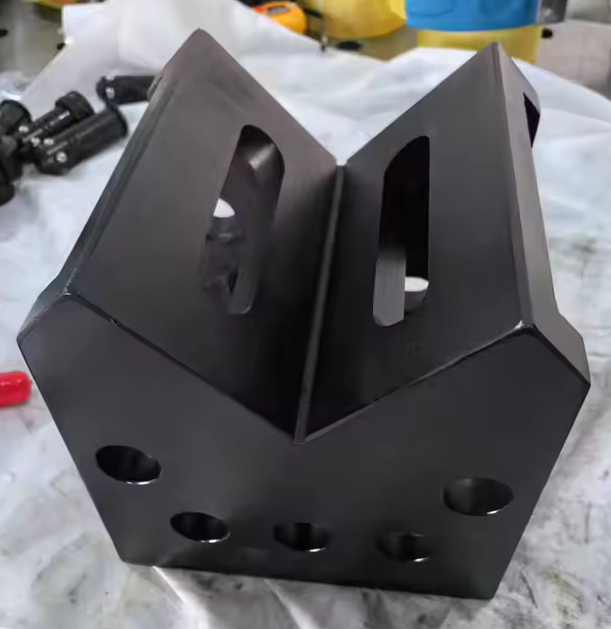
Stone fabrication tables are precision-engineered work surfaces designed to support cutting, polishing, and assembly operations in the natural stone industry. These tables provide a flat, stable, and durable foundation essential for processing heavy materials like granite, marble, and quartz. Key features include high load-bearing capacity, modular flexibility for various slab sizes, and resistance to abrasion and moisture. By ensuring accurate positioning and minimizing vibration, these tables significantly improve cut quality and operational safety in professional workshops.
What Are Stone Fabrication Tables?
In the context of modern stoneworking, a fabrication table is not merely a surface to place material; it is a critical component of the production workflow. These structures serve as the primary interface between raw stone slabs and processing machinery, such as bridge saws, CNC routers, and hand-polishing tools.
The core function of a stone fabrication table is to maintain dimensional stability. When a multi-ton granite slab is cut or polished, any movement or unevenness in the supporting surface can lead to chipping, inaccurate cuts, or even dangerous shifts in material position. Therefore, industrial-grade tables are constructed from robust materials like steel frameworks, cast iron, or reinforced composites to withstand extreme weights and continuous mechanical stress.
Unlike generic workshop benches, specialized stone tables often incorporate features tailored to the unique challenges of lithic materials. These may include water drainage systems for wet cutting, T-slots for clamping, and adjustable leveling feet to compensate for uneven workshop floors. The design prioritizes both the protection of the expensive stone material and the ergonomic efficiency of the fabricator.
Key Features of High-Performance Stone Fabrication Tables
When evaluating stone fabrication tables, several technical attributes determine their suitability for professional applications. Understanding these features helps manufacturers and workshop owners select equipment that enhances productivity rather than hindering it.
Structural Rigidity and Load Capacity
The most fundamental requirement is structural integrity. Stone slabs, particularly granite and quartzite, are incredibly dense. A standard kitchen countertop slab can weigh over 1,000 pounds (450 kg). Larger island pieces or commercial vanity tops can exceed this significantly.
- Heavy-Duty Framework: High-quality tables utilize thick-walled steel tubing or cast iron bases to prevent flexing under load.
- Uniform Support: The surface must distribute weight evenly to prevent stress fractures in the stone during cutting or polishing.
- Vibration Dampening: Rigid construction minimizes vibration transfer from nearby machinery, ensuring smoother finishes on polished edges.
Surface Durability and Material Composition
The tabletop itself faces constant exposure to abrasive stone dust, water, and physical impact from tools. Common surface materials include:
- Powder-Coated Steel: Offers excellent resistance to rust and corrosion, crucial for wet environments.
- Cast Iron Plates: Provide exceptional flatness and durability, often used in precision inspection and assembly tasks.
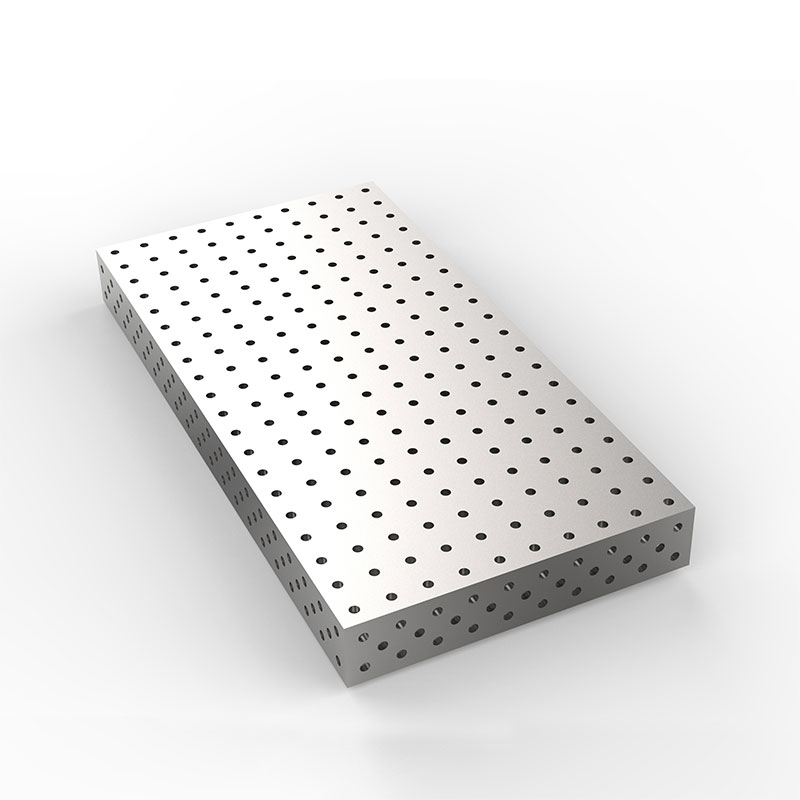
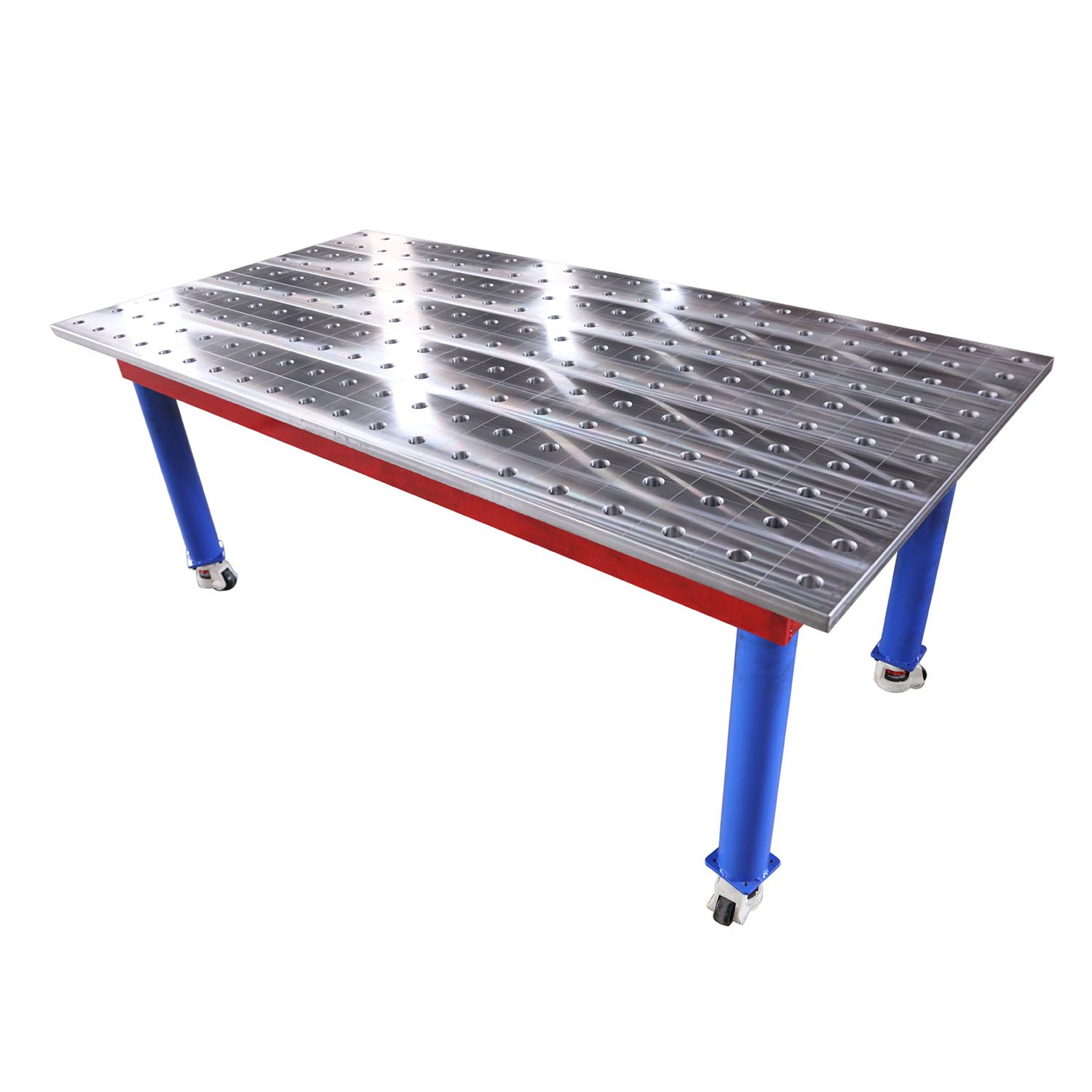
- Modular Grid Systems: Perforated surfaces allow for flexible clamping options using stoppers and pins, adapting to various slab shapes.
Modularity and Flexibility
Modern fabrication shops handle diverse projects, from small bathroom vanities to large commercial lobby floors. Fixed-size tables limit versatility. Modular tables, such as those utilizing grid patterns with standardized hole spacing, allow fabricators to reconfigure support points quickly. This adaptability reduces setup time and accommodates irregularly shaped pieces without requiring custom jigs for every job.
Integration with Clamping and Positioning Accessories
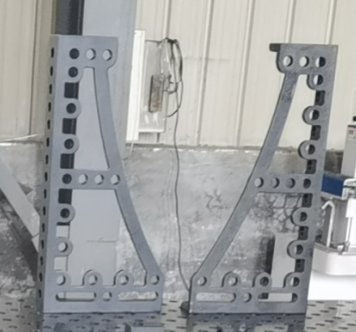
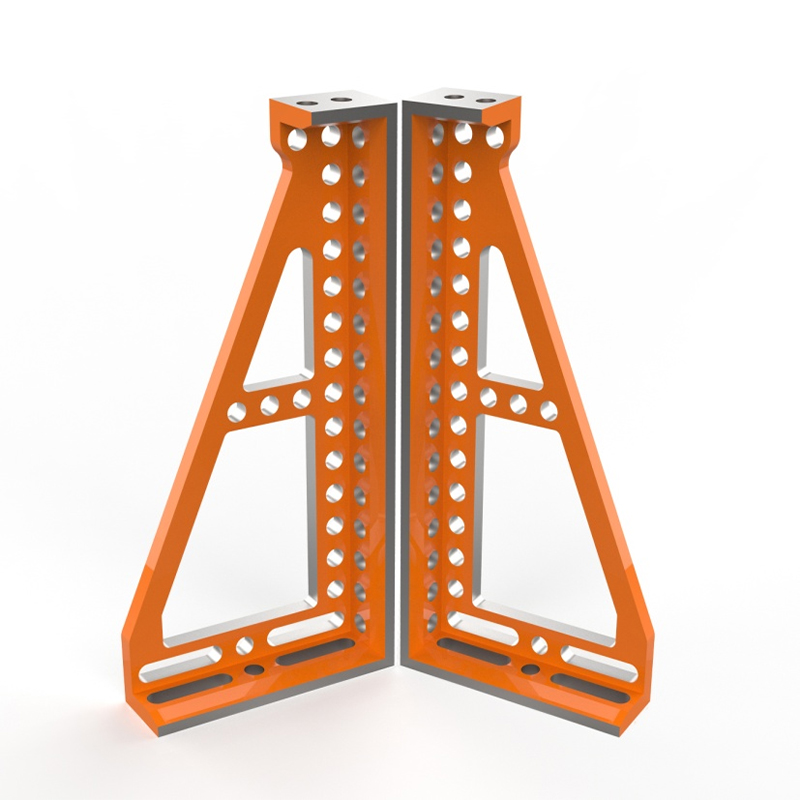
A table is only as effective as its ability to hold the workpiece securely. Advanced fabrication tables are designed to integrate seamlessly with auxiliary positioning tools. For instance, systems compatible with U-shaped and L-shaped multi-purpose square boxes enable rapid 90-degree alignment of slab edges. Similarly, 200-series support angle irons can be inserted into table grids to support vertical edges during polishing or sealing, ensuring consistent angles and reducing manual holding efforts.
Applications in the Stone Industry
Stone fabrication tables are versatile assets used across multiple stages of the production lifecycle. Their application extends beyond simple storage, playing active roles in precision manufacturing processes.
Cutting and Sawing Operations
During the initial breakdown of jumbo slabs or final trimming of countertops, stability is paramount. Fabrication tables provide a level reference plane for bridge saws. When equipped with proper clamping mechanisms, they prevent the slab from shifting as the diamond blade passes through, reducing the risk of blade binding or uneven cuts. The flat surface also ensures that water runoff from wet saws drains efficiently, keeping the workspace clean and safe.
CNC Machining and Edge Profiling
CNC machines require precise coordinate systems. A warped or unstable table can introduce errors in the machine’s Z-axis calibration, leading to incorrect depth cuts for sink bowls or faucet holes. High-precision tables, such as those engineered by specialists in modular fixtures, ensure that the stone remains perfectly parallel to the machine head. This accuracy is critical when creating complex edge profiles or intricate inlay designs where tolerances are measured in millimeters.
Assembly and Glue-Up
Mitered edges, seams, and backsplash installations require perfect angular alignment. Fabricators use fabrication tables as assembly jigs. By leveraging accessories like 0-225° universal angle gauges, workers can set precise angles for miter joints before applying epoxy. The rigid table surface ensures that the glued pieces do not slip while the adhesive cures, resulting in invisible seams and structurally sound assemblies.
Quality Control and Inspection
Before shipping, every piece must undergo rigorous inspection for flatness, squareness, and surface defects. A precision-ground table serves as a reference datum for these checks. Using straight edges and feeler gauges against the table surface allows inspectors to detect even minor warping in the stone. This step is vital for maintaining high quality standards and avoiding costly returns from clients.
Botou Haijun Metal Products: Precision Solutions for Fabrication
While traditional stone tables focus solely on support, the evolution of modular fixturing technology has introduced new levels of efficiency to the fabrication process. Botou Haijun Metal Products Co., Ltd. specializes in the research, development, and production of high-precision flexible modular fixtures and metalworking tools, bridging the gap between general support surfaces and advanced positioning systems.
Although originally renowned for their 2D and 3D flexible welding platforms in the automotive and aerospace industries, Haijun Metal’s engineering principles are directly applicable to high-precision stone and metal fabrication. Their core product line emphasizes exceptional versatility and precision, making their modular platforms ideal for workshops that require rapid reconfiguration and exact positioning.
Haijun Metal offers a comprehensive range of complementary components that enhance the functionality of any fabrication workspace. For example, their U-shaped and L-shaped multi-purpose square boxes can be integrated into modular table grids to provide instant, repeatable right-angle references for stone edge alignment. The 200-series support angle irons offer robust vertical support for heavy slabs during edge work, while the 0-225° universal angle gauges allow for precise angular setups for non-standard cuts or architectural features.
Furthermore, the company manufactures professional cast iron 3D welding platforms and angle connection blocks. In a stone fabrication context, these cast iron surfaces provide the ultimate in flatness and durability, resisting the wear and tear of heavy abrasive materials. With years of industry experience, Haijun Metal has become a trusted supplier of tools and gauges to customers both domestically and internationally, continuously providing high-quality production machinery tool series that prioritize durability and stability.
Selection Guide: Choosing the Right Table for Your Workshop
Selecting the appropriate stone fabrication table involves balancing budget, space, and production volume. Below is a comparative analysis to guide decision-making.
| Feature |
Standard Steel Table |
Modular Grid System |
Cast Iron Precision Platform |
| Primary Use |
General support, light cutting |
Flexible clamping, complex assembly |
High-precision inspection, CNC reference |
| Flexibility |
Low (Fixed surface) |
High (Reconfigurable stops/pins) |
Medium (Flat surface, accessory dependent) |
| Durability |
Moderate (Prone to denting) |
High (Hardened steel/grid) |
Very High (Wear-resistant cast iron) |
| Cost |
Low |
Medium to High |
High |
| Best For |
Small shops, basic installs |
Custom fabrication, varied shapes |
High-volume, tight tolerance work |
Factors to Consider
- Workspace Dimensions: Measure your available floor space carefully. Ensure there is enough clearance around the table for material handling equipment like A-frames or forklifts.
- Material Types: If you primarily work with engineered quartz, which is brittle, a table with uniform, cushioned support may be preferable. For granite, rigid steel or cast iron is better suited.
- Accessory Compatibility: Check if the table supports standard clamping systems. Investing in a system compatible with universal accessories, such as those from Haijun Metal, future-proofs your workshop.
- Portability: Some shops require mobile solutions. Look for tables with locking caster wheels if you need to rearrange the shop floor frequently.
Common Mistakes to Avoid in Table Selection and Use
Even with high-quality equipment, improper usage can lead to inefficiencies or damage. Here are common pitfalls observed in the industry.
Ignoring Leveling
A table that is not perfectly level will cause water to pool in specific areas, accelerating rust and creating slippery hazards. More importantly, an unlevel table can cause slabs to slide during cutting. Always use adjustable feet and a spirit level during installation.
Overloading Beyond Design Limits
While stone tables are built tough, every structure has a maximum load rating. Concentrating excessive weight on a single point, such as placing a heavy machinery leg directly on a thin grid panel without reinforcement, can deform the surface. Distribute heavy loads using spreader plates or additional supports.
Neglecting Maintenance
Stone dust is abrasive and can clog moving parts or degrade surface coatings over time. Regular cleaning is essential. For modular tables, keep the grid holes clear of debris to ensure accessories fit snugly. Apply protective coatings to steel surfaces periodically to prevent corrosion from prolonged water exposure.
Frequently Asked Questions (FAQ)
What is the best material for a stone fabrication table surface?
For general fabrication, powder-coated steel offers a good balance of cost and durability. For high-precision work involving CNC machining or detailed assembly, cast iron or hardened modular steel grids are superior due to their flatness and wear resistance.
Can I use a welding table for stone fabrication?
Yes, many principles overlap. Heavy-duty welding tables, especially modular ones like those produced by Botou Haijun Metal Products, are excellent for stone fabrication. They provide the rigidity, flatness, and clamping options needed for precise stone work. However, ensure the surface is cleaned thoroughly to avoid contaminating the stone with metal particles or oil.
How do I prevent stone slabs from cracking on the table?
Ensure the table surface is flat and free of high spots that could create pressure points. Use uniform support across the entire slab area. When cutting, support the off-cut piece to prevent it from snapping off under its own weight before the cut is complete.
Are modular tables worth the investment for small shops?
For small shops handling diverse custom jobs, modular tables can significantly reduce setup time. The ability to quickly clamp and align irregular shapes without building custom jigs for each project improves throughput and accuracy, offering a strong return on investment.
Conclusion and Next Steps
Stone fabrication tables are foundational to efficient and high-quality stoneworking. They provide the stability, precision, and durability required to process heavy, brittle materials safely. Whether you opt for a standard steel surface or a advanced modular system, the right table enhances every step of the fabrication process, from cutting to final inspection.
Integrating high-precision positioning tools further elevates workshop capabilities. Companies like Botou Haijun Metal Products Co., Ltd. demonstrate how modular fixture technology, originally developed for aerospace and automotive sectors, can bring exceptional versatility and accuracy to stone and metal fabrication. By utilizing components such as universal angle gauges and multi-purpose square boxes, fabricators can achieve faster setup times and tighter tolerances.
If you are looking to upgrade your workshop’s efficiency, consider the specific demands of your production volume and material types. Evaluate the long-term benefits of modularity and precision engineering. For detailed specifications on modular platforms and complementary positioning accessories, explore our full range of industrial solutions.
View Related Products and Technical Solutions