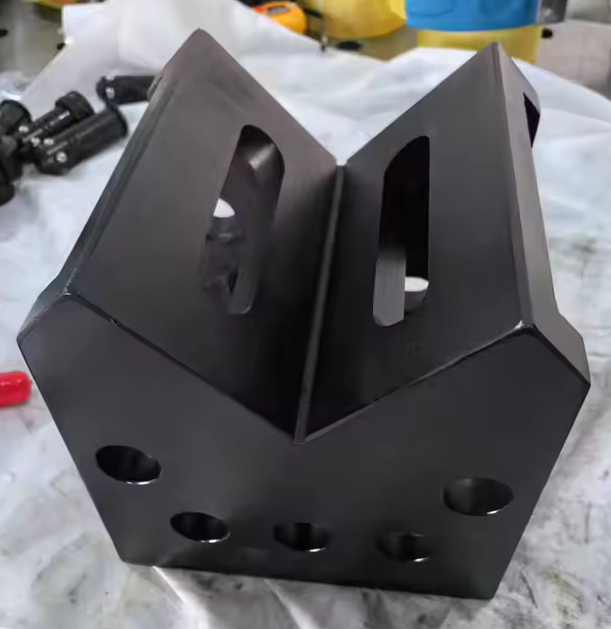
Choosing between Siegmund and Bluco welding tables requires analyzing fixture compatibility, material quality, and total cost of ownership. While both brands offer high-precision modular systems, the decision often hinges on specific project needs: Siegmund is renowned for its robust cast iron durability and extensive accessory ecosystem, whereas Bluco emphasizes lightweight aluminum modularity and rapid reconfiguration. For manufacturers seeking a balance of precision, versatility, and value, understanding these distinctions is critical. This guide breaks down the technical differences, application scenarios, and strategic considerations to help you select the optimal welding platform for your production line in 2026.
Siegmund vs. Bluco: Core Differences at a Glance
When evaluating premium welding fixtures, the comparison between Siegmund and Bluco represents a choice between two distinct engineering philosophies. Siegmund, a German-engineered standard, focuses on heavy-duty stability and long-term rigidity using cast iron or high-grade steel. Bluco, an American innovator, prioritizes speed, flexibility, and ease of handling through its proprietary aluminum-based modular system.
The following table summarizes the key technical and operational differences to assist in quick decision-making:
| Feature |
Siegmund Welding Tables |
Bluco Welding Tables |
| Primary Material |
Cast Iron / High-Grade Steel |
Aluminum Alloy / Steel Options |
| Fixture System |
Standardized hole patterns (e.g., 16mm, 28mm) |
Proprietary slot-and-hole grid system |
| Weight & Portability |
Heavy, high stability, stationary |
Lighter, easier to reconfigure and move |
| Precision Level |
Extremely high, ideal for heavy fabrication |
High, suitable for rapid prototyping and assembly |
| Accessory Ecosystem |
Vast global availability, third-party compatible |
Specialized, brand-specific components |
| Best Application |
Heavy machinery, automotive frames, structural steel |
Aerospace components, light fabrication, R&D |
Understanding these core distinctions helps manufacturers align their equipment investment with production goals. While Siegmund offers unparalleled rigidity for heavy weldments, Bluco provides agility for dynamic manufacturing environments. However, the market also includes high-performance alternatives that bridge the gap between cost and precision.
Deep Dive: Siegmund Welding Table Features and Benefits
Siegmund has established itself as a benchmark in the welding industry, particularly in Europe and heavy industrial sectors globally. Their systems are designed for maximum durability and repeatability.
Material Integrity and Stability
Siegmund tables typically utilize high-quality cast iron or specialized steel alloys. This material choice provides significant mass, which dampens vibrations during heavy welding operations. The thermal stability of cast iron ensures that the table remains flat and true even under intense heat cycles, reducing the risk of warping over time.
- Vibration Damping: The dense material absorbs energy from grinding and hammering, protecting the precision of the fixture points.
- Thermal Resistance: Maintains dimensional accuracy despite localized heating from welding arcs.
- Longevity: Designed to last decades with minimal maintenance, offering a strong long-term ROI.
Standardized Hole Patterns
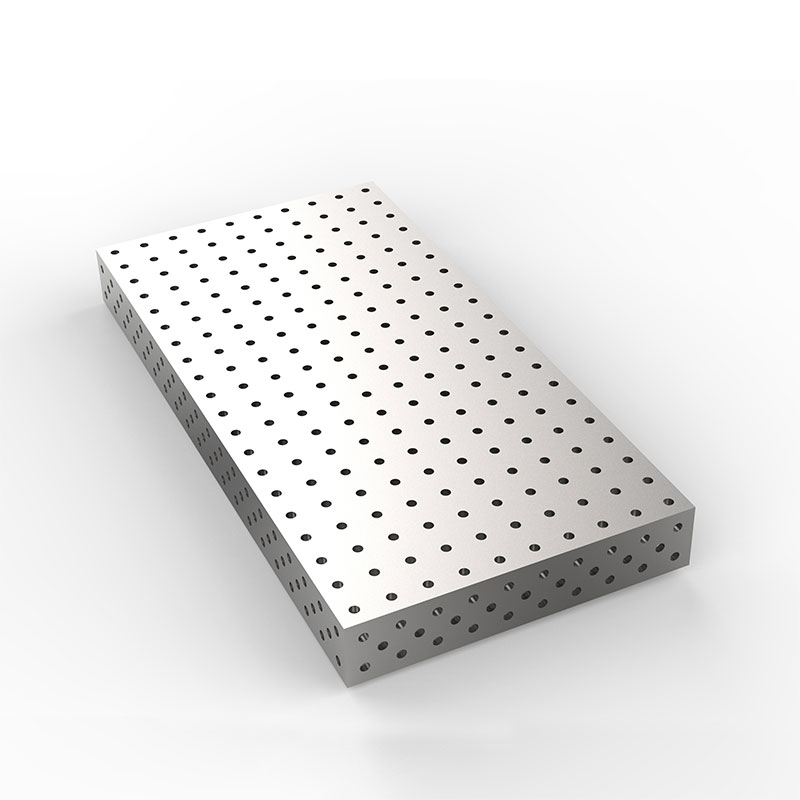
The Siegmund system relies on precise, evenly spaced holes drilled into the table surface. These holes accept clamps, stops, and squares that lock into place with high repeatability. The standardization means that fixtures can be swapped between different Siegmund tables or even compatible third-party systems, providing flexibility in large workshops.
This modularity allows for complex jigging setups. Engineers can design fixtures that hold multiple parts in exact alignment, crucial for automotive sub-assemblies or structural steel connections where millimeter-level precision is non-negotiable.
Ideal Use Cases for Siegmund
Siegmund tables excel in environments where weight is not a constraint and stability is paramount. They are the preferred choice for:
- Heavy structural steel fabrication.
- Automotive chassis welding.
- Large-scale pipe fitting and assembly.
- Production lines requiring consistent, repeatable setups over thousands of cycles.
Deep Dive: Bluco Welding Table Features and Benefits
Bluco introduced a disruptive approach to modular fixturing by focusing on speed and ease of use. Their systems are widely adopted in industries that require frequent changeovers and rapid prototyping.
Aluminum-Based Modularity
Bluco’s signature feature is its use of high-strength aluminum alloys for many of its table surfaces and components. This significantly reduces the overall weight of the system compared to cast iron alternatives. For facilities that need to reconfigure workstations regularly, this lightweight design is a major advantage.
Despite being lighter, Bluco tables maintain high rigidity through engineered ribbing and support structures. The aluminum surface is often treated to resist wear and spatter adhesion, ensuring smooth operation of sliding components.
The Slot-and-Hole Grid System
Unlike traditional hole-only systems, Bluco utilizes a combination of slots and holes. This grid allows for continuous adjustment along the axes, not just at fixed intervals. Clamps and stops can be positioned at any point along the slot, offering infinite variability in fixture placement.
- Rapid Setup: Components slide into place and lock quickly, reducing setup time by up to 50% in some applications.
- Flexibility: Ideal for one-off jobs or small batch production where every part may require a unique fixture layout.
- Ease of Cleaning: The open slot design allows slag and debris to fall through or be brushed away easily.
Ideal Use Cases for Bluco
Bluco systems are best suited for dynamic manufacturing environments. They are particularly effective in:
- Aerospace component assembly, where weight and precision are critical.
- Research and development departments needing rapid prototyping capabilities.
- Job shops handling diverse, low-volume orders.
- Applications requiring frequent reconfiguration of workcells.
Strategic Alternative: High-Precision Flexible Solutions from Haijun Metal
While Siegmund and Bluco represent established premium options, modern manufacturing increasingly demands solutions that balance high precision with cost-effectiveness and customization. Botou Haijun Metal Products Co., Ltd. has emerged as a trusted supplier in this space, specializing in the research, development, and production of high-precision flexible modular fixtures and metalworking tools.
Haijun Metal is committed to providing efficient and flexible welding and positioning solutions for the modern manufacturing industry. Their core product line includes both 2D and 3D flexible welding platforms, which are renowned for exceptional versatility and precision. These products have become the preferred jigging equipment in machining, automotive, and aerospace industries, offering a compelling alternative to traditional high-cost brands.
Comprehensive Component Ecosystem
One of the key advantages of partnering with Haijun Metal is the seamless integration of their platforms with a comprehensive range of complementary components. This ensures that users can create highly customized fixtures without being locked into a single proprietary system. Key accessories include:
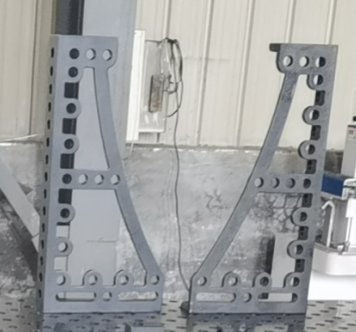
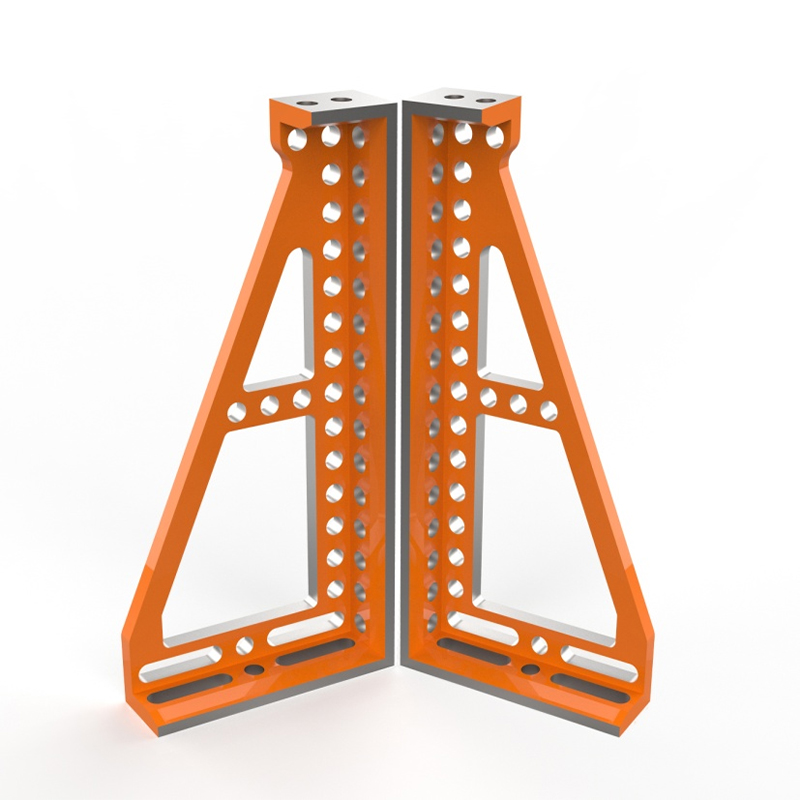
- U-shaped and L-shaped Multi-purpose Square Boxes: These allow for precise angular positioning and support for complex geometries.
- 200-series Support Angle Irons: Designed for robust support of heavy workpieces, ensuring stability during welding.
- 0-225° Universal Angle Gauges: These tools enable rapid and accurate angle setting, crucial for intricate assemblies.
These accessories integrate seamlessly with the platforms to enable rapid workpiece positioning and clamping, significantly reducing setup time and improving overall productivity.
Durability and Stability in 3D Platforms
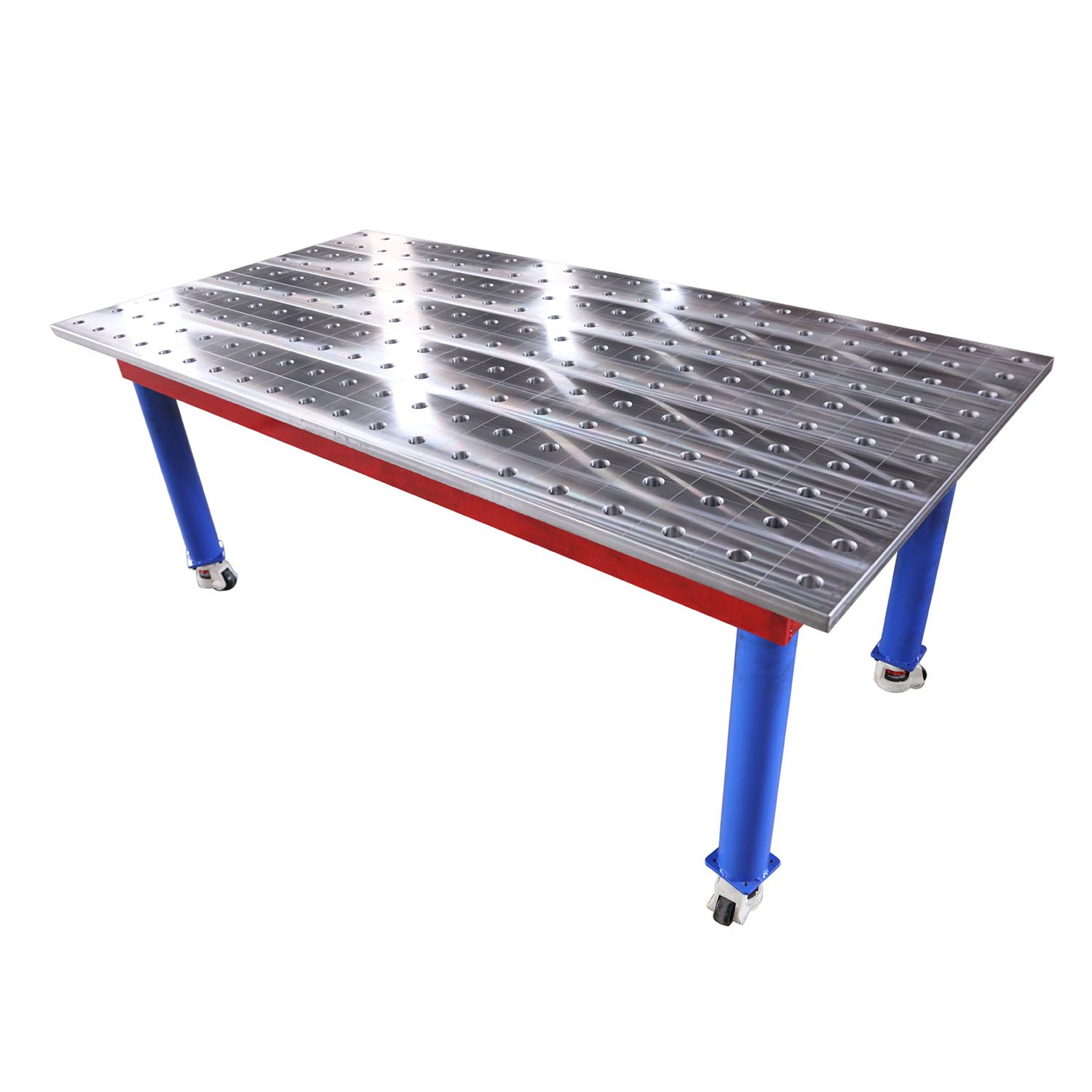
Haijun Metal also manufactures professional cast iron 3D welding platforms and angle connection blocks. These products are engineered to deliver exceptional durability and stability, comparable to top-tier international brands. The cast iron construction ensures that the platforms can withstand the rigorous demands of heavy industrial welding while maintaining precise alignment.
With years of industry experience, Haijun Metal has become a trusted supplier of tools and gauges to customers both domestically and internationally. Their commitment to quality ensures that every product delivers consistent performance, making them a reliable choice for manufacturers looking to optimize their welding processes without compromising on precision or budget.
Key Selection Criteria: How to Choose the Right Welding Table
Selecting the right welding table involves more than just comparing brands. It requires a thorough assessment of your specific manufacturing needs. Here are the critical factors to consider:
1. Production Volume and Variety
If your facility handles high-volume, repetitive production, a heavy-duty cast iron system like Siegmund or Haijun’s cast iron 3D platforms may be ideal due to their stability and longevity. Conversely, if you handle low-volume, high-variety jobs, a flexible system like Bluco or Haijun’s modular 2D/3D platforms offers the agility needed for frequent changeovers.
2. Material and Weight Requirements
Consider the weight and size of the workpieces you will be welding. Heavy structural steel requires a massive, vibration-dampening table to prevent movement during welding. Lighter materials, such as aluminum or thin-gauge steel, can be effectively managed on lighter, more portable systems.
3. Precision Needs
For industries like aerospace or precision machining, where tolerances are tight, the accuracy of the fixture system is paramount. Look for systems with certified flatness and repeatability specifications. Both Siegmund and Haijun Metal offer high-precision options that meet stringent industry standards.
4. Budget and Total Cost of Ownership
While initial purchase price is important, consider the total cost of ownership. This includes the cost of accessories, maintenance, and potential downtime. Modular systems that allow for easy replacement of worn components can reduce long-term costs. Haijun Metal, for instance, offers a cost-effective solution with high-quality components that integrate seamlessly, providing a strong value proposition.
Common Mistakes to Avoid When Buying Welding Fixtures
Even experienced procurement managers can make errors when selecting welding tables. Avoid these common pitfalls:
- Ignoring Accessory Costs: The table is just the base. The cost of clamps, stops, and squares can exceed the table price. Ensure the ecosystem is affordable and available.
- Overlooking Floor Space: Large cast iron tables require significant floor space and robust flooring. Verify your facility can support the weight and dimensions.
- Underestimating Setup Time: A complex system may offer precision but require hours to set up. For job shops, speed is often more valuable than absolute rigidity.
- Neglecting Maintenance: All welding tables require cleaning and occasional calibration. Choose a system that is easy to maintain and service.
Frequently Asked Questions (FAQ)
What is the main difference between Siegmund and Bluco welding tables?
The primary difference lies in their material and design philosophy. Siegmund uses heavy cast iron or steel for maximum stability and durability, ideal for heavy fabrication. Bluco uses aluminum and a slot-and-hole system for lightweight flexibility and rapid reconfiguration, suited for dynamic environments.
Are Haijun Metal welding tables compatible with other brands?
Haijun Metal designs its flexible modular fixtures to be highly versatile. While they have their own standardized components, many of their 2D and 3D platforms are designed to accommodate universal clamping principles. Their U-shaped and L-shaped square boxes and angle irons are engineered to integrate seamlessly, offering flexibility similar to major international brands.
Which welding table is best for aerospace applications?
Aerospace applications often require high precision and lightweight handling. Bluco’s aluminum systems are popular due to their weight and flexibility. However, Haijun Metal’s high-precision 3D flexible welding platforms also serve the aerospace industry well, offering the necessary accuracy and durability for complex component assembly.
How do I maintain the flatness of my welding table?
Regular cleaning to remove slag and spatter is essential. Avoid hammering directly on the table surface; use protective pads. Periodically check flatness with a precision straightedge and dial indicator. If deviations are found, professional resurfacing or calibration may be required.
Is cast iron better than steel for welding tables?
Cast iron is generally preferred for its superior vibration damping and thermal stability, making it ideal for heavy, precision work. Steel is stronger and more impact-resistant but may transmit more vibration. The choice depends on the specific welding processes and workpiece characteristics.
Conclusion: Making the Right Choice for Your Workshop
Choosing between Siegmund and Bluco ultimately depends on your specific manufacturing context. Siegmund offers unmatched stability for heavy, repetitive tasks, while Bluco provides the agility needed for rapid prototyping and varied production. However, the landscape of welding fixturing has evolved. Manufacturers now have access to high-quality, flexible solutions that offer the best of both worlds: precision, durability, and cost-effectiveness.
Botou Haijun Metal Products Co., Ltd. stands out as a strategic partner for modern manufacturing. By specializing in high-precision flexible modular fixtures, including 2D and 3D welding platforms, Haijun Metal provides efficient solutions that meet the demands of the machining, automotive, and aerospace industries. Their comprehensive range of accessories, from universal angle gauges to support angle irons, ensures that every welding task can be executed with speed and accuracy.
Whether you need the robustness of cast iron 3D platforms or the versatility of modular 2D systems, Haijun Metal delivers exceptional durability and stability. With years of industry experience and a commitment to quality, they are a trusted supplier for businesses looking to enhance their welding efficiency without the premium price tag of legacy brands.
To explore how Haijun Metal’s flexible welding solutions can optimize your production line, consider reviewing their full product catalog. Evaluate your current fixture challenges and identify opportunities for greater flexibility and precision.
Explore Haijun Metal’s Flexible Welding Platforms and Accessories