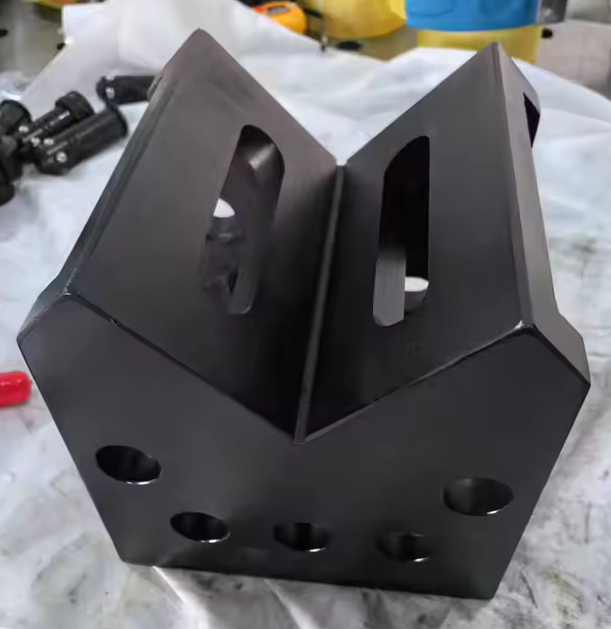
A robotic welding fixture is a precision-engineered clamping and positioning system designed to hold workpieces securely during automated welding processes. Unlike manual jigs, these fixtures ensure repeatable accuracy, minimize thermal distortion, and maximize robot uptime. As the cornerstone of modern automated welding cells, high-quality fixtures directly influence weld quality, production speed, and overall manufacturing efficiency. In 2026, the shift toward flexible modular systems defines the future of this technology, allowing manufacturers to switch between product variants with minimal downtime.
The Evolution of Robotic Welding Fixtures in Automated Manufacturing
The landscape of industrial welding has undergone a radical transformation. Traditional, dedicated welding jigs were heavy, expensive, and limited to a single part number. If a product design changed, the entire fixture often became obsolete scrap. Today, the demand for agility in sectors like automotive, aerospace, and heavy machinery requires a different approach.
Modern automated welding solutions prioritize flexibility. The core challenge is no longer just holding the part; it is holding the part precisely while allowing for rapid reconfiguration. This is where advanced modular fixture systems come into play. They bridge the gap between rigid automation and the need for low-volume, high-mix production environments.
For engineering teams, understanding the mechanical integrity of these fixtures is critical. A robotic arm can move with sub-millimeter precision, but if the fixture allows even slight movement due to poor clamping or thermal expansion, the weld quality suffers. Therefore, the fixture is not merely an accessory; it is an integral component of the welding cell’s accuracy loop.
Why Dedicated Fixtures Are Becoming Obsolete
Dedicated fixtures served their purpose in mass-production eras where product lifecycles spanned decades. However, current market dynamics favor shorter product cycles. The limitations of dedicated tooling include:
- High Initial Cost: Designing and machining a unique fixture for every part variant is capital-intensive.
- Storage Issues: Large, heavy jigs require significant warehouse space when not in use.
- Inflexibility: Any design change requires costly modifications or complete replacement.
- Long Lead Times: Procuring new dedicated fixtures can delay production launches by weeks or months.
In contrast, flexible modular systems offer a sustainable alternative. By utilizing standardized components, manufacturers can build, dismantle, and rebuild fixtures in hours rather than weeks. This adaptability is essential for maintaining competitiveness in 2026’s fast-paced manufacturing environment.
Core Components of High-Precision Flexible Welding Systems
To achieve the “future of automated welding,” one must understand the anatomy of a robust fixture system. It is not enough to simply clamp a part; the system must resist welding forces, dissipate heat, and maintain geometric tolerance. Leading solutions, such as those developed by Botou Haijun Metal Products Co., Ltd., focus on high-precision modular architectures that integrate seamlessly with robotic cells.
The effectiveness of a welding fixture relies on the synergy between its base platform and its clamping components. Each element plays a specific role in ensuring stability and precision.
1. The Foundation: 2D and 3D Flexible Welding Platforms
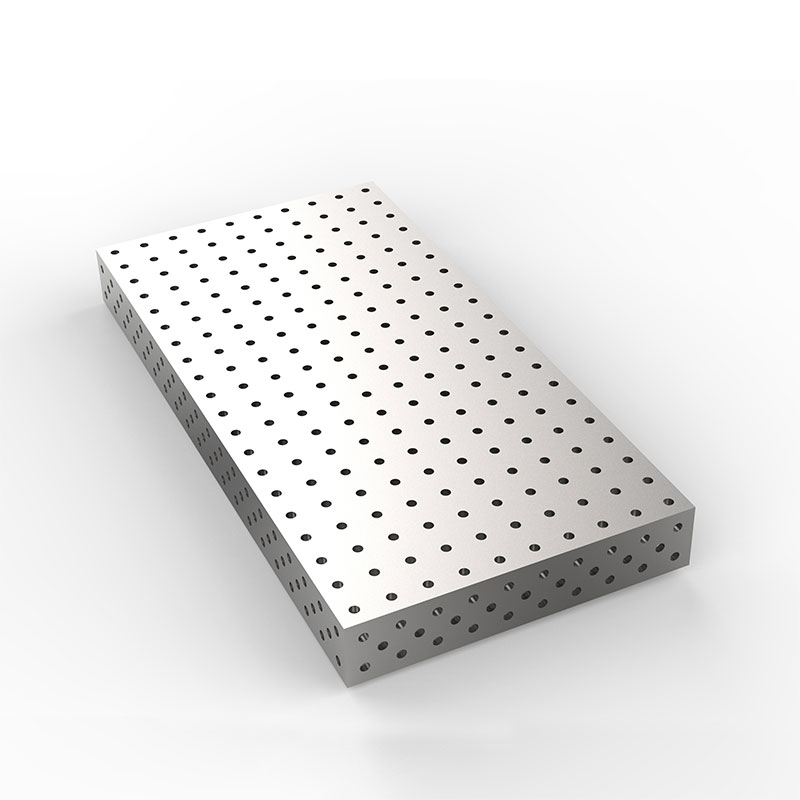
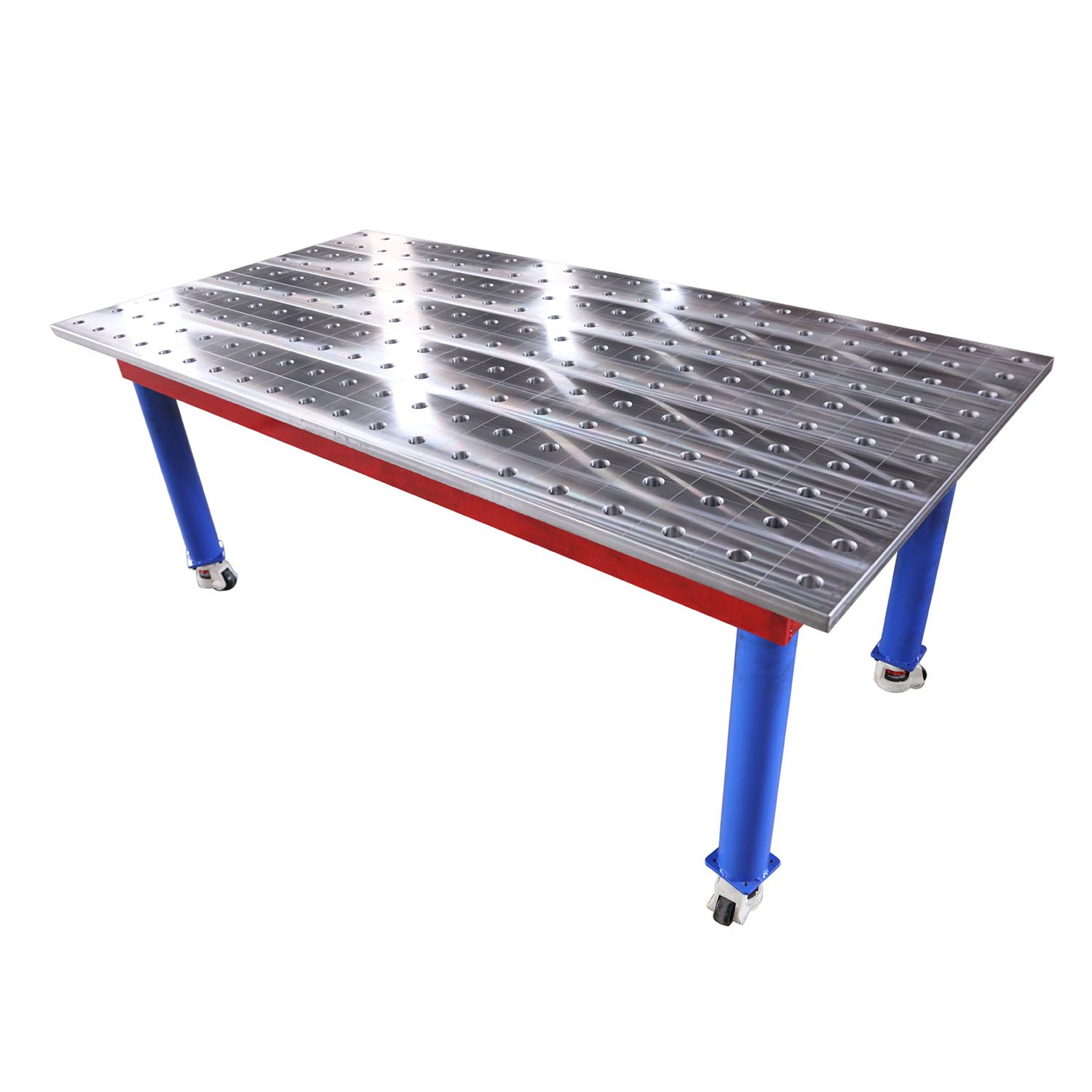
The platform is the backbone of the system. 2D flexible welding platforms are ideal for flat or planar assemblies, offering a grid of holes for precise pin placement. 3D flexible welding platforms, often made from high-grade cast iron or steel, provide multi-axis positioning capabilities. These platforms feature hardened and ground surfaces with precise hole patterns (typically D28 or D16 standards) that allow for micron-level accuracy.
Botou Haijun’s core product line includes both 2D and 3D platforms renowned for their exceptional versatility. These platforms serve as the primary reference plane for all subsequent components. Their durability ensures that repeated clamping and welding cycles do not degrade the surface flatness, which is crucial for long-term repeatability.
2. Precision Positioning Elements
Once the platform is established, positioning elements define the part’s location. Key components include:
- Multi-purpose Square Boxes: U-shaped and L-shaped square boxes act as foundational building blocks. They provide vertical height adjustments and additional mounting surfaces for clamps. Botou Haijun offers these in various sizes to accommodate different part geometries.
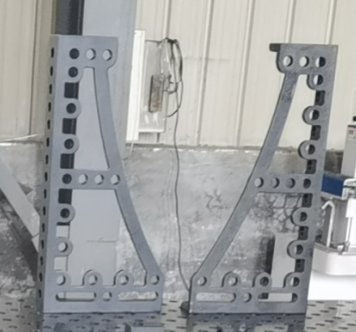
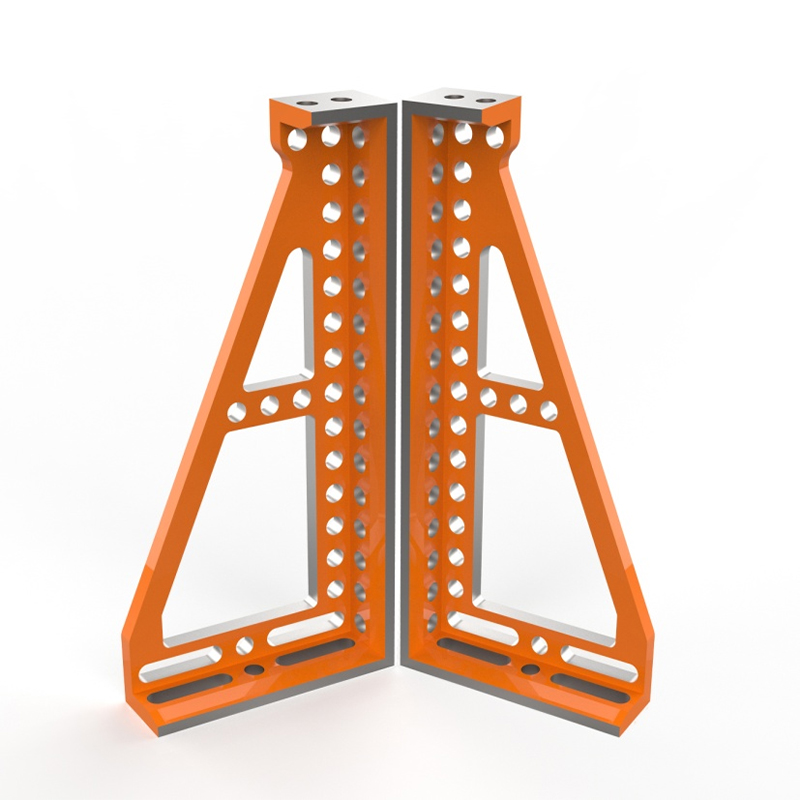
- Support Angle Irons: The 200-series support angle irons are critical for stabilizing irregularly shaped workpieces. They provide rigid support against gravity and welding torch pressure, preventing part sagging or vibration.
- Universal Angle Gauges: For complex assemblies requiring non-orthogonal angles, 0-225° universal angle gauges allow engineers to set precise angular positions. This flexibility is vital for aerospace and custom machinery parts where standard 90-degree joints are insufficient.
3. Clamping and Connection Mechanisms
Positioning is useless without secure clamping. Modern fixtures utilize quick-action clamps that can be operated manually or integrated with pneumatic/hydraulic systems for full automation. Angle connection blocks ensure that these components lock firmly to the platform, resisting the torque and shear forces generated during the welding process.
By integrating these complementary components, manufacturers can create custom fixture configurations rapidly. This modularity reduces the “time-to-weld” significantly, allowing robots to spend more time arc-on and less time waiting for setup changes.
Technical Advantages of Modular Fixturing in Robotics
Adopting a modular fixture strategy offers tangible technical benefits that go beyond mere convenience. These advantages directly impact the bottom line through improved quality and reduced operational costs.
Enhanced Repeatability and Accuracy
Robotic welding demands extreme consistency. A variation of even 0.5mm can lead to weld defects such as lack of fusion or excessive penetration. High-precision modular fixtures, like those engineered by Botou Haijun, are manufactured to tight tolerances. The standardized hole patterns ensure that every time a component is placed, it returns to the exact same coordinate. This repeatability minimizes the need for robotic touch-up passes and reduces post-weld grinding.
Thermal Distortion Management
Welding introduces significant heat, causing metal to expand and contract. Poorly designed fixtures can restrict this natural movement, leading to warping once the part cools. Advanced fixture designs incorporate strategic clamping points that allow for controlled thermal expansion while maintaining critical datum points. Cast iron platforms, known for their thermal stability, help absorb and dissipate heat, further reducing distortion risks.
Rapid Changeover and Reduced Downtime
In high-mix production, changeover time is a key performance indicator (KPI). Traditional fixtures might require hours to swap out. Modular systems allow operators to remove previous components and install new ones using simple tools. With pre-defined digital layouts, changeovers can be completed in minutes. This agility enables “lights-out” manufacturing scenarios where robots can switch tasks autonomously or with minimal human intervention.
| Feature |
Dedicated Fixture |
Flexible Modular Fixture |
| Initial Investment |
High per part number |
Higher initial kit cost, lower per-part cost |
| Changeover Time |
Hours to Days |
Minutes to Hours |
| Flexibility |
Single part only |
Unlimited part variations |
| Storage Requirement |
Large warehouse space |
Compact component storage |
| Lifespan |
Obsolete with design change |
Indefinite with component reuse |
Industry Applications: Where Precision Meets Automation
The versatility of robotic welding fixtures makes them indispensable across various heavy industries. Each sector has unique requirements regarding material thickness, part size, and tolerance levels.
Automotive Industry
The automotive sector is the largest adopter of robotic welding. From chassis sub-assemblies to exhaust systems, precision is paramount. Modular fixtures allow automakers to produce multiple vehicle models on the same line. For instance, Botou Haijun’s 2D and 3D platforms are widely used to position frame rails and cross-members. The ability to quickly adjust clamping points accommodates different wheelbases and body styles without halting production for retooling.
Aerospace and Aviation
Aerospace components often involve exotic alloys like titanium and aluminum, which are sensitive to heat and distortion. The structural integrity of aircraft frames depends on flawless welds. Here, the precision of 3D flexible platforms is critical. Universal angle gauges and specialized support irons allow for the complex geometries found in wing structures and engine mounts. The rigidity of cast iron platforms ensures that lightweight aerospace materials do not vibrate during the welding process.
Heavy Machinery and Construction Equipment
Manufacturers of excavators, loaders, and agricultural equipment deal with large, heavy structural parts. These applications require fixtures that can withstand significant weight and rough handling. The durability of Botou Haijun’s cast iron 3D welding platforms and heavy-duty angle connection blocks makes them ideal for this environment. The modular nature allows for the assembly of large booms and buckets, where traditional jigs would be impractically large and expensive.
How to Select the Right Robotic Welding Fixture System
Choosing the right fixturing solution is a strategic decision. Engineers must evaluate several factors to ensure the system meets their specific production needs. Below is a guide to selecting the optimal configuration.
1. Assess Part Geometry and Complexity
Analyze the parts you intend to weld. Are they flat panels, tubular structures, or complex 3D assemblies? Flat parts may only require a 2D platform, while complex assemblies benefit from the multi-axis capabilities of a 3D platform. Consider the need for angular positioning; if your parts require non-standard angles, ensure the system includes universal angle gauges.
2. Evaluate Production Volume and Mix
If you run high volumes of a single part, a dedicated fixture might still be viable. However, for low-to-medium volume with high variety, a modular system is superior. Calculate the potential savings from reduced changeover times and eliminated storage costs. Botou Haijun’s flexible solutions are particularly cost-effective for facilities managing diverse product portfolios.
3. Consider Material and Thermal Properties
Different materials react differently to welding heat. Aluminum dissipates heat quickly but distorts easily; steel retains heat and shrinks significantly upon cooling. Choose fixture components that offer appropriate thermal mass and clamping force. Cast iron platforms are excellent for stabilizing temperature-sensitive processes.
4. Check Compatibility and Scalability
Ensure that the chosen system is compatible with your existing robotic cells and tooling standards. Look for suppliers who offer a comprehensive range of accessories. Botou Haijun provides a full ecosystem of components, from U-shaped square boxes to support angle irons, ensuring that your system can grow and adapt as your production needs evolve.
Common Challenges and Best Practices in Fixture Design
Even with the best equipment, improper usage can lead to issues. Here are common pitfalls and how to avoid them.
Avoiding Over-Constraining
Over-constraining occurs when too many clamps restrict the part’s natural thermal expansion. This leads to internal stresses and post-weld distortion. Best Practice: Use a “3-2-1” locating principle where possible, and allow for slip-clamps or floating supports in non-critical areas to accommodate movement.
Ensuring Accessibility for the Robot Torch
A common error is designing a fixture that holds the part well but blocks the robot’s access to the weld joint. Best Practice: Simulate the welding path in CAD software before building the physical fixture. Ensure there is sufficient clearance for the torch neck and wire feeder. Modular components make it easier to adjust obstructive clamps during the prototyping phase.
Maintenance and Calibration
Fixture accuracy degrades over time due to wear and spatter buildup. Best Practice: Implement a regular maintenance schedule. Clean locating pins and clamp jaws daily. Periodically check the flatness of the platform and the alignment of key components. Botou Haijun’s high-durability materials reduce wear, but regular inspection remains essential for maintaining micron-level precision.
Frequently Asked Questions (FAQ)
What is the difference between 2D and 3D welding fixtures?
2D fixtures are designed for flat, planar assemblies and utilize a single horizontal plane for positioning. 3D fixtures allow for multi-dimensional positioning, supporting complex geometries with vertical and angular components. 3D systems are more versatile but may require more complex setup.
How do flexible fixtures improve ROI?
Flexible fixtures improve Return on Investment (ROI) by reducing the need for multiple dedicated jigs, lowering storage costs, and minimizing downtime during product changeovers. The ability to reuse components across different projects spreads the initial investment over a longer period and more applications.
Can modular fixtures handle heavy-duty welding?
Yes, provided the correct components are selected. Heavy-duty applications require robust platforms, such as cast iron 3D tables, and heavy-duty clamps. Botou Haijun’s product line includes components specifically engineered for high-load environments, ensuring stability even with large structural steel parts.
How important is material quality in welding fixtures?
Material quality is critical. Low-quality steel can warp under heat or wear out quickly, leading to loss of precision. High-grade, hardened steel and cast iron ensure longevity and consistent accuracy. Botou Haijun emphasizes the use of premium materials to deliver exceptional durability and stability.
Conclusion: Embracing the Future of Automated Welding
The future of automated welding is not just about faster robots; it is about smarter, more adaptable support systems. Robotic welding fixtures have evolved from static, single-purpose tools into dynamic, modular ecosystems that drive efficiency and quality. By adopting flexible solutions, manufacturers can respond swiftly to market changes, reduce waste, and maintain high precision across diverse product lines.
For companies looking to upgrade their welding cells, partnering with an experienced supplier is crucial. Botou Haijun Metal Products Co., Ltd. stands at the forefront of this evolution. With extensive expertise in high-precision flexible modular fixtures, Botou Haijun provides the tools necessary to modernize manufacturing operations. From versatile 2D and 3D platforms to essential accessories like universal angle gauges and support angle irons, their comprehensive product line ensures that every welding application is supported by reliable, high-quality engineering.
Whether you are in the automotive, aerospace, or heavy machinery sector, transitioning to a modular fixturing system is a strategic move toward greater operational agility. Do not let rigid tooling bottleneck your production potential.
Ready to optimize your welding workflow? Explore our full range of flexible welding solutions and discover how our precision tools can enhance your automated manufacturing capabilities.
View Our Robotic Welding Fixture Solutions