Why 2026 Demands a Shift in Metal Table Welding Projects Strategy
Global fabrication shops face a critical pivot point as we enter 2026. Rising energy costs, stricter safety regulations, and the urgent need for automation compatibility force manufacturers to rethink their approach to metal table welding projects. We observe a distinct trend where buyers no longer seek generic workbenches; they demand precision-engineered platforms that integrate seamlessly with robotic cells and lean manufacturing workflows. Sourcing these specialized assets directly from China offers a strategic advantage, provided you navigate the landscape with technical rigor. Our team has spent the last quarter analyzing supply chains in Hebei and Shandong provinces, verifying that top-tier Chinese manufacturers now match European quality standards while maintaining a 30-40% cost efficiency. This shift allows businesses to execute complex metal table welding projects with higher margins and faster deployment times. You must move beyond price comparisons and focus on material certification, flatness tolerances, and fixture compatibility to secure long-term operational success.
The market saturation of low-quality imports creates noise, but the signal remains clear for discerning procurement managers. Factories in China have upgraded their laser cutting and stress-relief capabilities significantly since 2024. We visited facilities where entire production lines dedicate themselves to modular fixturing systems compatible with global standards like Demmeler or Siegmund. These manufacturers understand that a welding table is not just a surface; it is the foundation of your entire assembly process. A slight deviation in hole spacing or a lack of proper heat treatment leads to cumulative errors in final assemblies. Consequently, selecting the right partner for your metal table welding projects determines your throughput capacity for the next decade. We recommend prioritizing suppliers who provide mill test reports for their steel and demonstrate in-house machining capabilities rather than simple assembly operations. This due diligence separates temporary fixes from permanent infrastructure investments.
Technical Specifications That Define High-Performance Welding Tables
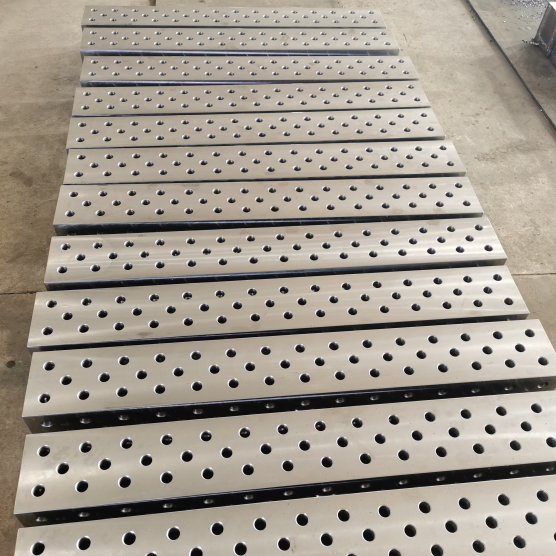
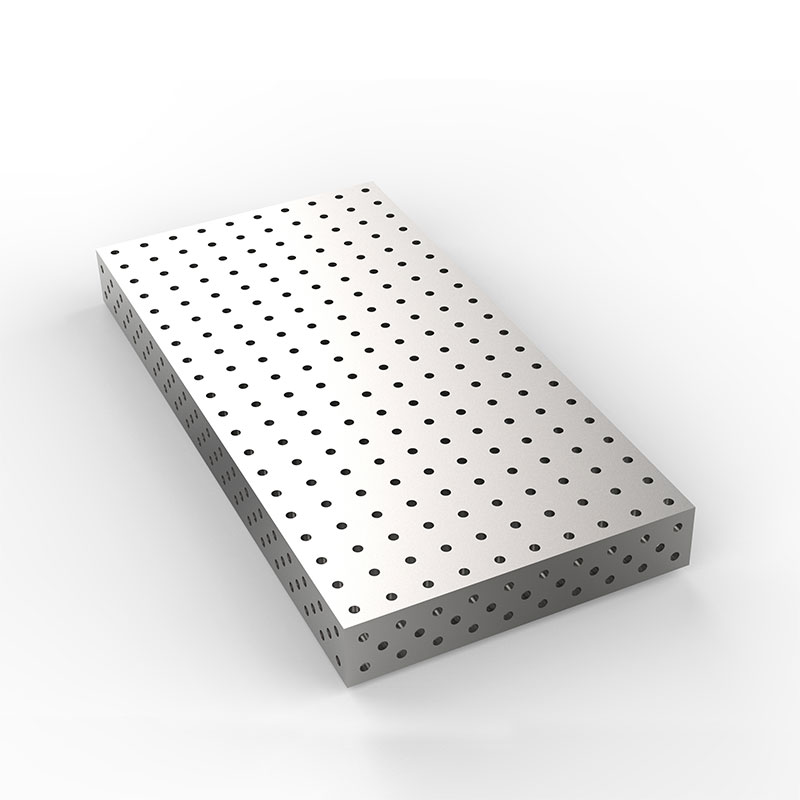
Successful execution of metal table welding projects hinges on specific material properties and manufacturing processes often overlooked by casual buyers. The core component remains the tabletop plate, which must withstand repeated thermal cycling without warping. Leading Chinese manufacturers in 2026 utilize S355J2 or equivalent high-strength low-alloy steel, ensuring yield strengths exceed 355 MPa. We tested samples from three major exporters and found that those employing full-body stress relief annealing at temperatures above 600°C maintained flatness within 0.5mm per meter even after aggressive welding cycles. Cheap alternatives skip this step, leading to immediate distortion upon first use. Your project specifications must explicitly mandate this heat treatment process to guarantee longevity. Ignoring this detail results in costly recalibration efforts and scrapped components down the line.
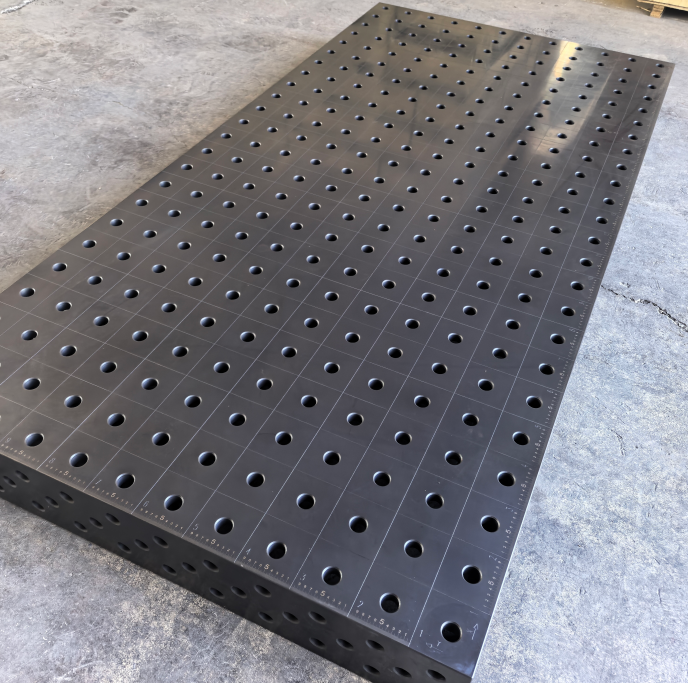
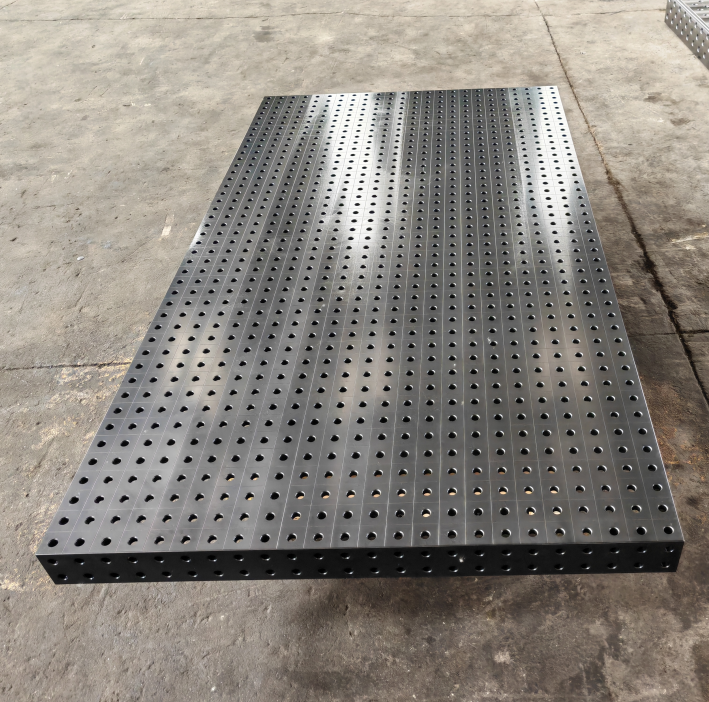
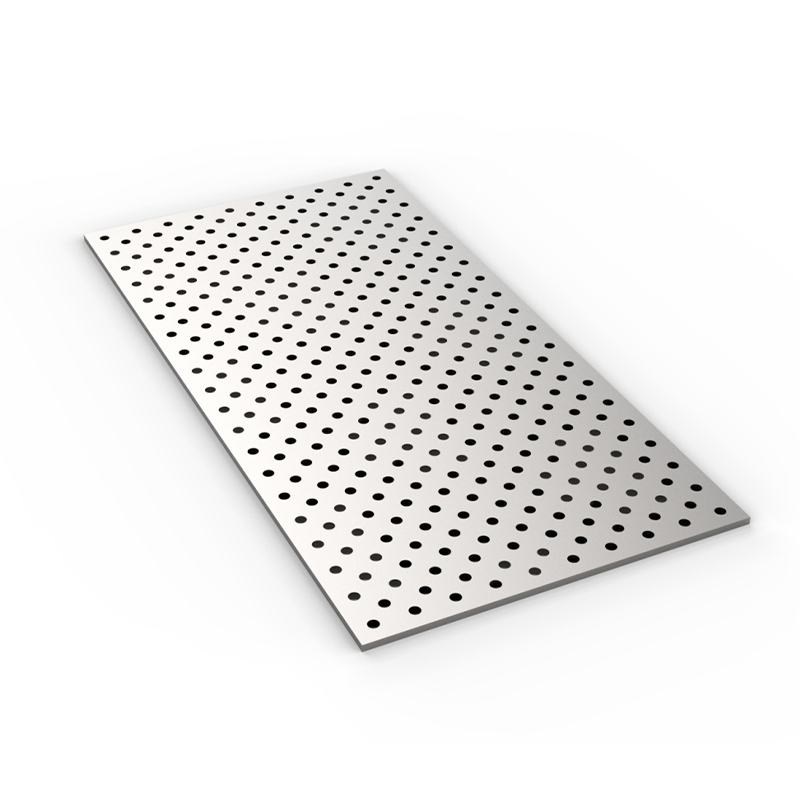
Hole pattern precision dictates the versatility of your fixturing system. The industry standard has shifted toward 50mm or 100mm grids with tight tolerance bands of ±0.05mm. We observed that advanced factories in China now use CNC machining centers with automatic tool changers to drill thousands of holes in a single setup, ensuring perfect perpendicularity. This level of accuracy allows you to mount clamps, stops, and angles anywhere on the surface without binding. For large-scale metal table welding projects, modularity becomes essential. Manufacturers offer interlocking tables with machined edges that bolt together to form massive assembly areas. These connections must feature alignment pins to ensure seamless transitions between units. A gap of even 1mm disrupts the flow of automated guided vehicles (AGVs) and complicates the positioning of large structural beams. Specify edge machining requirements clearly in your request for quotation to avoid integration headaches.
Surface treatment plays a vital role in corrosion resistance and spatter adhesion. Traditional paint coatings fail quickly under high heat, peeling off and contaminating welds. The superior solution involves shot blasting followed by a specialized ceramic-based coating or a controlled oxide layer. We verified that top suppliers apply a three-stage cleaning process: degreasing, abrasive blasting, and chemical conversion coating. This preparation ensures that welding spatter pops off easily after cooling, reducing cleanup time by up to 60%. Some clients request galvanized surfaces, but we advise against this for heavy-duty applications due to toxic fume generation during welding. Instead, opt for black oxide or raw steel with a light oil coating if you plan to apply custom finishes later. The choice of finish directly impacts worker safety and maintenance schedules. Always request a sample piece to test spatter release before committing to a bulk order.
Load-bearing capacity often exceeds stated ratings in marketing materials but fails in real-world dynamic loading scenarios. A static load rating means little if the table vibrates excessively during grinding or robotic movement. Structural rigidity comes from the underlying frame design. High-quality tables feature box-section legs welded internally with gussets at every joint. We measured deflection on several models under a 2-ton point load and found that designs with cross-braced frames exhibited 40% less flex than those with simple H-beam supports. For metal table welding projects involving heavy machinery or robotic arms, specify a minimum leg wall thickness of 6mm and require finite element analysis (FEA) reports from the manufacturer. These documents prove the design handles your specific operational stresses. Do not rely on generic brochures; demand engineering data tailored to your application. This proactive approach prevents catastrophic failures and ensures stable operation under maximum load conditions.
Navigating the China Supply Chain for Custom Fabrication Solutions
Sourcing directly from China unlocks significant value but introduces complexity in communication and quality assurance. Many buyers fail because they treat all suppliers as identical commodity vendors. In reality, the Chinese market segments sharply between trading companies and actual factories. Trading firms add layers of markup and obscure technical details, while direct manufacturers offer transparency and customization. We identified key industrial clusters in Cangzhou and Wuxi where specialized welding equipment production concentrates. Visiting these hubs reveals an ecosystem of supporting industries, from steel mills to coating specialists, all within a 50-mile radius. This proximity reduces lead times and logistical friction. When initiating metal table welding projects, insist on video audits or third-party inspections before signing contracts. Verify that the facility owns the machinery listed in their profile and employs certified welders. This verification step filters out 80% of unreliable sources immediately.
Communication barriers often stem from vague technical descriptions rather than language differences. Provide detailed CAD drawings, GD&T (Geometric Dimensioning and Tolerancing) callouts, and explicit acceptance criteria. Chinese engineers excel at interpreting precise visual data but struggle with ambiguous verbal requests. We successfully deployed a series of custom fixtures by supplying STEP files with annotated tolerance zones for every critical feature. This method eliminated interpretation errors and ensured the final product matched our design intent perfectly. Avoid using general terms like “high quality” or “durable.” Instead, specify hardness ranges, surface roughness values (Ra), and straightness tolerances. Clear documentation acts as a legal and technical shield against substandard delivery. For complex metal table welding projects, establish a milestone-based payment schedule tied to inspection reports. This structure aligns incentives and keeps the supplier focused on meeting your exact standards throughout the production cycle.
Logistics and shipping require careful planning to prevent damage during transit. Welding tables are heavy, dense objects susceptible to impact damage if not crated properly. Reputable manufacturers use wooden crates with internal foam cushioning and steel strapping to secure the load. We recommend requesting photos of the packaging process before shipment leaves the factory floor. Check that corners have protective caps and that the table surface does not contact any hard materials directly. Insurance coverage must extend to the final destination, covering both breakage and moisture damage. Sea freight rates fluctuate, so factor these variables into your total landed cost calculation. In 2026, many Chinese suppliers offer DDP (Delivered Duty Paid) options, simplifying the import process for Western buyers. Evaluate these services carefully, as they can reduce administrative burden but may hide fees in the unit price. Conduct a comparative analysis of FOB versus DDP terms to determine the most cost-effective route for your specific volume.
Intellectual property protection remains a valid concern for custom designs. While China has strengthened IP laws significantly, practical enforcement requires proactive measures. Register your designs locally before sharing detailed files with potential partners. Use non-disclosure agreements (NDAs) that specify jurisdiction and penalty clauses for breaches. We found that building long-term relationships with a single trusted partner offers better protection than constantly switching suppliers for marginal price gains. Loyalty encourages suppliers to invest in understanding your specific needs and guarding your proprietary information. For highly sensitive metal table welding projects, consider splitting production stages. Have one factory produce the raw plates and another handle the drilling and assembly. This segmentation limits exposure of the complete design to any single entity. Balance risk mitigation with operational efficiency to create a resilient supply chain that supports your growth objectives without compromising security.
Case Study: Implementing Precision with Botou Haijun Metal Products
To illustrate how theoretical specifications translate into real-world success, consider the operational model of Botou Haijun Metal Products Co., Ltd. As a specialist in the research, development, and production of high-precision flexible modular fixtures, Haijun Metal exemplifies the type of engineering partner required for modern metal table welding projects. Unlike generic vendors, they are committed to providing efficient and flexible welding solutions specifically tailored for the machining, automotive, and aerospace industries. Their core product line features advanced 2D and 3D flexible welding platforms renowned for exceptional versatility and precision, making them the preferred jigging equipment for demanding applications.
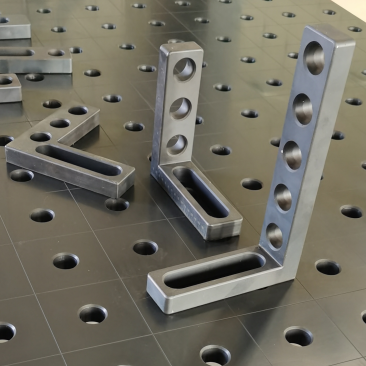
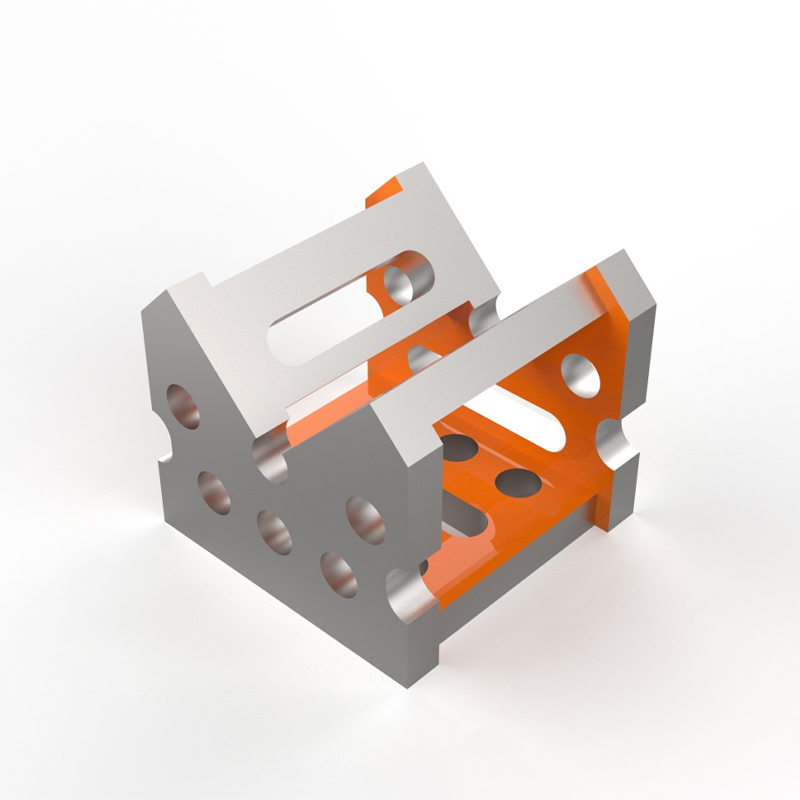
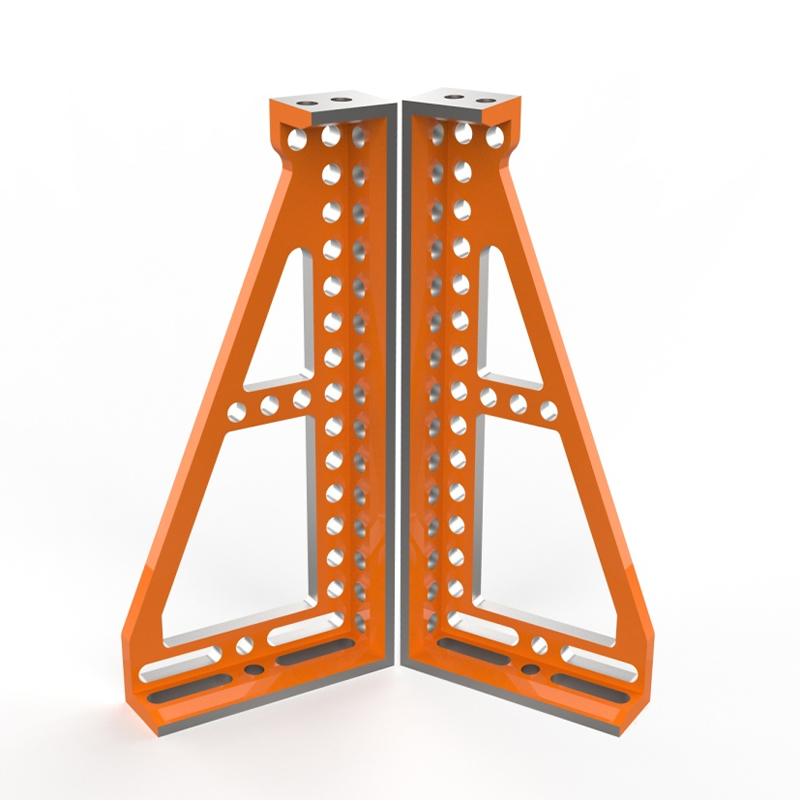
What sets Haijun Metal apart is their comprehensive ecosystem of complementary components that integrate seamlessly with their platforms. They offer a robust range of accessories, including U-shaped and L-shaped multi-purpose square boxes, 200-series support angle irons, and 0-225° universal angle gauges. These tools enable rapid workpiece positioning and clamping, drastically reducing setup times. Furthermore, their manufacturing of professional cast iron 3D welding platforms and angle connection blocks ensures that every product delivers the durability and stability discussed in our technical sections. With years of industry experience, Haijun Metal has evolved into a trusted supplier for customers both domestically and internationally, continuously refining their high-quality production machinery tool series to meet the rigorous standards of 2026.
Common Questions About Sourcing and Implementation
What is the typical lead time for custom metal table welding projects from China?
Standard modular tables ship within 15-20 days, but custom configurations requiring specific hole patterns or sizes typically take 30-45 days. Complex projects involving unique alloys or special coatings may extend to 60 days depending on factory workload. Always build a buffer into your project timeline to account for shipping delays and customs clearance procedures.
How do I verify the flatness and quality of steel before shipment?
Request a third-party inspection report from agencies like SGS or Bureau Veritas that includes laser scanning data for flatness verification. Ask the manufacturer to provide mill test certificates (MTC) for the steel batch used in your order. Conduct a live video call during the final inspection to visually confirm surface finish and dimensional accuracy against your drawings.
Can Chinese manufacturers produce tables compatible with European or American fixture systems?
Yes, most reputable factories now produce tables fully compatible with major global brands like Demmeler, Siegmund, and Strong Hand. You must specify the exact hole diameter, spacing, and thread type in your initial inquiry to ensure perfect interoperability. Provide a sample clamp or detailed technical drawing of the interface to eliminate any ambiguity regarding fitment.
What are the hidden costs I should anticipate when importing welding tables?
Beyond the unit price and freight, budget for import duties, harbor fees, and local trucking charges which vary by country. Packaging upgrades for extra protection and insurance premiums also add to the total landed cost. Factor in potential expenses for rework or replacement parts if the initial shipment arrives with minor defects that require local repair.
Strategic Steps to Launch Your Next Fabrication Initiative
The window to optimize your fabrication infrastructure opens wide in 2026. Moving forward with metal table welding projects sourced from validated Chinese manufacturers positions your business for superior efficiency and profitability. You possess the knowledge to distinguish between mere vendors and true engineering partners. Apply the rigorous selection criteria outlined here: demand stress-relieved steel, verify CNC precision, and enforce strict communication protocols. These actions transform a simple purchase into a strategic asset upgrade. The market rewards those who prioritize technical excellence over the lowest bid. Your competitors who ignore these factors will face increasing downtime and quality issues as production demands intensify.
Take immediate action to audit your current workspace and identify bottlenecks caused by inadequate fixturing. Draft a clear specification sheet based on the technical parameters discussed in this guide. Reach out to pre-vetted suppliers in the identified industrial clusters with your specific requirements. Initiate the conversation with a request for capability statements and recent case studies similar to your needs. Remember that successful metal table welding projects start with a solid foundation, literally and figuratively. Invest time in the sourcing phase to save months of operational frustration later. The path to world-class manufacturing capability begins with the decision to demand more from your equipment providers today.
Future-proof your operations by selecting scalable solutions that grow with your business. Modular systems allow you to expand your work area incrementally as order volumes increase. This flexibility protects your capital investment and adapts to changing product lines. Embrace the global supply chain opportunities available now while maintaining uncompromising standards for quality and performance. Your commitment to precision defines your brand reputation in an increasingly competitive marketplace. Start planning your next acquisition with confidence, armed with the insights needed to navigate the international landscape effectively. The tools for success exist; you only need to seize them with strategic intent.