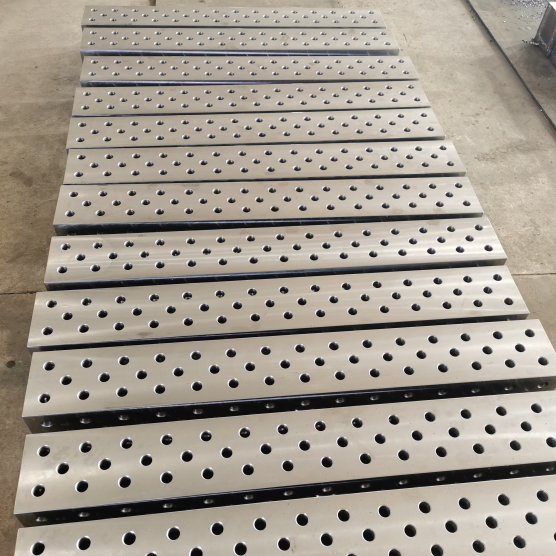
Industrial equipment aluminum castings are precision-engineered metal components manufactured through advanced casting processes, specifically designed to withstand the rigorous demands of heavy machinery, automation systems, and processing plants. As a specialized OEM manufacturer, we provide custom solutions that combine high strength-to-weight ratios with complex geometric capabilities. Our production utilizes high-pressure die casting (HPDC), low-pressure permanent mold, and sand casting techniques to deliver parts that meet strict ISO and ASTM standards. By optimizing alloy selection—such as A380, A360, and A356—we ensure superior thermal conductivity, corrosion resistance, and mechanical durability for critical industrial applications. This guide details our manufacturing capabilities, quality assurance protocols, and engineering support services tailored for B2B procurement and technical sourcing.
Why Industrial Equipment Relies on Precision Aluminum Castings
The shift toward lightweight yet durable materials in industrial sectors has positioned aluminum casting as a cornerstone of modern equipment design. Unlike traditional steel or iron components, industrial equipment aluminum castings offer a unique balance of performance and efficiency. In 2026, the demand for energy-efficient machinery drives engineers to reduce moving mass without compromising structural integrity. Aluminum alloys provide this solution, allowing for faster cycle times in automated systems and reduced energy consumption in motor-driven applications.
Our manufacturing approach focuses on the specific needs of industrial Original Equipment Manufacturers (OEMs). We understand that industrial environments involve exposure to vibration, thermal fluctuations, and corrosive agents. Therefore, our casting processes are engineered to minimize porosity and maximize density. This results in components that maintain dimensional stability under load, ensuring longer service life and reduced maintenance intervals for end-users. The ability to integrate complex internal channels for cooling or fluid transport directly into the casting further enhances system efficiency, reducing the need for secondary assembly operations.
Key Advantages of Aluminum in Heavy-Duty Applications
- High Strength-to-Weight Ratio: Aluminum castings provide substantial structural support while significantly reducing the overall weight of machinery. This is critical for mobile industrial equipment and robotic arms where inertia affects performance.
- Corrosion Resistance: Natural oxide layers and optional anodizing treatments protect components from harsh industrial chemicals, moisture, and outdoor weathering, extending asset lifespan.
- Thermal Management: Aluminum’s excellent thermal conductivity makes it ideal for heat sinks, engine blocks, and hydraulic manifolds, effectively dissipating heat generated during high-load operations.
- Design Flexibility: Advanced molding techniques allow for the creation of intricate shapes, thin walls, and integrated features that are difficult or impossible to achieve with machining or fabrication alone.
- Cost-Effective Mass Production: Once molds are created, high-volume production runs offer a lower per-unit cost compared to CNC machining, especially for complex geometries.
Core Manufacturing Processes for Industrial Components
Selecting the right casting method is pivotal to achieving the desired mechanical properties and surface finish. As a comprehensive OEM partner, we employ multiple casting technologies, each optimized for specific industrial requirements. Our engineering team assists clients in determining the most suitable process based on volume, complexity, tolerance requirements, and budget constraints.
High-Pressure Die Casting (HPDC)
High-Pressure Die Casting is the preferred method for producing large volumes of complex, thin-walled components with tight tolerances. In this process, molten aluminum is injected into a steel mold at high pressure and speed. This technique is ideal for industrial equipment parts such as housing units, gearboxes, and pump bodies.
The HPDC process ensures excellent surface finish and dimensional accuracy, often reducing or eliminating the need for secondary machining. Our state-of-the-art die-casting machines utilize real-time monitoring systems to control injection parameters, ensuring consistent quality across every shot. This method is particularly effective for alloys like A380 and A360, which offer good fluidity and mechanical properties.
Low-Pressure Permanent Mold Casting
For applications requiring higher mechanical integrity and lower porosity than HPDC can provide, we utilize Low-Pressure Permanent Mold casting. This process involves filling the mold cavity with molten aluminum under low pressure, typically using gravity or slight gas pressure. The slower fill rate reduces turbulence, resulting in denser castings with superior mechanical properties.
This method is commonly used for larger industrial components such as valve bodies, impellers, and structural brackets. The permanent molds allow for moderate production volumes with better surface quality than sand casting, while maintaining the structural benefits of a directional solidification process. It is an optimal choice for parts subjected to high stress or pressure containment.
Sand Casting for Large-Scale Industrial Parts
When dealing with very large components or low-volume prototypes, sand casting remains the most versatile and cost-effective solution. We use both green sand and resin-bonded sand systems to create molds for massive industrial equipment parts, such as base frames, large housings, and custom manifolds.
Sand casting allows for the production of extremely large parts that exceed the capacity of die-casting machines. While the surface finish may be rougher than die-cast parts, modern machining and finishing techniques can achieve precise final dimensions. This process supports a wide range of aluminum alloys, including high-strength variants like A356-T6, making it suitable for heavily loaded structural applications.
| Process Feature |
High-Pressure Die Casting (HPDC) |
Low-Pressure Permanent Mold |
Sand Casting |
| Production Volume |
High (Mass Production) |
Medium to High |
Low to Medium |
| Tolerance Precision |
Very High (±0.1mm) |
High (±0.25mm) |
Moderate (±0.5mm+) |
| Surface Finish |
Smooth (Minimal Machining) |
Good |
Rough (Requires Machining) |
| Part Complexity |
High (Thin Walls, Intricate) |
Moderate |
High (Large, Thick Sections) |
| Tooling Cost |
High |
Medium |
Low |
| Typical Alloys |
A380, A360, ADC12 |
A356, A319 |
A356, 319, 355 |
Material Selection: Optimizing Alloys for Industrial Performance
The performance of industrial equipment aluminum castings is heavily dependent on the alloy composition. Different industrial applications require specific balances of strength, ductility, corrosion resistance, and machinability. Our metallurgical experts guide clients in selecting the optimal alloy to meet their operational environment and functional requirements.
A380: The Industry Standard for Die Casting
A380 is the most widely used aluminum alloy for die casting due to its excellent combination of casting characteristics and mechanical properties. It offers good fluidity, allowing it to fill complex mold geometries easily, and provides high tensile strength and hardness. A380 is ideal for general-purpose industrial components such as motor housings, pump casings, and electronic enclosures. Its balanced composition ensures reliable performance in most standard industrial environments.
A360: Superior Corrosion Resistance and Fluidity
For applications exposed to corrosive elements or requiring exceptional surface finish, A360 is the preferred choice. This alloy exhibits superior corrosion resistance compared to A380 and has even better fluidity, enabling the production of thinner walls and more intricate details. A360 is commonly used in marine equipment, chemical processing machinery, and outdoor industrial fixtures where longevity and aesthetic quality are paramount.
A356-T6: High Strength and Structural Integrity
A356 is a heat-treatable alloy known for its high strength-to-weight ratio and excellent shock resistance. When treated to the T6 condition, it achieves significant improvements in yield strength and hardness. This alloy is frequently used in safety-critical industrial components, such as lifting equipment, structural brackets, and high-pressure valve bodies. Its low iron content ensures better ductility and toughness, making it suitable for dynamic loading conditions.
Custom Alloy Development
In cases where standard alloys do not meet specific operational needs, we offer custom alloy development services. By adjusting elemental compositions—such as adding magnesium for strength or silicon for fluidity—we can tailor material properties to unique application requirements. This capability allows us to support innovative industrial designs that push the boundaries of traditional material performance.
Engineering Support and Custom OEM Solutions
As a dedicated OEM partner, we go beyond simple manufacturing. Our engineering team collaborates closely with clients from the conceptual stage through to mass production. This collaborative approach ensures that designs are optimized for manufacturability, cost-efficiency, and performance.
Design for Manufacturability (DFM) Analysis
Early involvement in the design phase allows us to identify potential manufacturing challenges before tooling begins. Our DFM analysis evaluates part geometry, wall thickness, draft angles, and undercuts to ensure successful casting. We provide detailed feedback and recommendations to modify designs, reducing the risk of defects such as shrinkage, warping, or incomplete filling. This proactive approach minimizes development time and costs, accelerating time-to-market for new industrial equipment.
Advanced Tooling and Mold Design
High-quality castings start with precision tooling. Our in-house tooling department utilizes CAD/CAM software and CNC machining to create durable, high-precision molds. We use premium steel grades and advanced cooling channel designs to optimize cycle times and extend mold life. For complex parts, we employ slide mechanisms and vacuum-assisted casting techniques to eliminate air entrapment and ensure complete cavity fill. Our tooling maintenance protocols ensure consistent quality throughout the production run.
Prototype and Rapid Iteration
We understand the importance of rapid prototyping in industrial product development. Using quick-turnaround tooling and sample casting services, we provide functional prototypes for testing and validation. This allows clients to verify fit, form, and function before committing to full-scale production. Our iterative feedback loop ensures that any necessary design adjustments are made efficiently, reducing the risk of costly errors in mass production.
Quality Assurance and Compliance Standards
Quality is non-negotiable in industrial manufacturing. Our facility adheres to rigorous quality management systems, ensuring that every industrial equipment aluminum casting meets or exceeds customer specifications and industry standards. We maintain full traceability of materials and processes, providing transparency and confidence to our partners.
In-Process Quality Control
Quality control begins at the raw material stage. We verify the chemical composition of incoming aluminum ingots using spectrometry. During production, our operators monitor key process parameters such as melt temperature, injection pressure, and cycle time. Automated inspection systems detect surface defects and dimensional deviations in real-time, allowing for immediate corrective actions. This continuous monitoring ensures consistent quality and minimizes scrap rates.
Final Inspection and Testing
Every batch undergoes comprehensive final inspection before shipment. Our quality lab is equipped with advanced metrology tools, including Coordinate Measuring Machines (CMM), X-ray fluorescence (XRF) analyzers, and hardness testers. We perform dimensional checks, visual inspections, and mechanical property tests to verify compliance with drawing specifications. For critical components, we offer non-destructive testing (NDT) methods such as X-ray and dye penetrant inspection to detect internal voids or surface cracks.
Certifications and Standards
Our manufacturing processes comply with international standards, including ISO 9001 for quality management and ISO 14001 for environmental responsibility. We adhere to ASTM and ANSI standards for aluminum alloy compositions and mechanical properties. Additionally, we support industry-specific certifications required by automotive, aerospace, and medical equipment sectors, ensuring that our castings meet the highest regulatory requirements.
| Inspection Method |
Purpose |
Application |
| CMM (Coordinate Measuring Machine) |
Precise dimensional verification |
Complex geometries, tight tolerances |
| X-Ray Inspection |
Detect internal porosity and voids |
Pressure-containing parts, structural components |
| Spectrometry |
Verify chemical composition |
Raw material intake, alloy certification |
| Dye Penetrant Testing |
Identify surface cracks and leaks |
Sealed housings, safety-critical parts |
| Hardness Testing |
Confirm mechanical strength |
Heat-treated components, wear-resistant parts |
Common Applications of Industrial Aluminum Castings
The versatility of aluminum castings makes them indispensable across various industrial sectors. Our components are integral to the functionality and reliability of diverse machinery and systems.
Automation and Robotics
In the realm of industrial automation, weight reduction is crucial for improving speed and energy efficiency. Aluminum castings are used for robot arms, joint housings, and end-effectors. The high stiffness and low mass of aluminum allow for faster acceleration and deceleration, enhancing productivity in assembly lines. Additionally, the material’s damping properties help reduce vibration, improving precision in delicate operations.
Hydraulic and Pneumatic Systems
Hydraulic pumps, valves, and manifolds require materials that can withstand high pressures and fluid compatibility. Aluminum castings provide the necessary strength and leak-proof integrity for these systems. The ability to cast complex internal passages directly into the component simplifies assembly and reduces potential leak points. Our A356 and A319 alloys are particularly suited for these high-pressure applications.
Power Generation and Transmission
From wind turbine hubs to generator housings, aluminum castings play a vital role in power generation equipment. Their corrosion resistance ensures longevity in outdoor environments, while their thermal conductivity aids in heat dissipation for electrical components. Lightweight castings also reduce the structural load on towers and support structures, lowering overall installation costs.
Material Handling and Logistics
Conveyor systems, forklift components, and sorting machinery benefit from the durability and light weight of aluminum castings. Wheels, brackets, and frame connections made from aluminum reduce the overall weight of handling equipment, leading to lower energy consumption and easier maneuverability. The wear resistance of certain aluminum alloys ensures long service life in high-friction environments.
How to Choose the Right Aluminum Casting Manufacturer
Selecting the right manufacturing partner is critical to the success of your industrial project. Here are key factors to consider when evaluating potential suppliers for industrial equipment aluminum castings.
- Technical Expertise: Look for a manufacturer with deep engineering knowledge and experience in your specific industry. They should be able to provide DFM feedback and material recommendations.
- Process Capabilities: Ensure the supplier offers the appropriate casting methods (HPDC, Low-Pressure, Sand) for your part’s complexity and volume requirements.
- Quality Systems: Verify that the manufacturer has robust quality control processes and relevant certifications (ISO, ASTM). Ask about their inspection equipment and defect resolution protocols.
- Scalability: Choose a partner who can scale production from prototype to mass manufacturing without compromising quality or lead times.
- Communication and Support: Effective communication is essential for successful OEM partnerships. Select a supplier who is responsive, transparent, and willing to collaborate on problem-solving.
Frequently Asked Questions (FAQ)
What is the typical lead time for custom aluminum castings?
Lead times vary depending on the complexity of the part and the casting process. Prototype samples can often be produced within 2-4 weeks, including tooling fabrication. Mass production lead times typically range from 4-8 weeks after tooling approval. We work closely with clients to expedite urgent projects where possible.
Can you handle post-casting machining and finishing?
Yes, we offer comprehensive secondary services, including CNC machining, drilling, tapping, deburring, and surface treatments such as anodizing, powder coating, and painting. This one-stop-shop approach ensures that parts are delivered ready for assembly, reducing supply chain complexity.
What is the minimum order quantity (MOQ) for custom castings?
MOQs depend on the tooling cost and production method. For high-pressure die casting, MOQs are typically higher to amortize tooling costs, often starting at 500-1,000 units. For sand casting, lower quantities are feasible, sometimes as low as 50-100 units for prototypes. We discuss flexible options to suit your project budget.
How do you ensure dimensional accuracy in large castings?
For large castings, we use rigid tooling designs with precise cooling systems to control shrinkage. Post-casting, we employ fixturing and CMM inspection to verify critical dimensions. If necessary, we perform stress-relief heat treatments to stabilize the part before final machining, ensuring long-term dimensional stability.
What industries do you primarily serve?
We primarily serve the industrial automation, heavy machinery, hydraulic systems, power generation, and material handling sectors. Our expertise lies in producing high-performance components that meet the demanding requirements of these industries.
About Botou Haijun Metal Products Co., Ltd.
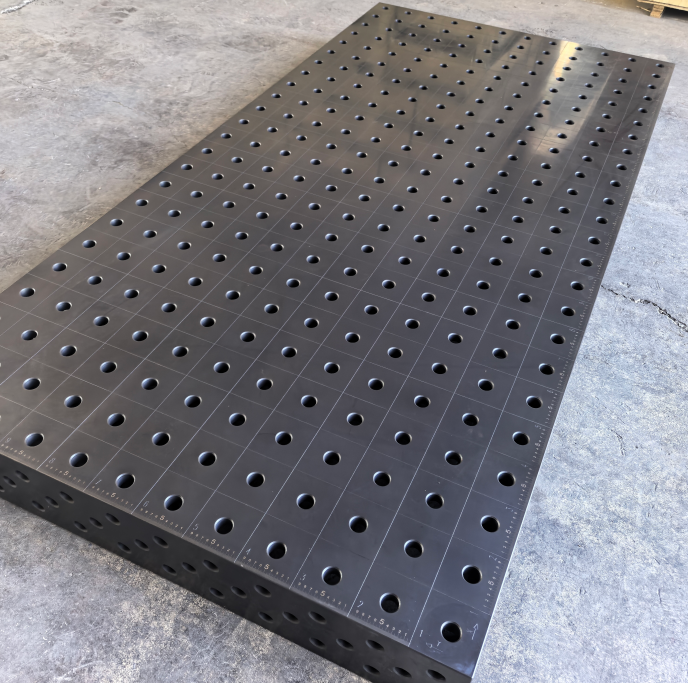
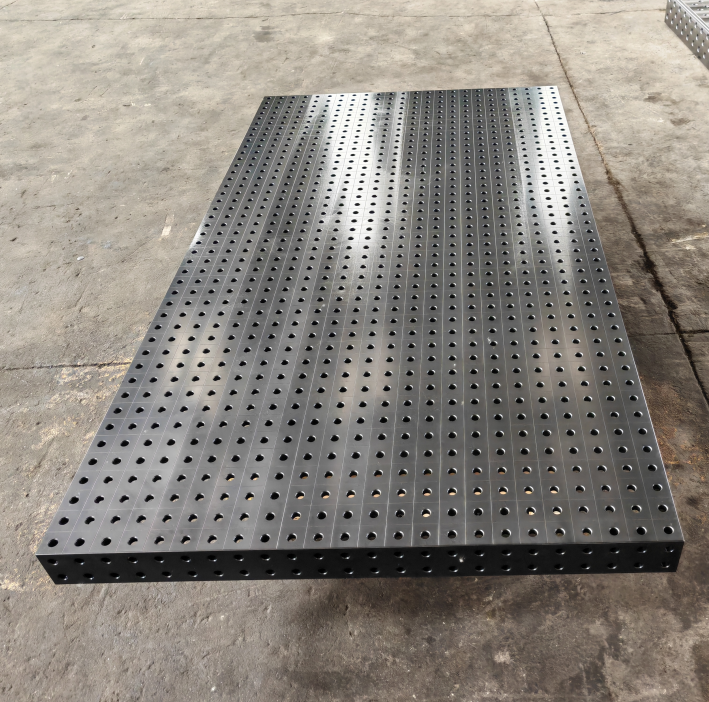
While our core expertise lies in the precision casting of aluminum components for heavy industry, Botou Haijun Metal Products Co., Ltd. is also a recognized leader in the research, development, and production of high-precision flexible modular fixtures and metalworking tools. Committed to providing efficient and flexible welding and positioning solutions for the modern manufacturing industry, we complement our casting services with a robust line of tooling products.
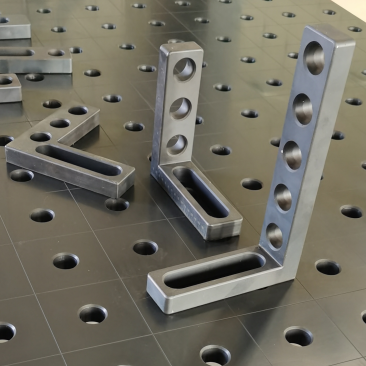
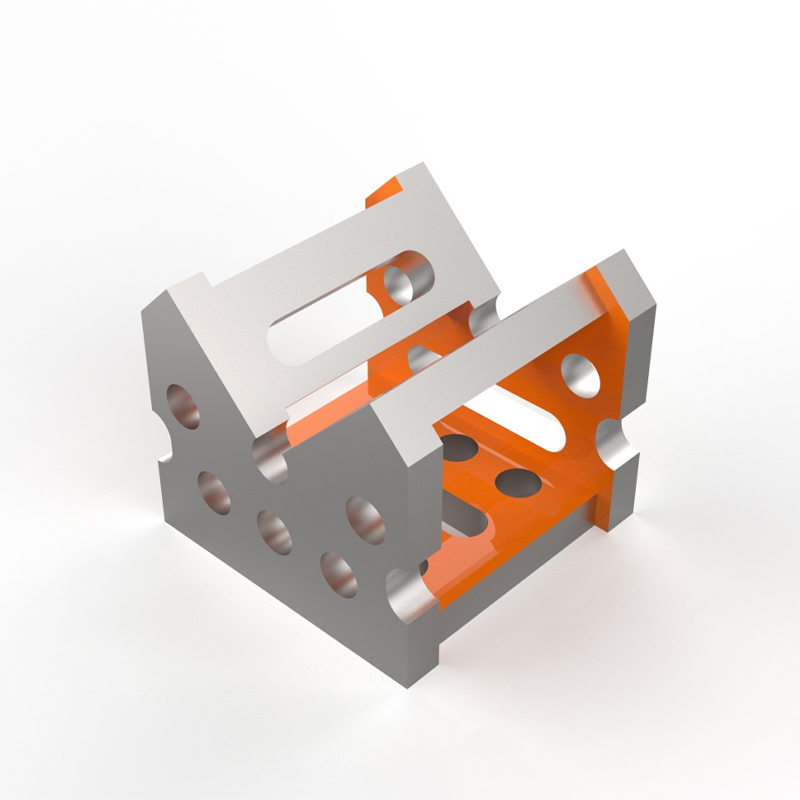
Our portfolio includes renowned 2D and 3D flexible welding platforms, which have become the preferred jigging equipment in the machining, automotive, and aerospace industries due to their exceptional versatility and precision. To support these platforms, we offer a comprehensive range of complementary components, such as U-shaped and L-shaped multi-purpose square boxes, 200-series support angle irons, and 0-225° universal angle gauges. These accessories integrate seamlessly to enable rapid workpiece positioning and clamping. Additionally, we manufacture professional cast iron 3D welding platforms and angle connection blocks, ensuring that every product delivers exceptional durability and stability. With years of industry experience, Haijun Metal has become a trusted supplier of tools and gauges to customers both domestically and internationally, continuously providing high-quality production machinery tool series alongside our advanced casting capabilities.
Conclusion: Partnering for Industrial Excellence
In the competitive landscape of industrial manufacturing, the quality of components directly impacts the performance and reliability of the final equipment. Industrial equipment aluminum castings offer a superior solution for achieving lightweight, durable, and complex designs. By leveraging advanced casting technologies, rigorous quality control, and expert engineering support, we empower OEMs to innovate and excel.
Whether you require high-volume die-cast housings, large-scale sand-cast structural components, or precision modular fixtures for your assembly lines, our team is equipped to deliver tailored solutions. We are committed to building long-term partnerships based on trust, quality, and mutual success.
If you are looking for a reliable manufacturing partner for your next industrial project, we invite you to discuss your requirements with our engineering team. Let us help you optimize your design, select the right materials, and streamline your production process.
Ready to start your project? Contact us today for a free DFM analysis and quote. Explore our full range of custom casting solutions and technical resources to learn more about how we can support your industrial manufacturing goals.