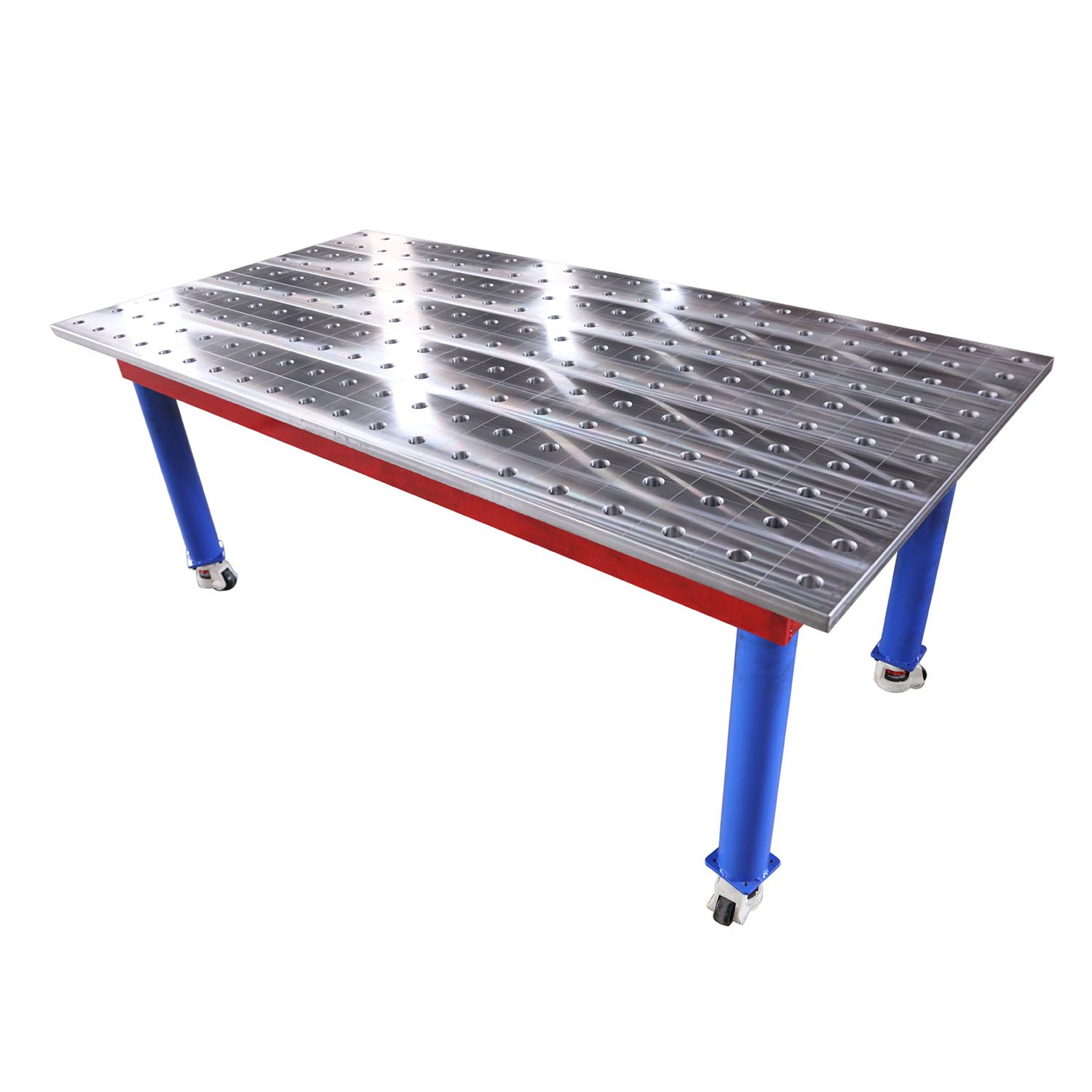
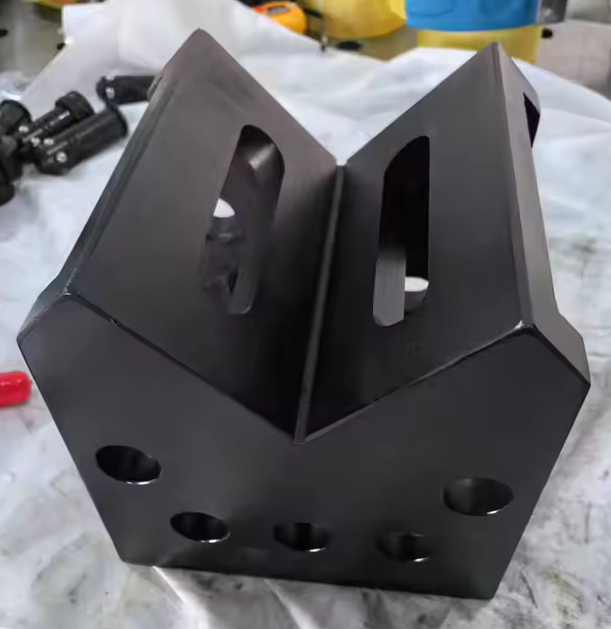
A folding welding table is a specialized, space-efficient workbench designed for welders who need to maximize floor space without compromising on structural integrity or precision. Unlike traditional heavy-duty fixed tables, these units feature collapsible legs or hinged tops that allow for compact storage when not in use. They are ideal for small workshops, mobile repair units, and multi-purpose fabrication areas where flexibility is paramount. By integrating modular fixture compatibility with a foldable design, modern solutions provide the rigidity required for accurate welding while offering the convenience of easy deployment and stowage.
Why Choose a Folding Welding Table for Your Workshop?
In modern manufacturing and independent fabrication, floor space is a premium asset. Traditional cast iron welding tables are incredibly stable but permanently occupy significant square footage. A folding welding table addresses this constraint by offering a dual-state functionality: a rigid, professional-grade workspace during operation and a compact, stored profile during downtime.
The primary advantage lies in operational flexibility. For job shops that handle diverse projects, the ability to clear the floor space allows for larger assembly tasks or the movement of heavy machinery. Furthermore, for mobile welders who travel to client sites, a foldable unit that can fit into a standard van or truck bed is indispensable. However, the challenge has always been maintaining precision. A flimsy table leads to poor weld quality due to vibration and misalignment. Today’s advanced engineering solves this by using high-strength locking mechanisms and reinforced leg structures that mimic the stability of fixed platforms.
Key Benefits of Space-Saving Welding Solutions
- Maximized Floor Utility: Reclaim up to 80% of your workshop floor when the table is folded, allowing for other activities or storage.
- Portability: Many models include wheels or lightweight yet strong frames, making them easy to move around the shop or transport to job sites.
- Modular Compatibility: Modern folding tables are increasingly designed with standardized hole patterns (such as 16mm or 28mm systems) to accept clamps, stops, and squares.
- Cost-Effectiveness: For startups or hobbyists, a high-quality folding table offers a lower entry cost compared to large, permanent cast iron installations while still providing professional results.
Core Features of High-Performance Folding Welding Tables
Not all folding tables are created equal. When evaluating a space-saving solution, it is critical to look beyond the folding mechanism and assess the core engineering attributes that determine welding performance. The goal is to achieve a balance between portability and the rigidity required for precise metalwork.
Structural Integrity and Load Capacity
The most common concern with folding tables is wobble. High-end solutions mitigate this through triangulated leg designs and heavy-duty locking pins. The tabletop must be made from low-carbon steel or alloy steel with sufficient thickness (typically 8mm to 12mm) to resist warping under heat and load. A robust folding welding table should support dynamic loads of at least 500kg to 1000kg, ensuring that heavy assemblies do not compromise the table’s stability.
Precision Hole Patterns and Modularity
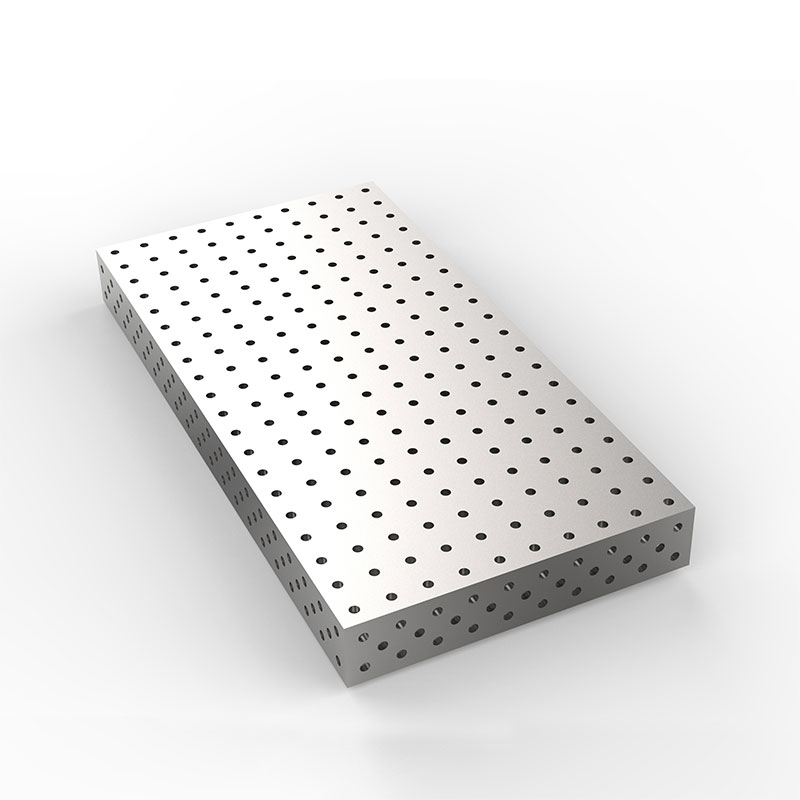
To transform a simple table into a precision welding fixture, the surface must feature a grid of accurately machined holes. These holes allow for the use of flexible modular fixtures. While basic folding tables may have no holes, professional-grade units integrate hole patterns compatible with standard clamping systems. This enables users to secure workpieces at exact angles and positions, crucial for repeatable production runs.
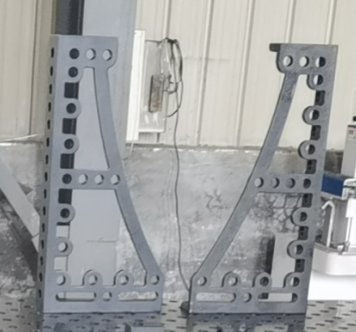
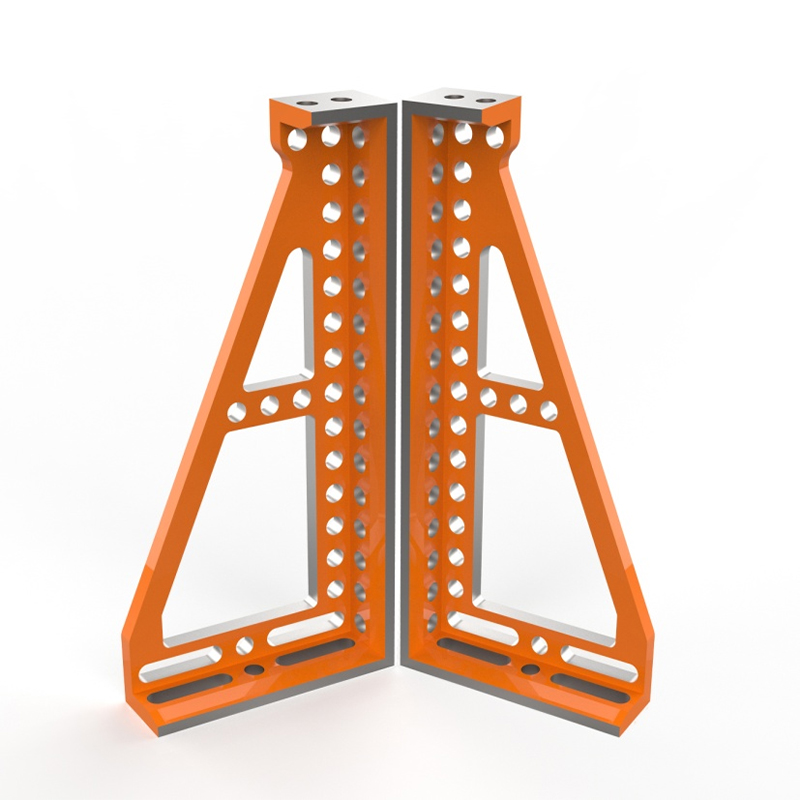
At Botou Haijun Metal Products Co., Ltd., we recognize that versatility is key. While our core expertise lies in high-precision 2D and 3D flexible welding platforms, the principles of modularity apply to space-saving solutions as well. Our range of complementary components, such as U-shaped and L-shaped multi-purpose square boxes and 200-series support angle irons, can often be adapted to various work surfaces. These accessories integrate seamlessly to enable rapid workpiece positioning and clamping, ensuring that even a portable setup can achieve the accuracy demanded by the automotive and aerospace industries.
Surface Treatment and Durability
Welding generates spatter, heat, and UV radiation. The table surface must withstand these conditions without degrading. Common treatments include:
- Black Oxide Finish: Provides moderate corrosion resistance and reduces glare from the welding arc.
- Powder Coating: Offers superior durability and rust protection, though it may burn off near direct weld zones.
- Nickel Plating: Used in high-end modular tables to prevent spatter adhesion and ensure smooth movement of fixtures.
Folding vs. Fixed Welding Tables: A Comparative Analysis
Choosing between a folding and a fixed welding table depends largely on your workshop’s layout and production volume. The following table highlights the critical differences to help you make an informed decision.
| Feature |
Folding Welding Table |
Fixed Cast Iron/Steel Table |
| Space Efficiency |
High. Can be stored vertically or under other equipment. |
Low. Permanently occupies floor space. |
| Portability |
Excellent. Suitable for mobile repairs and site work. |
Poor. Typically stationary and very heavy. |
| Stability/Rigidity |
Good to Very Good (depends on locking mechanism). |
Excellent. Unmatched mass dampens vibration. |
| Setup Time |
Requires unfolding and locking before each use. |
Always ready for immediate use. |
| Load Capacity |
Moderate to High (500kg – 1500kg typical). |
Very High (2000kg+). |
| Best For |
Small shops, multi-use spaces, mobile welders. |
High-volume production, heavy industrial fabrication. |
How to Select the Right Folding Welding Table
Selecting the appropriate model involves assessing your specific workflow requirements. Consider the following factors to ensure the table meets your operational needs.
1. Assess Your Workspace Constraints
Measure the available storage space. If you plan to store the table against a wall, ensure the folded dimensions fit comfortably. Also, consider the ceiling height if you intend to hang the table vertically. For garage workshops, a table that folds flat enough to slide under a workbench is often the most practical choice.
2. Determine Required Precision Levels
If your work involves intricate jigging or repetitive assembly, look for a table with pre-drilled hole patterns. Standard hole sizes like 16mm or 28mm allow for compatibility with a wide range of clamps and stops. For general fabrication where precise alignment is less critical, a solid flat top may suffice. However, integrating modular fixtures significantly enhances capability. As noted by industry leaders like Botou Haijun Metal Products Co., Ltd., the use of precision accessories such as 0-225° universal angle gauges and angle connection blocks can transform a basic surface into a highly accurate positioning system. These tools ensure that every product delivers exceptional durability and stability in the final assembly.
3. Evaluate Weight and Material Thickness
Heavier tables generally offer better stability. Look for tabletops with a thickness of at least 8mm. Thinner materials may warp over time due to thermal stress from welding. Check the leg construction; tubular steel with reinforced joints is preferable to thin-gauge sheet metal folds. The locking mechanism should be positive and robust, preventing any accidental collapse during use.
4. Check for Grounding Points
Safety is paramount in welding. Ensure the table has a dedicated grounding point or a clean metal surface area for attaching your welding ground clamp. Poor grounding can lead to arc instability and potential damage to electronic equipment nearby.
Step-by-Step Guide: Setting Up and Using a Folding Welding Table
Proper setup is crucial to ensure safety and precision. Follow these steps to maximize the performance of your folding welding table.
Step 1: Unfolding and Positioning
Clear the area of debris. Unfold the legs slowly, ensuring they lock into place with an audible click or secure pin insertion. Place the table on a level floor. If the floor is uneven, use shims under the feet to stabilize the frame. A wobbling table is a safety hazard and will result in poor weld quality.
Step 2: Securing the Locking Mechanisms
Inspect all locking pins, latches, or braces. Tighten any adjustable tensioners. For tables with cross-braces, ensure they are fully extended and locked. This step transforms the folding structure into a rigid unit capable of handling lateral forces.
Step 3: Installing Modular Fixtures (If Applicable)
If your table features a hole pattern, install your necessary stops and clamps. Use a square to verify that your fixtures are perpendicular to the table surface. At Botou Haijun Metal Products Co., Ltd., we emphasize the importance of precise initial setup. Our 2D and 3D flexible welding platforms are renowned for their exceptional versatility and precision, becoming the preferred jigging equipment in machining and automotive sectors. Applying similar rigor to your folding table setup ensures consistent results.
Step 4: Grounding and Safety Check
Attach your welding ground clamp to a designated point on the table. Ensure the connection is tight and free of paint or rust. Put on appropriate PPE, including welding gloves, helmet, and fire-resistant clothing. Keep a fire extinguisher nearby.
Step 5: Execution and Cleanup
Perform your welding tasks. Avoid striking arcs directly on the table surface outside of designated zones to preserve the finish. After cooling, remove all fixtures and clean the surface of spatter. Fold the table only when it is completely cool and free of hot slag.
Common Mistakes to Avoid with Folding Welding Tables
Even with high-quality equipment, user error can compromise results. Here are common pitfalls and how to avoid them.
- Ignoring Level Checks: Assuming the floor is level is a mistake. Always use a spirit level to check the table surface before starting precision work. An unlevel table leads to distorted assemblies.
- Overloading Beyond Capacity: Respect the manufacturer’s weight limits. Placing excessively heavy assemblies on a lightweight folding frame can cause structural failure or permanent deformation.
- Neglecting Lock Verification: Failing to double-check locking pins can lead to catastrophic collapse during welding. Make this a mandatory part of your setup routine.
- Using Incompatible Fixtures: Forcing clamps into holes that are not the correct size or pitch can damage both the fixture and the table. Stick to the specified modular system.
- Poor Maintenance: Allowing rust to accumulate in the folding hinges can seize the mechanism. Regularly lubricate moving parts with a high-temperature appropriate lubricant.
Maintenance Tips for Longevity
To ensure your folding welding table remains a reliable asset for years, adhere to a regular maintenance schedule.
Clean After Every Use: Remove welding spatter using a chisel or grinder with a flap disc. Spatter buildup can interfere with the flatness of the table and the fit of modular fixtures.
Lubricate Hinges and Locks: Apply a light coat of oil or silicone spray to all folding joints and locking mechanisms. This prevents rust and ensures smooth operation.
Inspect for Warping: Periodically check the tabletop for flatness. If warping is detected, it may be possible to flatten it using a hammer and dolly, or by machining, depending on the severity.
Store Properly: When storing the table folded, keep it in a dry environment to prevent corrosion. If storing vertically, ensure it is securely anchored to prevent tipping.
Industry Applications for Space-Saving Welding Solutions
Folding welding tables are not just for hobbyists. They serve critical roles in various professional sectors where space and flexibility are valued.
Automotive Repair and Customization
Auto shops often need to switch between welding, engine work, and body repair. A folding table can be deployed for fabricating custom brackets or exhaust components and then stowed away to make room for vehicle lifts or disassembly areas.
Aerospace Component Fabrication
While large aerospace structures require massive fixed platforms, smaller component assembly and repair can benefit from precise, portable setups. The ability to move the workstation to different parts of the hangar enhances workflow efficiency.
Construction and Site Work
For structural steel erectors and onsite repair teams, a folding table that fits in a pickup truck is invaluable. It allows for the precise fabrication of connection plates and repairs in the field, reducing the need to return to the main shop.
Educational and Training Facilities
Vocational schools and training centers benefit from folding tables because they allow instructors to reconfigure the classroom layout quickly. Tables can be stored away to open up space for lectures or other types of practical training.
FAQ: Frequently Asked Questions About Folding Welding Tables
Can a folding welding table handle heavy-duty industrial welding?
Yes, provided it is designed for industrial use. Look for tables with thick steel tops (10mm+) and robust locking leg mechanisms. While they may not match the mass of a cast iron block, high-quality folding tables can handle significant loads and rigorous daily use.
What is the difference between a 2D and 3D welding platform?
A 2D platform allows for clamping and positioning in a single plane (flat), ideal for sheet metal and frame assembly. A 3D platform allows for positioning in multiple planes and angles, suitable for complex geometries. Botou Haijun Metal Products Co., Ltd. specializes in both, offering 2D and 3D flexible welding platforms that are renowned for their exceptional versatility and precision in the machining and aerospace industries.
How do I prevent my folding table from wobbling?
Ensure the floor is level. Use adjustable feet if available. Check that all locking pins are fully engaged. If the table has cross-braces, ensure they are tight. Over time, hinges may wear; replacing worn pins or bushings can restore rigidity.
Are modular fixtures compatible with all folding tables?
No. Compatibility depends on the hole pattern (size and spacing). Common standards include 16mm and 28mm systems. Before purchasing fixtures, verify the specifications of your table. Many professional folding tables now adopt these standard patterns to enhance utility.
What accessories enhance the functionality of a folding welding table?
Essential accessories include clamps, stops, squares, and angle gauges. Specifically, U-shaped and L-shaped multi-purpose square boxes and support angle irons are highly effective. These components, such as those offered by Botou Haijun Metal Products Co., Ltd., integrate seamlessly to enable rapid workpiece positioning and clamping, ensuring exceptional durability and stability in your setups.
Conclusion: Optimizing Your Workshop with Flexible Solutions
A folding welding table represents a smart investment for any workshop prioritizing space efficiency without sacrificing quality. By understanding the key features—structural rigidity, modular compatibility, and ease of use—you can select a unit that enhances your productivity. Whether you are a mobile welder, a small job shop owner, or a fabrication enthusiast, the right table provides the foundation for precise, professional results.
For those seeking higher levels of precision and modularity, integrating professional-grade fixtures is essential. Companies like Botou Haijun Metal Products Co., Ltd. have established themselves as trusted suppliers of tools and gauges globally, continuously providing high-quality production machinery tool series. Their expertise in high-precision flexible modular fixtures underscores the importance of combining a stable workspace with accurate positioning tools.
If you are ready to upgrade your welding setup, consider your specific space constraints and precision needs. Evaluate the load capacity and hole patterns carefully. For customized solutions or to explore a comprehensive range of complementary components like universal angle gauges and cast iron 3D welding platforms, reach out to experienced manufacturers who understand the demands of modern manufacturing.
Ready to optimize your welding workflow? Contact us today to discuss your specific requirements and discover how our flexible welding solutions can transform your workshop efficiency.
Explore Our Full Range of Welding Tables and Fixtures