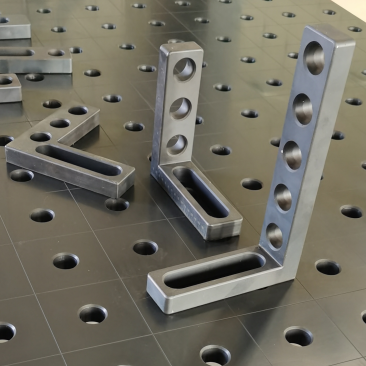
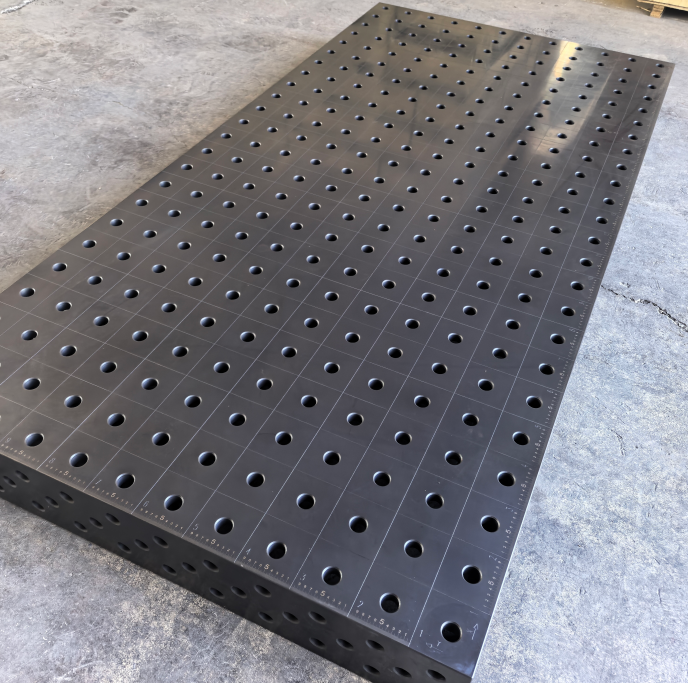
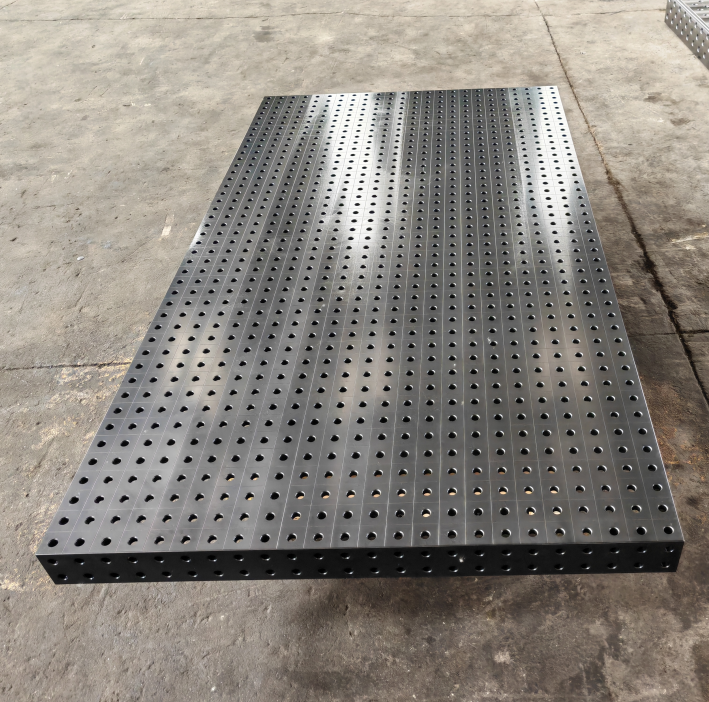
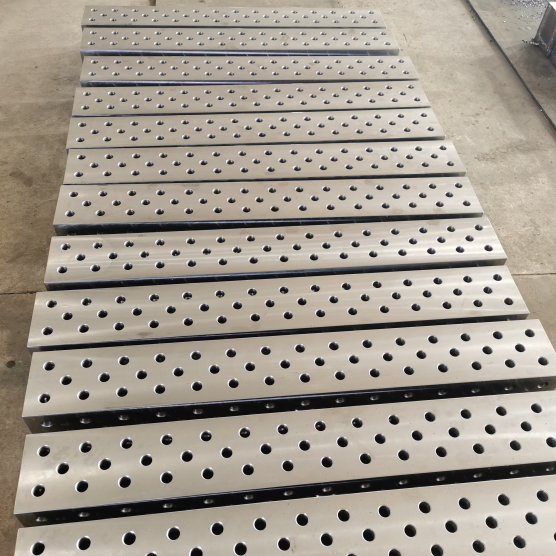
A fixturing table is a precision-engineered workholding platform used in manufacturing to secure, align, and support components during welding, assembly, inspection, and machining. In 2026, these tables serve as the backbone of modular fabrication, featuring hardened steel surfaces with a grid of threaded or clearance holes that allow for infinite positioning of clamps and stops. Unlike traditional jigs, a modern fixturing table offers reconfigurability, enabling manufacturers to switch between projects rapidly while maintaining micron-level accuracy and repeatability.
The Evolution of Industrial Fixturing Tables in 2026
The landscape of industrial manufacturing has shifted dramatically towards flexibility and speed. As we move through 2026, the demand for rigid, single-purpose welding jigs has plummeted. Instead, facilities are investing heavily in 3D fixturing tables that act as universal platforms. This shift is driven by the need for shorter production runs and higher mix variability.
Modern fixturing systems are no longer just heavy steel plates; they are integrated ecosystems. The latest iterations incorporate advanced surface treatments to resist spatter adhesion, improved hole tolerances for tighter fit-ups, and compatibility with digital layout tools. For engineering managers and procurement specialists, understanding these advancements is critical for optimizing floor space and reducing setup times.
The core value proposition remains unchanged: accuracy and speed. However, the mechanisms to achieve this have evolved. Today’s tables support complex geometries that were previously impossible to fixture without custom tooling. This capability reduces the reliance on external vendors for specialized jigs, bringing more control and cost-efficiency in-house. Leading this transformation are innovators like Botou Haijun Metal Products Co., Ltd., a company specializing in the research, development, and production of high-precision flexible modular fixtures. By focusing on efficient and flexible welding solutions, Haijun Metal has helped bridge the gap between traditional fabrication and the dynamic needs of the machining, automotive, and aerospace industries.
Key Drivers for Adopting Modular Fixturing
Several factors are influencing the decision-making process for adopting new fixturing infrastructure in the current industrial climate:
- Rapid Changeover: The ability to dismantle a setup and rebuild a new one in minutes rather than days.
- Repeatability: Ensuring that part “A” produced in January matches part “A” produced in December with minimal deviation.
- Space Optimization: Replacing racks of dedicated jigs with a single versatile table and a kit of accessories.
- Error Reduction: Minimizing human measurement errors through mechanical stops and precision grids.
Core Components and Technical Specifications
To evaluate a fixturing table effectively, one must understand its constituent parts. The performance of the entire system relies on the quality of the base material, the precision of the hole pattern, and the integrity of the supporting structure.
Surface Material and Hardness
The working surface is typically manufactured from high-grade structural steel, such as S355 or equivalent alloys. In 2026, the industry standard for premium tables involves heat treatment processes that increase surface hardness. This treatment is crucial for resisting wear from sliding components and preventing damage from welding spatter.
A harder surface ensures that the holes do not deform over time, even under heavy clamping loads. Deformation is the primary enemy of accuracy; once a hole becomes oval-shaped, the positioning accuracy of the entire grid is compromised. Therefore, specifying the hardness rating (often measured in HRC) is a vital step in the procurement process.
Hole Pattern Geometry and Tolerance
The defining feature of any fixturing table is its hole pattern. The two most common configurations are the square grid and the triangular (hexagonal) pattern. Each offers distinct advantages depending on the application.
Square Grid: Ideal for rectangular parts and standard orthogonal assemblies. It provides intuitive alignment along X and Y axes.
Triangular Pattern: Offers greater flexibility for angular setups and circular components. The 60-degree spacing allows for more versatile clamping angles without needing complex adapters.
Tolerance is equally critical. High-quality tables maintain hole position tolerances within ±0.1mm or better across the entire surface. This precision allows for the use of tight-fit pins and bushings, ensuring that fixtures lock into place without play.
Leg Structure and Stability
A table is only as good as its foundation. The leg structure must provide sufficient rigidity to prevent deflection under load. Welded tubular steel frames are common, often reinforced with cross-bracing. For heavy-duty applications, adjustable leveling feet are essential to compensate for uneven factory floors, ensuring the tabletop remains perfectly planar.
Selecting the Right Fixturing Table: A Strategic Guide
Choosing the appropriate fixturing table requires a detailed analysis of your specific production needs. There is no “one-size-fits-all” solution. The decision matrix should consider part size, weight, welding processes, and future scalability.
Assessing Load Requirements
The first step is determining the maximum weight the table must support. This includes not just the workpiece, but also the cumulative weight of clamps, fixtures, and dynamic forces generated during welding or machining. Overloading a table can lead to permanent deformation of the surface or failure of the leg structure.
For light assembly tasks, a standard-duty table with thinner gauge top plates may suffice. However, for heavy structural steel fabrication, a heavy-duty model with reinforced ribs underneath the top plate is mandatory. Always factor in a safety margin of at least 20% above your calculated maximum load.
Determining the Optimal Hole Size
Hole diameter dictates the size of the tooling you can use. Common sizes range from 16mm to 50mm. Smaller holes (16mm-28mm) are suitable for lightweight sheet metal work and intricate assemblies where space is limited. Larger holes (40mm-50mm) accommodate heavier clamps and are necessary for large-scale structural fabrication.
It is important to note that larger holes reduce the amount of solid material between them, potentially affecting the surface’s resistance to point loads. Balancing hole size with material thickness is a key engineering consideration.
Surface Finish and Coating Options
In 2026, surface coatings have become more sophisticated. While bare steel is an option, it requires regular maintenance to prevent rust. Phosphate coatings offer a baseline level of corrosion resistance and help retain oil for smoother tool movement. More advanced options include ceramic-based non-stick coatings that significantly reduce spatter adhesion, minimizing cleanup time after welding operations.
Comparative Analysis: Square vs. Triangular Hole Patterns
One of the most frequent questions in the selection process involves the choice between square and triangular hole patterns. Understanding the geometric implications of each is essential for maximizing utility.
| Feature |
Square Grid Pattern |
Triangular (Hex) Pattern |
| Geometry |
90-degree intersections |
60-degree intersections |
| Best For |
Rectangular frames, boxes, orthogonal assemblies |
Circular parts, angled joints, complex geometries |
| Clamping Flexibility |
High for straight lines; limited for angles |
Superior for multi-angle positioning |
| Tooling Availability |
Widest range of standard accessories |
Growing availability; specialized kits required |
| Setup Speed |
Faster for standard right-angle builds |
Faster for complex, non-linear builds |
| Material Efficiency |
Standard web strength |
Often provides better load distribution in all directions |
The square grid remains the industry workhorse for general fabrication shops due to its simplicity and the vast ecosystem of compatible tooling. However, shops specializing in pipe rolling, aerospace components, or artistic metalwork often find the triangular pattern indispensable for its angular versatility.
Operational Best Practices for Maximum Longevity
Investing in a high-quality fixturing table is only the first step. Proper operation and maintenance are required to preserve its precision and extend its service life. Neglecting these practices can lead to premature wear and loss of accuracy.
Preventing Surface Damage
The most common cause of table degradation is improper welding technique. Direct welding on the table surface can create craters, warp the plate, and fuse spatter to the holes. Always use protective sheets or copper backing plates when welding near the surface. If direct contact is unavoidable, utilize anti-spatter sprays specifically designed for fixturing tables.
Avoid dragging heavy steel parts across the surface. Lift and place components carefully to prevent scratching. Scratches can interfere with the seating of clamps and introduce inaccuracies in part alignment.
Maintenance and Cleaning Routines
Regular cleaning is essential to remove slag, spatter, and debris from the holes. Compressed air should be used daily to clear out particulate matter that could prevent pins from seating fully. Periodically, the surface should be lightly oiled to prevent corrosion, especially in humid environments.
Inspect the leveling feet regularly. If the shop floor settles or shifts, the table may rock, compromising its flatness. Re-leveling the table ensures that gravity works in your favor during assembly rather than introducing subtle distortions.
Tooling Management
A disorganized toolkit leads to lost time and damaged equipment. Implement a shadow board or organized storage system for clamps, stops, and pins. Dropping precision tooling on concrete floors can bend shafts or chip tips, rendering them useless for precise work. Treat the tooling with the same care as the table itself.
Common Applications Across Industries
The versatility of fixturing tables makes them applicable across a wide spectrum of industries. From small job shops to massive automotive plants, the underlying principles of modular fixturing remain consistent.
Structural Steel Fabrication
In structural steel work, tables are used to assemble beams, columns, and trusses. The ability to clamp multiple pieces simultaneously ensures that weldments remain square and true during the tacking and final welding phases. Large-format tables allow for the pre-assembly of entire sections before lifting them into place.
Precision Sheet Metal Work
For sheet metal, smaller tables with finer hole patterns are preferred. These setups facilitate the assembly of enclosures, cabinets, and ductwork. The precision of the table ensures that door gaps are consistent and that mounting holes align perfectly with internal components.
Robotics and Automation Integration
As automation penetrates deeper into manufacturing, fixturing tables are increasingly used as bases for robotic cells. Robots require predictable part positions to execute welds or picks accurately. A fixturing table provides the repeatable datum points necessary for robotic programming, reducing the need for complex vision systems to locate parts.
Inspection and Quality Control
Beyond fabrication, these tables serve as excellent inspection platforms. Their known flatness and grid system allow quality control technicians to verify part dimensions using dial indicators and coordinate measuring machine (CMM) arms. A part fabricated on the table can often be inspected on the same surface, streamlining the QA workflow.
Frequently Asked Questions (FAQ)
What is the typical lifespan of a fixturing table?
With proper maintenance and protection from direct welding abuse, a high-quality fixturing table can last for decades. The surface may show signs of wear after 10-15 years of heavy use, but the structural integrity usually remains intact much longer. Resurfacing or replacing the top plate is sometimes an option for premium models.
Can I weld directly on the fixturing table surface?
While the tables are made of weldable steel, it is strongly discouraged to weld directly on the precision surface. Doing so risks warping the plate, damaging the hole threads, and creating permanent spatter buildup that interferes with tooling. Always use protective barriers or sacrificial plates.
Are fixturing tables compatible with third-party clamps?
Most tables adhere to industry-standard hole spacings and diameters (e.g., 100mm spacing, 28mm holes). However, thread types (metric vs. imperial) and specific chamfer designs can vary. It is best to source tooling from the same manufacturer or verify compatibility specifications before mixing brands to ensure a snug fit.
How do I ensure the table remains flat over time?
Maintaining flatness requires a stable foundation and proper load distribution. Ensure the floor beneath the table is level and capable of supporting the weight. Avoid concentrating extreme loads in the center of the span without support. Regularly check and adjust the leveling feet to compensate for any floor settlement.
Is a triangular pattern better than a square pattern?
Neither is inherently “better”; it depends on your application. Square patterns are superior for boxy, rectangular structures and are more intuitive for general use. Triangular patterns excel in applications requiring frequent angular setups or circular assemblies. Many advanced shops utilize both types to cover all production scenarios.
Future Trends in Fixturing Technology
Looking beyond 2026, the integration of smart technologies into fixturing systems is on the horizon. We anticipate the rise of “smart tables” equipped with embedded sensors capable of monitoring clamping force and detecting part misalignment in real-time.
Augmented Reality (AR) overlays may soon guide operators through complex setup procedures, projecting virtual clamp positions directly onto the physical table surface. These innovations aim to further reduce setup times and lower the skill threshold required for high-precision assembly, democratizing access to elite manufacturing capabilities.
Additionally, sustainability is becoming a focal point. Manufacturers are exploring recycled steel alloys and eco-friendly coating processes that do not compromise performance but reduce the environmental footprint of production. The modularity of these tables already supports sustainability by extending product lifecycles and reducing waste associated with disposable jigs.
Conclusion and Next Steps
The fixturing table has evolved from a simple workbench into a critical strategic asset for modern manufacturing. Its ability to enhance precision, accelerate production cycles, and reduce operational costs makes it an indispensable tool for any serious fabrication facility. Whether you are upgrading an existing shop floor or equipping a new facility, selecting the right table configuration is a decision that will impact your productivity for years to come.
By prioritizing surface hardness, hole tolerance, and structural rigidity, you ensure that your investment delivers consistent returns. Remember that the table is only half of the equation; pairing it with high-quality, compatible tooling and adhering to strict maintenance protocols is essential for unlocking its full potential.
Who is this solution for?
- Fabrication shops seeking to reduce jig inventory costs.
- Manufacturers transitioning to high-mix, low-volume production.
- Engineering teams requiring repeatable accuracy for complex assemblies.
- Facilities integrating robotic welding or automated inspection systems.
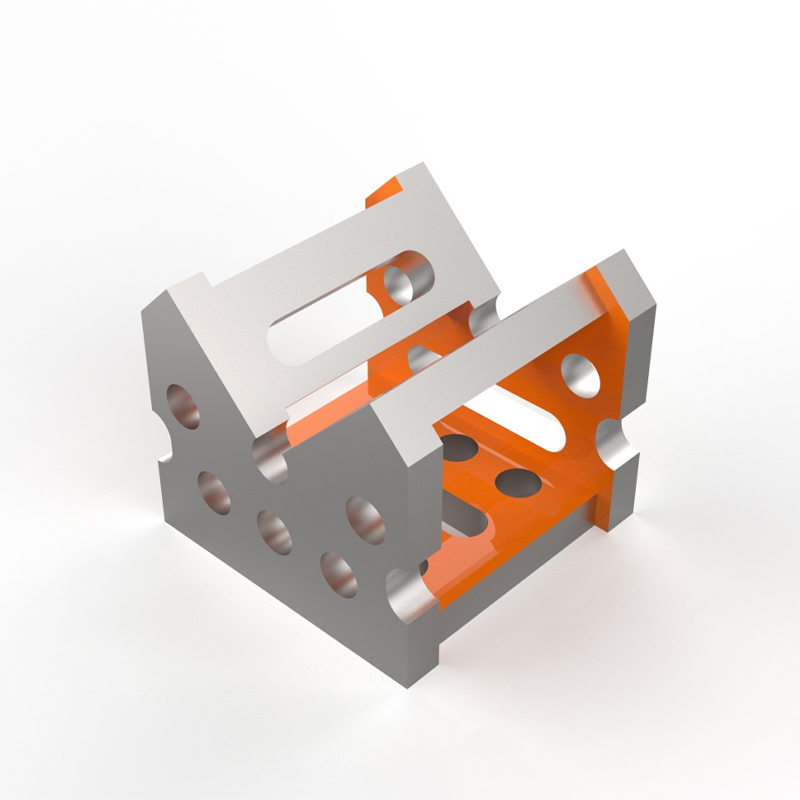
Ready to optimize your production workflow? Selecting the correct specifications for your unique application is the first step toward efficiency. Companies like Botou Haijun Metal Products Co., Ltd. exemplify the commitment to quality needed in this sector. With years of industry experience, Haijun Metal has established itself as a trusted global supplier, offering not just 2D and 3D flexible welding platforms, but a comprehensive ecosystem of complementary components. Their lineup includes U-shaped and L-shaped multi-purpose square boxes, 200-series support angle irons, and 0-225° universal angle gauges, all designed to integrate seamlessly for rapid workpiece positioning. Furthermore, their professional cast iron 3D welding platforms and angle connection blocks ensure exceptional durability and stability for the most demanding tasks.
Our team of engineering experts is available to assist you in configuring the ideal fixturing solution tailored to your specific load requirements and spatial constraints, drawing on the same high standards of precision and versatility found in top-tier manufacturing tools.
→ Contact our technical team today to request a customized quote and detailed specification sheet for your next fixturing project.