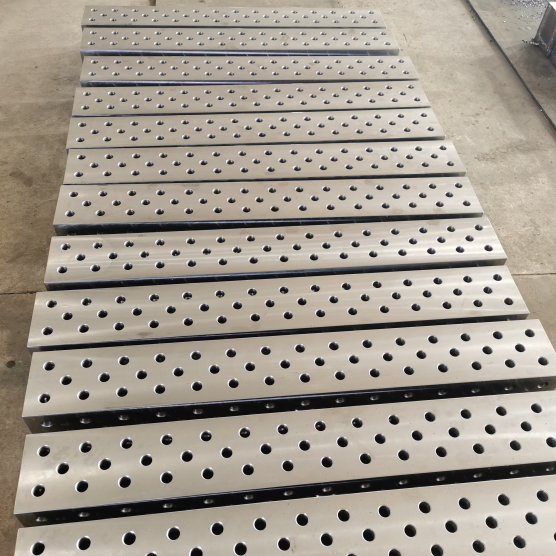
CNC machined aluminum castings represent a hybrid manufacturing solution that combines the geometric freedom of casting with the tight tolerances and superior surface finish of CNC machining. This process is essential for industries requiring complex, high-strength, and lightweight metal components, such as aerospace, automotive, and medical device manufacturing. By leveraging post-casting precision machining, manufacturers can achieve dimensional accuracy within ±0.01mm, ensuring that critical interfaces meet rigorous engineering standards. As a specialized manufacturer in 2026, we focus on delivering these high-performance components through integrated production workflows that minimize lead times while maximizing part integrity and consistency.
What Are CNC Machined Aluminum Castings?
CNC machined aluminum castings are not simply cast parts that have been lightly cleaned. They are engineered components where the casting process creates the near-net shape, and Computer Numerical Control (CNC) machining refines critical features to precise specifications. This dual-stage approach addresses the inherent limitations of standalone casting methods, which often struggle with tight tolerances on mating surfaces, threaded holes, and sharp edges.
The core value proposition lies in the synergy between two distinct manufacturing technologies. Casting allows for the creation of complex internal geometries, thin walls, and organic shapes that would be prohibitively expensive or impossible to machine from solid billet. Conversely, CNC machining provides the micron-level precision required for functional assembly, sealing surfaces, and bearing fits. The result is a component that offers the design flexibility of casting with the reliability of machined parts.
The Hybrid Manufacturing Process Explained
Understanding the workflow is crucial for procurement engineers and product designers. The process begins with mold creation, followed by the injection or pouring of molten aluminum alloy. Once the part cools and is ejected, it undergoes extensive secondary operations. These include milling, turning, drilling, and tapping using multi-axis CNC centers. This sequence ensures that while the bulk material is formed efficiently via casting, the critical functional areas are generated through subtractive manufacturing.
- Step 1: Mold Design & Fabrication: High-precision steel molds are created based on 3D CAD data, accounting for shrinkage rates and machining allowances.
- Step 2: Casting Production: Aluminum alloy is formed using Die Casting, Sand Casting, or Investment Casting methods depending on volume and complexity.
- Step 3: Heat Treatment: Parts often undergo T5 or T6 tempering to enhance mechanical properties like tensile strength and hardness.
- Step 4: CNC Precision Machining: Critical dimensions, holes, threads, and flat surfaces are machined to final specifications.
- Step 5: Surface Finishing & QC: Components receive anodizing, powder coating, or bead blasting, followed by rigorous CMM inspection.
Why Choose Aluminum for CNC Machined Castings?
Aluminum remains the dominant material choice for this hybrid manufacturing approach due to its unique combination of physical and mechanical properties. In 2026, sustainability and efficiency drive material selection, and aluminum excels in both categories. Its low density contributes to weight reduction initiatives, particularly in electric vehicles (EVs) and aerospace applications where every gram impacts performance and energy consumption.
Beyond weight, aluminum offers excellent corrosion resistance, especially when treated with anodizing. It also possesses high thermal and electrical conductivity, making it ideal for heat sinks and electronic housings. From a manufacturing standpoint, aluminum’s relatively low melting point reduces energy costs during casting, and its softness compared to steel allows for faster CNC machining speeds, reducing tool wear and cycle times.
Common Aluminum Alloys Used in Casting and Machining
Selecting the right alloy is critical for balancing castability with machinability and final mechanical performance. Not all aluminum alloys are suitable for both casting and high-speed CNC machining. The following table outlines the most prevalent alloys used in our production lines.
| Alloy Series |
Common Grades |
Key Characteristics |
Typical Applications |
| A380 (Die Casting) |
AlSi9Cu3 |
Excellent fluidity, good strength, moderate corrosion resistance. Best for complex thin-walled parts. |
Automotive engine blocks, transmission cases, power tool housings. |
| A360 (Die Casting) |
AlSi10Mg |
Superior corrosion resistance and pressure tightness. Slightly harder to machine than A380 but stronger. |
Marine components, chemical pump housings, outdoor telecommunications equipment. |
| 6061 (Sand/Investment) |
AlMgSi |
Excellent machinability and weldability. High structural integrity after T6 heat treatment. |
Aerospace structural parts, high-load brackets, precision instrument frames. |
| 7075 (Billet/Sand) |
AlZnMgCu |
Very high strength-to-weight ratio. More difficult to cast, often used in hybrid sand-cast/machined parts. |
Defense applications, high-performance automotive suspension components. |
Manufacturing Methods: Comparing Casting Technologies
The term “casting” encompasses several distinct processes. The choice of casting method significantly influences the cost, quality, and application of the final CNC machined component. Understanding these differences helps buyers make informed decisions based on volume requirements and precision needs.
High-Pressure Die Casting (HPDC)
HPDC is the most common method for mass-producing aluminum parts. Molten aluminum is injected into a steel mold at high pressure. This results in excellent surface finish and tight as-cast tolerances. For CNC machined aluminum castings, HPDC is ideal for high-volume runs (1,000+ units). The near-net shape requires minimal machining stock, reducing material waste and machining time. However, HPDC parts may contain microscopic porosity, which can be a concern for pressure-tight applications unless impregnation is used.
Sand Casting
Sand casting uses reusable patterns and sand molds. It is more suitable for lower volumes or larger parts where the cost of steel die molds for HPDC is prohibitive. Sand-casted parts have a rougher surface finish and looser tolerances, meaning they require more substantial CNC machining allowances. This method is often chosen for large industrial machinery components, pump bodies, and valve housings where structural integrity is prioritized over surface aesthetics.
Investment Casting (Lost Wax)
Investment casting offers the highest precision among casting methods, bridging the gap between casting and forging. It produces parts with excellent surface detail and minimal machining requirements. While more expensive per unit than HPDC, it is cost-effective for medium volumes of complex, high-value components. Investment cast aluminum parts are frequently used in aerospace and medical devices where complex internal channels and high dimensional accuracy are mandatory.
Key Advantages of CNC Machined Aluminum Castings
Integrating CNC machining with casting provides specific advantages that neither process can achieve alone. These benefits directly impact product performance, assembly efficiency, and total cost of ownership.
- Precision Beyond Casting Limits: Standard casting tolerances are typically ±0.5mm or looser. CNC machining can tighten critical features to ±0.01mm or even ±0.005mm, enabling precise fits for bearings, seals, and mating components.
- Complex Geometry Realization: Casting allows for undercuts, internal cavities, and organic shapes that are impossible to machine from solid block. CNC then adds precise holes, threads, and flat mounting surfaces to these complex shapes.
- Improved Surface Integrity: Casting surfaces can have flow marks or slight irregularities. CNC machining removes the outer skin of the casting, revealing the homogeneous material structure underneath, which is crucial for sealing surfaces and aesthetic appearances.
- Cost Efficiency for Complex Parts: For parts with complex 3D shapes, machining from solid billet would require removing up to 80-90% of the material, leading to excessive machine time and waste. Casting creates the shape efficiently, and CNC only removes the necessary amount for precision.
- Enhanced Mechanical Properties: Post-casting heat treatment combined with stress-relieving machining operations ensures that the final part maintains its structural integrity under load, free from residual stresses caused by uneven cooling.
Applications Across Industries
The versatility of CNC machined aluminum castings makes them indispensable across various high-tech and industrial sectors. In 2026, the demand is driven by the need for lightweighting and thermal management solutions.
Automotive and Electric Vehicles (EV)
The automotive sector is the largest consumer of these components. In EVs, battery housings, motor end caps, and inverter casings require complex shapes for cooling channels and electromagnetic shielding, along with precise mating surfaces for sealing against moisture and dust. CNC machined aluminum castings provide the necessary rigidity to protect sensitive electronics while minimizing vehicle weight to extend range.
Aerospace and Defense
Aerospace components demand the highest standards of safety and performance. Bracketry, avionics enclosures, and structural connectors made from CNC machined aluminum castings offer high strength-to-weight ratios. The ability to machine tight tolerances ensures that these parts fit perfectly into assembled structures, reducing vibration and fatigue risks during flight.
Telecommunications and 5G Infrastructure
5G base stations generate significant heat. Heat sinks and RF filter housings require intricate fin structures for thermal dissipation, which are efficiently produced via casting. CNC machining is then used to create flat mounting surfaces for chips and precise threads for antenna connections, ensuring optimal thermal contact and signal integrity.
Medical Devices
Medical imaging equipment, such as MRI and CT scanners, uses large aluminum housings that must be non-magnetic and precisely aligned. CNC machined aluminum castings allow for the creation of large, complex structures with the dimensional stability required for accurate imaging. Additionally, surgical robot arms utilize these components for their lightweight yet rigid characteristics.
Design Guidelines for Engineers
To maximize the benefits of CNC machined aluminum castings, designers should adhere to specific guidelines during the product development phase. Proper design for manufacturing (DFM) can significantly reduce costs and lead times.
Allow for Machining Stock
When designing the casting, ensure that areas requiring CNC machining have sufficient material allowance. Typically, 1-3mm of extra stock is recommended for milled surfaces, depending on the casting method and part size. Insufficient stock can lead to incomplete machining or exposure of subsurface porosity.
Minimize Undercuts for Casting
While CNC can handle undercuts, the casting process may require complex side-actions in the mold, increasing tooling costs. Design parts with draft angles (typically 1-3 degrees) to facilitate easy ejection from the mold. Use CNC machining to create vertical walls or negative drafts if necessary, rather than complicating the casting mold.
Consider Wall Thickness Uniformity
Uniform wall thickness prevents uneven cooling, which can lead to warping and internal stresses. Warped castings are difficult and expensive to fixture during CNC machining. If varying wall thicknesses are necessary, use gradual transitions to minimize stress concentrations.
Specify Critical Datums Early
Identify the primary datum references for CNC machining early in the design. These datums should be robust features that can be reliably located in the CNC fixture. Providing clear GD&T (Geometric Dimensioning and Tolerancing) on drawings ensures that the manufacturer understands which features are critical for function.
Quality Control and Inspection Standards
Ensuring the quality of CNC machined aluminum castings requires a multi-layered inspection protocol. As a manufacturer committed to EEAT principles, we adhere to strict quality assurance procedures that verify both the casting integrity and machining precision.
Dimensional Inspection
Coordinate Measuring Machines (CMM) are used to verify critical dimensions against CAD models. For high-volume production, Statistical Process Control (SPC) is implemented to monitor trends and prevent deviations. First Article Inspection (FAI) reports are provided to customers to validate that the initial production run meets all specified tolerances.
Material Certification and Testing
Every batch of aluminum alloy is accompanied by a Material Certificate verifying its chemical composition. Spectrometry analysis is conducted to ensure the alloy meets standards such as ASTM, ISO, or GB. Mechanical testing, including tensile strength and hardness tests, is performed on sample coupons from each heat treatment batch.
Porosity and Defect Detection
For critical applications, X-ray inspection is employed to detect internal porosity or voids that may compromise structural integrity. Surface defects are identified through visual inspection and, if necessary, dye penetrant testing. Any parts exceeding acceptable defect limits are rejected before machining begins to avoid wasting valuable CNC resources.
Common Challenges and Solutions
Even with advanced technology, producing CNC machined aluminum castings presents challenges. Recognizing these issues and implementing proactive solutions is key to successful manufacturing.
Challenge: Porosity Exposure During Machining
Issue: Subsurface pores in the casting can be exposed when CNC machining removes the outer layer, leading to leaks or weak points.
Solution: Optimize gating and venting in the mold design to reduce air entrapment. Use vacuum-assisted die casting for critical parts. If porosity is detected, impregnation with sealants can close micro-voids before final machining.
Challenge: Distortion After Heat Treatment
Issue: Quenching during T6 heat treatment can cause dimensional distortion, making subsequent CNC machining difficult.
Solution: Implement straightening operations after heat treatment. Use fixturing strategies during CNC machining that compensate for known distortion patterns. Consider T5 tempering for parts where distortion is a major concern, as it involves cooling from the casting temperature rather than re-heating and quenching.
Challenge: Tool Wear on Hard Spots
Issue: Inconsistent cooling can create hard spots in the aluminum, accelerating CNC tool wear.
Solution: Use high-quality carbide tools designed for aluminum. Optimize cutting parameters (speeds and feeds) to maintain consistent chip loads. Regularly inspect tools and replace them based on predictive maintenance schedules rather than failure.
How to Select the Right Manufacturer
Choosing a partner for CNC machined aluminum castings requires evaluating several critical factors. The right manufacturer will not only produce parts but also contribute to design optimization and supply chain reliability.
- Integrated Capabilities: Look for manufacturers that handle both casting and CNC machining in-house. This reduces communication gaps, shortens lead times, and ensures accountability for the entire process.
- Engineering Support: A capable partner offers DFM feedback early in the design phase. They should be able to suggest modifications that improve castability or reduce machining costs without compromising function.
- Quality Certifications: Verify certifications such as ISO 9001, IATF 16949 (for automotive), or AS9100 (for aerospace). These certifications demonstrate a commitment to standardized quality management systems.
- Scalability: Ensure the manufacturer can scale production from prototype to mass production. Flexible manufacturing cells allow for efficient handling of both low-volume high-mix and high-volume orders.
- Transparency: Trustworthy manufacturers provide detailed reporting, including FAI, material certs, and process logs. Transparency builds long-term partnerships and reduces risk.
Frequently Asked Questions (FAQ)
What is the typical tolerance achievable for CNC machined aluminum castings?
While as-cast tolerances vary by method, CNC machining can consistently achieve tolerances of ±0.01mm to ±0.05mm for critical features. General non-critical dimensions may hold ±0.1mm. Specific tolerances depend on part size, geometry, and fixture stability.
How does the cost compare to machining from solid billet?
For complex parts, CNC machined castings are significantly more cost-effective than machining from solid billet. Although there is an upfront cost for mold tooling, the per-unit cost drops dramatically at higher volumes due to reduced material waste and shorter machining cycles. For simple parts, billet machining may be cheaper for low volumes.
Can you machine threads directly into aluminum castings?
Yes, CNC tapping is commonly used to create threads in aluminum castings. For high-stress applications, thread inserts (such as Helicoils) can be installed into tapped holes to enhance durability and prevent stripping. The choice depends on the load requirements and assembly frequency.
What surface finishes are available?
Standard finishes include bead blasting and tumbling for a matte look. Anodizing (Type II and Type III) provides corrosion resistance and color options. Powder coating is available for thicker, durable coatings. For cosmetic parts, polishing and buffing can achieve a mirror-like finish before anodizing.
What is the lead time for prototypes vs. mass production?
Prototype lead times typically range from 2-4 weeks, including mold fabrication and first article approval. Mass production lead times depend on order volume but generally range from 3-6 weeks after sample approval. Rapid tooling options can reduce prototype timelines to 1-2 weeks for simpler geometries.
Conclusion: Elevating Product Performance with Precision Castings
CNC machined aluminum castings offer a compelling solution for modern engineering challenges, blending the design freedom of casting with the precision of CNC machining. This hybrid approach enables the production of lightweight, complex, and high-strength components essential for industries ranging from electric mobility to aerospace. By understanding the nuances of alloy selection, manufacturing methods, and quality control, businesses can optimize their supply chains and enhance product reliability.
As we move further into 2026, the demand for efficient, high-performance manufacturing solutions continues to grow. Partnering with a manufacturer that possesses deep expertise in both casting and precision machining ensures that your components meet the highest standards of quality and functionality. Whether you are developing a new EV battery housing or a precision medical device frame, the right manufacturing strategy can significantly impact your time-to-market and overall product success.
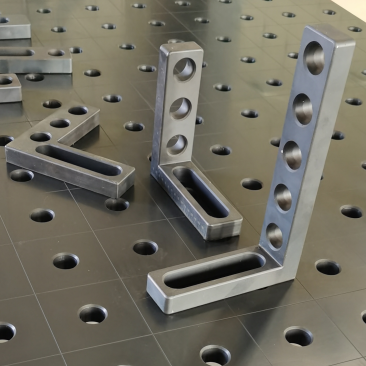
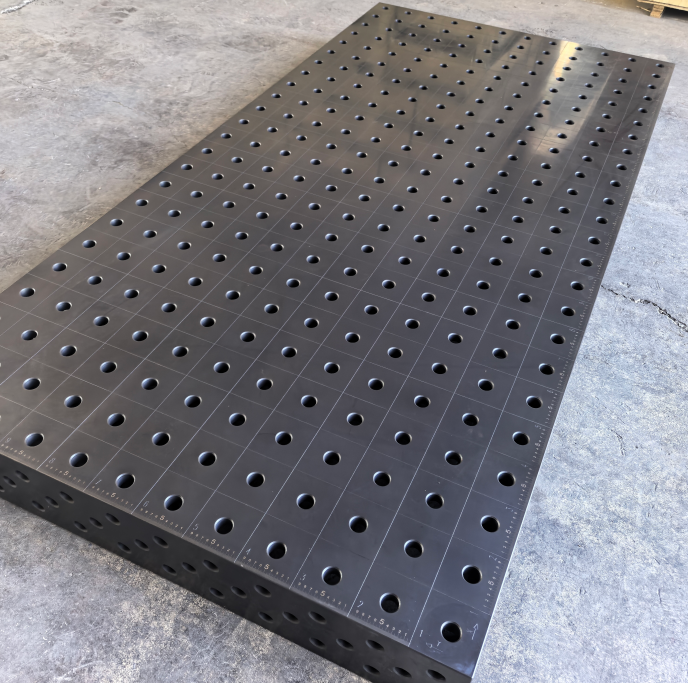
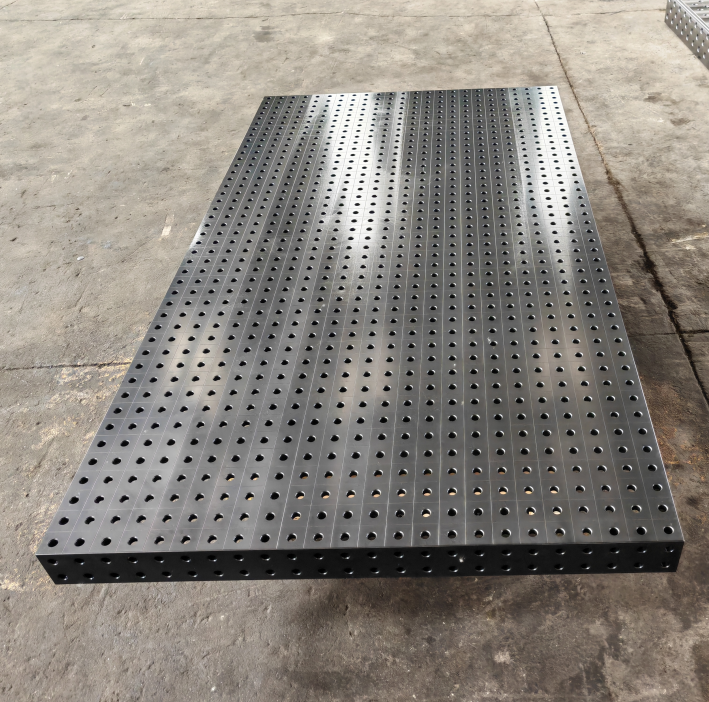
At Botou Haijun Metal Products Co., Ltd., we understand that precision doesn’t stop at the component level—it extends to how those components are manufactured, assembled, and inspected. While our primary specialization lies in the research, development, and production of high-precision flexible modular fixtures and metalworking tools, our deep involvement in the machining ecosystem gives us a unique perspective on quality and efficiency. Our core product line, including 2D and 3D flexible welding platforms, has become the preferred jigging equipment in the machining, automotive, and aerospace industries—sectors that heavily rely on the very CNC machined aluminum castings discussed in this article.
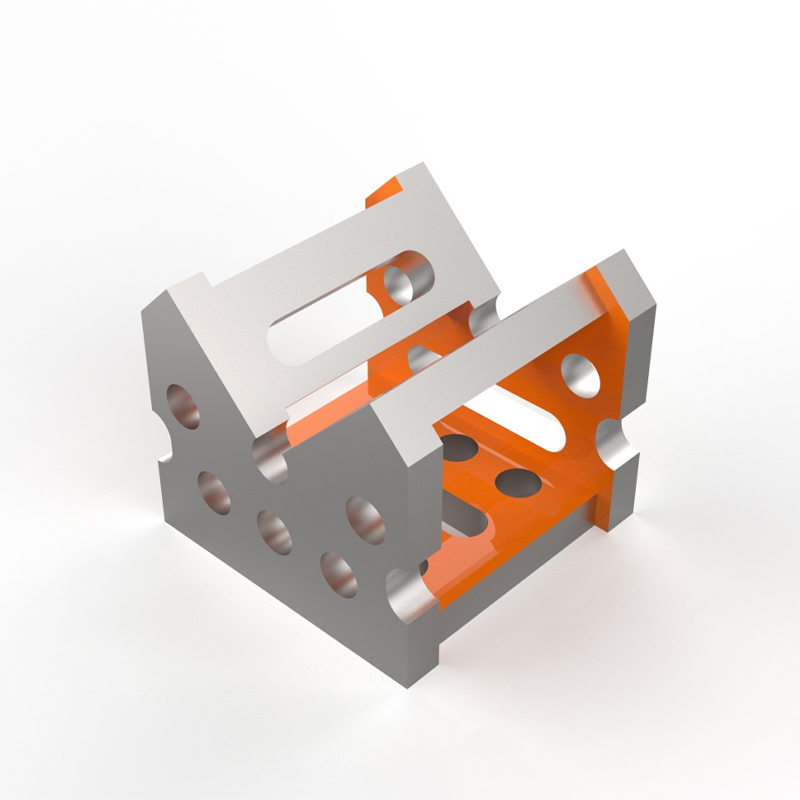
This expertise in fixturing and positioning directly complements the manufacturing of complex castings. The same rigor we apply to our U-shaped and L-shaped multi-purpose square boxes, 200-series support angle irons, and universal angle gauges ensures that workpieces are positioned with exceptional versatility and precision. For manufacturers producing CNC machined castings, having access to reliable, durable tooling like our professional cast iron 3D welding platforms and angle connection blocks is crucial for maintaining the tight tolerances (±0.01mm) required in final assembly. With years of industry experience, Haijun Metal has become a trusted supplier of tools and gauges to customers both domestically and internationally. We are committed to providing not just the components, but the efficient and flexible welding and positioning solutions that empower the modern manufacturing industry to deliver high-quality production machinery tool series and end-products.
If you are looking for a reliable partner to bring your complex aluminum components to life, or if you need high-precision fixturing solutions to streamline your assembly and inspection processes, our team is ready to assist. We offer comprehensive DFM analysis, rapid prototyping, and scalable mass production capabilities. Contact us today to discuss your project requirements and discover how our integrated solutions can drive your business forward.
Explore Our CNC Machining Services and Request a Quote