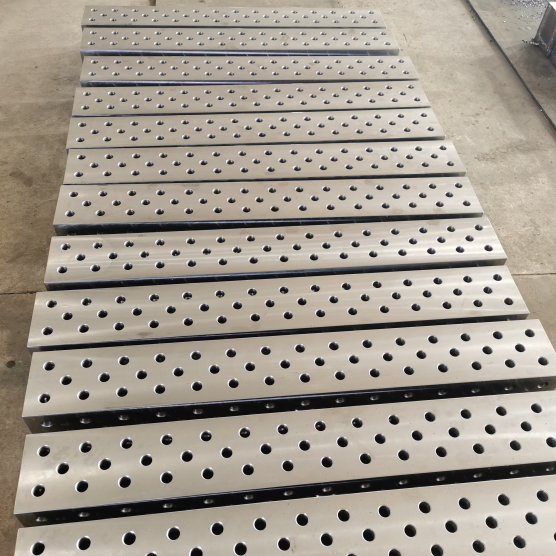
Looking for the best weldsale table in 2026? A weldsale table is a modular, precision-engineered welding platform designed for high-efficiency fabrication, featuring standardized hole patterns for flexible clamping and positioning. As a leading China manufacturer, we offer competitive pricing, customizable modular designs, and industrial-grade durability to meet global sourcing demands.
Why Choose a Modular Weldsale Table in 2026?
The fabrication industry has shifted dramatically toward flexibility and speed. In 2026, the weldsale table has evolved from a simple work surface into a comprehensive ecosystem for lean manufacturing. Unlike traditional fixed tables, modern modular systems allow welders to reconfigure their workspace in minutes rather than hours.
This adaptability is crucial for shops handling diverse projects, from small artistic sculptures to large structural steel assemblies. The core value lies in the standardization of tooling. By utilizing a grid of precision-drilled holes, users can lock fixtures, stops, and clamps anywhere on the surface.
Key drivers for adoption include:
- Rapid Setup: Reduce changeover time between jobs by up to 70% compared to traditional methods.
- Precision Accuracy: Ensure repeatable squareness and alignment without manual measuring for every piece.
- Scalability: Connect multiple tables to create massive work areas for oversized components.
- Cost Efficiency: Lower labor costs through streamlined workflows and reduced rework.
For businesses sourcing from China, the 2026 market offers unprecedented value. Advanced laser cutting and robotic welding technologies in Chinese factories have elevated quality standards while maintaining aggressive pricing structures.
Understanding the Core Technology Behind Weldsale Tables
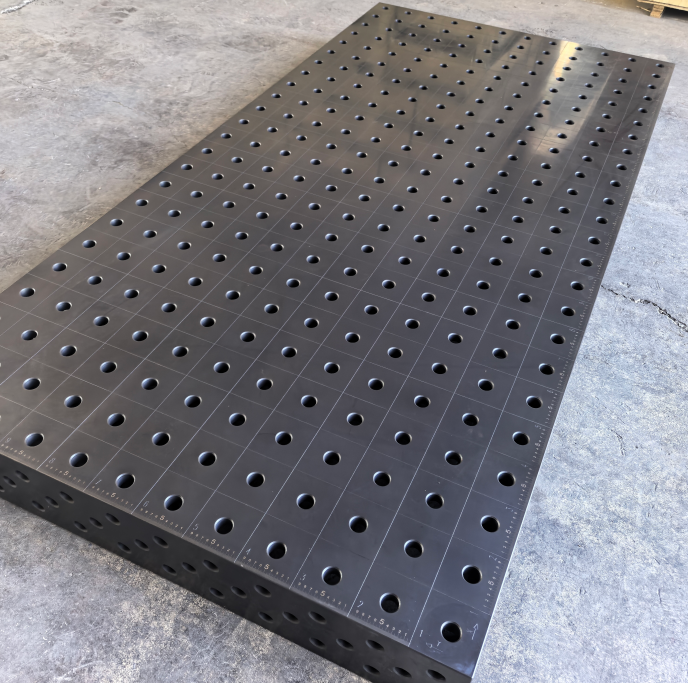
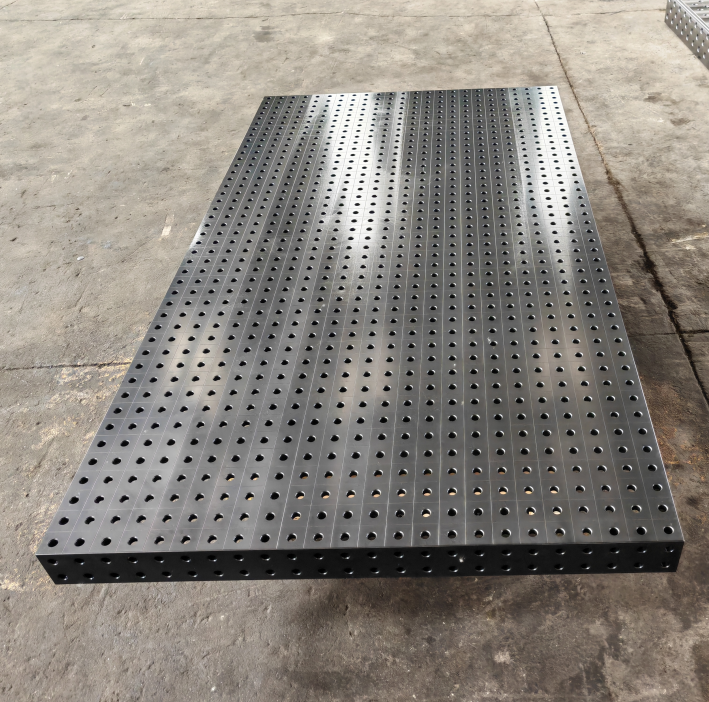
At the heart of every high-quality weldsale table is the hole pattern geometry. The industry standard has largely converged on a 100mm x 100mm or 50mm x 50mm grid, with hole diameters typically ranging from 16mm to 28mm depending on the load class.
These holes are not merely drilled; they are often machined with perpendicular precision to ensure that clamping tools sit perfectly vertical. This perpendicularity is critical for achieving true 90-degree angles in welded assemblies.
The material selection is equally vital. Top-tier manufacturers in 2026 utilize high-strength low-alloy (HSLA) steel plates. These materials undergo stress-relief annealing after welding the leg structures to prevent warping over time.
Surface treatments have also advanced:
- Nitriding: Provides exceptional surface hardness and wear resistance, ideal for high-volume production.
- Galvanization: Offers superior corrosion protection for outdoor or humid environments.
- Powder Coating: A cost-effective solution for indoor shops requiring spark resistance and easy cleaning.
When evaluating suppliers, understanding these technical nuances helps buyers distinguish between commodity products and professional-grade equipment.
Top Modular Designs and Configurations Available
The versatility of the weldsale table shines through its modular design options. In 2026, manufacturers offer a wide array of configurations to suit specific workshop layouts and project requirements.
Selecting the right configuration depends on your primary workflow. Do you need a stationary hub for heavy assembly, or a mobile unit for on-site repairs? The market now caters to both extremes and everything in between.
Standard Fixed-Frame Tables
The workhorse of the industry, fixed-frame tables provide maximum stability. These units feature rigid legs welded directly to the tabletop frame, often with adjustable leveling feet to compensate for uneven factory floors.
They are ideal for permanent installation in dedicated welding cells. The lack of moving parts ensures zero vibration during heavy grinding or impact welding operations.
Common specifications include:
- Sizes ranging from 1000x1000mm to 3000x1500mm.
- Load capacities exceeding 2 tons per square meter.
- Integrated cable management trays underneath the surface.
For high-volume manufacturers, these tables serve as the anchor point for automated welding cells and robotic arms.
Mobile and Castor-Equipped Units
Mobility is a growing trend in 2026. Mobile weldsale tables come equipped with heavy-duty castors, allowing operators to move large assemblies to different stations without cranes.
Crucially, these units feature locking mechanisms that rigidify the castors, transforming the mobile unit into a stable fixed table during operation. Some advanced models include hydraulic leveling systems.
Benefits of mobile designs:
- Flexibility to rearrange shop floor layout instantly.
- Ability to bring the work to the machine or vice versa.
- Ideal for job shops with limited space or varying project sizes.
These units are particularly popular in educational institutions and training centers where classroom configurations change frequently.
Expandable and Linkable Systems
Perhaps the most innovative design is the linkable system. These tables feature machined edges with precise alignment pins and bolting channels.
Users can connect two or more tables side-by-side to create a seamless, larger working surface. The connection points are engineered to maintain flatness across the joint within tight tolerances.
Applications for expandable systems:
- Fabrication of wind turbine blades or long structural beams.
- Assembly of large vehicle frames or agricultural machinery.
- Temporary expansion for peak production periods.
This modularity future-proofs your investment, allowing you to grow your capacity as your business expands without replacing existing equipment.
Price Analysis: Sourcing Direct from China Manufacturers
One of the most compelling reasons to source a weldsale table from China in 2026 is the price-to-performance ratio. Direct manufacturing eliminates middleman markups, offering significant savings for international buyers.
However, “cheap” should never mean “low quality.” The Chinese market has matured, with many factories now adhering to ISO 9001 standards and exporting to demanding markets in Europe and North America.
Factors Influencing Cost
Understanding the cost drivers helps in negotiating the best deal. The price of a weldsale table is not just about the weight of the steel; it involves processing complexity and finish quality.
Primary cost components include:
- Material Grade: Q345B or equivalent HSLA steel costs more than mild steel but offers better longevity.
- Hole Machining: Laser cutting followed by CNC drilling or reaming adds cost but ensures precision.
- Heat Treatment: Stress-relief processes add time and energy costs but are essential for stability.
- Surface Finish: Nitriding is more expensive than painting but provides a longer service life.
Bulk orders typically attract substantial discounts. Manufacturers often tier their pricing based on container load quantities, making group buying or consolidated shipping an attractive strategy for smaller shops.
Comparing Global vs. China Pricing
When comparing prices, it is essential to look at the total landed cost, including shipping and duties. Even with these added expenses, Chinese-made tables often undercut local competitors by 30-50%.
Local distributors in the West often rebrand Chinese products, adding their margin layer. Buying direct allows you to access the same factory lines at a fraction of the retail price.
Typical price ranges (FOB China) in 2026:
- Entry-Level (Painted, Standard Steel): Highly competitive for startups and hobbyists.
- Mid-Range (Galvanized, Stress-Relieved): The sweet spot for professional fabrication shops.
- Premium (Nitrided, High-Precision): Comparable quality to top European brands at significantly lower costs.
Transparency in quoting is key. Reputable manufacturers provide detailed breakdowns of material thickness, hole tolerance, and finishing processes.
Quality Standards and Manufacturing Processes
In 2026, the gap between top-tier Chinese manufacturers and established Western brands has narrowed significantly. Many Chinese factories now employ the same advanced machinery and quality control protocols.
When sourcing a weldsale table, verifying the manufacturing process is crucial to ensuring you receive a product that meets your precision requirements.
Advanced Fabrication Techniques
Modern production lines utilize high-power fiber laser cutters capable of slicing thick steel plates with micron-level accuracy. This technology ensures that the hole patterns are consistent across the entire table surface.
Robotic welding cells are increasingly common for assembling the table frames. Robots provide consistent weld penetration and minimize heat distortion, which is a common issue with manual welding of large structures.
Key manufacturing steps include:
- Laser Cutting: Precision cutting of the tabletop and structural components.
- CNC Drilling/Reaming: Creating holes with exact diameters and perpendicularity.
- Robotic Welding: Assembling the frame with minimal thermal distortion.
- Machining: Milling the top surface flat if required for ultra-high precision applications.
These processes result in a product that is not only strong but also geometrically accurate, which is the defining characteristic of a professional weldsale table.
Quality Control and Testing
Rigorous QC checks are the hallmark of a reliable supplier. Before shipment, tables should undergo flatness testing, hole position verification, and load testing.
Leading manufacturers use coordinate measuring machines (CMM) to validate the positional accuracy of the hole grid. This ensures that any tool inserted into the grid will align perfectly with others.
Essential QC metrics to request:
- Flatness Tolerance: Typically within 1mm over 1 meter for standard grades.
- Hole Perpendicularity: Critical for ensuring clamps sit vertically.
- Weld Integrity: Ultrasonic or dye penetrant testing for critical structural joints.
Requesting inspection reports or third-party certification (like SGS or TUV) can provide additional peace of mind for large orders.
Comparison: Weldsale Table vs. Traditional Welding Tables
To understand the true value of a weldsale table, it is helpful to compare it directly with traditional welding tables. The differences extend beyond just the presence of holes; they represent a fundamental shift in workflow philosophy.
Traditional tables are often simple steel surfaces with occasional fixturing points. In contrast, modular systems are designed as complete positioning solutions.
| Feature |
Modular Weldsale Table |
Traditional Welding Table |
| Flexibility |
High: Infinite clamping positions via grid pattern |
Low: Limited to edge clamping or drilled spots |
| Setup Speed |
Fast: Tooling locks in seconds |
Slow: Requires manual measurement and tack welding |
| Precision |
High: Repeatable accuracy within tenths of a millimeter |
Variable: Dependent on operator skill and jigs |
| Scalability |
Expandable: Can link multiple units seamlessly |
Fixed: Cannot be easily expanded |
| Initial Cost |
Higher upfront investment |
Lower initial purchase price |
| Long-term ROI |
High: Reduced labor and rework costs |
Lower: Higher labor intensity and potential errors |
The data clearly shows that while the initial cost of a weldsale table may be higher, the return on investment through labor savings and improved quality is substantial.
For high-mix, low-volume production environments, the flexibility of the modular system is unmatched. It allows shops to pivot between different product lines without investing in dedicated jigs for each one.
Pros and Cons of Modular Systems
Like any industrial equipment, modular welding tables have their strengths and limitations. Understanding these helps in making an informed purchasing decision.
Advantages:
- Versatility: One table can handle hundreds of different part geometries.
- Accuracy: Built-in referencing eliminates cumulative measurement errors.
- Durability: Designed to withstand sparks, spatter, and heavy impacts.
- Resale Value: High-quality modular tables retain value well due to demand.
Disadvantages:
- Upfront Cost: Requires a larger initial capital outlay compared to basic tables.
- Tooling Dependency: Maximum efficiency requires purchasing compatible clamps and stops.
- Weight: Extremely heavy, requiring forklifts or cranes for movement (unless on castors).
- Maintenance: Holes need periodic cleaning to remove spatter and debris.
Despite the downsides, the operational benefits overwhelmingly favor the adoption of modular systems for serious fabrication work.
Essential Accessories and Tooling Ecosystem
A weldsale table is only as good as the tooling used with it. The ecosystem of accessories is vast, ranging from simple clamps to complex angle positioners.
Investing in a robust set of tools unlocks the full potential of the modular grid. In 2026, accessory compatibility has become more standardized, allowing mixing and matching of brands in many cases.
Must-Have Clamping Solutions
Clamps are the primary interface between your workpiece and the table. Quick-action toggle clamps with precision-ground bases are the industry standard.
These clamps slide into the holes and lock down with a lever action, securing the part instantly. Variations include vertical hold-downs, horizontal pull-clamps, and push-pull units.
Recommended clamp types:
- Toggle Clamps: For rapid securing of sheet metal and light structures.
- Cam Action Clamps: Provide high holding force for heavier components.
- Magnetic Clamps: Useful for temporary positioning before final clamping.
Having a diverse assortment of clamp sizes ensures you can handle everything from thin gauge sheet metal to thick structural plates.
Positioning Stops and Angles
Precision stops are critical for creating square assemblies. Adjustable stops allow you to set exact dimensions and lock them in place.
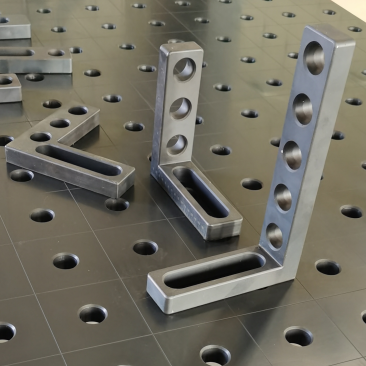
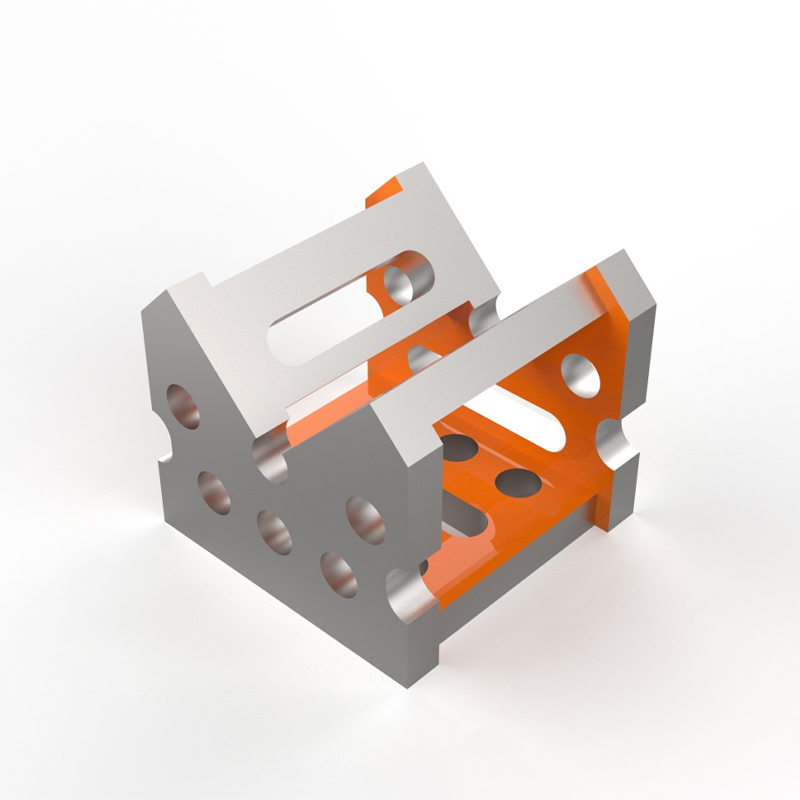
Angle brackets and cubes enable the creation of complex 3D structures. These tools often feature multiple mounting faces, allowing attachment from various angles.
Key positioning tools include:
- Corner Cubes: For creating perfect 90-degree corners in box sections.
- Adjustable Stops: For setting repeatable lengths and widths.
- Pin Sets: To locate parts precisely within the grid.
These accessories transform the table from a passive surface into an active fixture, guiding the assembly process with mathematical precision.
Step-by-Step Guide to Setting Up Your Weldsale Table
Proper setup is essential to maximize the lifespan and accuracy of your weldsale table. Following a systematic approach ensures stability and safety from day one.
Whether you are installing a single unit or a multi-table array, these steps will guide you through the process.
- Step 1: Site Preparation: Ensure the floor is level and capable of supporting the table’s weight plus the maximum load. Clean the area of debris and oil.
- Step 2: Uncrating and Inspection: Carefully remove packaging. Inspect the tabletop for any shipping damage and verify the hole pattern is clean and free of obstruction.
- Step 3: Positioning and Leveling: Move the table into place using appropriate lifting equipment. Use the adjustable feet to level the table, checking with a precision spirit level in multiple directions.
- Step 4: Anchoring (Optional): For fixed installations, bolt the table legs to the floor to prevent movement during heavy use. Mobile units should have castor locks engaged.
- Step 5: Initial Tooling Setup: Install your primary clamps and stops. Perform a test assembly with a known square piece to verify the table’s accuracy.
- Step 6: Maintenance Routine: Establish a daily cleaning schedule to remove spatter from the holes using a dedicated reaming tool or brush.
Regular maintenance prevents the buildup of slag that can interfere with tool insertion and compromise positioning accuracy.
Real-World Applications and Case Studies
The versatility of the weldsale table makes it suitable for a wide range of industries. From aerospace to artistic metalwork, the principles of modular fixturing apply universally.
Examining real-world applications highlights how different sectors leverage this technology to solve specific challenges.
Automotive and Motorsport Fabrication
In the motorsport industry, precision is paramount. Roll cages and chassis components must be perfectly aligned to ensure safety and performance.
Fabricators use weldsale tables to build complex jigs quickly. The ability to adjust stop positions allows for rapid prototyping of new chassis designs without welding permanent fixtures.
Key benefits in this sector:
- Reduced development time for custom race cars.
- Guaranteed symmetry in left and right-hand components.
- Ability to hold thin-walled tubing without distortion during welding.
The repeatability of the system ensures that every chassis produced meets the exact same specifications.
Structural Steel and Construction
For structural steel fabricators, the challenge often lies in the size and weight of the components. Linkable weldsale tables provide the necessary surface area.
Large beam connections and truss assemblies can be laid out flat, squared, and tack welded with confidence. The modular nature allows for the creation of custom assembly lines.
Operational improvements include:
- Faster assembly of repetitive truss sections.
- Improved fit-up accuracy, reducing field adjustment needs.
- Safer working conditions by keeping heavy parts stable at waist height.
This application demonstrates how scalability turns a standard tool into a heavy-industry solution.
Artistic and Architectural Metalwork
Artists and architects often deal with unique, one-off pieces that defy standard jigs. The flexibility of the weldsale table is ideal for this creative environment.
Complex geometric sculptures can be built up incrementally, with supports added and moved as needed. The clean, professional finish of the table also protects delicate materials.
Creative advantages:
- Freedom to experiment with complex angles and shapes.
- Easy cleanup and reconfiguration between diverse projects.
- Professional presentation for client viewings in the workshop.
The table becomes a canvas for creativity, removing technical barriers to realizing complex designs.
Future Trends in Welding Table Technology
As we progress through 2026, the evolution of the weldsale table continues. Emerging technologies are poised to further enhance functionality and integration with digital workflows.
Staying ahead of these trends can provide a competitive edge for forward-thinking fabrication shops.
Integration with Digital Fabrication
The future lies in the connection between physical fixturing and digital design. We are seeing the rise of tables compatible with augmented reality (AR) projection systems.
These systems project the CAD layout directly onto the table surface, guiding the operator on exactly where to place clamps and parts. This reduces setup time and eliminates interpretation errors.
Emerging features include:
- QR-coded hole grids for automatic tool recognition.
- Integrated sensors to monitor load distribution and clamp status.
- Software interfaces that translate BIM models directly to table coordinates.
This digital-physical bridge represents the next frontier in smart manufacturing.
Sustainable Manufacturing Practices
Sustainability is becoming a key consideration in sourcing decisions. Manufacturers are adopting eco-friendly processes and materials.
New surface treatments are being developed that eliminate hazardous chemicals while providing superior protection. Additionally, the longevity of modular tables aligns with circular economy principles.
Eco-conscious developments:
- Use of recycled steel in table construction.
- Water-based powder coatings with low VOC emissions.
- Design for disassembly to facilitate recycling at end-of-life.
Choosing a supplier who prioritizes sustainability can enhance your own company’s green credentials.
How to Select the Right China Manufacturer
With countless suppliers available, selecting the right partner is critical. A reliable manufacturer ensures quality, timely delivery, and after-sales support.
Due diligence is essential to avoid common pitfalls associated with international sourcing.
Key Criteria for Evaluation
Look for manufacturers with a proven track record in exporting to your region. Experience with international logistics and compliance standards is invaluable.
Verify their production capabilities. Do they own their machinery, or are they a trading company? Direct factories usually offer better control over quality and pricing.
Checklist for supplier selection:
- Certifications: ISO 9001, CE marking, and other relevant quality standards.
- Portfolio: Request photos or videos of previous projects similar to your needs.
- Communication: Assess their responsiveness and technical knowledge during inquiries.
- Warranty: Clear terms on warranty coverage for structural defects and surface issues.
Requesting samples or visiting the factory (virtually or in person) can provide definitive proof of capability.
Navigating Logistics and Import
Shipping heavy steel tables requires careful planning. Understand the Incoterms offered by the supplier (e.g., FOB, CIF, DDP).
Calculate the total landed cost, including ocean freight, port charges, customs duties, and inland transportation. Consolidating orders with other goods can optimize shipping costs.
Logistics tips:
- Ensure packaging is robust enough to prevent rust and damage during sea transit.
- Verify the dimensions and weight to ensure compatibility with your receiving dock’s equipment.
- Work with a experienced freight forwarder familiar with industrial machinery imports.
Smooth logistics are the final piece of the puzzle in successfully acquiring a high-quality weldsale table.
Conclusion: Investing in Efficiency with Weldsale Tables
The decision to invest in a weldsale table is a strategic move towards greater efficiency, precision, and profitability. In 2026, the availability of high-quality, modular designs from China manufacturers makes this technology accessible to businesses of all sizes.
By understanding the core technologies, evaluating the right configurations, and selecting a reputable supplier, you can transform your fabrication workflow. The initial investment pays dividends through reduced labor hours, minimized rework, and enhanced product quality.
Whether you are outfitting a new shop or upgrading existing equipment, the modular weldsale table stands out as the cornerstone of modern welding operations. Embrace the flexibility and precision it offers to stay competitive in an evolving industrial landscape.
Ready to upgrade your workshop? Explore the latest modular designs and secure the best price directly from top-rated China manufacturers today.