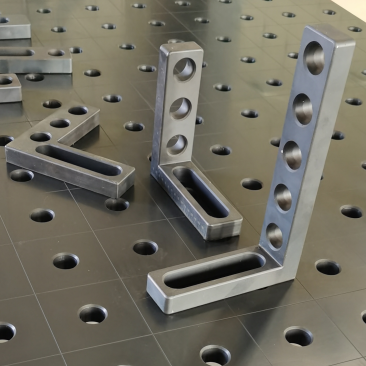
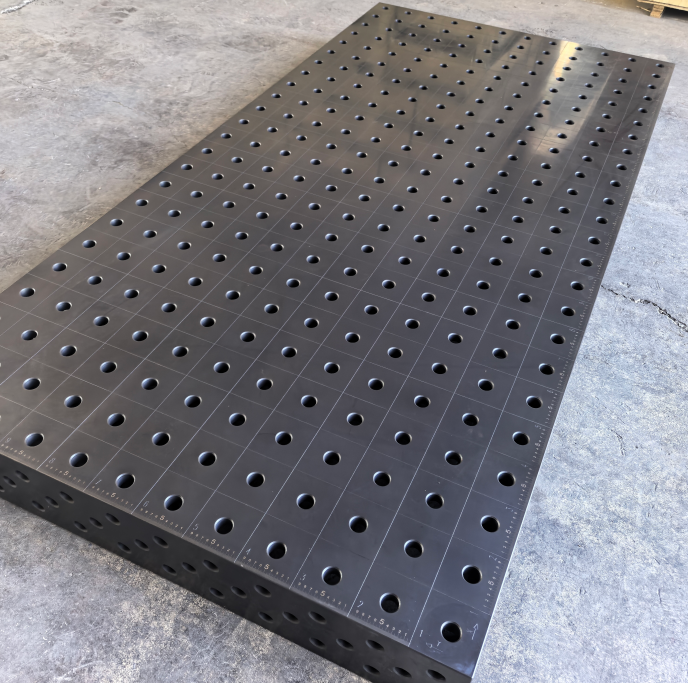
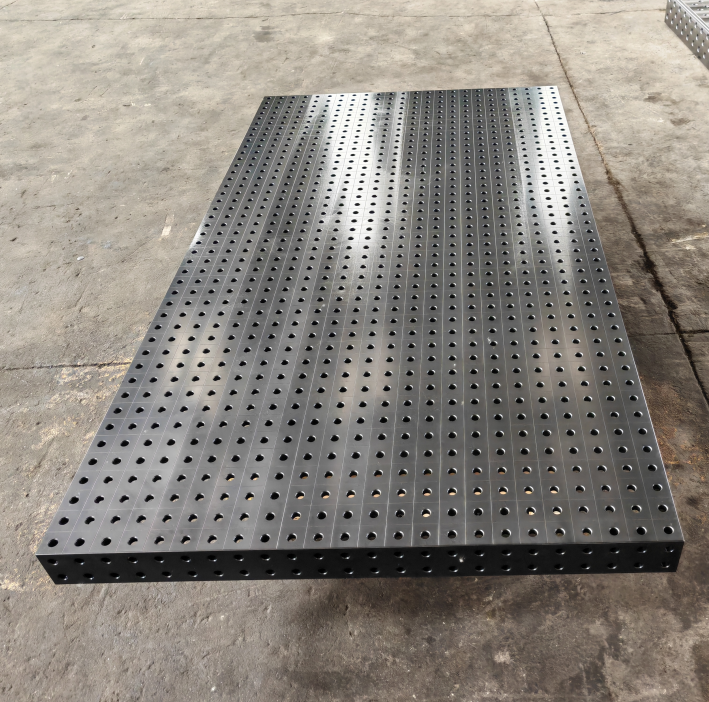
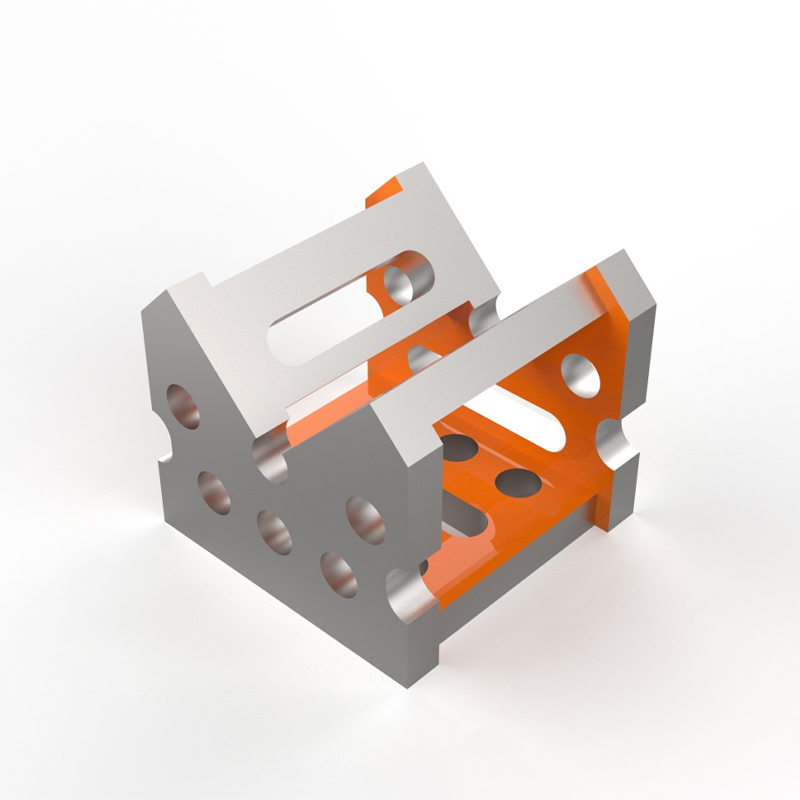
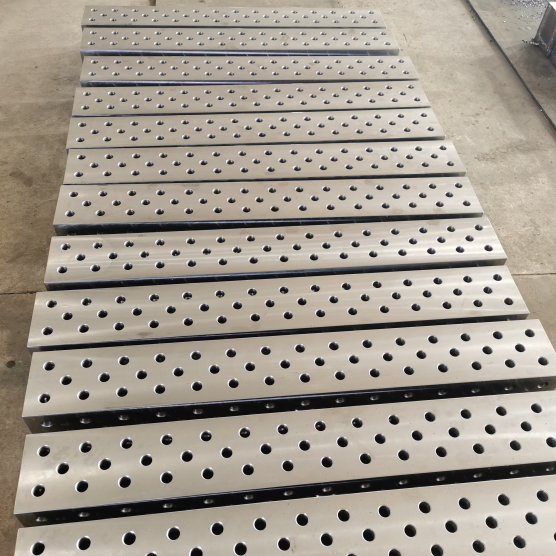
A Welding Platform is a precision-engineered work surface featuring a grid of holes or slots, designed to securely clamp, position, and align metal components for accurate welding assembly. In 2026, buying the right platform involves evaluating material grade (HT200 vs. HT300), hole system compatibility (D16/D28), and total lifecycle costs, with standard units ranging from $1,000 to $10,000 depending on customization and load capacity.
Understanding the 2026 Welding Platform Market Landscape
The global manufacturing sector in 2026 has shifted dramatically towards flexible, modular fabrication systems. The traditional fixed jig is rapidly being replaced by the three-dimensional Welding Platform. This evolution is driven by the need for rapid changeovers in small-batch production and the rising labor costs associated with manual fitting.
Modern platforms are no longer just tables; they are the foundation of automated cells. They integrate seamlessly with robotic arms, vision systems, and servo-positioners. The market now demands surfaces that can withstand high thermal stress while maintaining geometric stability within microns.
Buyers today face a complex array of choices. From entry-level cast iron tables for small workshops to massive, nitrided steel structures for heavy industrial assembly lines, the specifications vary widely. Understanding these differences is crucial for making a sound investment.
The core value proposition of a 2026-era platform lies in its versatility. A single unit can replace dozens of dedicated fixtures. This modularity reduces floor space requirements by up to 40% and significantly lowers the capital expenditure needed for new product introductions.
Key Drivers Behind the Shift to Modular Fixturing
Several factors are accelerating the adoption of advanced Welding Platform systems. First, the rise of electric vehicle (EV) battery tray manufacturing requires extreme precision and repeatability. Second, the construction industry’s move towards prefabricated steel modules demands faster assembly times.
Third, the integration of AI-driven quality control means that the physical setup must be perfect before the robot even strikes an arc. Any deviation in the base platform translates directly into weld defects. Therefore, the stability of the table is as critical as the robot itself.
Furthermore, supply chain resilience has become a priority. Companies prefer equipment that can be reconfigured instantly when product designs change, rather than waiting weeks for new custom fixtures to be machined. This agility is the hallmark of the modern 3D welding table.
Technical Specifications: What to Look for in 2026
When evaluating a Welding Platform, technical specifications go beyond simple dimensions. The material composition, heat treatment, and hole tolerance define the tool’s lifespan and accuracy. In 2026, the industry standard has moved firmly towards high-grade materials.
The most critical specification is the steel grade. Platforms made from HT200 cast iron are common for light-duty work. However, for serious industrial applications involving heavy loads or continuous use, HT300 is the required standard. This material offers superior vibration damping and resistance to deformation.
Surface treatment is another vital factor. Nitriding is the preferred process in 2026. It creates a hard, wear-resistant outer layer that prevents spatter adhesion and resists corrosion. Unlike painted surfaces, a nitrided finish maintains its integrity even after years of grinding and hammering.
Hole Systems: D16 vs. D28 Standards
The hole pattern defines the ecosystem of clamps and tools you can use. The two dominant standards are the D16 system (16mm holes) and the D28 system (28mm holes). Choosing the right one depends entirely on your workload and part size.
The D16 system is ideal for sheet metal work, lightweight frames, and precision instrumentation. With a typical hole spacing of 50mm or 100mm, it offers high density for fine adjustments. It is the go-to choice for industries like aerospace component assembly and medical device manufacturing.
The D28 system is built for heavy structural steel, automotive chassis, and large machinery. The larger holes accommodate robust clamping forces required for thick plates. Load capacities for D28 tables often exceed 3 tons, with some heavy-duty models reaching 5 tons or more.
Compatibility is key. While adapters exist, mixing systems on a single table can compromise rigidity. It is best to select a platform that matches the majority of your production needs. Many manufacturers now offer hybrid tables, but pure systems generally provide better long-term value.
Precision Tolerances and Flatness
In high-precision welding, flatness is non-negotiable. A warped table leads to misaligned joints and residual stress in the final product. Top-tier manufacturers in 2026 guarantee hole center distances with tolerances as tight as ±0.05mm.
This level of precision ensures that when you insert a stop or a clamp, it is exactly where the CAD model says it should be. For robotic welding cells, this eliminates the need for extensive recalibration every time a new job is loaded.
Surface flatness is typically measured across the entire plane. High-quality tables undergo stress-relief annealing before machining to prevent future warping. Buyers should always request certification of flatness, especially for tables larger than 2×4 meters.
Comprehensive Price Analysis and Cost Factors
The cost of a Welding Platform in 2026 varies significantly based on size, material, and configuration. Understanding the price drivers helps buyers avoid overpaying for features they do not need or under-investing in critical durability aspects.
Entry-level tables, often made from lower-grade steel with basic painting, can start around $1,000 for small units. These are suitable for hobbyists or very light repair work. However, they lack the longevity and precision required for professional production environments.
Mid-range professional tables, featuring HT200 cast iron and standard hole patterns, typically fall between $2,500 and $8,000. This range includes popular sizes like 1m x 2m or 1.5m x 3m. They offer a good balance of performance and affordability for small to medium enterprises.
High-End Industrial Solutions
For heavy-duty applications, prices range from $10,000 to over $50,000. These units are constructed from HT300 steel, feature full nitriding, and include custom hole layouts. They are engineered to support multi-ton loads without deflection.
Customization adds to the cost. Non-standard sizes, special slot configurations, or integrated T-slots can increase the base price by 30% to 60%. However, these customizations often eliminate the need for additional adapter plates, saving money in the long run.
It is also important to consider the total cost of ownership. A cheaper table may require replacement within two years due to wear or warping. A premium HT300 table can last decades, making the initial investment more economical over time.
Accessories and Hidden Costs
The platform itself is only part of the equation. A functional system requires clamps, stops, angles, and pins. A basic starter kit of accessories can cost as much as the table itself. Buyers should budget for a comprehensive set of tooling immediately.
Shipping is another significant factor. Welding tables are extremely heavy. Freight costs for a 2-ton table can be substantial, especially for international orders. Some suppliers include shipping in the quote, while others charge separately.
Import duties and taxes must also be factored into the final budget. When sourcing from major manufacturing hubs like China, these fees can add 10-20% to the landed cost. Transparent pricing from suppliers helps in accurate financial planning.
Material Science: HT200 vs. HT300 Cast Iron
The choice between HT200 and HT300 is the most critical decision in platform selection. These designations refer to the tensile strength of the cast iron. HT200 offers a minimum tensile strength of 200 MPa, while HT300 provides 300 MPa.
HT200 is sufficient for general fabrication, light structural work, and prototyping. It has good machinability and adequate damping properties. For shops working primarily with mild steel sheets or thin-walled tubes, HT200 is a cost-effective choice.
HT300, however, is the gold standard for 2026’s demanding applications. Its higher carbon content and refined microstructure provide exceptional rigidity. It resists bending under heavy clamping forces and maintains accuracy under thermal cycling.
Why Nitriding Matters for Longevity
Surface hardness is essential for a welding table. Without treatment, soft iron will quickly become pitted by arc strikes and scratched by sliding heavy parts. Nitriding diffuses nitrogen into the surface, creating a case-hardened layer.
This process increases surface hardness significantly, making it difficult for welding spatter to fuse to the table. Spatter can be easily chipped off, reducing cleanup time. It also provides excellent corrosion resistance, eliminating the need for oils or waxes.
In 2026, nearly all reputable manufacturers offer nitriding as a standard or optional upgrade. Buyers should verify the depth of the nitrided layer. A deeper case ensures that the benefits last even after years of resurfacing or heavy use.
Thermal Stability and Stress Relief
Casting introduces internal stresses that can cause distortion over time. High-quality manufacturers perform stress-relief annealing. This involves heating the casting to a specific temperature and cooling it slowly to release internal tensions.
This step is crucial for large tables. Without it, a table might arrive flat but warp within months of use. Stress-relieved tables maintain their geometric integrity, ensuring that the hole pattern remains true throughout the equipment’s life.
Thermal stability is also vital during welding. As heat is applied to the workpiece, the table absorbs some of it. A stable material expands uniformly, preventing localized distortions that could misalign the assembly.
Comparison of Leading Welding Platform Solutions
Selecting the right provider involves comparing technical capabilities, pricing models, and support services. The market in 2026 is diverse, with options ranging from specialized Chinese exporters to local domestic fabricators.
| Solution Type |
Key Characteristics |
Ideal Application Scenarios |
| Standard D16 System |
Lightweight, high hole density, ±0.05mm tolerance, cost-effective |
Precision sheet metal, electronics enclosures, medical devices, prototyping |
| Heavy-Duty D28 System |
HT300 material, nitrided surface, 3-5 ton load capacity, robust clamping |
Automotive chassis, heavy machinery, structural steel beams, shipbuilding modules |
| Octagonal 3D Tables |
Multi-angle faces, compatible with turners/positioners, flexible geometry |
Complex pipe fabrication, angular frame assembly, robotic cell integration |
| Custom Hybrid Platforms |
Mixed hole sizes, integrated T-slots, tailored dimensions, higher cost |
Specialized aerospace parts, unique architectural structures, high-volume dedicated lines |
The Standard D16 System dominates the precision market. Its fine grid allows for intricate setups that would be impossible with larger holes. It is the preferred choice for industries where millimeter-level accuracy dictates product quality.
The Heavy-Duty D28 System is indispensable for structural work. Its ability to handle massive weights without flexing makes it the backbone of heavy industry. The larger clamps provide the necessary force to hold thick plates in place during high-heat welding.
Octagonal 3D Tables represent the pinnacle of flexibility. By allowing access from multiple angles, they facilitate complex welds without re-fixturing. When paired with motorized positioners, they enable fully automated multi-axis welding sequences.
Evaluating Supplier Capabilities
When sourcing from manufacturers, particularly in major hubs like Wuxi or Shenzhen, verification is key. Look for suppliers with audited status and a proven track record of exports to demanding markets like the US, Germany, and Japan.
Production capacity is another indicator. A factory capable of producing 1,000 units per month likely has mature quality control processes. Check for certifications such as ISO 9001, which ensures consistent manufacturing standards.
After-sales support is often overlooked but critical. Does the supplier offer replacement parts? Can they provide technical drawings for custom tooling? A responsive supplier can minimize downtime if a specific clamp or pin is lost or damaged.
Integration with Automation and Robotics
In 2026, the Welding Platform is rarely an island. It is the stage upon which automation performs. Integration with robotics requires specific considerations regarding mounting points, clearance, and signal interfacing.
Robotic cells demand absolute repeatability. The platform must allow the robot to return to the exact same coordinate system every cycle. This is achieved through precision-machined reference edges and standardized hole patterns that match the robot’s tooling.
Many modern tables feature threaded inserts or tapped holes specifically designed for mounting external axes or turntables. This modularity allows the workspace to expand dynamically. A simple table can transform into a multi-station rotary index system.
Compatibility with Vision Systems
Advanced welding cells now employ 3D vision cameras to detect part placement errors. The welding table plays a role here too. Its surface finish must not reflect laser light in a way that confuses the sensors. Matte, nitrided surfaces are ideal for this.
The hole pattern can also serve as a calibration grid for vision systems. Known coordinates allow the camera to triangulate the position of the workpiece accurately. This synergy between physical fixturing and digital sensing is the future of smart manufacturing.
Furthermore, cable management is crucial. Robots generate significant movement. Tables with integrated channels or under-table trays help keep power and data cables organized, preventing snagging and wear during high-speed operations.
Supporting Flexible Manufacturing Systems
The trend towards “High-Mix, Low-Volume” production means tables must be reconfigured quickly. Quick-change clamping systems are becoming standard. These allow operators to swap fixtures in minutes rather than hours.
Digital twins of the welding table are now common. Engineers simulate the entire welding process in software before cutting metal. Having an accurate 3D model of the physical table, complete with hole locations, is essential for collision-free programming.
This digital-physical link reduces setup errors and accelerates time-to-market. Companies that invest in platforms with available CAD libraries gain a significant competitive advantage in agile manufacturing.
Step-by-Step Guide to Selecting Your Platform
Choosing the right Welding Platform is a strategic process. Following a structured approach ensures that the selected equipment meets both current needs and future growth plans.
- Step 1: Define Workpiece Parameters. Determine the maximum size, weight, and material thickness of the parts you will weld. This dictates the table size and load capacity (HT200 vs. HT300).
- Step 2: Choose the Hole System. Select D16 for precision/light work or D28 for heavy structural tasks. Consider future projects to ensure scalability.
- Step 3: Assess Precision Requirements. If you are doing robotic welding or aerospace work, demand ±0.05mm tolerance and certified flatness reports.
- Step 4: Evaluate Surface Treatment. Insist on nitrided surfaces for durability and spatter resistance. Avoid painted tables for production environments.
- Step 5: Calculate Total Budget. Include the cost of the table, a comprehensive accessory kit, shipping, and import duties. Do not underestimate the cost of tooling.
- Step 6: Verify Supplier Credentials. Check for audits, customer reviews, and export history. Request samples or visit the factory if possible.
This systematic evaluation minimizes the risk of purchasing inadequate equipment. It ensures that every dollar spent contributes directly to improved productivity and quality.
Common Pitfalls to Avoid
One common mistake is buying a table that is too small. While it saves upfront costs, it limits the size of assemblies you can build. Always choose a table slightly larger than your current maximum requirement.
Another error is neglecting the accessory ecosystem. A table without clamps is useless. Ensure the supplier offers a wide range of compatible tools, including angle brackets, magnetic stops, and toggle clamps.
Finally, do not ignore foundation requirements. Heavy tables need a level, solid floor. Installing a 3-ton table on an uneven surface will induce stress and compromise accuracy, regardless of the table’s quality.
Real-World Applications and Case Studies
The impact of a high-quality Welding Platform is best understood through real-world applications. Across various industries, these tables are driving efficiency and quality improvements.
In the automotive sector, manufacturers use D28 tables to assemble battery trays for electric vehicles. The precision of the hole system ensures that cooling channels align perfectly, preventing leaks. The rigid structure supports the heavy weight of battery modules during laser welding.
The construction industry utilizes large octagonal tables for prefabricating steel beams and columns. By rotating the table, welders can access all joints without using overhead cranes. This has reduced assembly time for H-beams by over 50% in some reported cases.
Success in Aerospace and Defense
Aerospace contractors rely on D16 systems for fabricating engine mounts and fuselage frames. The tight tolerances ensure that components fit together without forced alignment, which could introduce stress cracks. The non-sparking nature of certain treated surfaces is also a safety plus.
In defense manufacturing, modular tables allow for rapid prototyping of armored vehicle components. Designs can be iterated quickly by simply moving clamps to new positions. This agility is crucial for meeting tight development deadlines.
These examples illustrate that the welding table is not just a passive tool. It is an active enabler of modern manufacturing strategies, directly influencing throughput, quality, and profitability.
Impact on Small Business Growth
Small job shops have also benefited immensely. By replacing dedicated fixtures with a single modular table, they can accept a wider variety of jobs. This flexibility allows them to pivot quickly when market demands shift.
Reduced setup times mean more arc-on time. A shop that used to spend four hours setting up a job can now do it in thirty minutes. This increase in utilization rates often pays for the equipment within the first year of operation.
Maintenance and Care for Long-Term Performance
To maximize the lifespan of your Welding Platform, proper maintenance is essential. While these tables are built to last, neglect can lead to premature wear and loss of accuracy.
Regular Cleaning: Remove welding spatter daily. Use a scraper or a specialized spatter removal tool. Avoid grinding the table surface unless absolutely necessary, as this removes the nitrided layer.
Lubrication: Keep moving parts of clamps and pins lubricated. Rust prevention is critical, especially in humid environments. Apply a thin coat of rust inhibitor if the table will be idle for extended periods.
Periodic Calibration Checks
Over time, heavy impacts can slightly shift the table’s position or damage specific holes. Conduct annual flatness checks using a precision level or laser scanner. If deviations are found, professional resurfacing may be required.
Inspect the hole threads periodically. Cross-threading from careless insertion of pins can ruin the usability of a hole section. Train operators to insert tools straight and gently to preserve the integrity of the grid.
Proper care ensures that your investment retains its value. A well-maintained table from 2026 will still be performing at peak efficiency in 2040, serving as a cornerstone of your fabrication capability.
Future Trends in Welding Fixturing Technology
Looking beyond 2026, the evolution of the Welding Platform continues. We can expect to see deeper integration with IoT (Internet of Things) technologies. Smart tables equipped with sensors could monitor load distribution and temperature in real-time.
Active compensation systems might emerge, where the table automatically adjusts its surface to counteract thermal distortion during welding. This would push precision to unprecedented levels, enabling new possibilities in ultra-high-tolerance assembly.
Sustainability will also play a larger role. Manufacturers are exploring eco-friendly coatings and recycling programs for old cast iron tables. The circular economy concept is beginning to take hold in the heavy equipment sector.
The Rise of Adaptive Clamping
Future accessories may feature adaptive clamping mechanisms that auto-lock upon insertion. This would further reduce setup times and eliminate human error in clamping force application. Combined with AI vision, the setup process could become almost entirely autonomous.
As robotics become more collaborative (cobots), welding tables will need to adapt to safer, lighter designs that still offer high rigidity. The boundary between the table and the robot end-effector may blur, creating unified manipulation systems.
These advancements promise to make welding even more efficient and accessible. Staying informed about these trends helps businesses plan their capital expenditures strategically for the next decade.
Conclusion: Making the Right Investment Decision
Purchasing a Welding Platform in 2026 is a strategic decision that impacts your production capacity, product quality, and bottom line. The market offers a wide spectrum of solutions, from affordable entry-level units to sophisticated industrial systems.
By prioritizing material quality (HT300), surface treatment (nitriding), and system compatibility (D16/D28), buyers can secure a tool that serves their business for decades. The initial cost is merely a fraction of the value generated through improved efficiency and reduced waste.
Whether you are outfitting a small job shop or expanding a massive automated cell, the right welding platform provides the stability and flexibility needed to thrive in a competitive market. Invest wisely, plan for the future, and let precision be the foundation of your success.
Remember, the best platform is not necessarily the most expensive one, but the one that perfectly aligns with your specific technical requirements and growth trajectory. Take the time to evaluate, compare, and select the solution that empowers your workforce to achieve excellence.