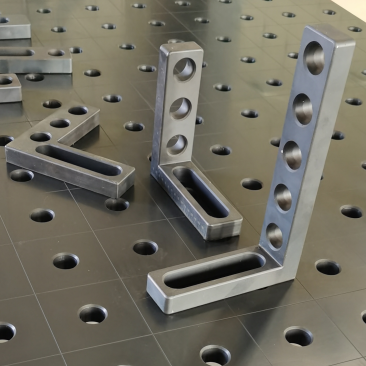
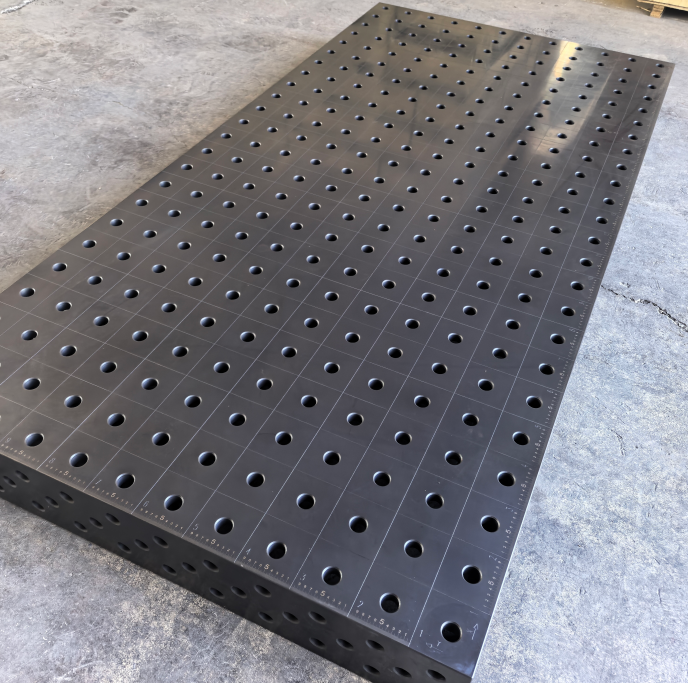
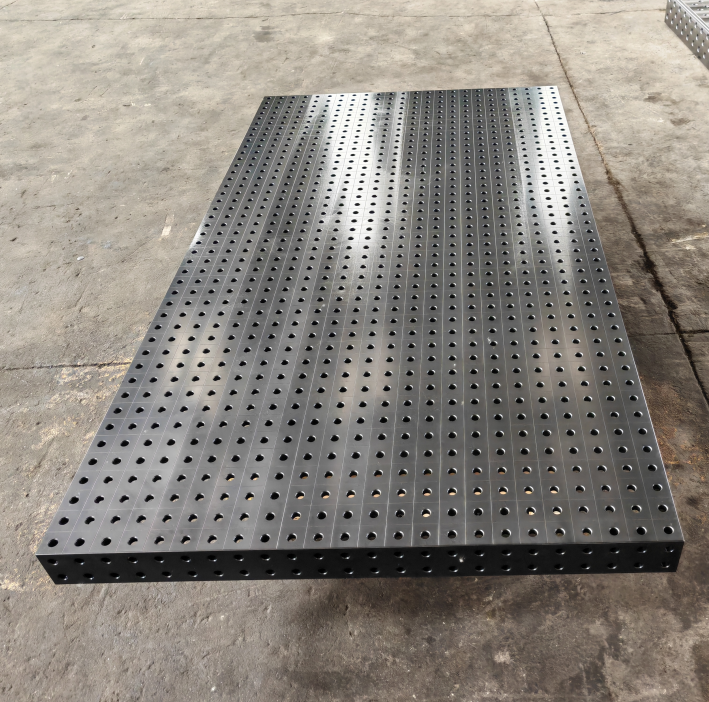
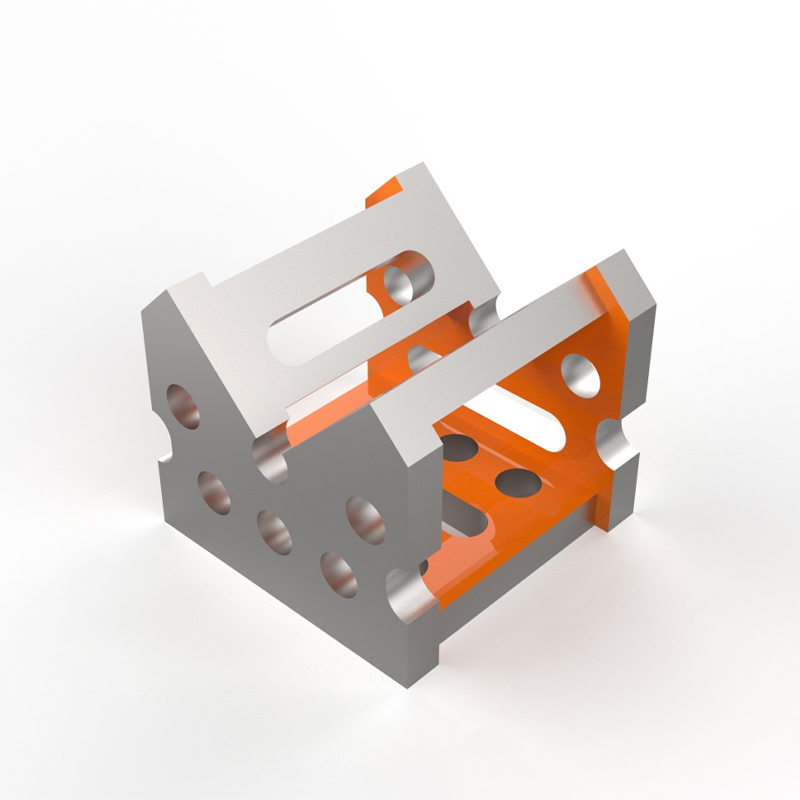
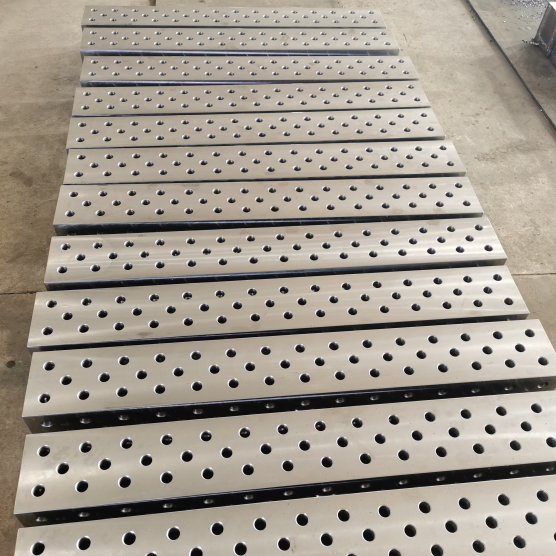
A welding fixture table top is a precision-engineered, flat work surface featuring a grid of holes or slots designed to hold, clamp, and position metal components accurately during welding. For 2026, prices for high-quality cast iron and steel tops from Chinese manufacturers typically range from $500 to $4,000 per unit, depending on size, material grade, and customization options like 3D modular systems.
Understanding the Welding Fixture Table Top in 2026
The manufacturing landscape has shifted significantly towards flexible fabrication. The welding fixture table top is no longer just a flat surface; it is the foundation of modern modular fixturing systems. In 2026, these tables are engineered to withstand extreme thermal cycles while maintaining geometric accuracy.
Industry experts define these tops as the critical interface between the welder and the workpiece. They eliminate the need for custom-built jigs for every new project. Instead, workers use standardized clamps and stops inserted into the table’s grid.
This shift supports “lean manufacturing” principles. By reducing setup time, factories increase throughput. The demand for durable, heat-resistant tops has surged in sectors like shipbuilding, automotive, and heavy machinery.
Modern tops are available in two primary configurations: 2D and 3D. A 2D top features holes on a single horizontal plane. A 3D top includes holes on the sides and sometimes the bottom, allowing for multi-axis clamping.
Selecting the right top requires understanding load capacities and thermal expansion coefficients. Cheap alternatives often warp under high heat, ruining precision. Premium options use stress-relieved cast iron or specialized alloy steel.
Key Materials: Cast Iron vs. Steel
Material selection dictates the lifespan and performance of your welding fixture table top. The two dominant materials in the 2026 market are cast iron and structural steel.
Cast Iron remains the gold standard for precision. Its graphite microstructure provides excellent vibration damping. This reduces noise and prevents weld defects caused by movement. It also retains heat well, distributing thermal energy evenly to prevent localized warping.
Steel tops, often made from high-tensile structural steel, offer superior impact resistance. They are lighter than cast iron and less prone to cracking if dropped. However, they may warp more easily under intense, concentrated heat without proper reinforcement.
Recent industry trends show a hybrid approach. Some manufacturers coat steel tops with ceramic or nickel-based alloys to improve heat resistance. Others use ductile iron to balance strength and damping properties.
For high-volume production involving heavy impacts, steel is often preferred. For intricate, precision welding where vibration control is paramount, cast iron is the superior choice.
2026 Pricing Trends for Welding Fixture Table Tops
Pricing for welding fixture table top units varies widely based on specifications. As of early 2026, market data indicates a clear segmentation between entry-level, mid-range, and premium industrial models.
Entry-level steel tops, often thinner and with fewer mounting points, can be found starting around $500. These are suitable for light-duty workshops or educational institutions. They typically lack the rigorous stress-relieving processes of industrial grades.
Mid-range cast iron tables, such as standard 1000x1500mm models with D16 or D28 hole patterns, generally fall between $900 and $2,000. This price point includes basic accessories and offers a strong balance of durability and cost.
Premium 3D modular systems with five working surfaces and custom fixtures command prices from $2,000 to $4,000 or higher. These units often include advanced clamping systems and are built for continuous heavy industrial use.
Customization plays a significant role in final costs. Requests for specific hole spacings, non-standard dimensions, or integrated T-slots can increase the price by 15-30%. However, bulk orders often reduce the per-unit cost significantly.
Shipping and logistics also affect the landed cost. Since these tables are heavy, freight charges from China to global destinations can be substantial. Buyers should factor in CIF (Cost, Insurance, and Freight) terms when comparing quotes.
Cost Factors Influencing Your Purchase
Several technical variables drive the price differences seen in the 2026 market. Understanding these helps buyers avoid overpaying for features they do not need.
- Thickness: Thicker tops (e.g., 50mm vs. 20mm) resist warping better but cost more in material and shipping weight.
- Hole Pattern Density: A finer grid (e.g., 100mm spacing) offers more flexibility but requires more machining time, increasing costs.
- Heat Treatment: Stress-relieved and annealed tops are more expensive but guarantee long-term flatness.
- Surface Finish: Machined finishes provide better contact for clamps compared to raw cast surfaces.
- Accessories Included: Packages including clamps, stops, and angle brackets offer better value than buying the top alone.
Buyers should also consider the total cost of ownership. A cheaper top that warps after six months is more expensive than a premium top lasting ten years. Durability is a key metric in ROI calculations.
Technical Specifications and Standards
When sourcing a welding fixture table top, technical specifications are the language of quality. Ignoring these details can lead to incompatible tooling or premature failure.
The most common standard is the hole diameter system. D16 (16mm) and D28 (28mm) are the global norms. D16 is ideal for lighter fabrication and tubing. D28 is designed for heavy structural steel and large assemblies.
Hole spacing is another critical spec. Standard grids are usually 100x100mm or 50x50mm. Closer spacing allows for more precise positioning but reduces the structural integrity of the table if the material is too thin.
Flatness tolerance is vital for precision work. High-end tables boast tolerances within ±0.5mm over the entire surface. Lower-grade tables may have variances of ±2mm or more, which is unacceptable for automated welding cells.
Load capacity ratings indicate how much weight the table can support without deflecting. Industrial tables often support several tons distributed evenly. Point load capacity is equally important for heavy, concentrated fixtures.
Dimensional Accuracy and Tolerances
Precision manufacturing defines the utility of a welding fixture table top. The accuracy of the hole positions determines whether your fixtures will align correctly.
CNC machining ensures that hole patterns are consistent across the entire surface. Inconsistent spacing leads to “stack-up errors,” where small deviations accumulate, causing major misalignments in large assemblies.
Thermal stability is tested through repeated heating and cooling cycles. Quality manufacturers simulate years of use to ensure the table does not permanently deform. This is crucial for users performing high-heat processes like submerged arc welding.
Surface hardness is measured on the Rockwell scale. A harder surface resists damage from sparks, spatter, and accidental drops of heavy tools. Soft surfaces dent easily, creating uneven areas that compromise clamping.
Buyers should request certification documents regarding flatness and material composition. Reputable Chinese manufacturers provide test reports verifying that the product meets ISO or equivalent standards.
Comparative Analysis of Welding Table Solutions
Choosing the right solution involves comparing different types of tables against specific operational needs. The following table highlights the differences between common options available in 2026.
| Solution Type |
Key Characteristics |
Ideal Application |
| Standard 2D Cast Iron Top |
Excellent vibration damping, single-sided holes, heavy weight |
Precision pipe fitting, general fabrication, robotic welding cells |
| Heavy-Duty Steel Top |
High impact resistance, lower cost, prone to warping if thin |
Structural steel assembly, shipbuilding, rough construction |
| 3D Modular System |
Holes on 5 sides, maximum flexibility, highest price point |
Complex aerospace parts, custom machinery, multi-angle welding |
| Portable Light-Duty Top |
Lightweight, smaller footprint, limited load capacity |
On-site repairs, small workshops, educational training |
This comparison illustrates that there is no “one size fits all.” A shipyard requires the durability of steel, while an aerospace contractor needs the precision of a 3D cast iron system.
The trend in 2026 is towards modularity. Companies prefer buying a base welding fixture table top and expanding their system with additional tops or extensions as needed. This scalability protects initial investments.
Integration with automation is another differentiator. Tables designed for robotics often have specific grounding points and cable management channels built into the design. Standard manual tables lack these features.
How to Select the Right Manufacturer in China
China is the world’s leading producer of welding fixture table top units. However, the market is saturated with varying quality levels. Selecting the right partner is crucial for success.
Look for manufacturers with a proven track record in export. Companies specializing in industrial machinery rather than general hardware tend to have better quality control. Verify their production capacity and lead times.
Request samples or visit the factory if possible. Inspect the machining quality of the holes. They should be smooth, burr-free, and perfectly perpendicular to the surface. Rough edges indicate poor manufacturing.
Check for customization capabilities. Can they drill custom hole patterns? Do they offer unique sizes? A flexible manufacturer can tailor the product to your specific workflow requirements.
Communication is key. Ensure the supplier understands your technical requirements clearly. Misunderstandings about hole spacing or material grade can result in unusable products.
Evaluating Supplier Credibility
Trustworthiness is a pillar of EEAT. When evaluating a Chinese supplier, look for third-party certifications. ISO 9001 certification indicates a structured quality management system.
Review customer testimonials and case studies. Real-world feedback from companies in similar industries provides valuable insights into product performance and after-sales support.
Ask about warranty policies. A confident manufacturer will offer a warranty against warping and material defects. Clarify the terms for returns and replacements in case of shipping damage.
Payment terms should be secure. Use established platforms or letters of credit for large orders. Avoid suppliers who demand full payment upfront without any guarantees.
Installation and Maintenance Best Practices
Proper installation extends the life of your welding fixture table top. Even the highest quality table can fail if installed on an uneven floor or unsupported frame.
Ensure the supporting frame is rigid and level. Use adjustable feet to compensate for floor irregularities. The table must be fully supported to prevent sagging under load.
Grounding is essential for safety and weld quality. Connect the table directly to the welding ground to prevent stray currents. This also protects sensitive electronic equipment nearby.
Regular maintenance keeps the table functioning optimally. Clean spatter regularly using anti-spatter sprays. Avoid chipping spatter off with hard tools, as this can damage the hole edges.
- Daily: Wipe down the surface and remove loose debris.
- Weekly: Check clamps and stops for wear; lubricate moving parts.
- Monthly: Inspect the flatness using a straight edge; tighten frame bolts.
- Annually: Perform a comprehensive calibration check.
Neglecting maintenance leads to accumulated errors. Over time, small dents and debris build-up can compromise the precision of your entire fabrication process.
Troubleshooting Common Issues
Users may encounter issues like sticking clamps or uneven surfaces. Sticking clamps often result from spatter buildup inside the holes. Regular cleaning with a dedicated reamer solves this.
If the table appears warped, check the support frame first. Often, the frame has twisted, not the table itself. Re-leveling the frame usually resolves the issue.
Rust can be a problem in humid environments. Apply a thin coat of rust-inhibiting oil if the table will be idle for long periods. Avoid thick greases that attract dust and grit.
Real-World Applications and Case Studies
The versatility of the welding fixture table top is evident across diverse industries. From small job shops to massive shipyards, these tables are indispensable.
In the automotive sector, manufacturers use 3D tables to assemble complex chassis components. The ability to clamp parts from multiple angles reduces welding distortion and improves fitment.
Shipbuilding relies on large-scale steel tops for assembling hull sections. The durability of these tables withstands the harsh marine environment and heavy plate weights.
Aerospace firms utilize precision cast iron tops for fuel lines and structural brackets. The tight tolerances ensure that critical components meet stringent safety regulations.
Small businesses benefit too. A single modular table allows a small shop to tackle a wide variety of jobs without investing in multiple custom jigs. This flexibility is a competitive advantage.
Success Story: Streamlining Production
A mid-sized machinery manufacturer recently upgraded from traditional wooden benches to a modular welding fixture table top system. The results were immediate and impactful.
Setup times decreased by 60%. Workers could position parts in minutes rather than hours. The consistency of the grid eliminated measurement errors, reducing rework rates significantly.
The company reported a 25% increase in overall productivity within the first year. The initial investment was recovered in less than eight months due to labor savings and material efficiency.
This case underscores the transformative potential of modern fixturing. It is not just a purchase; it is a strategic upgrade to the manufacturing process.
Future Trends in Welding Fixturing Technology
The future of the welding fixture table top lies in smart integration and advanced materials. As Industry 4.0 evolves, tables are becoming smarter and more connected.
We expect to see tables with embedded sensors monitoring temperature and load in real-time. This data can optimize welding parameters and predict maintenance needs before failures occur.
New composite materials may offer the strength of steel with the damping properties of cast iron at a lower weight. This would revolutionize portable and mobile welding setups.
Automation compatibility will deepen. Tables will feature standardized interfaces for collaborative robots (cobots), allowing for seamless human-robot collaboration on the same workspace.
Sustainability is also a growing focus. Manufacturers are exploring eco-friendly coatings and recycling programs for old tables. The lifecycle of these products is being extended through better design.
Frequently Asked Questions
What is the difference between D16 and D28 tables?
D16 tables have 16mm holes and are suited for lighter work. D28 tables have 28mm holes for heavier loads and larger clamps.
Can I weld directly on the table surface?
Yes, but use spatter protection. Direct welding can damage the surface finish over time. Ceramic mats or sprays are recommended.
How do I clean a welding table top?
Use a wire brush for loose spatter and a dedicated scraper for stubborn deposits. Avoid abrasive grinding on the precision surface.
Are Chinese welding tables reliable?
Yes, provided you choose a reputable manufacturer with quality certifications. Many global brands source their tables from China.
Conclusion
Investing in a high-quality welding fixture table top is a strategic decision that pays dividends in precision, efficiency, and safety. The 2026 market offers a wide array of options from Chinese manufacturers, catering to every budget and application.
By understanding the nuances of materials, specifications, and pricing, buyers can make informed choices. Whether opting for robust steel or precision cast iron, the right table transforms the welding process.
Prioritize suppliers who demonstrate expertise and transparency. Look for evidence of rigorous testing and satisfied customers. A reliable partner ensures that your investment stands the test of time.
As fabrication demands grow, the role of the modular table becomes even more central. Embrace these technologies to stay competitive in an evolving industrial landscape. The future of welding is precise, flexible, and efficient.