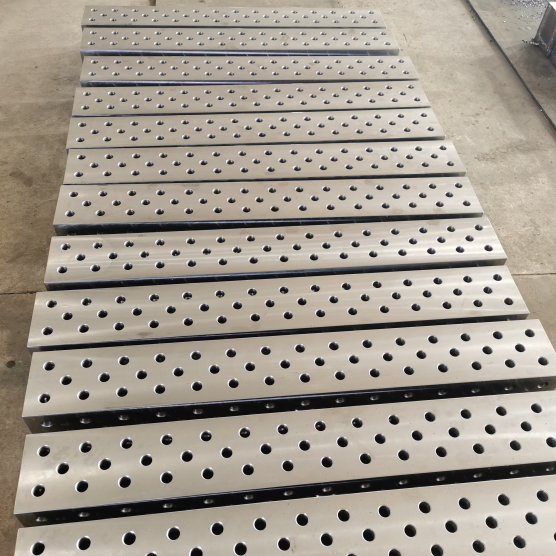
Choosing the right welding table top with holes is critical for precision, safety, and workflow efficiency in 2026. These perforated surfaces allow for infinite clamping configurations using modular fixturing systems, transforming a standard workbench into a versatile fabrication station. Whether you are a hobbyist or running an industrial shop, understanding the material grades, hole patterns, and emerging tech trends ensures you invest in a surface that lasts decades while adapting to modern welding automation.
What Is a Welding Table Top with Holes?
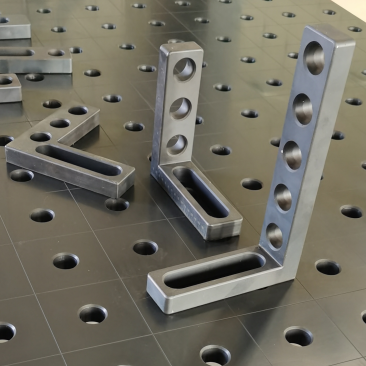
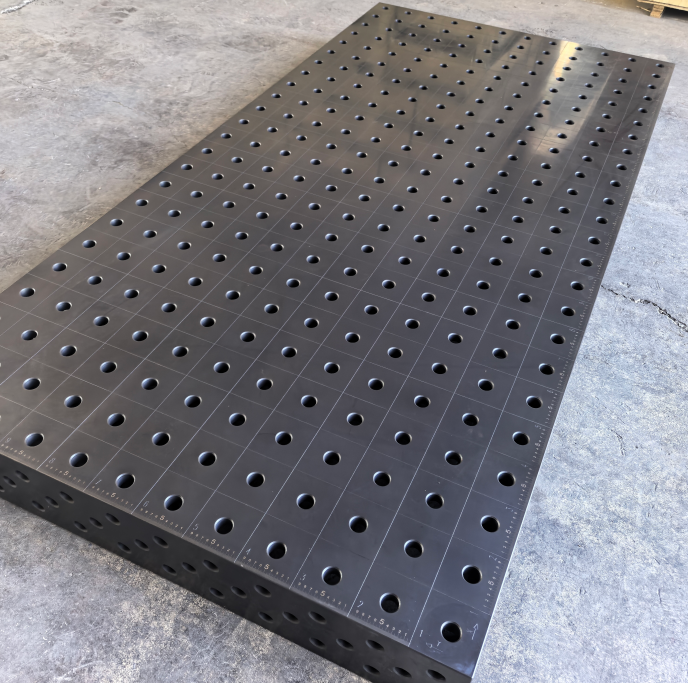
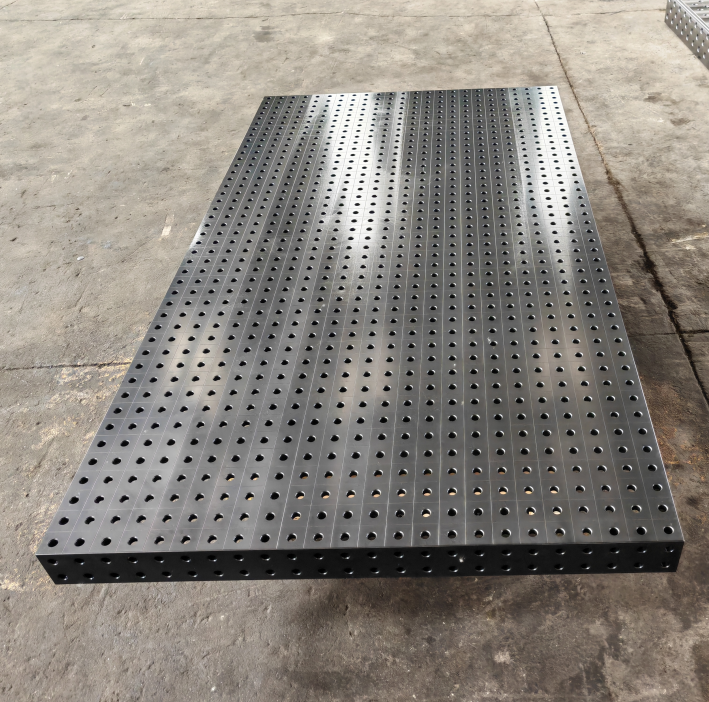
A welding table top with holes is a specialized steel plate featuring a precise grid of drilled or punched openings. Unlike solid tops, these holes serve as anchor points for clamps, stops, and angles, enabling users to secure workpieces in any position without traditional tack welding. This system, often referred to as “3D fixturing,” has become the industry standard for high-accuracy metal fabrication.
The primary function of these holes is modularity. By inserting hardened pins or bolts into the grid, welders can create custom jigs instantly. This capability drastically reduces setup time and improves repeatability for batch production. In 2026, the demand for these tables has surged due to the rise of small-batch manufacturing and the need for flexible workspace solutions.
Most professional-grade tops are constructed from low-carbon steel or alloy steel, treated to resist spatter adhesion. The hole pattern is typically uniform, allowing tools to be used at any point on the surface. This universality is what separates a premium welding table top with holes from a basic DIY workbench.
Key Technical Specifications for 2026 Models
When evaluating options for 2026, buyers must look beyond simple dimensions. The technical specifications define the longevity and utility of the table. Modern engineering focuses on flatness tolerance, material hardness, and hole precision to support increasingly complex projects.
Material Composition and Durability
The core material determines how well the table withstands heat, impact, and corrosion. Most high-end models utilize S355JR structural steel or equivalent alloys. These materials offer superior tensile strength compared to mild steel, reducing the risk of warping under heavy thermal stress.
- Low Carbon Steel: Cost-effective and easy to machine, but prone to warping if not stress-relieved.
- Alloy Steel: Offers higher hardness and better resistance to deformation, ideal for heavy-duty industrial use.
- Stainless Steel Options: Emerging in niche markets for clean-room environments, though significantly more expensive.
Surface treatment is equally vital. Many 2026 models feature anti-spatter coatings that prevent molten metal from fusing to the surface. This reduces cleanup time and preserves the integrity of the hole threads or edges.
Hole Patterns and Spacing Standards
The geometry of the hole grid dictates which fixtures you can use. The two dominant standards in the market are the 16mm and 28mm systems. Choosing the wrong pattern can limit your accessory compatibility.
The 16mm system is generally preferred for light to medium-duty work, offering a denser grid for finer adjustments. It is popular among artisans and small shops. Conversely, the 28mm system provides greater load-bearing capacity per pin, making it suitable for heavy structural steel fabrication.
Hole spacing usually follows a 100mm x 100mm grid. This standardization ensures that accessories from different manufacturers remain interchangeable. Precision drilling is crucial; even a millimeter of deviation can cause alignment issues when assembling large structures.
Flatness Tolerance and Surface Finish
For precision welding, the flatness of the table is non-negotiable. High-quality tops undergo milling or grinding to achieve a flatness tolerance within ±0.5mm over the entire surface. This ensures that assemblies do not twist or bow during the cooling process.
In 2026, laser scanning verification is becoming common for premium brands. Manufacturers provide certification documents proving the flatness of each batch. A rough surface finish can trap debris, while an overly polished one might reflect arc glare uncomfortably. A matte, shot-blasted finish is currently the industry preference.
Comparison: Solid Top vs. Perforated Welding Table
Deciding between a solid top and a welding table top with holes depends largely on your specific workflow. While solid tops have their place, the versatility of perforated surfaces offers distinct advantages for most modern applications.
| Feature |
Solid Welding Table |
Welding Table Top with Holes |
| Clamping Flexibility |
Limited to edge clamping or magnetic bases |
Unlimited positioning via grid holes |
| Setup Speed |
Slow; requires tack welding or custom jigs |
Fast; modular fixtures lock in seconds |
| Repeatability |
Low; difficult to replicate exact setups |
High; pins ensure identical positioning |
| Cost |
Lower initial investment |
Higher upfront cost plus fixture expenses |
| Maintenance |
Easy to clean, but spatter sticks easily |
Holes can clog with slag; requires regular cleaning |
| Best Use Case |
General cutting, grinding, and heavy beating |
Precision assembly, pipe fitting, and batch production |
The data clearly shows that for anyone focused on accuracy and efficiency, the perforated option is superior. However, solid tops remain relevant for tasks involving heavy hammering where hole integrity might be compromised.
Top Tech Trends Shaping Welding Tables in 2026
The fabrication industry is evolving rapidly, and welding tables are no exception. In 2026, several technological advancements are redefining what users expect from their work surfaces. These trends focus on integration, smart materials, and ergonomic design.
Integration with Automation and Robotics
As collaborative robots (cobots) become more common in small shops, welding tables are being designed with robotic mounting points in mind. The standardized hole grids allow robots to be anchored directly to the table, ensuring stable operation during automated welding cycles.
Manufacturers are now reinforcing specific zones of the table to handle the dynamic loads of robotic arms. This convergence of manual and automated workflows requires a welding table top with holes that maintains its flatness even under vibrational stress.
Advanced Anti-Spatter Nanocoatings
Cleanup is the most hated part of welding. New nanocoating technologies introduced in recent years create a hydrophobic and oleophobic barrier on the steel surface. These coatings prevent spatter from adhering strongly, allowing it to flake off effortlessly once cooled.
This innovation extends the life of the table and keeps the holes clear for longer periods. Some 2026 models also feature self-healing polymers in the coating matrix, which can withstand minor abrasions without losing their protective properties.
Modular Expandability Systems
The concept of the “infinite table” is gaining traction. New designs allow multiple table tops to be bolted together seamlessly, creating massive work areas without gaps or height discrepancies. The hole patterns align perfectly across joined units.
This modularity supports scalable growth for businesses. You can start with a single unit and expand horizontally or vertically as your project needs grow. Accessories like side racks and tool holders are also becoming more integrated with the main grid system.
Industry Leaders in Modular Fixturing Solutions
As the demand for high-precision flexible welding platforms grows, selecting a reputable manufacturer becomes paramount. Companies like Botou Haijun Metal Products Co., Ltd. have emerged as key players, specializing in the research, development, and production of advanced modular fixtures and metalworking tools. Committed to providing efficient solutions for the modern manufacturing industry, Haijun Metal’s core product line includes both 2D and 3D flexible welding platforms renowned for their exceptional versatility.
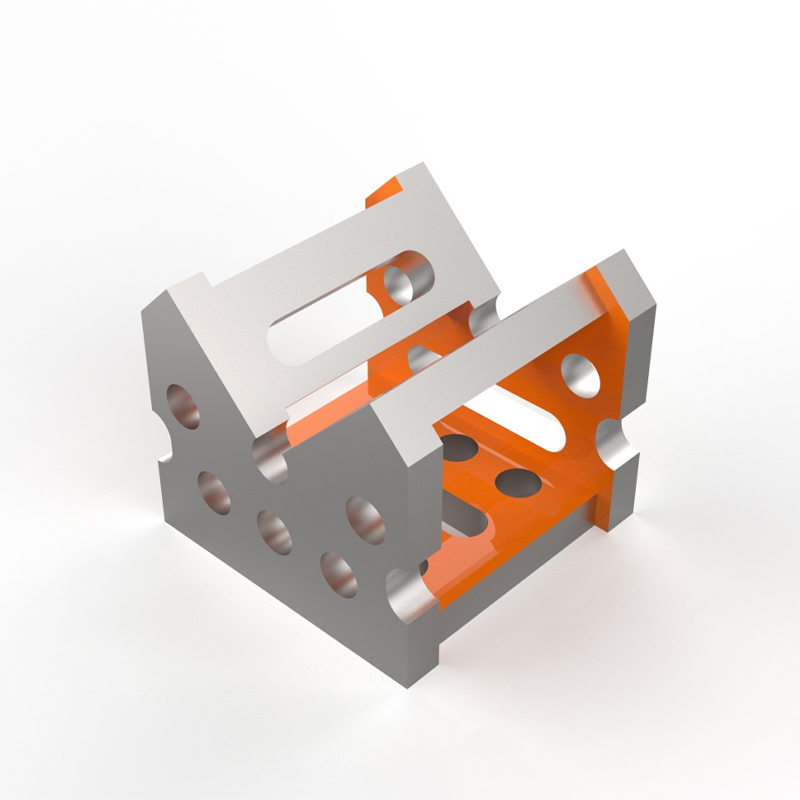
These platforms have become preferred jigging equipment across the machining, automotive, and aerospace sectors. Beyond the tables themselves, Haijun Metal offers a comprehensive ecosystem of complementary components designed to integrate seamlessly with their platforms. Their catalog features U-shaped and L-shaped multi-purpose square boxes, 200-series support angle irons, and 0-225° universal angle gauges, all engineered to enable rapid workpiece positioning and clamping. Furthermore, the company manufactures professional cast iron 3D welding platforms and angle connection blocks, ensuring that every product delivers the durability and stability required for rigorous industrial applications. With years of experience, Haijun Metal has established itself as a trusted global supplier, continuously delivering high-quality machinery tool series that meet the evolving needs of fabricators worldwide.
How to Choose the Right Size and Configuration
Selecting the correct size and configuration involves analyzing your shop space, typical project scale, and budget. A mismatch here can lead to ergonomic strain or workflow bottlenecks.
Assessing Your Workspace Dimensions
Measure your available floor space carefully, leaving at least 3 feet of clearance around the table for movement and clamping access. Remember that the effective working area is slightly smaller than the total dimensions due to the frame.
Consider the height of the table. Standard heights range from 30 to 34 inches. Ergonomic guidelines suggest the table surface should be at elbow height when standing comfortably. Adjustable leg options are increasingly popular for accommodating different user heights.
Determining Load Capacity Requirements
Calculate the maximum weight of the assemblies you typically handle. Include the weight of the fixtures and clamps in this calculation. A welding table top with holes must support not just static weight but also the dynamic forces applied during clamping and welding.
- Light Duty: Up to 1,000 lbs distributed load. Suitable for automotive repair and artistic metalwork.
- Medium Duty: Up to 3,000 lbs. Ideal for general fabrication and structural steel work.
- Heavy Duty: Over 5,000 lbs. Required for large machinery components and shipbuilding parts.
Underspecifying the load capacity can lead to permanent deformation of the table surface, ruining its flatness and rendering the hole grid useless for precision work.
Budget vs. Long-Term Value
While entry-level tables are tempting due to lower prices, they often lack stress-relieving treatments. Over time, these cheaper models warp, costing more in replacements than buying a quality unit initially. Invest in a reputable brand that offers warranty coverage on flatness.
Factor in the cost of the fixturing kit. A table without clamps and stops is like a car without wheels. Budget approximately 30-50% of the table cost for a comprehensive set of accessories to unlock its full potential.
Step-by-Step Guide to Setting Up Your Perforated Table
Proper setup ensures safety and maximizes the utility of your new equipment. Follow these steps to install and configure your welding table top with holes effectively.
- Step 1: Unboxing and Inspection. Carefully remove the packaging and inspect the surface for shipping damage. Check a sample of holes to ensure they are free of debris and burrs.
- Step 2: Leveling the Base. Place the table in its designated spot. Use a spirit level to check flatness in all directions. Adjust the leveling feet until the surface is perfectly horizontal.
- Step 3: Cleaning the Surface. Wipe down the table with a degreaser to remove any protective oils applied during manufacturing. This ensures better adhesion for any temporary markers or tapes you might use.
- Step 4: Organizing Fixtures. Sort your clamps, stops, and angles. Keep frequently used items within arm’s reach. Consider installing a magnetic tool holder on the side frame.
- Step 5: Test Assembly. Perform a dry run by setting up a simple square assembly using four stops and clamps. Verify that all pins slide in smoothly and lock securely.
Regular maintenance is key. After each shift, brush out any slag from the holes to prevent buildup. Periodically re-check the level, especially if the table is subjected to heavy impacts.
Real-World Applications and Use Cases
The versatility of a welding table top with holes makes it applicable across a wide range of industries. From aerospace prototyping to custom motorcycle builds, the benefits of modular fixturing are universal.
Precision Pipe Fabrication
Pipe fitters rely heavily on angle stops and V-blocks that fit into the table holes. This setup allows for perfect 90-degree joints and complex multi-plane intersections. The ability to lock pipes in place eliminates the need for tedious tack welding adjustments.
In 2026, specialized pipe clamping kits have evolved to handle larger diameters and exotic alloys. These kits leverage the grid system to maintain alignment throughout the welding and cooling phases, preventing distortion.
Automotive Chassis Building
Custom car builders use these tables to construct chassis frames with exact symmetry. By mirroring stop positions on both sides of the table, builders ensure that the left and right rails are identical. This precision is critical for vehicle handling and safety.
The holes also facilitate the mounting of engine stands and transmission jacks directly to the table, creating a stable platform for powertrain installation. This integration streamlines the entire assembly line process.
Artistic Metal Sculptures
Metal artists benefit from the freedom to clamp irregular shapes at odd angles. The dense grid allows for creative fixation methods that would be impossible on a solid table. Complex geometric sculptures can be assembled piece by piece with confidence.
Furthermore, the table serves as a layout board. Artists can draw full-scale templates on paper and tape them to the surface, using the holes to pin the template and the metal pieces simultaneously for accurate tracing and cutting.
Price Analysis and Market Outlook for 2026
The market for welding tables has stabilized after the supply chain disruptions of previous years. In 2026, prices are reflective of raw material costs and manufacturing complexity. Understanding the pricing tiers helps in making an informed purchase.
Entry-level tables, often imported with basic finishing, range from $300 to $600. These are suitable for hobbyists but may lack the flatness certification required for professional work. Mid-range models, offering stress-relieved steel and better coatings, typically fall between $800 and $1,500.
Premium industrial tables, featuring laser-verified flatness and advanced nanocoatings, command prices from $2,000 to $5,000 or more. While the upfront cost is high, the ROI comes from reduced labor time and improved product quality. Bulk purchasing options are available for shops needing multiple units.
Looking ahead, prices are expected to remain steady, with slight increases tied to steel futures. However, competition among manufacturers is driving better value propositions, such as included accessory kits and extended warranties.
Frequently Asked Questions (FAQ)
Can I drill additional holes in my welding table top?
It is generally not recommended to drill extra holes. Doing so can compromise the structural integrity and flatness of the table. Moreover, unauthorized drilling often voids the manufacturer’s warranty. The existing grid is designed to cover most needs; use extension plates if more holes are required.
What is the best way to clean clogged holes?
Use a dedicated hole cleaning tool or a tapered reamer designed for your specific hole size. Avoid using standard drill bits, as they can enlarge the holes and ruin the fit for your fixtures. Regular brushing after welding sessions prevents severe clogging.
Are all welding table clamps compatible with every table?
No, compatibility depends on the hole diameter and spacing. A 16mm clamp will not fit securely in a 28mm hole without an adapter. Always verify the system standard (16mm, 22mm, or 28mm) before purchasing accessories to ensure a snug fit.
How often should I check the flatness of my table?
For professional shops, a quarterly check is advisable. Use a precision straightedge and feeler gauges to detect any deviations. If the table is subjected to heavy abuse or moving frequently, monthly inspections are safer to maintain quality standards.
Is a stainless steel top worth the extra cost?
Only if you work in environments where contamination is a major concern, such as food processing equipment or pharmaceutical fabrication. For general steel welding, carbon steel with a good coating offers better durability and cost-efficiency.
Conclusion and Final Recommendations
Investing in a high-quality welding table top with holes is a strategic decision that pays dividends in precision, speed, and versatility. As we move through 2026, the integration of advanced materials and modular designs makes these tables more essential than ever for serious fabricators.
For hobbyists, a mid-range 16mm system offers the best balance of cost and functionality. Professional shops should prioritize heavy-duty 28mm tables with certified flatness and anti-spatter coatings to handle rigorous daily use. Remember that the table is only as good as the fixturing system you pair with it.
When making your final choice, focus on long-term durability rather than short-term savings. Look for manufacturers that provide detailed technical specs and warranty support. By selecting the right table, you future-proof your workshop and elevate the quality of your craftsmanship.
Take the next step by auditing your current workflow. Identify the bottlenecks caused by inadequate clamping or unstable surfaces. Then, choose a welding table top with holes that specifically addresses those pain points, ensuring your shop remains competitive in an evolving industry.