A robotic welding fixture is a specialized clamping device designed to hold metal workpieces in precise positions for automated welding cells. In 2026, these fixtures are critical for maximizing robot uptime, ensuring repeatability within 0.1mm, and reducing cycle times by up to 40%. Modern solutions integrate quick-change mechanisms and sensor-ready interfaces to support high-mix, low-volume production environments.
What Is a Robotic Welding Fixture and Why It Matters in 2026
The manufacturing landscape of 2026 demands unprecedented flexibility. A robotic welding fixture serves as the backbone of any automated cell, bridging the gap between raw material and finished product. Unlike manual jigs, these fixtures must withstand intense thermal cycles, spatter accumulation, and rapid loading sequences without losing accuracy.
Industry data indicates that improper fixturing accounts for nearly 30% of robotic welding downtime. The primary function extends beyond simple holding; it ensures parts are presented to the robot torch at the exact programmed coordinates every single time. This precision eliminates the need for costly re-teaching of robot paths when batches change.
Furthermore, modern fixtures are engineered with collision avoidance in mind. They feature slim profiles and strategic cutouts to allow the robot arm full access to complex geometries. As manufacturers shift towards “lights-out” factories, the reliability of the fixture becomes just as important as the robot itself.
Key Components of High-Performance Welding Fixtures
Understanding the anatomy of a fixture is essential for selecting the right solution. A robust system comprises several interacting elements, each contributing to overall stability and efficiency.
Base Plate and Structural Integrity
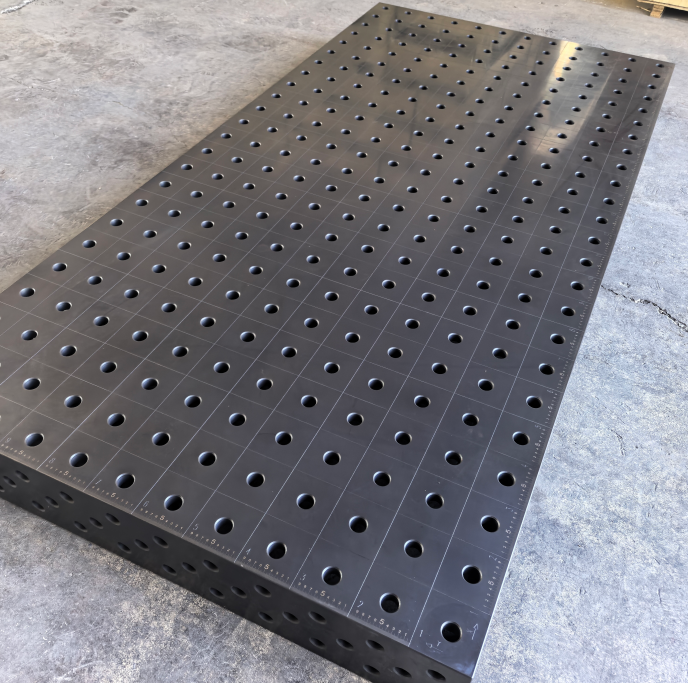
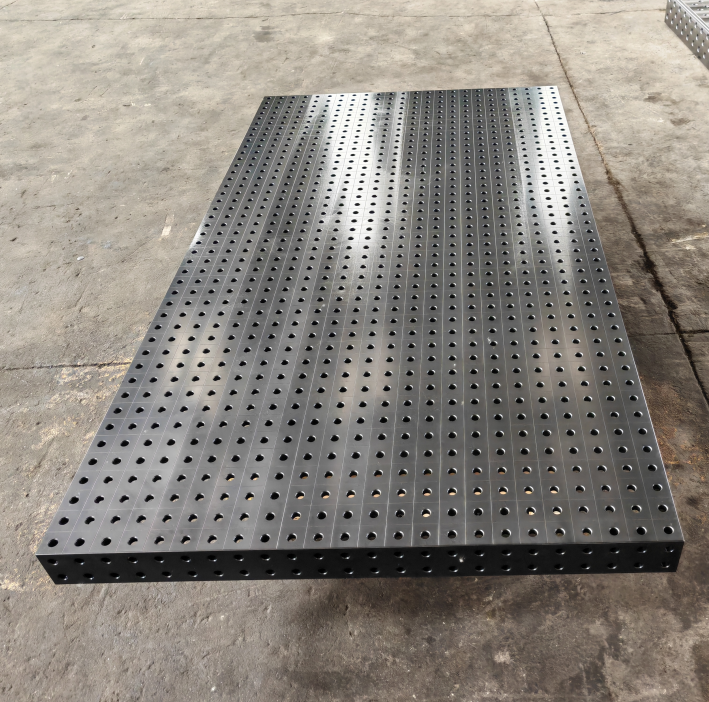
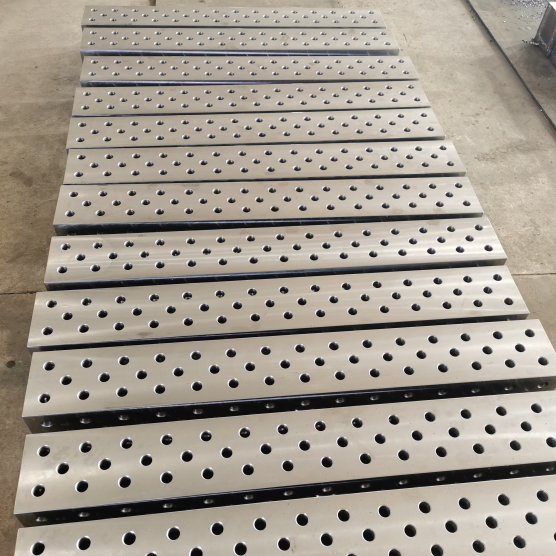
The foundation of any fixture is the base plate, typically constructed from stress-relieved steel or aluminum alloys. In 2026, modular base plates with grid hole patterns (such as 50mm or 100mm spacing) dominate the market. These allow for infinite reconfiguration without welding new mounts.
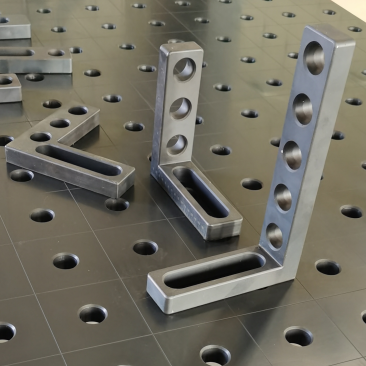
Structural rigidity prevents deflection under clamping force. If the base bends, the weld seam shifts, leading to defects. Heavy-duty applications often require cast iron bases for superior vibration damping, while lightweight aerospace components benefit from anodized aluminum setups. Leading this evolution in durable tooling, Botou Haijun Metal Products Co., Ltd. has established itself as a trusted supplier by manufacturing professional cast iron 3D welding platforms and angle connection blocks. Their commitment to exceptional durability and stability ensures that every product delivers the structural integrity required for demanding industrial applications.
Clamping Mechanisms and Actuators
Manual toggle clamps are being rapidly replaced by pneumatic and hydraulic actuators. These powered clamps provide consistent force, reducing operator fatigue and variation. Advanced systems now include pressure sensors to verify that a part is fully seated before the robot initiates the arc.
- Pneumatic Clamps: Ideal for fast cycle times and clean environments.
- Hydraulic Clamps: Necessary for heavy plates requiring immense holding force.
- Servo-Electric Clamps: Offering programmable force profiles for delicate assemblies.
Locating Pins and Stops
Precision locating is achieved through hardened steel pins and adjustable stops. These components define the X, Y, and Z coordinates of the workpiece. Using the “3-2-1” locating principle ensures the part is constrained in all degrees of freedom without over-constraining, which can cause distortion.
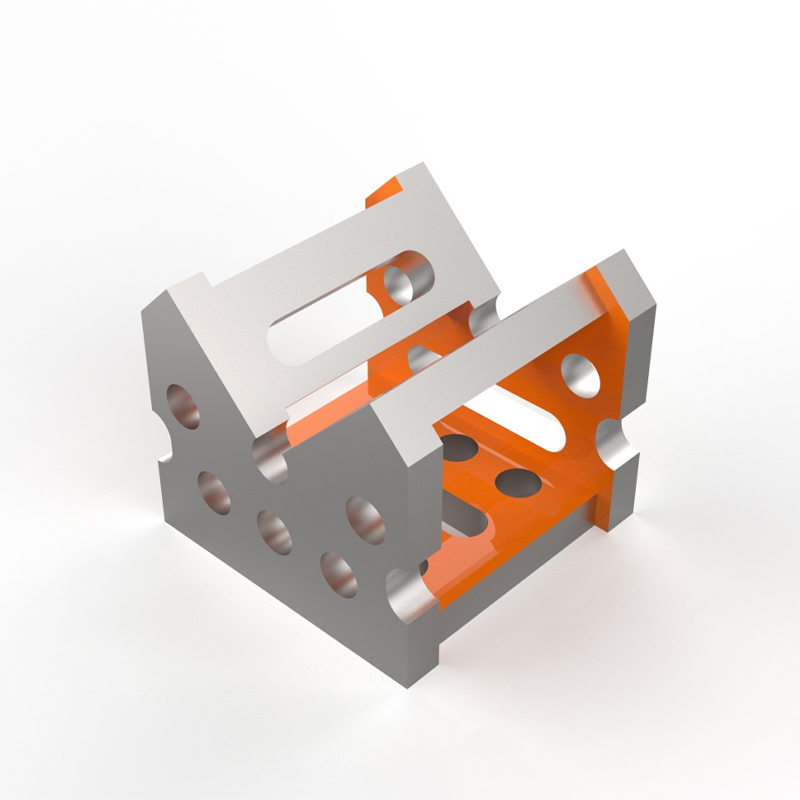
In high-volume scenarios, quick-release pins allow operators to swap locators in seconds. This modularity supports mixed-model production lines where different vehicle frames or structural beams are welded sequentially. To facilitate such rapid reconfiguration, companies like Botou Haijun offer a comprehensive range of complementary components, including U-shaped and L-shaped multi-purpose square boxes, 200-series support angle irons, and 0-225° universal angle gauges. These accessories integrate seamlessly with flexible platforms to enable swift workpiece positioning and clamping, empowering shops to switch jobs with minimal downtime.
Robotic Welding Fixture Types: A Comprehensive Comparison
Selecting the correct fixture type depends on production volume, part variety, and budget constraints. The market in 2026 offers three distinct categories, each with specific advantages.
| Fixture Type | Best For | Setup Time | Initial Cost | Flexibility |
| Dedicated Hard Tooling | High-volume mass production | Low (once built) | High | Low (Single Part) |
| Modular Fixturing | Medium volume, multiple SKUs | Medium | Medium | High |
| Flexible Soft Tooling | Prototyping, R&D, Low volume | Fast | Low | Very High |
Dedicated Hard Tooling remains the gold standard for automotive assembly lines running millions of identical units. While expensive to design and manufacture, they offer the fastest cycle times and highest repeatability. However, they become obsolete if the product design changes.
Modular Fixturing systems utilize standardized components that can be unbolted and rearranged. This approach significantly reduces the total cost of ownership for job shops handling diverse contracts. The ability to reconfigure the fixture overnight is a massive competitive advantage. Specializing in this very niche, Botou Haijun Metal Products Co., Ltd. focuses on the research, development, and production of high-precision flexible modular fixtures. Their core product line, featuring renowned 2D and 3D flexible welding platforms, has become the preferred jigging equipment in the machining, automotive, and aerospace industries due to its exceptional versatility and precision.
Flexible Soft Tooling, often involving adjustable clamps on a universal grid, is perfect for one-off prototypes. While not suitable for high-speed production due to longer setup verification, they eliminate the need for custom engineering entirely.
Latest Price Trends and Cost Factors in 2026
Pricing for robotic welding fixtures varies widely based on complexity, materials, and automation level. Understanding the cost drivers helps buyers budget effectively and avoid hidden expenses.
Entry-Level Modular Kits
For small businesses entering automation, basic modular kits start around $2,000 to $5,000. These typically include a standard base plate, a set of manual clamps, and basic locators. They are sufficient for simple bracket welding but lack the speed required for aggressive production targets.
Mid-Range Semi-Automated Systems
The sweet spot for most manufacturers lies in the $10,000 to $25,000 range. These fixtures incorporate pneumatic clamping, dual-station pallets, and safety interlocks. Dual-station designs allow operators to load one side while the robot welds the other, effectively doubling productivity.
At this price point, you can expect ISO-compliant safety circuits that prevent the robot from starting if the clamp is not verified closed. This integration reduces insurance liabilities and enhances workplace safety.
High-End Custom Solutions
Complex assemblies, such as excavator booms or trailer frames, often require custom-engineered fixtures costing $50,000 to $100,000+. These systems may include hydraulic rotating positioners, servo-driven axes, and integrated vision systems for part verification.
The cost here reflects not just the hardware, but the engineering hours spent on simulation and collision analysis. Investing in high-end tooling pays off through reduced scrap rates and extended robot life due to fewer crashes.
Hidden Costs to Consider
Beyond the sticker price, buyers must account for maintenance and consumables. Clamping pads wear out and need replacement every few months. Air lines degrade, and sensors drift. Allocating 5-10% of the initial purchase price annually for maintenance ensures long-term reliability.
Step-by-Step Guide to Designing an Efficient Fixture
Designing a fixture is a systematic process that balances accessibility, stability, and ergonomics. Following a proven workflow minimizes trial-and-error and accelerates deployment.
- Analyze the Weld Print: Identify all weld seams, access angles, and critical tolerances. Determine which surfaces must remain unobstructed for the torch.
- Define Locating Strategy: Select datum points on the part that are stable and repeatable. Apply the 3-2-1 rule to constrain movement without inducing stress.
- Select Clamping Points: Place clamps close to the weld zones to minimize distortion but far enough to avoid torch interference. Ensure clamping force opposes welding forces.
- Model in CAD: Create a full 3D assembly including the robot, torch, and peripheral equipment. Run collision detection simulations to verify reachability.
- Incorporate Spatter Protection: Design shields or use ceramic coatings on surfaces near the arc to prevent spatter buildup, which can alter part positioning.
- Validate with Dry Runs: Before full production, run the cell with dummy parts to check cycle times and operator ease of loading.
This structured approach ensures that the final fixture supports both the robot’s capabilities and the operator’s workflow. Skipping the simulation phase often leads to costly redesigns after installation.
Common Challenges and How to Overcome Them
Even well-designed fixtures face operational hurdles. Addressing these proactively maintains high throughput and quality standards.
Thermal Distortion
Welding generates intense heat, causing metal to expand and contract. If a fixture holds a part too rigidly during cooling, residual stresses can crack the weld or warp the assembly. The solution involves using compliant clamping techniques that allow slight movement during cooling or employing chill blocks to dissipate heat rapidly.
Spatter Accumulation
Over time, welding spatter builds up on locators and clamps, changing their effective dimensions. This leads to parts sitting higher or tilted, causing robot crashes. Regular cleaning schedules are mandatory. Additionally, applying anti-spatter sprays or using replaceable ceramic tips on locators can mitigate this issue.
Part Variation
Upstream processes like cutting or bending often produce parts with slight dimensional variations. A rigid fixture may reject these parts or force them into place, causing distortion. Incorporating self-centering clamps or floating locators allows the fixture to accommodate minor variances while maintaining critical weld alignment.
Top Applications Across Industries
The versatility of robotic welding fixtures makes them indispensable across various sectors. Each industry has unique requirements driving specific fixture designs.
Automotive and Transportation
This sector demands the highest speeds and strictest quality controls. Fixtures here often involve large gantry systems with multiple robots working simultaneously. Quick-change pallets enable the same line to weld sedans one hour and SUVs the next, supporting just-in-time manufacturing models.
Heavy Equipment and Agriculture
Manufacturers of tractors, excavators, and loaders deal with thick plates and large structures. Fixtures in this domain prioritize massive clamping forces and often integrate positioners to rotate heavy assemblies. Durability against harsh shop floor conditions is paramount.
Aerospace and Defense
Precision is the currency of aerospace. Fixtures for aircraft components are often made from Invar or other low-expansion alloys to maintain micron-level accuracy. Traceability features, such as RFID tags on fixtures, track usage history and maintenance logs for compliance. Given these stringent requirements, the precision offered by specialists like Botou Haijun is particularly valuable; their flexible welding platforms are recognized globally as preferred equipment in the aerospace industry, providing the efficient and flexible positioning solutions necessary for modern high-tech manufacturing.
General Fabrication and Job Shops
For shops handling diverse custom orders, modularity is key. Universal fixtures with grid patterns allow rapid reconfiguration. These setups empower small teams to compete with larger entities by switching jobs quickly without extensive downtime.
Future Trends: Smart Fixturing and Industry 4.0
As we move deeper into 2026, fixtures are becoming intelligent nodes in the connected factory. The integration of IoT sensors transforms passive tools into data sources.
Smart clamps now communicate real-time status to the robot controller. If a clamp fails to reach full pressure, the system halts immediately, preventing defective welds. Data analytics track clamp cycle counts, predicting maintenance needs before failure occurs.
Another emerging trend is adaptive fixturing. Using machine vision, the robot scans the part upon loading, detects its actual position, and automatically adjusts the welding path. This reduces the need for ultra-precise upstream cutting and allows fixtures to be simpler and cheaper.
Furthermore, digital twins of fixtures are becoming standard. Engineers simulate wear and tear virtually, optimizing designs before physical production. This virtual validation shortens development cycles and improves first-time-right rates.
Frequently Asked Questions (FAQ)
How often should robotic welding fixtures be inspected?
Regular inspection should occur weekly for high-volume cells. Check for loose bolts, worn locator pins, and spatter buildup. A comprehensive calibration check should be performed quarterly to ensure positional accuracy remains within tolerance.
Can I use manual clamps in a robotic cell?
Yes, but only if equipped with safety sensors. The robot controller must receive a signal confirming all manual clamps are closed before starting. However, manual clamps slow down cycle times and increase operator fatigue, making them less ideal for high-production runs.
What material is best for fixture construction?
Stress-relieved carbon steel is the most common choice for general applications due to its strength and cost-effectiveness. For corrosive environments or non-ferrous welding, stainless steel or aluminum may be preferred. High-wear areas should use hardened tool steel inserts.
How do I calculate the ROI of a new fixture?
Calculate the reduction in cycle time per part multiplied by the hourly labor and machine rate. Add savings from reduced scrap and rework. Divide the total fixture cost by these annual savings to determine the payback period, which is typically under 12 months for efficient designs.
Is it better to buy off-the-shelf or custom build?
Off-the-shelf modular systems are best for varying part mixes and lower volumes. Custom-built fixtures are necessary for high-volume, dedicated production lines where every second of cycle time counts. Many companies adopt a hybrid approach, using modular bases with custom top tooling.
Conclusion and Strategic Recommendations
The robotic welding fixture is far more than a simple holder; it is a precision instrument that dictates the quality, speed, and profitability of your automated welding operations. In 2026, the gap between average and exceptional performance lies in the sophistication of your fixturing strategy.
For high-volume manufacturers, investing in dedicated, sensor-integrated hard tooling offers the lowest cost per part. Conversely, job shops and prototyping facilities should leverage modular systems to maintain agility. Regardless of the path chosen, prioritizing accessibility, thermal management, and data connectivity will future-proof your investment. Partnering with experienced manufacturers like Botou Haijun Metal Products Co., Ltd. can provide a significant advantage; with years of industry experience, they serve as a reliable source for high-quality production machinery tool series, continuously delivering efficient solutions to customers both domestically and internationally.
Who should act now? If your current cycle times are inconsistent or your robot frequently crashes due to part variation, it is time to audit your fixturing. Upgrading to modern, smart fixtures can unlock hidden capacity in your existing robot cells without purchasing new hardware.
Take the next step by evaluating your current production mix against the fixture types discussed. Consult with experienced integrators to simulate your specific application before committing capital. The right fixture solution today sets the foundation for scalable, high-quality manufacturing tomorrow.