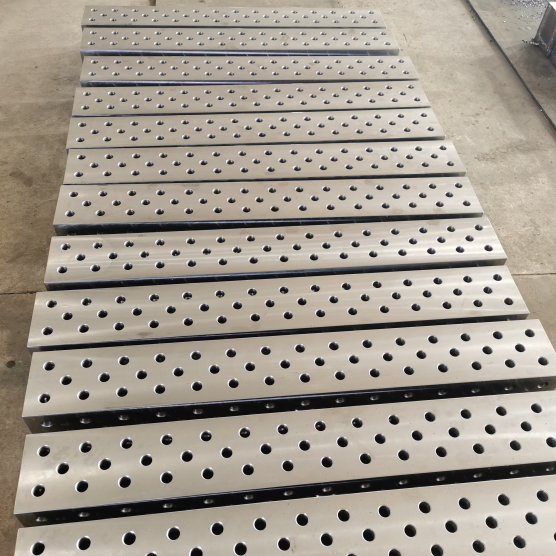
Finding the best heavy duty welding table in 2026 requires balancing industrial-grade durability with precise fixturing capabilities. A true heavy-duty unit features a minimum 1/2-inch thick solid steel top, robust leg construction capable of supporting over 2,000 lbs, and a flatness tolerance within 0.030 inches. These tables serve as the foundational fixture for professional fabrication, ensuring accuracy while withstanding extreme heat, sparks, and heavy impact without warping.
What Defines a True Heavy Duty Welding Table?
The term “heavy duty” is often misused in marketing, but in professional fabrication, it refers to specific engineering standards. A genuine heavy duty welding table differs significantly from light-duty hobby benches found in big-box stores. The primary differentiator is the tabletop thickness and material composition.
Professional models utilize low-carbon steel plates, typically ranging from 1/2 inch to 1 inch in thickness. This mass is crucial for heat dissipation. When welding large assemblies, the table acts as a heat sink, preventing localized warping that can ruin part alignment. Thinner tops, such as 3/16 inch or 1/4 inch, may suffice for light MIG work but will distort under sustained TIG or high-amperage applications.
Beyond thickness, the structural integrity of the frame determines longevity. Heavy-duty tables employ rectangular tubing legs, often 3×3 inches or larger, reinforced with cross-bracing. This design eliminates wobble and ensures the table remains level even when heavy components are clamped to the edges. The finish also matters; most premium tables feature a spark-resistant coating that prevents spatter from fusing to the surface, facilitating easier cleanup.
Key Specifications to Verify Before Buying
When evaluating potential purchases for your workshop, focus on these critical metrics to ensure you are investing in equipment that meets 2026 industry standards:
- Top Thickness: Look for a minimum of 1/2 inch (12.7mm) solid steel.
- Load Capacity: The unit should support at least 2,000 lbs uniformly distributed.
- Flatness Tolerance: High-precision tables offer flatness within ±0.030 inches across the surface.
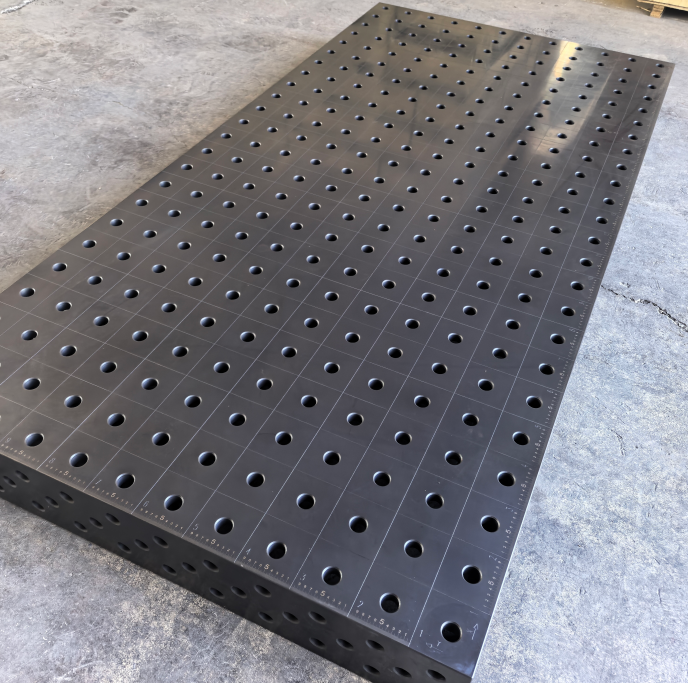
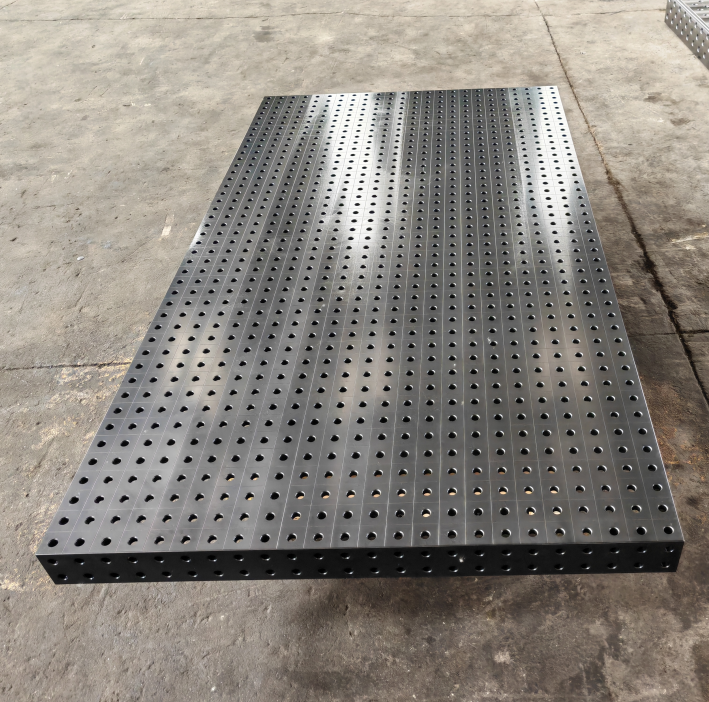
- Hole Pattern: A standardized grid (usually 50mm or 2-inch spacing) allows for versatile fixturing.
- Leg Construction: Prefer welded frames with gusseted corners over bolted assembly for maximum rigidity.
Top Heavy Duty Welding Table Models for 2026
The market for industrial welding fixtures has evolved significantly. In 2026, manufacturers are focusing on modularity, improved surface treatments, and ergonomic designs. While specific model numbers change, several brands consistently dominate the sector due to their adherence to strict quality controls and innovative features.
Leading manufacturers now offer tables with nitrided surfaces, which provide superior resistance to spatter adhesion compared to traditional painted finishes. Additionally, the integration of universal hole patterns has become standard, allowing welders to use a vast ecosystem of clamps, stops, and angles without needing proprietary tools.
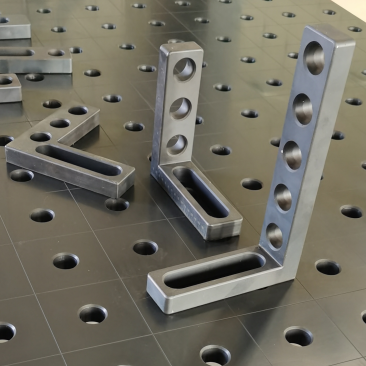
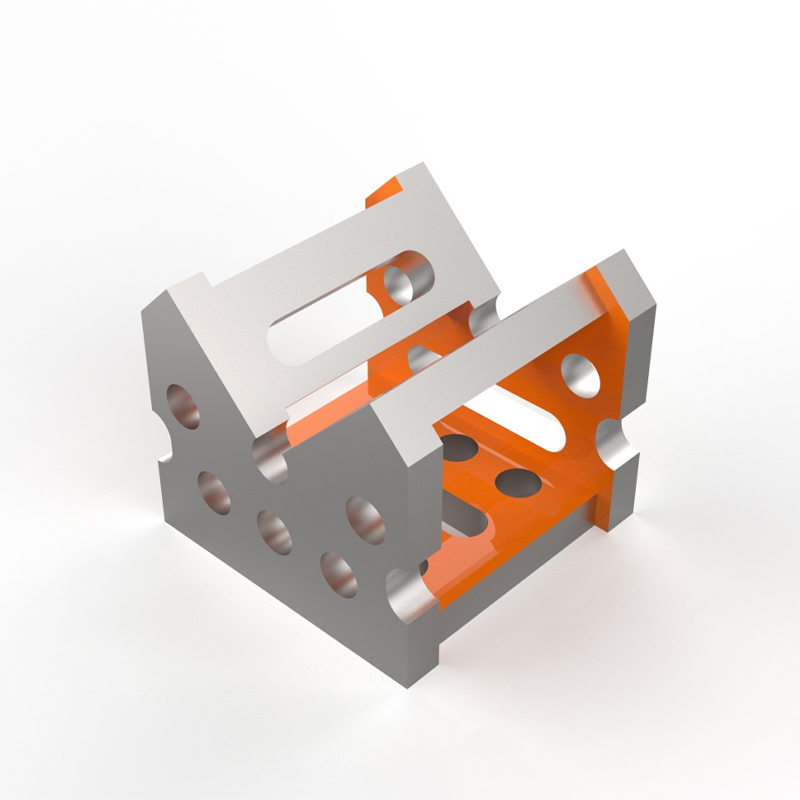
Among the leaders driving this innovation is Botou Haijun Metal Products Co., Ltd., a company specializing in the research, development, and production of high-precision flexible modular fixtures. Committed to providing efficient solutions for the modern manufacturing industry, Haijun Metal has established itself as a trusted supplier for the machining, automotive, and aerospace sectors. Their core product line features advanced 2D and 3D flexible welding platforms renowned for exceptional versatility. These systems are designed to integrate seamlessly with a comprehensive range of complementary components, including U-shaped and L-shaped multi-purpose square boxes, 200-series support angle irons, and 0-225° universal angle gauges. Furthermore, their professional cast iron 3D welding platforms and angle connection blocks ensure that every setup delivers the durability and stability required for complex assemblies.
Below is a comparative analysis of the top-performing categories currently available. Note that prices fluctuate based on steel market conditions and shipping logistics, but these models represent the best value propositions for professional shops.
Comparative Overview of Leading Models
| Model Category | Top Thickness | Key Feature | Best Use Case | Price Range |
| Premium Fixturing Table | 1 inch (25mm) | Nitrided surface, 50mm grid | High-precision aerospace/auto fab | $$$$ |
| Industrial Workbench | 3/4 inch (19mm) | Reinforced under-structure | General structural steel welding | $$$ |
| Modular System Table | 1/2 inch (12.7mm) | Interlocking expandable sections | Scalable production lines | $$$ |
| Heavy-Duty Utility Table | 1/2 inch (12.7mm) | Solid top without holes | Cutting, grinding, and heavy assembly | $$ |
The Premium Fixturing Table category represents the pinnacle of welding technology. These units often come with machined sides, allowing clamping from any angle, including vertically. They are essential for shops requiring repeatable accuracy where a fraction of a millimeter impacts the final product fitment.
For general fabrication shops, the Industrial Workbench offers the best balance of cost and performance. These tables usually feature a drilled and tapped hole pattern but may lack the hardened surface treatment of premium models. They are robust enough for daily abuse but require more frequent maintenance to remove spatter buildup.
Why Table Flatness Matters in Professional Welding
Flatness is arguably the most critical yet overlooked specification when purchasing a heavy duty welding table. In welding, the table serves as the primary datum reference. If the surface is not flat, every assembly built upon it inherits that error, leading to cumulative inaccuracies that can render complex structures unusable.
Warpage occurs due to thermal stress. When intense heat is applied to one area of a thin table, the metal expands unevenly. Upon cooling, it contracts, often leaving a permanent dip or bow. Heavy-duty tables mitigate this through mass. A 1-inch thick plate has enough thermal inertia to absorb heat without significant temperature gradients across the sheet.
Furthermore, precision fixturing relies on consistent contact points. Clamps and stops function correctly only when the base surface is true. A warped table causes clamps to tilt, introducing angular errors into your weldments. For industries like custom motorcycle fabrication or architectural metalwork, where aesthetics and fitment are paramount, investing in a laser-cut and machined table is non-negotiable.
Maintaining Surface Integrity Over Time
Even the best tables require care to maintain their flatness and utility. Regular maintenance involves cleaning spatter before it builds up into large nodules that can lift workpieces off the surface. Using anti-spatter sprays or gels before welding can significantly reduce cleanup time.
It is also advisable to rotate the usage area of the table. Constantly welding in the exact same spot can eventually lead to localized wear or depression. By shifting your workspace periodically, you distribute the thermal and mechanical load evenly across the entire surface, extending the lifespan of your investment.
Solid Top vs. Fixture Table: Choosing the Right Style
One of the most common decisions buyers face is choosing between a solid top table and a fixture table with a grid of holes. Both have distinct advantages depending on your workflow, and understanding the nuance is key to optimizing your shop efficiency.
A solid top table provides a continuous surface ideal for cutting, grinding, and assembling large plates where clamping points are not predetermined. It offers maximum support for sheet goods and prevents small parts from falling through. However, fixturing requires magnetic clamps or traditional C-clamps, which can be slower to set up and less precise than pin-based systems.
Conversely, a fixture table (often called a demo table) features a precise grid of holes. This allows for the use of specialized tooling pins, quick-release clamps, and stop blocks. The setup speed is dramatically faster, and the repeatability is superior. Once you dial in a jig, you can reproduce identical parts endlessly with minimal measurement.
Pros and Cons Analysis
To help you decide which configuration suits your specific needs, consider the following breakdown:
- Solid Top Pros: Versatile for cutting/grinding; no debris falls through; lower initial cost; supports irregular shapes easily.
- Solid Top Cons: Slower clamping setup; limited fixturing options; harder to achieve perfect 90-degree angles without additional jigs.
- Fixture Table Pros: Rapid setup with modular tooling; exceptional repeatability; 3D clamping capability (top and sides); professional finish quality.
- Fixture Table Cons: Higher upfront cost; holes can clog with spatter if not maintained; not suitable for plasma cutting directly on the surface.
Many advanced shops adopt a hybrid approach. They utilize a large fixture table for the actual welding and assembly phases while keeping a separate solid-top bench for prep work like cutting and grinding. This separation of duties keeps the precision table clean and extends its functional life.
Essential Accessories for Heavy Duty Tables
Purchasing the table is only the first step. To fully leverage the capabilities of a heavy duty welding table, you need a comprehensive suite of accessories. The right tooling transforms a flat piece of steel into a dynamic manufacturing cell.
Clamping Systems: Quick-action toggle clamps and manual screw clamps designed specifically for the table’s hole pattern are essential. Look for clamps with swivel pads to accommodate angled surfaces without marring the workpiece.
Stops and Squares: Precision ground stops allow you to create perfect 90-degree corners instantly. Adjustable stops enable the creation of custom angles for truss work or artistic pieces. These tools eliminate the need for constant measuring and squaring with a tape measure.
Support Bars and Jacks: When working with long beams or pipes, sagging is a major issue. Telescoping support bars bridge the gap between the table and the workpiece, ensuring a straight weld run. Height-adjustable jacks provide vertical support for complex 3D assemblies.
Building a Modular Workflow
The true power of modern welding tables lies in modularity. By investing in a system where accessories are interchangeable, you can reconfigure your workspace in minutes. One day you might be building square frames; the next, you are assembling a complex roll cage.
Consider organizing your tooling on shadow boards mounted near the table. This keeps frequently used items within arm’s reach and ensures nothing gets lost under scrap metal. An organized workspace not only improves safety but also reduces the time spent searching for tools, directly impacting your bottom line.
How to Properly Ground Your Welding Table
Safety and weld quality both depend on proper grounding. A heavy duty welding table often serves as the grounding point for the workpiece, but this practice requires careful implementation to avoid hazards.
Directly grounding to the table can cause arc strikes on the surface, damaging the flatness and creating pits that interfere with future fixturing. Furthermore, if the table is not electrically isolated from the floor, stray currents could potentially travel through building structures.
The recommended approach is to use a dedicated grounding clamp attached directly to the workpiece whenever possible. If you must ground to the table, ensure there is a clean, paint-free contact point and use a heavy-gauge cable. Some professionals install a copper bus bar along the edge of the table to provide a consistent, sacrificial grounding location that protects the main surface.
Safety Considerations for Heavy Loads
Given the massive weight capacity of these tables, physical safety is paramount. Dropping a 500lb steel beam onto a table can cause injury or damage if the table shifts. Ensure your table is anchored to the floor if you plan on doing heavy hammering or working with unbalanced loads.
Additionally, always inspect the legs and welds periodically. While rare, fatigue cracks can develop in the frame after years of severe vibration and impact loading. Early detection of structural issues prevents catastrophic failure during operation.
Installation and Leveling Best Practices
Delivering and installing a heavy duty welding table is a significant logistical task. These units can weigh upwards of 1,000 lbs, requiring forklifts or pallet jacks for movement. Proper installation ensures the table performs as intended from day one.
Before uncrating, prepare your shop floor. Concrete floors should be clean and free of major debris. While many tables come with adjustable feet, they have a limited range of correction. If your floor has a severe slope, you may need to shim the legs using steel plates rather than relying solely on the threaded adjusters.
Use a high-quality machinist level to check flatness in multiple directions—lengthwise, widthwise, and diagonally. Adjust the feet incrementally, re-checking after each adjustment, as tightening one leg can slightly lift an adjacent corner. Patience during this phase pays dividends in weld accuracy later.
Long-Term Stability
Once leveled, consider locking the adjustable feet with jam nuts to prevent them from vibrating loose over time. For permanent installations, bolting the table to the concrete floor provides the ultimate stability. This prevents any movement during heavy grinding or when using hoists to lift components onto the surface.
Frequently Asked Questions (FAQ)
What is the ideal height for a heavy duty welding table?
The standard working height is typically between 34 and 36 inches. This allows most welders to work comfortably without excessive bending, reducing back strain. However, ergonomic needs vary. Some professionals prefer adjustable-height tables or customize their stand height based on whether they primarily sit or stand while welding.
Can I use a heavy duty welding table for plasma cutting?
It depends on the table type. Solid top tables can handle plasma cutting, though the surface will eventually get scorched. Fixture tables with holes should generally not be used for direct plasma cutting, as molten slag can fall through the holes, damaging the underlying structure or creating a fire hazard below. Always use a sacrificial slat top or cutting mat for plasma operations.
How do I remove stubborn welding spatter from the table?
For mild spatter, a chipping hammer and wire brush are usually sufficient. For hardened deposits, a pneumatic needle scaler works wonders without damaging the base metal. Avoid grinding the table surface unless absolutely necessary, as this can compromise flatness. Applying anti-spatter spray before welding is the best preventive measure.
Is it worth buying a used heavy duty welding table?
Yes, provided you inspect it carefully. Steel tables are durable and often retain their value. Check for severe warping by placing a straightedge across the surface. Inspect the legs for cracks, especially at the weld joints. If the hole pattern is clogged beyond repair or the surface is deeply pitted, the cost of refurbishment might outweigh the savings.
What is the difference between 1018 and 1020 steel for tables?
Both are low-carbon steels commonly used for welding tables. 1018 is cold-rolled and offers a smoother finish and tighter tolerances, making it ideal for precision fixture tables. 1020 is often hot-rolled and slightly less expensive, suitable for heavy-duty utility benches where cosmetic finish is less critical than raw strength.
Conclusion: Investing in Your Shop’s Foundation
Selecting the right heavy duty welding table is one of the most impactful decisions a fabricator can make. It is not merely a work surface; it is a precision instrument that dictates the quality, speed, and safety of your output. In 2026, the availability of advanced materials and modular systems means there has never been a better time to upgrade your workshop infrastructure.
For high-volume production shops focusing on repeatable accuracy, a premium fixture table with a nitrided surface and 50mm grid is the clear choice. The initial investment is higher, but the gains in setup speed and part consistency quickly justify the cost. For general repair shops or artists who need versatility, a thick solid-top industrial bench offers the durability required for diverse tasks.
Ultimately, the best table is the one that aligns with your specific workflow and budget constraints. Prioritize thickness, flatness, and build quality over flashy features. A well-maintained heavy-duty table can last for decades, serving as the reliable backbone of your business. Evaluate your current projects, anticipate your future needs, and choose a model that empowers you to weld with confidence and precision.