Our aluminum casting machining service integrates high-pressure die casting, gravity casting, and 5-axis CNC precision machining into a unified manufacturing workflow. This end-to-end solution eliminates the need for multiple vendors, ensuring tighter tolerances (up to ±0.01mm), superior surface finishes, and reduced lead times for complex industrial components. By controlling both the casting and secondary machining processes in-house, we mitigate alignment errors and optimize cost-efficiency for high-volume automotive, aerospace, and electronics projects.
What Is Aluminum Casting Machining Service?
Aluminum casting machining service is a hybrid manufacturing process that combines primary shape formation (casting) with subtractive material removal (CNC machining). While casting creates the near-net shape of a part using molten aluminum, machining refines critical features such as bore holes, mounting surfaces, and threads to meet strict engineering specifications.
In traditional supply chains, casting and machining are often outsourced to separate suppliers. This fragmentation introduces logistical delays and quality risks. Our integrated approach ensures that the datum points established during casting are perfectly aligned with the machining fixtures. This synergy is critical for parts requiring high geometric dimensioning and tolerancing (GD&T) compliance.
The Integration of Casting and CNC Precision
The core value of this service lies in the seamless transition from molten metal to finished component. Aluminum alloys, particularly A380, A360, and ADC12, are chosen for their excellent fluidity and machinability. However, cast surfaces often contain draft angles, parting lines, and gate marks that must be removed or refined.
- Primary Formation: Molten aluminum is injected or poured into molds to create the basic geometry.
- Stress Relief: Heat treatment (T5 or T6) stabilizes the microstructure before cutting.
- Precision Machining: CNC mills and lathes remove excess material to achieve final dimensions.
- Quality Verification: CMM (Coordinate Measuring Machine) inspection validates tolerances against CAD models.
This workflow is essential for industries where component failure is not an option. For instance, in automotive powertrain applications, a misaligned mounting hole can cause vibration issues leading to premature engine failure. Our integrated service prevents such defects by maintaining a single chain of custody for quality control.
Why Choose Integrated Aluminum Casting and Machining?
Sourcing casting and machining separately often results in “blame games” when tolerances are missed. The caster may claim the machining was too aggressive, while the machinist may argue the casting was out of spec. By consolidating these services, we assume full responsibility for the final part quality.
Cost Efficiency and Lead Time Reduction
Consolidating suppliers reduces administrative overhead, shipping costs, and inventory holding times. In 2026, supply chain resilience is a top priority for procurement managers. An integrated model allows for faster iteration during the New Product Introduction (NPI) phase.
Furthermore, designing for manufacturability (DFM) feedback is immediate. If a design feature is difficult to cast, our engineers can suggest modifications that also simplify machining. This dual-perspective DFM analysis often reduces total unit cost by 15-20% compared to disjointed sourcing strategies.
Enhanced Quality Control and Traceability
Traceability is critical in regulated industries like medical devices and aerospace. Our integrated facility tracks each batch from raw material ingestion to final packaging. We utilize advanced metrology equipment to inspect cast blanks before they enter the CNC queue. This “gatekeeping” step prevents wasted machining time on defective casts.
- Material Certification: Full spectral analysis of aluminum ingots.
- In-Process Inspection: Real-time monitoring of CNC tool wear and casting porosity.
- Final Validation: Comprehensive reporting including X-ray reports for internal voids.
Core Manufacturing Processes Explained
Understanding the specific casting methods available helps in selecting the right process for your application. Each method offers distinct advantages regarding volume, complexity, and surface finish.
High-Pressure Die Casting (HPDC)
HPDC is the dominant process for high-volume production. It involves forcing molten aluminum into steel molds under high pressure (typically 10,000 to 20,000 psi). This results in excellent surface detail and thin wall capabilities.
Key Characteristics:
- Speed: Cycle times can be as low as 30 seconds for small parts.
- Precision: As-cast tolerances of ±0.1mm are achievable.
- Surface Finish: Smooth surfaces reduce the amount of machining required.
However, HPDC parts can suffer from air entrapment (porosity). Our machining strategy accounts for this by avoiding deep drilling in high-porosity zones or using vacuum-assisted casting techniques to minimize voids.
Gravity Casting and Low-Pressure Die Casting (LPDC)
For parts requiring higher structural integrity and lower porosity, gravity and LPDC are preferred. These processes fill the mold more slowly, allowing gas to escape and resulting in denser metal structures.
These methods are ideal for larger components such as automotive suspension arms or industrial pump housings. While cycle times are longer than HPDC, the mechanical properties are superior, making them suitable for heat-treated applications requiring high tensile strength.
CNC Machining Capabilities for Cast Aluminum
Once the cast blank is prepared, our CNC department takes over. We employ a fleet of 3-axis, 4-axis, and 5-axis machining centers. Aluminum is generally easy to machine, but cast alloys contain silicon particles that can be abrasive to cutting tools.
We use polycrystalline diamond (PCD) tooling for high-volume runs to maintain consistent surface finishes and extend tool life. For complex geometries, 5-axis machining allows us to access multiple faces in a single setup, ensuring critical features remain concentric and aligned.
Leveraging Advanced Fixturing for Precision
To fully realize the potential of 5-axis machining and ensure the tightest possible tolerances, precise workholding is paramount. At Botou Haijun Metal Products Co., Ltd., we specialize in the research, development, and production of high-precision flexible modular fixtures and metalworking tools. Our expertise extends beyond standard machining; we provide efficient and flexible welding and positioning solutions that are critical for modern manufacturing.
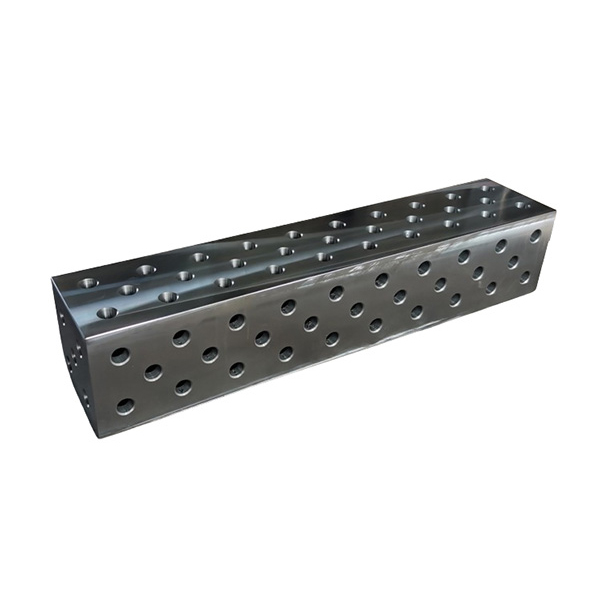
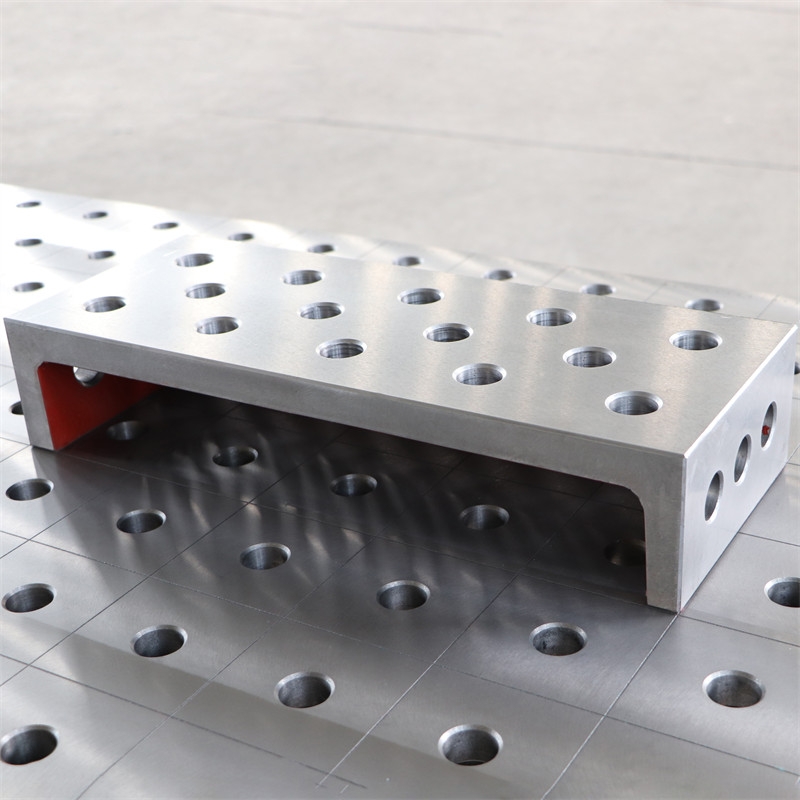
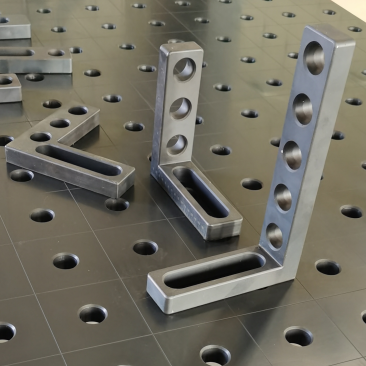
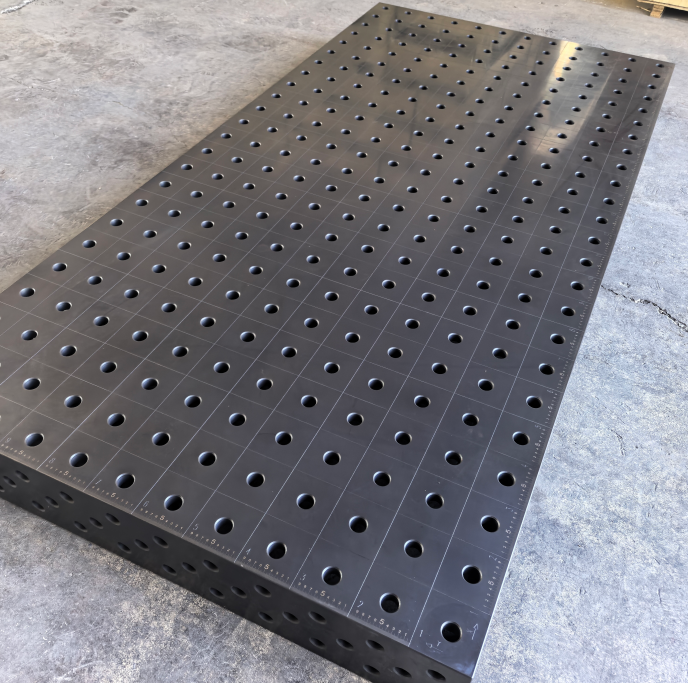
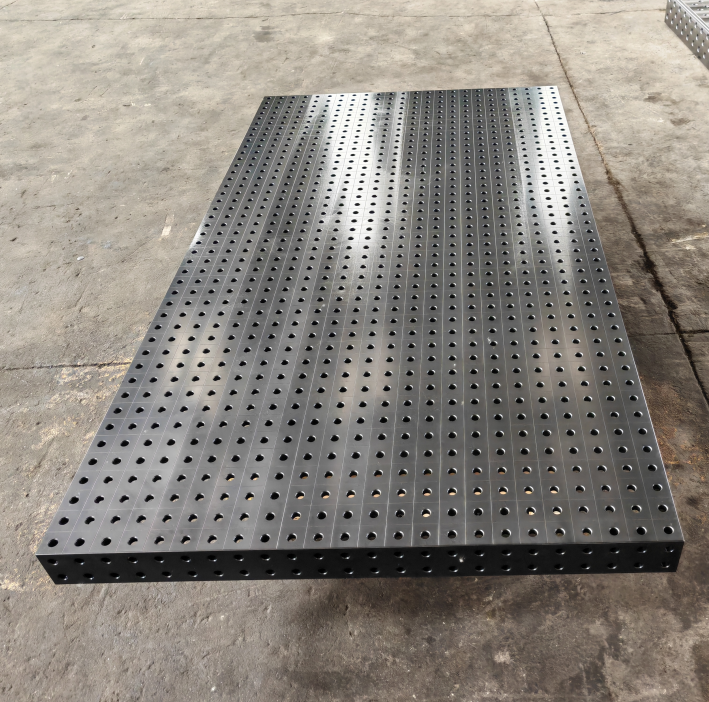
Our core product line includes versatile 2D and 3D flexible welding platforms, which have become preferred jigging equipment in the machining, automotive, and aerospace industries. By integrating our comprehensive range of complementary components—such as U-shaped and L-shaped multi-purpose square boxes, 200-series support angle irons, and 0-225° universal angle gauges—we enable rapid, accurate workpiece positioning and clamping. This capability ensures that every cast aluminum component we machine is held with exceptional stability, minimizing vibration and maximizing dimensional accuracy. Whether using professional cast iron 3D welding platforms or custom angle connection blocks, Haijun Metal’s commitment to durability and precision directly enhances the quality of our final machined products.
Material Selection: Aluminum Alloys for Casting and Machining
Selecting the correct alloy is fundamental to the success of your project. Different alloys offer varying balances of castability, mechanical strength, and machinability.
| Alloy Series | Common Grades | Key Properties | Typical Applications |
| A380 (ADC12) | Al-Si-Cu | Excellent fluidity, good strength, moderate corrosion resistance. | Engine blocks, transmission cases, electronic housings. |
| A360 | Al-Si-Mg | Superior corrosion resistance, high ductility, lower strength than A380. | Marine components, chemical pumps, outdoor enclosures. |
| A356 | Al-Si-Mg | Heat treatable (T6), high strength-to-weight ratio, low porosity. | Aerospace structures, automotive wheels, high-stress brackets. |
| 413 | Al-Si | High fluidity, pressure tightness, good weldability. | Hydraulic manifolds, intricate valve bodies. |
Impact of Silicon Content on Machining
Silicon improves fluidity during casting but increases abrasiveness during machining. High-silicon alloys like A380 require sharper, harder cutting tools. Conversely, low-silicon alloys like A535 are softer and gummier, potentially leading to chip welding on tool edges. Our engineers adjust feed rates and spindle speeds based on the specific alloy composition to optimize surface finish and tool longevity.
Design for Manufacturability (DFM) Guidelines
To maximize the benefits of our aluminum casting machining service, designers should adhere to specific DFM principles. These guidelines help reduce costs and improve part quality.
Uniform Wall Thickness
Varying wall thicknesses can lead to differential cooling rates, causing shrinkage voids and warping. We recommend maintaining uniform walls wherever possible. If thick sections are necessary for structural reasons, we suggest using cored holes or ribs to reduce mass without compromising strength.
Draft Angles and Parting Lines
Draft angles are essential for ejecting parts from molds. Typically, 1-2 degrees per side is sufficient. Designers should also consider the location of parting lines, as these areas may have slight flash or mismatch. Critical sealing surfaces should be located away from parting lines to minimize machining requirements.
Machining Allowances
Always specify adequate stock allowance for machined surfaces. A general rule of thumb is 0.5mm to 1.0mm of extra material on surfaces that will be CNC machined. Insufficient stock can result in incomplete cleaning of the cast surface, exposing porosity or oxide layers.
Hole and Boss Design
Cored holes are cheaper than drilled holes, but they have tolerance limitations. For precise hole locations and diameters, specify post-casting machining. Bosses (mounting points) should be ribbed for strength and designed with sufficient clearance for cutting tools to avoid interference during machining.
Step-by-Step Production Workflow
Transparency in our manufacturing process ensures clients know exactly what to expect at each stage. Here is how we execute a typical aluminum casting machining project.
Phase 1: Engineering and Tooling Design
Upon receiving your CAD files, our engineering team conducts a thorough DFM analysis. We simulate mold filling to predict potential defects and optimize gate locations. Once the design is approved, we manufacture high-precision steel molds. This phase typically takes 2-4 weeks, depending on complexity.
Phase 2: Prototype Casting and Validation
Before full-scale production, we produce T1 samples. These parts undergo initial dimensional checks and functional testing. Feedback from this stage may lead to minor tool adjustments. We provide detailed inspection reports, including first-article inspection (FAI) data.
Phase 3: Mass Production and Heat Treatment
With approved tools, we commence mass production. Cast parts are trimmed, deburred, and subjected to heat treatment if required. T5 tempering stabilizes dimensions, while T6 enhances mechanical strength. This step is crucial for ensuring the material behaves predictably during machining.
Phase 4: CNC Machining and Finishing
Heat-treated blanks are fixtured in CNC machines. We use custom jigs to ensure repeatable positioning. After machining, parts undergo surface finishing processes such as bead blasting, powder coating, or anodizing. Each batch is sampled for dimensional accuracy using CMM.
Phase 5: Quality Assurance and Packaging
Final inspection includes visual checks for surface defects and dimensional verification. We package parts using protective materials to prevent damage during transit. Custom pallets and crates are used for large or sensitive components. Documentation, including material certs and inspection reports, accompanies every shipment.
Applications Across Industries
Our aluminum casting machining service supports a diverse range of sectors, each with unique requirements for precision and performance.
Automotive and Electric Vehicles (EV)
The shift towards electrification has increased demand for lightweight, high-precision components. We produce battery housing enclosures, motor end caps, and power electronics heat sinks. These parts require tight tolerances to ensure proper sealing and thermal management. Our ability to machine complex cooling channels directly into cast housings is a key advantage for EV manufacturers.
Aerospace and Defense
Aerospace components demand the highest levels of traceability and reliability. We manufacture avionics housings, sensor mounts, and structural brackets using A356-T6 alloy. Our processes comply with AS9100 standards, ensuring that every part meets rigorous safety criteria. The combination of low weight and high strength makes our cast-machined parts ideal for flight-critical applications.
Telecommunications and 5G Infrastructure
5G base stations require robust, weather-resistant enclosures with precise mounting points for antennas and circuit boards. Our aluminum castings provide excellent electromagnetic shielding (EMI) and heat dissipation. Machined interfaces ensure seamless integration with fiber optic connectors and cooling systems.
Industrial Automation and Robotics
Robotic arms and automated guided vehicles (AGVs) rely on lightweight joints and gearboxes to maximize payload capacity and energy efficiency. We produce complex gearbox housings and joint brackets that combine structural rigidity with minimal weight. Precision machining ensures smooth movement and reduced wear on bearings and gears.
Comparison: Casting + Machining vs. Other Manufacturing Methods
Choosing the right manufacturing method depends on volume, complexity, and budget. Below is a comparison of our integrated service against alternative processes.
| Feature | Casting + CNC Machining | CNC Machining from Solid Billet | Metal Injection Molding (MIM) |
| Unit Cost (High Volume) | Low | Very High | Medium |
| Material Waste | Low (Near-net shape) | High (Up to 80% waste) | Low |
| Complex Geometry | Excellent (Internal features) | Limited (Tool access) | Good (Small parts only) |
| Lead Time | Medium (Tooling required) | Fast (No tooling) | Long (Tooling + Sintering) |
| Part Size Limit | Large (Up to 1m+) | Medium (Machine bed size) | Small (< 100g) |
For volumes exceeding 1,000 units, casting combined with machining is almost always more cost-effective than machining from solid billet. The reduction in material waste and machining time significantly lowers the per-unit cost. However, for prototypes or very low volumes, direct CNC machining may be preferable to avoid tooling expenses.
Common Challenges and Solutions
Even with advanced technology, challenges can arise. Our experience allows us to anticipate and mitigate common issues.
Porosity and Air Traps
Porosity is the most common defect in die casting. It can compromise pressure tightness and machining quality. Solution: We use vacuum-assisted die casting to remove air from the mold cavity. Additionally, we employ squeeze pin technology to compress the metal during solidification, reducing void formation.
Dimensional Instability
Cast parts can warp due to residual stresses. Solution: Proper heat treatment (aging) relieves these stresses. We also design fixtures that support the part naturally during machining, preventing clamping-induced distortion.
Tool Wear and Surface Finish
High-silicon alloys accelerate tool wear. Solution: We utilize coated carbide and PCD tools optimized for aluminum. Regular tool monitoring and predictive replacement schedules ensure consistent surface finishes and prevent catastrophic tool failure.
Frequently Asked Questions (FAQ)
What is the minimum order quantity (MOQ) for aluminum casting machining?
Our MOQ depends on the complexity of the part and the tooling required. For standard die casting, we typically start at 500-1,000 units to amortize tooling costs. However, we offer prototype services using soft tooling or sand casting for lower quantities (50-100 units) during the development phase.
Can you handle assemblies and sub-assemblies?
Yes. Beyond individual components, we provide assembly services. This includes inserting threaded inserts, pressing in bearings, and assembling multi-part housings. This turnkey approach simplifies your supply chain and reduces final assembly labor on your end.
What tolerances can be achieved with this service?
Standard die casting tolerances are around ±0.1mm to ±0.2mm. With secondary CNC machining, we can achieve tight tolerances of ±0.01mm to ±0.025mm on critical features. Geometric tolerances such as flatness and concentricity are also tightly controlled through precise fixturing.
How do you ensure the quality of internal structures?
We use X-ray inspection to detect internal porosity and inclusions. For critical applications, we can perform CT scanning to create a 3D map of internal voids. This non-destructive testing ensures that hidden defects do not compromise part integrity.
What surface finishes are available?
We offer a wide range of finishes, including bead blasting, powder coating, wet painting, anodizing (Type II and Type III), and chromate conversion coating. The choice depends on aesthetic requirements, corrosion resistance needs, and electrical conductivity specifications.
Selection Guide: How to Choose the Right Partner
When evaluating suppliers for aluminum casting machining service, consider the following factors to ensure a successful partnership.
- In-House Capabilities: Verify that the supplier controls both casting and machining. Outsourcing either step introduces risk.
- Engineering Support: Look for partners who offer proactive DFM feedback rather than just quoting prints.
- Quality Certifications: Ensure the facility holds ISO 9001 certification. Industry-specific certs like IATF 16949 (automotive) or AS9100 (aerospace) are strong indicators of process maturity.
- Scalability: Assess their capacity to ramp up production as your demand grows. Ask about their machine uptime and maintenance protocols.
- Communication: Clear, responsive communication is vital. Choose a partner who provides regular updates and transparent reporting.
Conclusion: Elevate Your Product with Precision Manufacturing
In the competitive landscape of modern manufacturing, the integration of aluminum casting and CNC machining offers a decisive advantage. It delivers the complex geometries of casting with the precise tolerances of machining, all while optimizing cost and lead time. Whether you are developing next-generation EV components, aerospace structures, or industrial automation hardware, our comprehensive service ensures your parts meet the highest standards of quality and performance.
By choosing a partner with deep expertise in both disciplines, you eliminate supply chain friction and gain a strategic ally in product development. Our commitment to EEAT principles—demonstrated through our technical transparency, experienced engineering team, and authoritative quality processes—makes us the trusted choice for global manufacturers.
Ready to optimize your manufacturing process? Contact our engineering team today for a free DFM analysis and quote. Let us help you bring your innovative designs to life with precision and efficiency.
Explore Our Aluminum Casting and Machining Solutions