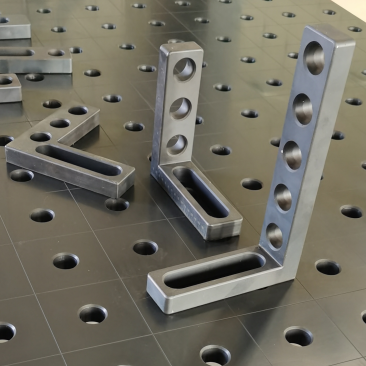
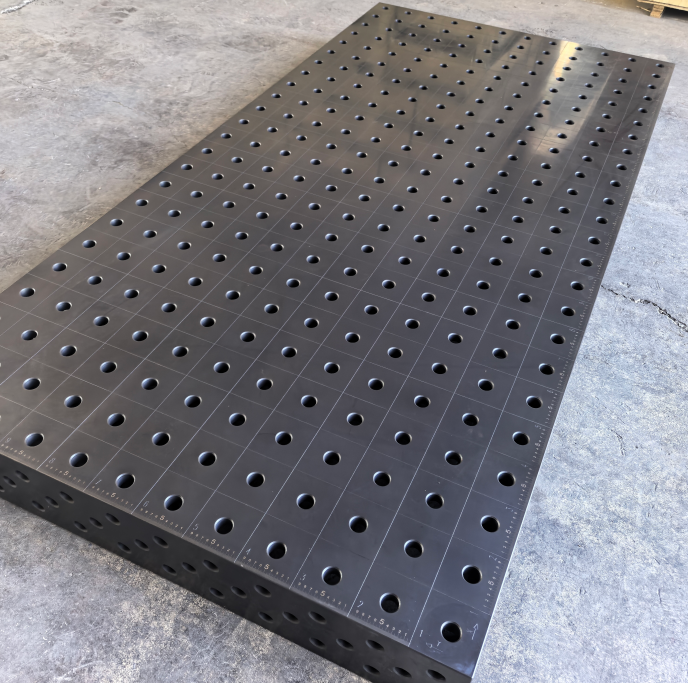
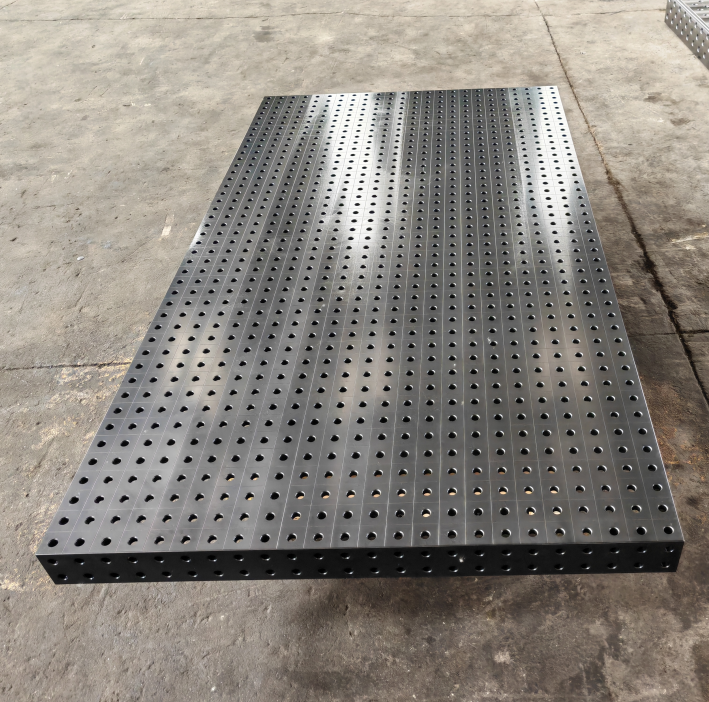
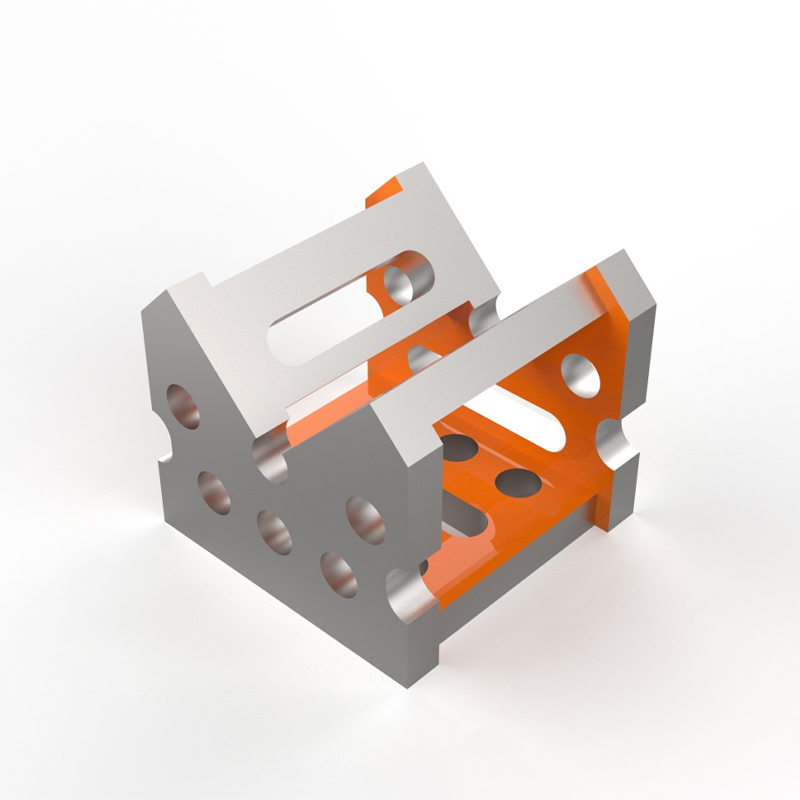
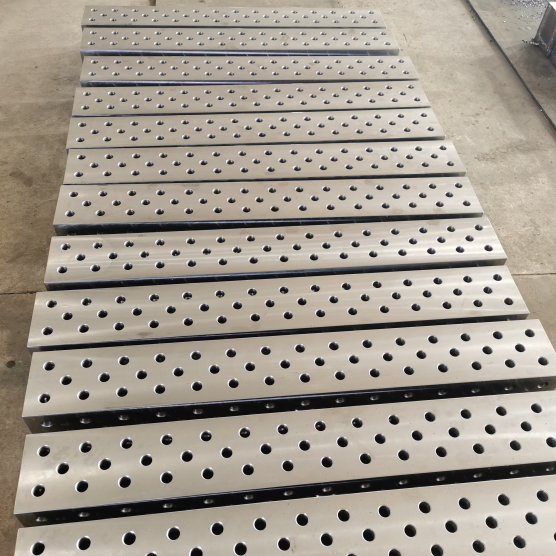
A welding desk is a specialized workbench designed to withstand high heat, sparks, and heavy loads during welding operations. In 2026, the best welding desks feature fire-resistant surfaces, modular fixturing holes, and ergonomic designs to enhance safety and precision. Whether for hobbyists or industrial fabrication, choosing the right table ensures durability and workflow efficiency.
Why a Professional Welding Desk Matters in 2026
The landscape of metal fabrication has evolved significantly. Modern projects demand higher precision, and the workspace must support these requirements. A standard workbench often fails under the thermal stress of welding, leading to warping or fire hazards. Investing in a dedicated welding desk is no longer optional for serious fabricators; it is a critical safety and productivity tool.
In 2026, the definition of a quality welding table has shifted. It is not just about a thick steel plate. The latest models integrate smart fixturing systems, advanced grounding options, and materials that resist spatter adhesion. This evolution reflects the industry’s move towards lean manufacturing and rapid prototyping.
Professional welders understand that setup time equals cost. A high-quality table with a grid of precision-drilled holes allows for instant clamping and positioning. This reduces the time spent measuring and tacking, directly impacting project turnaround times. Furthermore, the ergonomic height of modern desks reduces operator fatigue during long shifts.
Safety remains the paramount concern. Unlike wooden or light-gauge tables, a proper welding surface prevents accidental fires from stray sparks. The mass of a heavy-duty table also acts as a heat sink, dissipating thermal energy quickly and preventing distortion of the workpiece. This stability is crucial for maintaining tight tolerances in complex assemblies.
Key Features Defining Modern Welding Tables
When evaluating options, several core features distinguish a premium product from a basic one. The material composition is the first factor. Most top-tier desks use low-carbon steel or specialized alloys that withstand repeated thermal cycling without losing structural integrity.
- Fire-Resistant Surface: Must withstand direct arc exposure without melting or igniting.
- Fixturing Grid: A pattern of holes (typically 16mm or 28mm) for versatile clamping.
- Grounding Points: Dedicated terminals for safe electrical grounding of the workpiece.
- Load Capacity: Engineered to support heavy machinery and large assemblies without sagging.
- Modular Accessories: Compatibility with stops, squares, and quick-release clamps.
The surface finish is another critical aspect. In 2026, many manufacturers offer coatings that repel spatter, making cleanup significantly faster. These coatings do not interfere with electrical conductivity but prevent molten metal from fusing to the table surface. This feature alone can save hours of grinding and chipping over the life of the equipment.
Structural rigidity is achieved through reinforced leg designs and cross-bracing. A wobbly table compromises weld quality by introducing vibration during the process. High-end models often feature leveled feet to ensure stability on uneven workshop floors, a common issue in many fabrication shops.
Welding Desk Price Trends and Market Analysis 2026
The global market for welding equipment has seen dynamic shifts in pricing due to raw material costs and supply chain optimizations. For buyers looking to purchase a welding desk in 2026, understanding the price tiers is essential for budgeting effectively. Prices vary widely based on size, thickness, and included accessories.
Entry-level options for hobbyists and light DIY users typically range from $300 to $800. These units often feature thinner tabletops (around 10mm) and simpler leg structures. While suitable for occasional repair work, they may lack the precision fixturing capabilities required for professional fabrication.
The mid-range sector, catering to small businesses and serious enthusiasts, sees prices between $1,500 and $5,000. In this category, buyers can expect thicker plates (15mm to 20mm), robust framing, and a comprehensive hole pattern. These tables often come with basic clamping kits, offering excellent value for money.
Industrial-grade solutions command prices from $6,000 to over $20,000. These massive units are engineered for heavy manufacturing environments. They feature extremely thick tops (25mm+), hardened surfaces, and extensive accessory ecosystems. Some custom-built automated welding stations can exceed $50,000, integrating robotic mounts and conveyor systems.
Factors Influencing Welding Table Costs
Several variables drive the final cost of a welding workstation. The thickness of the tabletop is the most significant factor. Thicker plates require more raw material and heavier machining, directly increasing the price. However, they offer superior flatness and longevity.
- Material Grade: Specialized steel alloys cost more than standard carbon steel but offer better heat resistance.
- Manufacturing Precision: Laser-cut holes with tight tolerances add to production costs but ensure accurate fixturing.
- Surface Treatment: Advanced anti-spatter coatings or nitriding processes increase the unit price.
- Accessory Kits: Bundles including clamps, stops, and angles add value but raise the initial investment.
- Shipping and Logistics: Due to the extreme weight, freight costs can constitute a significant portion of the total price.
Regional manufacturing differences also play a role. Chinese manufacturers have become increasingly competitive, offering high-specification tables at lower price points due to scaled production and efficient supply chains. This has pressured Western manufacturers to innovate or adjust their pricing strategies to remain competitive.
Customization is another cost driver. Tables built to specific dimensions or with unique hole patterns require non-standard production runs. While this ensures the perfect fit for a specific workflow, it inevitably carries a premium compared to off-the-shelf models.
Top China Manufacturers and Sourcing Guide
China has solidified its position as a global hub for welding equipment manufacturing. In 2026, numerous Chinese factories produce world-class welding desks that rival established Western brands in quality while offering competitive pricing. Sourcing directly from these manufacturers can yield significant savings for bulk buyers or distributors.
Leading manufacturers in regions like Shandong, Jiangsu, and Guangdong have invested heavily in automation and quality control. Many now hold international certifications such as ISO 9001, ensuring consistent product standards. These facilities often serve both the domestic market and major global exporters.
When selecting a supplier, it is crucial to verify their production capabilities. Look for factories with in-house laser cutting and CNC machining centers. This vertical integration allows for tighter quality control and faster lead times. Companies that outsource key components may struggle with consistency.
Reputation and after-sales support are vital considerations. Established manufacturers often provide detailed technical documentation, warranty coverage, and responsive customer service. Reading reviews from international clients and requesting sample units can help mitigate the risks associated with overseas sourcing.
Evaluating Supplier Credibility
Not all manufacturers are created equal. A rigorous evaluation process helps identify reliable partners. Start by examining their product portfolio. A specialist focusing solely on welding fixtures is often more reliable than a general metalworker.
- Certifications: Verify ISO, CE, or other relevant industry certifications.
- Production Capacity: Ensure they can handle your order volume within your timeline.
- Quality Control: Ask about their inspection procedures for flatness and hole tolerance.
- Export Experience: Prefer suppliers with a track record of shipping to your region.
- Communication: Assess their responsiveness and technical knowledge during inquiries.
Trade shows remain an excellent venue for meeting suppliers face-to-face. Events like the Beijing Essen Welding & Cutting Fair showcase the latest innovations and allow buyers to inspect build quality firsthand. Virtual factory tours have also become a standard practice, offering a convenient way to assess facilities remotely.
Pricing negotiations should focus on total landed cost rather than just the ex-factory price. Include shipping, insurance, and potential duties in your calculations. Some manufacturers offer DDP (Delivered Duty Paid) terms, simplifying the import process for the buyer.
Comparison: Hobbyist vs. Industrial Welding Desks
Choosing the right table depends heavily on the intended application. A mismatch can lead to wasted funds or inadequate performance. The following comparison highlights the key differences between entry-level and professional-grade options available in 2026.
| Feature | Hobbyist / Light Duty | Industrial / Professional |
| Tabletop Thickness | 8mm – 12mm | 16mm – 50mm+ |
| Material | Mild Steel, sometimes painted | Low-carbon alloy, hardened surface |
| Hole Pattern | Sparse or non-existent | Dense grid (16mm/28mm spacing) |
| Flatness Tolerance | ±2mm per meter | ±0.5mm per meter or better |
| Load Capacity | Up to 500 kg | 2,000 kg to 10,000 kg+ |
| Spatter Resistance | Low, requires frequent cleaning | High, often coated or treated |
| Price Range | $300 – $1,000 | $2,000 – $20,000+ |
Hobbyist tables are ideal for occasional repairs, small art projects, and learning basic techniques. They are lightweight and easier to move around a garage. However, they lack the precision needed for complex jigs or heavy structural work.
Industrial tables are built for daily, intensive use. Their massive weight provides inherent stability, and the precision hole system enables repeatable setups. For fabrication shops producing multiple units of the same part, the time saved in fixturing quickly justifies the higher initial cost.
The durability gap is also significant. A light-duty table may warp after years of heavy use, rendering it unusable for precision work. An industrial table is designed to last decades, often becoming a permanent fixture in the workshop that retains its value over time.
Selecting the Right Size for Your Workshop
Dimensions play a crucial role in functionality. A table that is too small restricts movement, while one that is too large can dominate the workspace. Standard sizes range from compact 2×4 feet units to massive 10×20 feet platforms.
- Small Shops: A 4×8 feet table offers a good balance of workspace and footprint.
- Large Assemblies: Consider modular tables that can be bolted together to create larger surfaces.
- Height Adjustment: Ensure the table height matches the operator’s ergonomics, typically 34-36 inches.
- Clearance: Leave ample space around the table for walking and maneuvering large parts.
Modularity is a growing trend in 2026. Many manufacturers offer tables with interlocking edges, allowing users to expand their workspace as needs grow. This flexibility is particularly useful for shops with varying project sizes.
Don’t forget vertical space. Some advanced welding desks include overhead rails or mounting points for lighting and extraction arms. Integrating these features into the initial design can streamline the overall workflow and improve air quality in the shop.
Essential Accessories for Your Welding Station
A welding desk is only as good as the tooling used with it. To maximize the potential of your new table, investing in high-quality accessories is essential. These tools transform a flat surface into a versatile fabrication platform.
Clamping systems are the backbone of any fixturing setup. Quick-action toggle clamps allow for rapid securing of workpieces. For precision work, positional clamps with fine adjustments are indispensable. A well-stocked kit should include various sizes and types to handle different geometries.
Stops and squares ensure angular accuracy. Hardened steel stops can be inserted into the table holes to create perfect 90-degree corners or parallel guides. Magnetic squares offer temporary holding power for tacking before final welding.
- Swivel Clamps: Allow rotation of the workpiece for optimal welding positions.
- Gap Gauges: Ensure consistent joint spacing for uniform penetration.
- Protective Covers: Shield unused holes from spatter accumulation.
- Tool Trays: Keep frequently used items within easy reach.
- Grounding Clamps: Heavy-duty clamps to ensure a solid electrical connection.
Storage solutions are often overlooked but vital for organization. Under-table drawers or side-mounted racks keep the workspace clear of clutter. A clean table is a safe table, reducing the risk of tripping or accidental ignition of debris.
Lighting is another critical accessory. Integrated LED strips or adjustable arm lamps illuminate the weld zone, reducing eye strain and improving visibility of the puddle. In 2026, many tables come with pre-installed channels for wiring these lights seamlessly.
Maintenance Tips for Longevity
Proper maintenance extends the life of your welding table and maintains its precision. Regular cleaning prevents spatter buildup, which can interfere with clamping and fixturing. Use a chipping hammer or grinder to remove slag immediately after cooling.
- Daily Cleaning: Sweep off debris and wipe down the surface.
- Spatter Removal: Apply anti-spatter spray before welding to ease cleanup.
- Hole Care: Use reamers to clean out holes clogged with spatter.
- Rust Prevention: Apply a thin coat of oil if the table will be idle for extended periods.
- Flatness Checks: Periodically check the surface with a straightedge to detect warping.
Avoid dropping heavy objects onto the table, as this can cause dents or affect flatness. Use lifting equipment for placing heavy workpieces. Treating the table with care ensures it remains a precise reference surface for years.
Inspect the legs and frame regularly for signs of stress or damage. Tighten any loose bolts immediately. Structural integrity is key to safety, especially when supporting heavy loads or resisting the forces of welding distortion.
Common Mistakes When Buying a Welding Table
First-time buyers often make costly errors that compromise their workflow. Being aware of these pitfalls can save money and frustration. One common mistake is prioritizing price over quality. A cheap table may seem attractive initially but often lacks the durability and precision needed for serious work.
Another error is ignoring the hole pattern compatibility. Not all accessories fit all tables. Ensure the hole diameter and spacing match the tooling you plan to use. Mixing incompatible systems renders the fixturing capabilities useless.
- Underestimating Weight: Failing to account for floor load capacity or delivery logistics.
- Wrong Height: Choosing a table that causes back strain during operation.
- Lack of Grounding: Overlooking the importance of dedicated grounding points.
- Poor Surface Finish: Selecting a table prone to excessive spatter adhesion.
- Ignoring Future Needs: Buying a table too small for anticipated growth.
Neglecting delivery logistics is another frequent oversight. Welding tables are incredibly heavy. Without proper equipment like forklifts or pallet jacks, unloading can be dangerous or impossible. Always verify delivery terms and prepare your site beforehand.
Finally, failing to consider the environment. Outdoor use requires weather-resistant materials or protective covers. Using an indoor-grade table outside can lead to rapid rusting and degradation, shortening its lifespan significantly.
The Role of Ergonomics in Welding Productivity
Ergonomics is not just about comfort; it is about efficiency and health. A poorly designed workstation leads to fatigue, reducing concentration and increasing the risk of defects. The ideal welding desk allows the operator to work with natural posture.
Adjustable height features are gaining popularity. Being able to raise or lower the table accommodates different tasks and operator heights. Standing for long periods on a hard floor can be taxing, so anti-fatigue mats are also recommended companions to the table.
Reach distance is another factor. Tools and materials should be within easy reach to minimize bending and stretching. Organized storage integrated into the table design supports this principle, keeping the workflow smooth and uninterrupted.
Lighting placement affects neck strain. Lights mounted directly above the work area prevent shadows and reduce the need for awkward head positions. In 2026, ergonomic design is a standard expectation rather than a luxury feature.
Future Trends in Welding Workstation Technology
The future of welding desks lies in integration and intelligence. As fabrication becomes more automated, workstations are evolving to support robotic cells and collaborative robots (cobots). Tables with standardized mounting interfaces for robots are becoming more common.
Smart features are emerging. Some advanced tables now include sensors to monitor temperature and load distribution. This data can be fed into a central system to optimize workflow and predict maintenance needs. While still niche, this technology represents the direction of Industry 4.0 in welding.
- Robot Ready: Surfaces designed for easy mounting of robotic arms.
- Integrated Extraction: Built-in downdraft systems for fume removal.
- Modular Design: Easily reconfigurable layouts for flexible manufacturing.
- Sustainable Materials: Use of recycled steel and eco-friendly coatings.
- Digital Twins: Virtual modeling of the workstation for simulation.
Sustainability is also driving innovation. Manufacturers are exploring ways to reduce the carbon footprint of production. This includes using energy-efficient machining processes and recyclable packaging. Buyers are increasingly valuing these green credentials.
The convergence of software and hardware is another trend. Software that helps design fixturing setups digitally before physical implementation saves time and material. Tables that facilitate this digital-to-physical workflow will dominate the high-end market.
Conclusion: Making the Right Investment
Purchasing a welding desk is a strategic decision that impacts safety, quality, and profitability. In 2026, the market offers a diverse range of options suitable for every need, from garage hobbyists to global manufacturing giants. By understanding the key features, price drivers, and sourcing landscapes, buyers can make informed choices.
Prioritize quality and durability over initial cost savings. A robust table serves as the foundation of your workshop for decades. Consider the total ecosystem, including accessories and future expansion possibilities. The right table transforms welding from a struggle into a precise, enjoyable craft.
Whether sourcing locally or importing from top China manufacturers, due diligence is key. Verify specifications, check certifications, and read user feedback. With the right preparation, your new welding desk will become the most valuable asset in your fabrication arsenal, driving efficiency and excellence in every project.