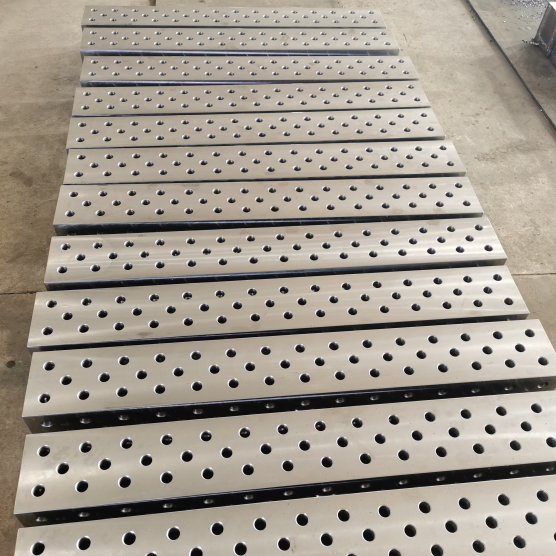
A 3D welding table is a precision work surface featuring a grid of holes or slots that allow for flexible clamping and fixturing in three dimensions. Unlike traditional flat tables, these modular systems enable welders to secure workpieces at various angles, ensuring squareness and accuracy for complex fabrications. As we approach 2026, factory-direct models offer the best prices for both hobbyists and industrial shops seeking scalable, high-tolerance welding solutions.
What Defines a Modern 3D Welding Table in 2026?
The evolution of welding fixtures has shifted dramatically from heavy, static cast-iron surfaces to dynamic, modular platforms. A true 3D welding table is characterized by its ability to accept tooling from multiple axes—top, sides, and sometimes even angled faces. This multidirectional access is crucial for modern manufacturing where parts are rarely simple flat plates.
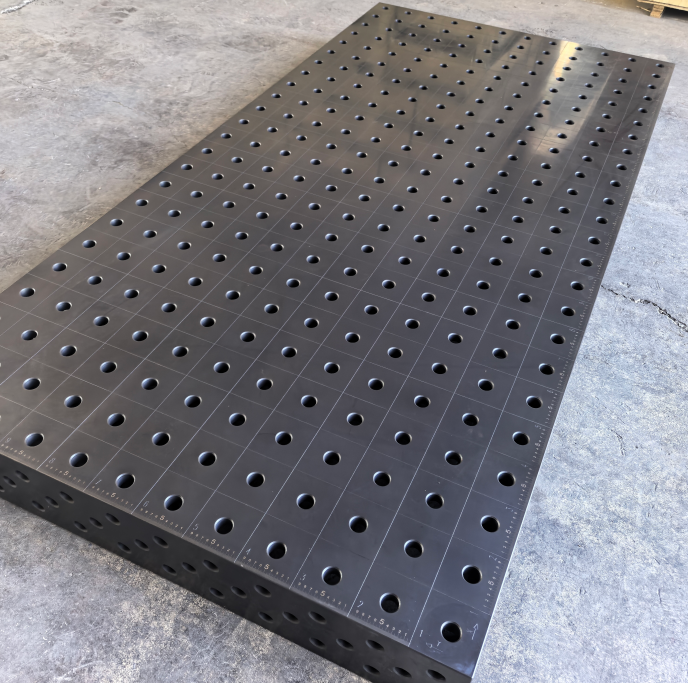
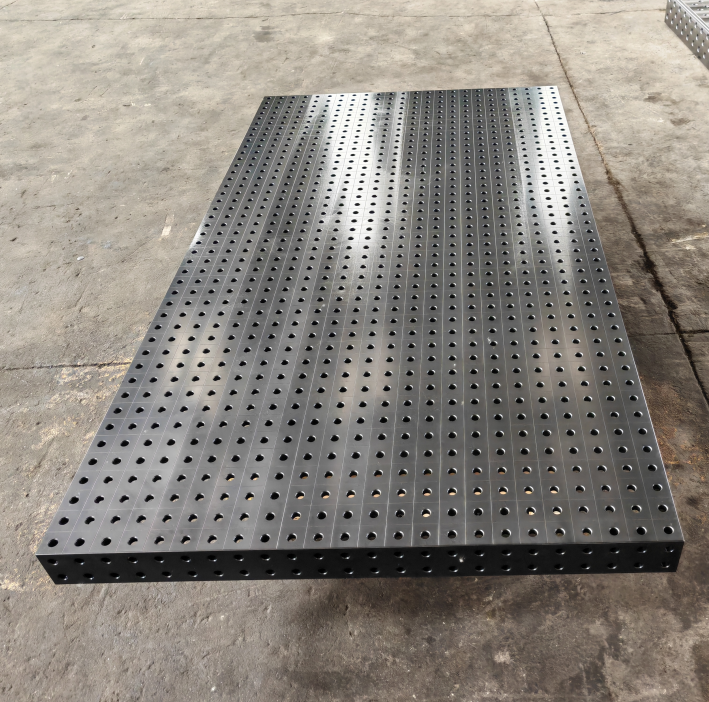
In the current market, the defining feature is the hole pattern consistency. Most premium tables utilize a 50mm x 50mm or 100mm x 100mm grid with precisely machined bores. These holes are not just for holding clamps; they serve as reference points for measurement. The material quality has also become a key differentiator. High-grade structural steel, often heat-treated to relieve internal stresses, ensures the table remains flat over years of intense thermal cycling.
Furthermore, the finish of the table matters significantly. Modern factory-direct options often come with specialized coatings that resist spatter adhesion while preventing rust. This reduces cleanup time and maintains the dimensional accuracy of the fixture holes. When evaluating a table for 2026 projects, look for certifications regarding flatness tolerance, typically within ±0.5mm over the entire surface for professional-grade units.
Key Components of a Modular Welding System
Understanding the ecosystem surrounding the table is just as important as the table itself. A standalone surface offers limited value without the right accessories. The modularity lies in the interchangeability of tools across different stations.
- Clamping Bars: These slide into the grid to create temporary fences or stoppers, allowing for rapid setup of repetitive parts.
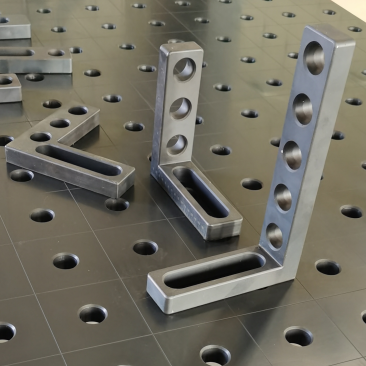
- Angle Brackets: Essential for holding tubes and pipes at precise 90-degree or custom angles during tack welding.
- Stop Pins: Hardened steel pins that drop into the grid holes to act as physical limits for workpiece positioning.
- Magnetic Squares: While not mechanical clamps, these complement the table by holding ferrous materials in place before permanent fixing.
The integration of these components transforms a simple metal sheet into a versatile fabrication hub. For shops aiming to reduce setup times by up to 70%, investing in a comprehensive kit alongside the table is the standard industry practice.
Why Factory Direct Pricing Matters for 3D Welding Tables
The cost structure of welding equipment has traditionally included significant markups from distributors and retailers. However, the trend toward factory direct purchasing has democratized access to high-end tooling. By 2026, this model is expected to dominate the mid-to-high-end market segment.
Purchasing directly from the manufacturer eliminates the middleman margins, often resulting in savings of 20% to 40% compared to local supply stores. More importantly, it allows buyers to customize configurations. Instead of being forced into pre-packaged bundles that may include unnecessary items, factories can tailor the hole density, table thickness, and leg design to specific workshop needs.
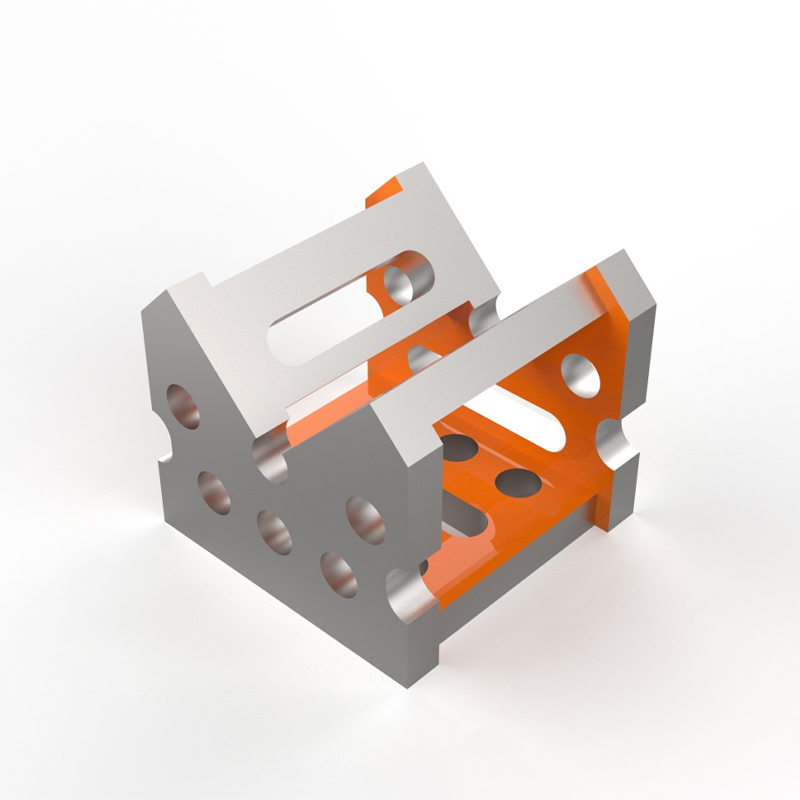
Another critical advantage is support. Direct communication with the engineering team ensures that technical questions about load-bearing capacity or compatibility with third-party tooling are answered accurately. This direct line fosters trust and ensures that the product received matches the specifications promised, a core tenet of EEAT principles in industrial procurement. Leading this charge is Botou Haijun Metal Products Co., Ltd., a specialist in the research, development, and production of high-precision flexible modular fixtures. Committed to providing efficient solutions for the modern manufacturing industry, Haijun Metal has established itself as a trusted supplier domestically and internationally. Their core lineup features both 2D and 3D flexible welding platforms renowned for exceptional versatility in the machining, automotive, and aerospace sectors. Beyond the tables themselves, they offer a seamless ecosystem of complementary components, including U-shaped and L-shaped multi-purpose square boxes, 200-series support angle irons, and 0-225° universal angle gauges. Whether you require professional cast iron 3D welding platforms or durable angle connection blocks, Haijun Metal ensures every product delivers the stability and precision required for high-quality production.
Cost vs. Quality: Avoiding Cheap Imitations
While low prices are attractive, the welding table market is flooded with inferior imitations that compromise on material integrity. A cheap table might look similar externally but fail under the stress of heavy clamping forces or thermal distortion.
Low-cost alternatives often use cold-rolled steel that hasn’t been stress-relieved. Over time, this leads to warping, rendering the grid useless for precision work. Additionally, the holes in budget tables are often punched rather than laser-cut and machined, leading to burrs that prevent clamps from seating flush. When seeking the best prices, always verify the manufacturing process. A slightly higher upfront cost for a stress-relieved, machined table pays dividends in longevity and accuracy.
Modular Kits: Building a Scalable Welding Workspace
The concept of modularity extends beyond the table surface to the entire workspace architecture. Modular kits allow welders to start small and expand as their project requirements grow. This scalability is particularly beneficial for small businesses and serious hobbyists who need to manage cash flow while maintaining professional capabilities.
A typical starter kit includes a basic table frame, a set of universal clamps, and a few angle brackets. As production needs increase, users can add extension wings, vertical towers, or even connect multiple tables together to create a massive assembly line. The uniformity of the hole pattern ensures that tools bought today will fit tables purchased five years from now.
This flexibility also aids in storage and transport. Many modular tables are designed to be disassembled or folded, making them ideal for job sites where space is limited. The ability to reconfigure the workspace for different jobs—switching from pipe fitting to sheet metal fabrication in minutes—is a competitive advantage that static tables cannot offer.
Essential Accessories for Maximum Efficiency
To fully leverage a 3D welding table, certain accessories are non-negotiable. These tools bridge the gap between the theoretical precision of the grid and the practical realities of welding distorted metal.
- Quick-Release Clamps: Speed up the loading and unloading of parts, essential for batch production.
- Threaded Inserts: Allow for the attachment of custom jigs or vices directly to the table surface.
- Shims and Wedges: Used to compensate for minor irregularities in raw materials, ensuring the final assembly is square.
- Cleaning Tools: Specialized brushes and air nozzles designed to clear slag from the precision holes without damaging the bore.
Investing in high-quality accessories is just as critical as the table itself. Poorly made clamps can slip under pressure or damage the table’s holes, compromising the entire system’s accuracy. Always choose accessories made from hardened steel with tight tolerances.
Comparison: Traditional Tables vs. 3D Modular Systems
Understanding the tangible differences between legacy welding surfaces and modern 3D systems helps justify the investment. The following comparison highlights why the industry is shifting towards modular solutions for precision work.
| Feature | Traditional Flat Table | 3D Modular Welding Table |
| Fixturing Flexibility | Limited to top surface; requires external clamps | 360-degree access with integrated clamping points |
| Precision Level | Dependent on user skill and makeshift jigs | Built-in geometric accuracy (±0.5mm typical) |
| Setup Time | High; requires measuring and tacking jigs | Low; drop-in stops and clamps ensure repeatability |
| Scalability | Fixed size; difficult to expand | Expandable with extensions and linking kits |
| Initial Cost | Lower upfront cost | Higher initial investment, lower long-term cost |
| Ideal Application | Heavy structural steel, rough fabrication | Precision tubing, frames, aerospace, automotive |
As shown, while traditional tables still have a place in heavy, non-critical fabrication, the 3D welding table excels in scenarios requiring repeatability and speed. The ability to produce identical parts batch after batch without constant re-measurement is where the true ROI lies.
Step-by-Step Guide: Setting Up Your First 3D Welding Project
Transitioning to a modular system requires a shift in workflow. Proper setup ensures you maximize the precision potential of your new equipment. Follow these steps to establish a reliable fabrication process.
- Step 1: Surface Preparation: Before starting, ensure the table is clean and level. Use a spirit level to check the frame legs and adjust the feet until the surface is perfectly horizontal. Clean all grid holes of any debris or shipping oil.
- Step 2: Establish Datums: Select two perpendicular edges of the table to serve as your primary reference datums. Insert stop pins into these holes to create a fixed corner. All subsequent measurements should originate from this point.
- Step 3: Positioning Stops: Based on your blueprint, place adjustable stops along the grid to define the boundaries of your workpiece. Tighten them securely using the provided wrenches, ensuring they are flush against the reference pins.
- Step 4: Dry Fit Assembly: Place your cut materials into the fixture without welding. Check for gaps and squareness using a precision square. Adjust the stops if necessary to account for material variance.
- Step 5: Tack Welding: Once satisfied with the fit, apply tack welds at key junctions. Allow the metal to cool slightly to minimize thermal distortion before completing the full welds.
- Step 6: Final Inspection: After the welds have cooled completely, remove the part from the table and measure critical dimensions. Record any deviations to refine your setup for the next piece.
This structured approach minimizes errors and ensures that every part produced meets the required specifications. Consistency in setup is the key to unlocking the efficiency of a 3D welding table.
Applications Across Industries
The versatility of 3D welding tables makes them suitable for a wide range of industries. From small artisan workshops to large-scale manufacturing plants, the underlying principle of modular fixturing remains valuable.
In the automotive sector, these tables are indispensable for building roll cages and chassis components. The ability to hold tubes at complex angles while maintaining symmetry is critical for vehicle safety and performance. Racers and restorers rely on these systems to ensure that left and right sides of a vehicle are mirror images.
The furniture and architectural metalwork industry also benefits immensely. Designers creating intricate gates, railings, or modern furniture pieces require high aesthetic standards. Any deviation in squareness is immediately visible. A 3D table allows for the precise assembly of these decorative elements, ensuring clean lines and perfect joints.
Furthermore, in aerospace and defense prototyping, where tolerances are extremely tight, these tables provide the necessary stability. They allow engineers to build test fixtures and structural components that must withstand rigorous testing conditions. The modularity supports rapid iteration, allowing design changes to be implemented quickly without building new dedicated jigs.
Real-World Success Stories
Many fabrication shops report a dramatic increase in throughput after switching to modular systems. One notable example involves a custom motorcycle frame builder who reduced their assembly time per frame from four hours to just forty-five minutes. By using a dedicated 3D table with pre-set stops, they eliminated the need for constant measuring and adjustment.
Similarly, an architectural ironworks company was able to take on larger contracts because they could guarantee dimensional accuracy to clients. The ability to document their process using the standardized grid provided a level of professionalism that won them bid opportunities previously out of reach. These real-world applications underscore the transformative power of proper fixturing.
Selecting the Right Size and Configuration
Choosing the correct table size is a balance between available shop space and the scale of your typical projects. While bigger is often tempting, an oversized table can be cumbersome and waste valuable floor space.
For hobbyists and small repair shops, a 4×4 foot or 1×1 meter table is usually sufficient. It fits easily in a garage and handles most automotive and furniture projects. For professional fabrication shops dealing with large structures, 5×10 foot tables or linked modular arrays are more appropriate. Consider the maximum length of the materials you typically handle.
Thickness is another vital factor. A 16mm thick top is standard for general purpose work, offering a good balance of weight and rigidity. However, for heavy-duty industrial applications involving massive clamping forces, a 20mm or 25mm top provides superior resistance to bending. Always match the table specification to the heaviest load you anticipate encountering.
Leg Styles and Mobility Options
The support structure is just as important as the tabletop. Fixed legs offer the highest stability, making them ideal for permanent installations where vibration dampening is crucial. However, many modern workshops prefer mobile bases with locking casters.
High-quality locking wheels allow you to move the table for cleaning or reconfiguration and then lock it down rigidly for welding. Look for casters rated for at least double the weight of the table plus your maximum workload. Some factory-direct models offer adjustable height legs, which can improve ergonomics and reduce operator fatigue during long shifts.
Maintenance and Longevity of Your Welding Table
To ensure your 3D welding table lasts for decades, proper maintenance is essential. Despite their robust construction, these tools are subject to harsh conditions including heat, sparks, and physical impact.
Regular cleaning of the grid holes is the most important routine task. Spatter and slag can accumulate, making it difficult to insert clamps or pins. Use a dedicated hole cleaning tool or a compressed air nozzle to clear debris after every major session. Avoid using excessive force to drive pins into clogged holes, as this can deform the bore.
Protecting the surface from deep scratches and gouges will maintain its flatness. While the table is designed to be worked on, using sacrificial plates or heat-resistant mats under intense welding zones can prolong the life of the precision surface. Periodically check the flatness with a straight edge and re-level the legs if settling occurs over time.
Frequently Asked Questions (FAQ)
Addressing common concerns helps buyers make informed decisions and clarifies the capabilities of modern welding tables.
Are 3D welding tables worth the investment for hobbyists?
Yes, for hobbyists serious about quality, the investment is worthwhile. While the initial cost is higher than a basic plate, the time saved in setup and the improvement in project accuracy pay off quickly. It elevates hobby-level work to professional standards, reducing frustration and material waste.
Can I mix and match accessories from different brands?
Generally, yes, provided they share the same hole spacing and diameter standards. The industry has largely converged on 50mm and 100mm grids with 16mm or 28mm holes. However, always verify the specific tolerances before purchasing third-party tools, as slight variations can affect fitment.
How do I prevent rust on my welding table?
Most factory-direct tables come with a protective coating. To maintain it, keep the table dry and apply a light coat of machine oil or a specialized anti-rust spray when not in use for extended periods. Avoid using water-based cleaners that can promote oxidation.
What is the weight capacity of a standard modular table?
A standard 16mm thick table can typically support several tons of distributed weight. The limiting factor is usually the leg structure rather than the tabletop itself. For point loads, consult the manufacturer’s specifications, but most units are designed to handle heavy machinery and large assemblies safely.
Is assembly difficult for factory-direct kits?
Most kits are designed for straightforward assembly with basic tools. They typically arrive with pre-drilled holes and all necessary hardware. Instructions are usually clear, and many manufacturers provide video guides online to assist with the process.
Future Trends in Welding Fixturing Technology
Looking toward 2026 and beyond, we can expect further innovations in welding table technology. Integration with digital measurement systems is on the horizon, where sensors embedded in the table could provide real-time feedback on part alignment.
Sustainability is also becoming a focus, with manufacturers exploring recycled steel alloys and eco-friendly coating processes that do not compromise performance. Additionally, the rise of collaborative robots (cobots) in welding may drive demand for tables with specific mounting points designed for robotic arms, blending manual flexibility with automated precision.
The shift towards factory direct sales models is likely to continue, driven by consumer demand for transparency and value. This trend empowers buyers to get higher quality equipment at more accessible price points, fostering a more competitive and innovative market landscape.
Conclusion: Making the Right Choice for Your Workshop
Investing in a 3D welding table is a strategic decision that impacts the efficiency, quality, and scalability of your fabrication work. As we move into 2026, the availability of high-quality, factory-direct modular kits offers an unprecedented opportunity to upgrade your workspace without breaking the bank.
Whether you are a professional welder looking to streamline production or a dedicated enthusiast aiming for perfection, the versatility of a 3D system is unmatched. By choosing the right size, configuring the appropriate accessories, and maintaining the equipment properly, you ensure years of precise and productive service.
Who is this for? This solution is ideal for anyone tired of fighting with makeshift jigs and inconsistent results. If you value your time and the quality of your output, a modular welding table is the logical next step.
Next Steps: Evaluate your current project needs and available space. Research reputable factory-direct suppliers that offer warranties and strong customer support. Start with a core kit that matches your most frequent tasks, and expand your system as your skills and business grow. The path to superior fabrication begins with a solid foundation.