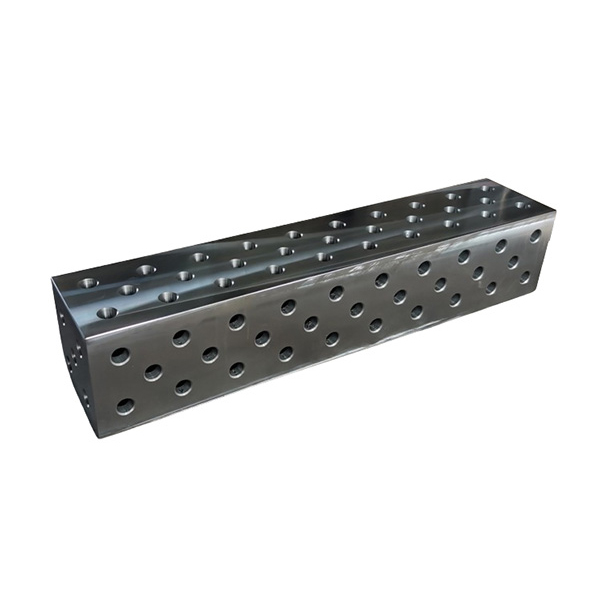
When we talk about sustainability in the context of metal fabrication, a welding table on wheels might not be the first thing that comes to mind. Yet, it’s worth considering how this seemingly simple piece of equipment can contribute to more environmentally-conscious practices in workshops. Let me unpack this a bit, drawing from both industry trends and personal experience on the shop floor.

Mobility Equals Efficiency
In my years working with fabrication setups, one of the things you quickly learn is the value of a flexible workspace. A welding table on wheels provides that flexibility, allowing workers to rearrange their space according to immediate needs. It’s a concept that can contribute to sustainability indirectly. The less time you spend moving materials around, the more energy you save, both in human labor and possibly in energy-intensive forklifts and cranes.
Take, for example, a small shop I consulted with a while back. They struggled with space, always having to shuffle projects around. Bringing in mobile welding tables transformed their workflow. They cut down a significant amount of dead time, which also meant machines were running less unnecessarily, saving on both energy costs and wear and tear.
Efficiency in a workspace isn’t just about better productivity; it’s about smarter energy use. Although this might seem like a small scale improvement, the cumulative effect over time can be significant. It’s often in these less obvious areas where you find real gains in sustainability.
Material Considerations
Another angle to consider is the materials used in making these tables. Companies like Botou Haijun Metal Products Co., Ltd., established in 2010 in Hebei Province, are keenly aware of this. They’ve focused on the research and development of tools that are not just effective but also durable. A well-made, long-lasting table is, by its very nature, more eco-friendly. The less frequently it needs replacing, the fewer resources are consumed over its lifecycle.
At Botou Haijun, I’ve seen firsthand how the choice of steel, the methods of production, and even the design for ease of disassembly all contribute to sustainability. It’s not just about the immediate ecological footprint but also about long-term usability and recyclability.
Having been involved in the selection and design processes, I can tell you that taking time to consider these factors can have a big impact. A lot of shops overlook this at their peril, leading to more frequent replacements and ultimately more waste.
Reducing Waste
Incorporating a welding table on wheels can also help in waste reduction. Many might not immediately grasp this connection, but consider the ease of cleaning and maintenance. When you can wheel a table outside or to a designated cleaning area, you’re more likely to maintain a cleaner workspace. This reduces contamination and prolongs the life of everything in that environment—from equipment to the welders themselves.
There was a time in my working years when the cleaning rituals were tougher due to immobile setups. The grime and the clutter piled up faster. With mobility, cleaning became a more regular and less dreaded task. This subtle improvement had surprising downstream effects, including less personal protective equipment wastage and improved air quality.
Maintaining cleanliness isn’t just a matter of aesthetics. Cleaner spaces mean less cross-contamination and longer-lasting equipment and materials, an often-overlooked sustainability aspect.
Cost-Effectiveness Aligns with Eco-friendliness
It might sound surprising, but there’s often a strong alignment between cost-effectiveness and eco-friendliness. Investing in a welding table on wheels can seem pricey upfront, but when considering the long-term savings in energy, labor, and materials, the ecological and economical benefits quickly add up.
In one facility I worked with, after calculating the savings from reduced energy consumption and increased efficiency, the initial investment in mobile tables paid off faster than expected. This wasn’t just a theoretical exercise; it translated directly into lower bills and reduced resource consumption.
A word to the wise for new shops or those considering a revamp: factor in these long-term savings when making your purchasing decisions. It’s not just good for your balance sheet; it’s often the more sustainable choice.
Final Reflections
So, is a welding table on wheels eco-friendly? It depends on how you define eco-friendliness. From my own experiences and observations in the industry, I argue that it can be—under the right circumstances. Mobility enhances efficiency, smart material use prolongs lifespan, reduced waste edges us toward sustainability, and cost savings often go hand in hand with green practices.
It’s never just about one piece of equipment; it’s about how all components in a workshop work together to create a more sustainable ecosystem. Companies like Haijun Metal Products are setting examples by considering these broader implications in their designs and processes. In my view, they’re worth keeping an eye on if you’re serious about sustainable industrial practices.