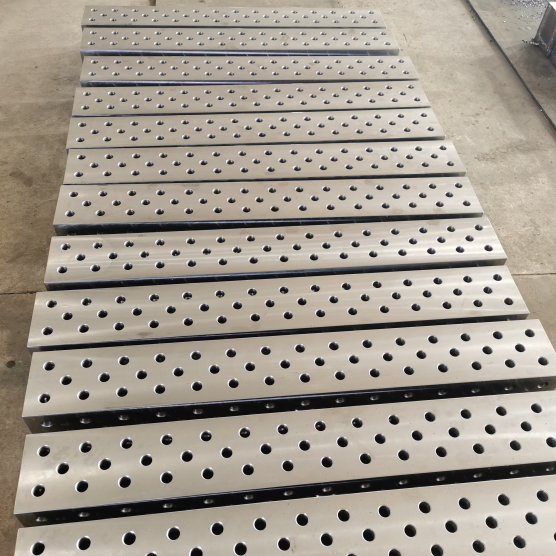
A cast iron welding table is a heavy-duty workbench made from high-grade cast iron, designed to provide a flat, stable, and heat-resistant surface for precision welding, assembly, and fabrication tasks. In 2026, prices for these tables typically range from $500 to $10,000 depending on size, features like 3D fixturing, and customization options available from Chinese manufacturers.
Why Choose a Cast Iron Welding Table in 2026?
The manufacturing landscape in 2026 demands higher precision and repeatability. A cast iron welding table offers superior vibration damping and thermal stability compared to standard steel tables. This makes it the preferred choice for industries requiring tight tolerances, such as aerospace, automotive prototyping, and robotic welding cells.
Unlike mild steel surfaces that warp under intense heat, cast iron maintains its flatness over time. The material’s microstructure absorbs shock and reduces distortion during complex welding sequences. This inherent stability ensures that your fixtures and clamps remain aligned, reducing rework and scrap rates.
Furthermore, modern cast iron tables often feature nitrided surfaces. This treatment increases surface hardness and resistance to spatter adhesion. Welders find that cleanup times are significantly reduced, enhancing overall shop floor efficiency.
Key Advantages of Cast Iron Over Steel Platforms
- Thermal Stability: Cast iron expands and contracts less than steel when exposed to welding heat, preserving dimensional accuracy.
- Vibration Damping: The graphite flakes within cast iron absorb vibrations, crucial for precision machining and delicate assembly work.
- Flatness Retention: High-grade grades like HT200 and HT300 ensure long-term flatness even under heavy loads.
- Spatter Resistance: Nitrided or painted surfaces prevent welding spatter from fusing to the table, extending tool life.
2026 Market Pricing and Cost Analysis
Understanding the cost structure is vital for procurement managers. In 2026, the price of a cast iron welding table varies widely based on specifications. Entry-level models start around $500, while large, customized 3D platforms can reach up to $10,000.
Small-scale tables, often used for hobbyists or light repair work, typically fall in the $500 to $2,000 range. These units usually measure around 1000mm x 1000mm and may come with basic clamping accessories. They are ideal for small workshops with limited space.
Mid-range industrial tables, priced between $900 and $4,000, offer enhanced features. Common dimensions include 1500mm x 1500mm with multiple mounting surfaces. These tables often support 3D fixturing systems, allowing for complex angular welds and multi-axis assembly.
High-end custom solutions command prices from $1,000 to $10,000. These are engineered for specific automation lines or robotic cells. They may include rotating mechanisms, integrated T-slots, and specialized coatings. Bulk orders often reduce the per-unit cost significantly.
Price Factors Influencing Your Purchase
- Material Grade: Tables made from HT300 cast iron are more expensive than HT200 due to higher strength and wear resistance.
- Surface Treatment: Nitriding, painting, or precision grinding adds to the cost but improves longevity and performance.
- Modularity: 3D modular systems with compatible fixtures cost more upfront but offer greater flexibility and ROI over time.
- Customization: Tailored hole patterns, sizes, or integrated lifting points increase manufacturing time and price.
- Order Volume: MOQ (Minimum Order Quantity) affects pricing; single pieces cost more than bulk orders of 50+ units.
Types of Cast Iron Welding Tables Available
The market in 2026 offers diverse configurations to suit various applications. Choosing the right type depends on your specific workflow, whether it involves manual arc welding, plasma cutting, or automated robotic processes.
Standard 2D Flat Tables remain popular for general fabrication. They provide a simple, robust surface for laying out parts. These are cost-effective and easy to maintain, making them a staple in many job shops.
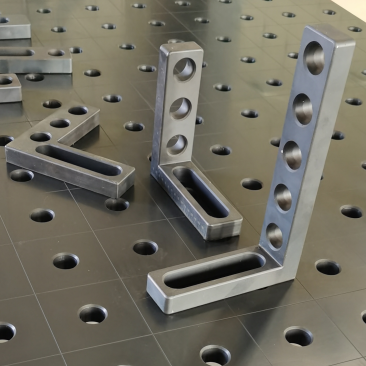
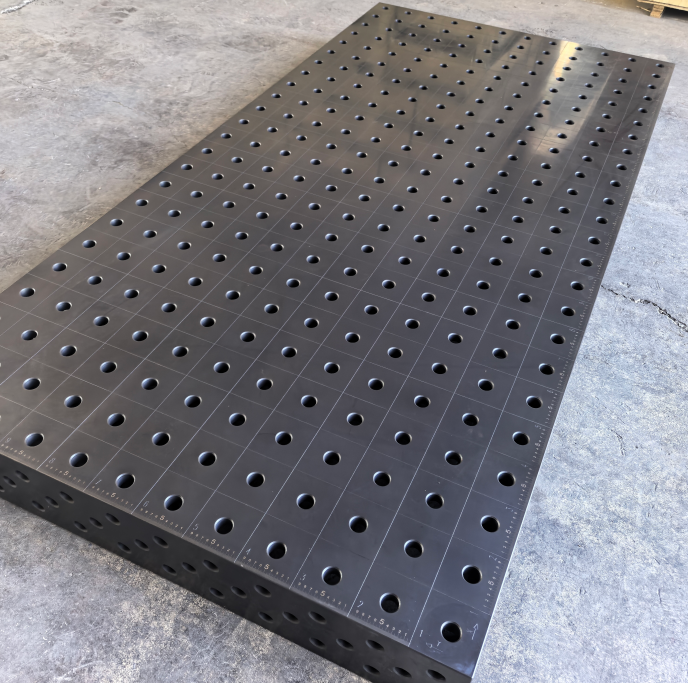
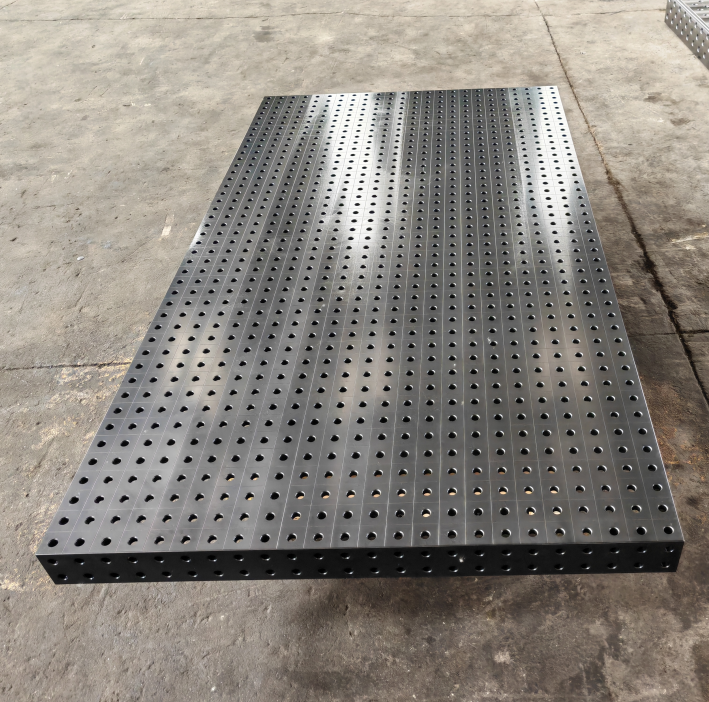
3D Flexible Welding Tables represent the current industry standard for complex assemblies. Featuring a grid of holes on the top and sides, they allow clamps and stops to be positioned at any angle. This versatility supports intricate geometries that 2D tables cannot handle.
Rotating Positioner Tables integrate a turntable mechanism into the cast iron base. This allows welders to rotate heavy components easily, improving access to difficult joints and enhancing ergonomic safety. These are essential for pipe welding and large structural fabrications.
Nitrided Surface Tables are specifically treated to resist wear and spatter. The hard outer layer ensures that the table surface remains smooth and functional even after years of heavy use. This is critical for high-volume production environments.
Selecting the Right Configuration for Your Shop
- For general repair and maintenance, a standard 2D table with a painted finish is sufficient and budget-friendly.
- For precision fixture building, invest in a 3D modular table with ground surfaces and accurate hole spacing.
- For robotic welding cells, choose heavy-duty cast iron platforms with reinforced legs and grounding points.
- For high-temperature applications, select tables with nitrided surfaces to prevent damage from plasma or laser cutting.
Technical Specifications and Material Grades
When sourcing from China or global manufacturers, understanding technical specs is crucial. The most common material grades encountered are HT200 and HT300. These designations refer to the tensile strength of the cast iron in MPa.
HT200 is a versatile grade suitable for most general welding applications. It offers a good balance of machinability, strength, and cost. Most standard welding tables found in the $500-$2,000 range utilize this grade.
HT300 represents a higher performance tier. With greater tensile strength and hardness, it is ideal for heavy-duty industrial use where the table will support massive loads or undergo frequent thermal cycling. Tables in the $4,000+ bracket often feature HT300.
Surface finish is another critical spec. High-quality tables boast a surface roughness of Ra0.8 or better. This level of smoothness ensures that parts sit flush against the table without gaps, which is essential for accurate tack welding.
Dimensions also play a key role. Standard sizes like 1500mm x 1500mm are widely available. However, manufacturers often support customization for non-standard sizes to fit specific production lines or confined spaces.
Understanding Surface Treatments
- Nitriding: A chemical heat treatment that hardens the surface, providing excellent resistance to abrasion and spatter.
- Precision Grinding: Ensures the table is perfectly flat, critical for applications requiring micron-level accuracy.
- Paint Coating: Provides corrosion resistance and a non-stick surface for spatter, though less durable than nitriding.
- Black Oxide: Offers moderate rust protection and a professional aesthetic, commonly used for indoor workshop tables.
Comparison: Cast Iron vs. Steel Welding Tables
Deciding between cast iron and steel is a common dilemma. While both materials serve the purpose of supporting welding tasks, their physical properties lead to different performance outcomes in real-world scenarios.
Steel tables are generally lighter and less expensive to manufacture. They are suitable for lightweight projects and mobile setups. However, they are prone to warping under high heat and lack the natural vibration damping of cast iron.
Cast iron tables, conversely, are heavier and more rigid. Their ability to absorb energy makes them superior for precision work. The initial investment is higher, but the lifespan and consistency often justify the cost for professional operations.
| Feature | Cast Iron Table | Steel Table |
| Thermal Stability | Excellent; minimal warping | Moderate; prone to distortion |
| Vibration Damping | High; absorbs shock effectively | Low; transmits vibrations |
| Weight | Very Heavy; stable base | Lighter; easier to move |
| Cost | Higher initial investment | Lower entry cost |
| Best Use Case | Precision fixing, robotics, heavy duty | General fabrication, light duty |
When to Upgrade from Steel to Cast Iron
- If you notice consistent dimensional errors in your welded assemblies due to table movement.
- If your current table warps visibly after repeated welding cycles.
- If you are implementing robotic automation that requires a rigid, non-flexing base.
- If you need to hold tight tolerances (e.g., within 0.5mm) for aerospace or automotive parts.
Applications Across Industries
The versatility of the cast iron welding table extends beyond simple welding. Its robust nature makes it a cornerstone in various sectors of the manufacturing economy in 2026.
In the automotive industry, these tables are used for building jigs and fixtures for chassis assembly. The ability to clamp parts securely in 3D space allows for the creation of complex sub-assemblies with high repeatability.
The aerospace sector relies on cast iron platforms for assembling delicate components. The vibration damping properties protect sensitive parts during the welding process, ensuring structural integrity without micro-fractures.
CNC machining shops utilize these tables as secondary workholding stations. After machining, parts can be immediately moved to the welding table for assembly, leveraging the same datum points for consistency.
Robotic integration is another major application. Automated welding cells require a stable platform that does not shift under the dynamic forces of robot movement. Cast iron provides the necessary mass and rigidity for safe, efficient automation.
Real-World Use Cases
- Fixture Building: Creating custom jigs for batch production runs using the grid hole pattern.
- Prototyping: Rapidly setting up and tearing down test assemblies for new product designs.
- Repair Work: Providing a flat reference surface for straightening bent frames and structures.
- Training Centers: Offering students a professional-grade environment to learn proper fixturing techniques.
How to Select a Reliable Manufacturer
Sourcing a cast iron welding table from China requires due diligence. With prices ranging from $500 to $10,000, ensuring quality is paramount to avoid costly mistakes. Look for manufacturers who specialize in foundry work and precision machining.
Verify the material certification. Reputable suppliers will provide documentation confirming the use of HT200 or HT300 grade iron. Without this, you risk receiving a table made from inferior scrap metal that may crack or warp.
Check for surface finish guarantees. A quality manufacturer will specify the Ra value and flatness tolerance. Ask for photos or videos of the actual production process to gauge their capability and attention to detail.
Consider payment security. Platforms like Made-in-China.com offer protected payments, ensuring funds are only released upon successful shipment. This mitigates the risk of fraud and non-delivery.
Customization availability is a key indicator of a capable factory. If a supplier can modify hole patterns, sizes, or add features like rotating bases, they likely have advanced engineering and machining capabilities.
Red Flags to Avoid When Sourcing
- Unrealistically Low Prices: If a large 3D table is priced significantly below market average, the material quality is likely compromised.
- Lack of Technical Data: Suppliers who cannot provide specs on material grade or surface hardness should be avoided.
- No Customization Options: Rigid refusal to adapt standard models may indicate limited manufacturing flexibility.
- Poor Communication: Delayed responses or vague answers to technical questions suggest potential post-sales support issues.
Maintenance and Longevity Tips
To maximize the return on your investment, proper maintenance of your cast iron welding table is essential. Despite its durability, neglect can lead to rust, surface damage, and loss of flatness.
Regular cleaning is the first step. Remove welding spatter and slag after every shift. Use a wire brush or scraper gently to avoid gouging the surface. For nitrided tables, spatter should peel off easily with minimal effort.
Apply a thin coat of oil or rust preventative regularly, especially in humid environments. Cast iron is susceptible to oxidation if left bare. A light machine oil works well to protect the surface without interfering with clamping.
Avoid dropping heavy objects onto the table surface. While cast iron is strong, it is brittle compared to steel. A sharp impact from a dropped hammer or part can chip the surface or create a dent, compromising flatness.
Periodically check the flatness using a precision straightedge. If minor deviations occur, they can sometimes be corrected by resurfacing, although prevention is always better than cure.
Essential Maintenance Checklist
- Daily: Brush off spatter and debris; wipe down with a dry cloth.
- Weekly: Inspect for rust spots; apply protective oil if necessary.
- Monthly: Check clamp and fixture compatibility; ensure holes are not clogged.
- Annually: Verify overall flatness and structural integrity of legs and supports.
The Future of Welding Fixturing Technology
As we progress through 2026, the evolution of welding tables continues. The trend is moving towards smarter, more integrated systems that connect with digital manufacturing workflows.
We are seeing increased adoption of modular 3D systems that allow for infinite configurability. These systems reduce the need for dedicated hard tooling, enabling faster changeovers between jobs. This flexibility is crucial for high-mix, low-volume production.
Integration with IoT sensors is emerging. Future tables may monitor temperature distribution, vibration levels, and load bearing in real-time. This data can optimize welding parameters and predict maintenance needs before failures occur.
Sustainability is also a driving factor. Manufacturers are adopting greener casting processes and recyclable materials. The longevity of cast iron itself contributes to sustainability by reducing the frequency of replacement.
Robotics compatibility will become standard rather than optional. As labor costs rise, more shops will automate. Tables designed specifically for collaborative robots (cobots) and large industrial arms will dominate the high-end market.
Emerging Trends to Watch
- Smart Clamping: Automated clamps that adjust position based on digital blueprints.
- Hybrid Materials: Composites combining cast iron stability with lighter weight alloys.
- Augmented Reality (AR): AR overlays projecting weld paths directly onto the table surface.
- Eco-Friendly Coatings: Non-toxic, biodegradable surface treatments replacing traditional oils and paints.
Frequently Asked Questions About Cast Iron Welding Tables
Buyers often have specific concerns regarding shipping, installation, and compatibility. Addressing these common questions helps clarify the purchasing decision and ensures satisfaction with the final product.
Q: How long does shipping take from China?
A: Shipping times vary by destination and method. Sea freight typically takes 4-6 weeks, while air freight is faster but more expensive. Always factor in customs clearance time.
Q: Can I use standard clamps on these tables?
A: Most 3D cast iron tables use a standard hole pattern (e.g., 16mm or 28mm). Ensure your existing fixtures match the hole size and spacing of the new table.
Q: Is assembly required?
A: Many tables ship fully assembled, especially smaller units. Larger platforms may require leg attachment. Manufacturers usually provide clear instructions and necessary hardware.
Q: What is the warranty period?
A: Warranty terms differ by supplier. Typical coverage ranges from 1 to 2 years for material defects and workmanship. Customized items may have different terms.
Final Thoughts on Making the Right Investment
Investing in a cast iron welding table is a strategic move for any fabrication business aiming for higher quality and efficiency. The combination of thermal stability, durability, and precision makes it an indispensable tool in the modern workshop.
With 2026 prices offering a wide range of options, there is a solution for every budget. From affordable entry-level models to high-end robotic platforms, the key is to match the table’s specifications to your specific operational needs.
By choosing a reputable manufacturer and adhering to proper maintenance practices, your welding table will serve as a reliable foundation for years to come. It is not just a purchase; it is an investment in the precision and reputation of your work.
Whether you are upgrading from a steel bench or equipping a new automated cell, the cast iron welding table stands out as the superior choice for professional welding applications. Embrace the technology that drives accuracy and productivity in today’s competitive market.