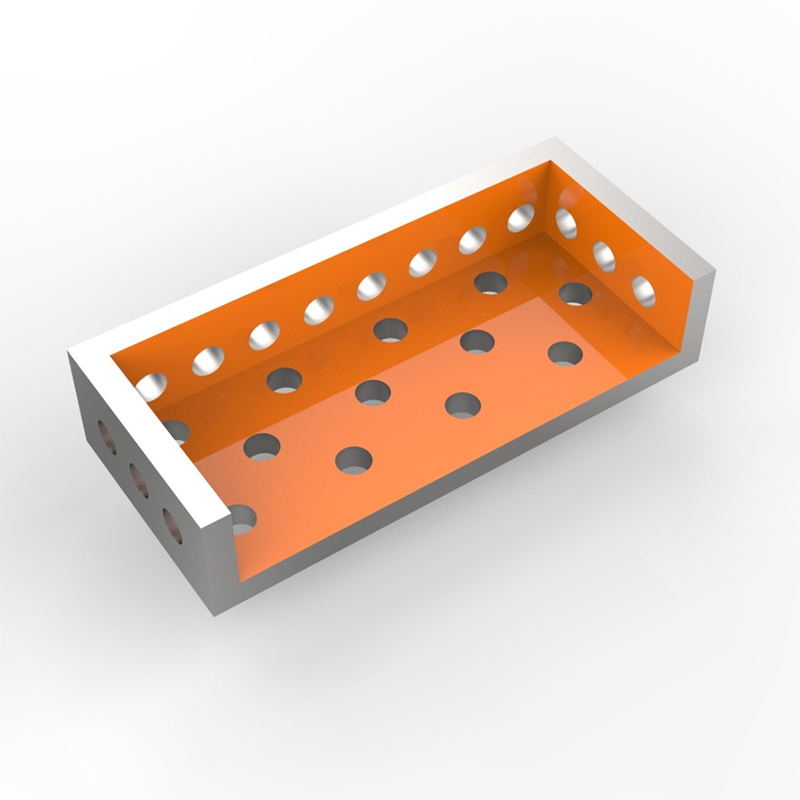
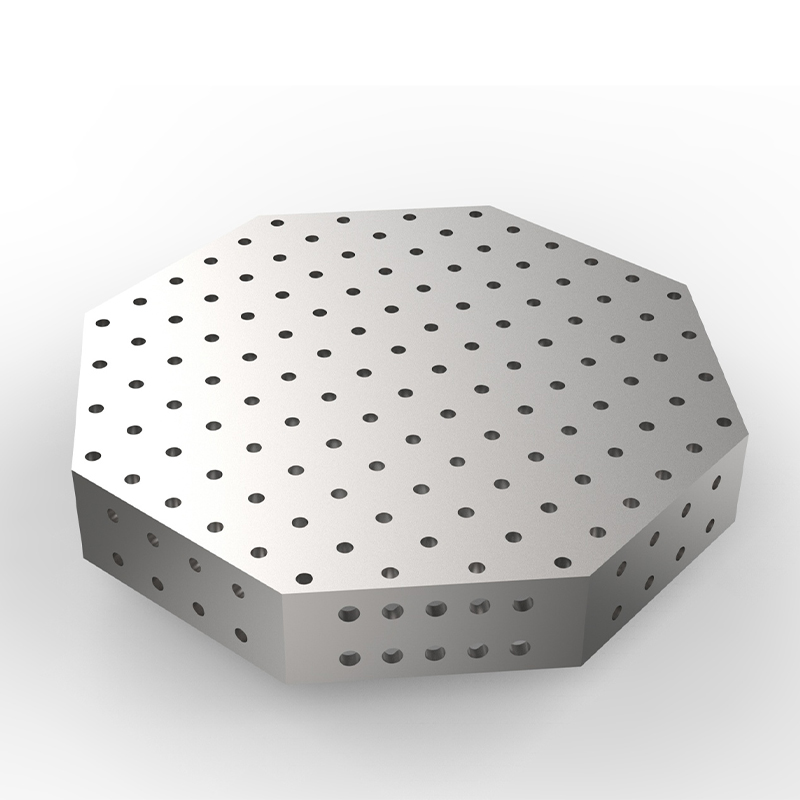
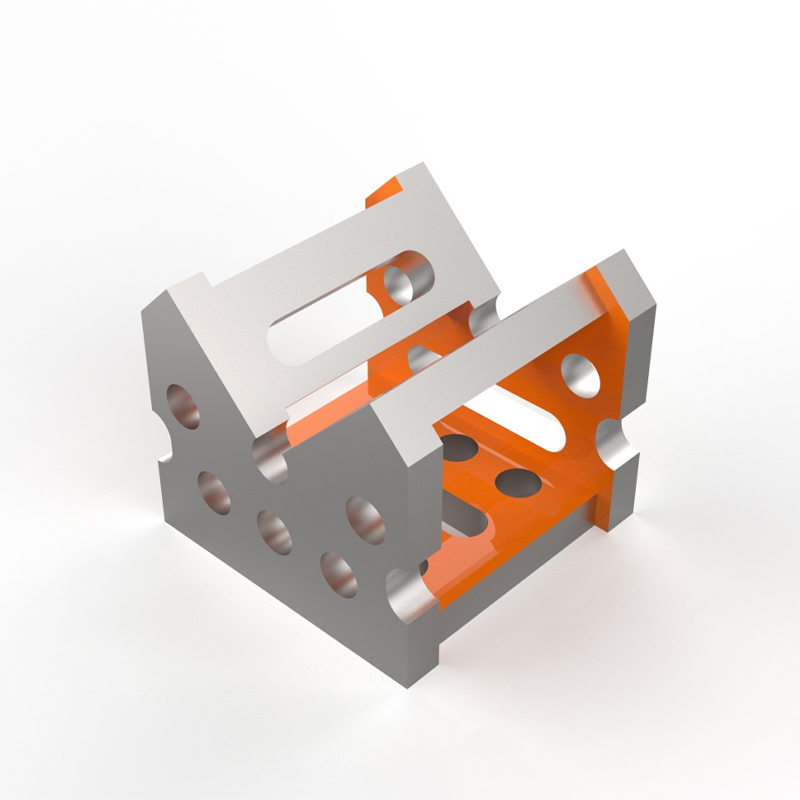
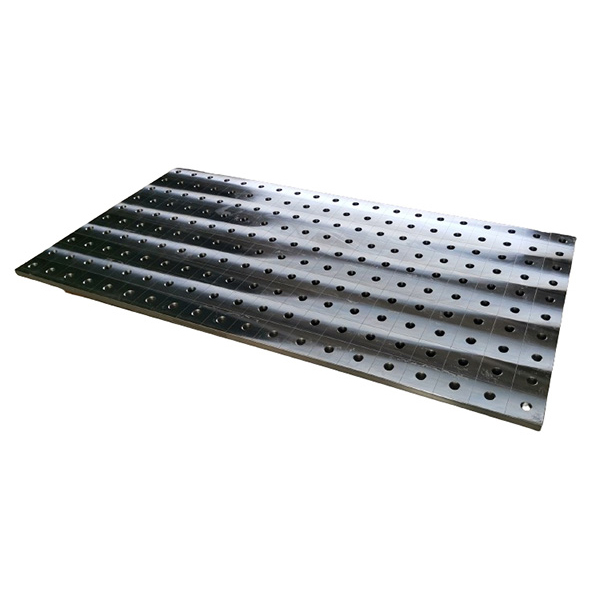
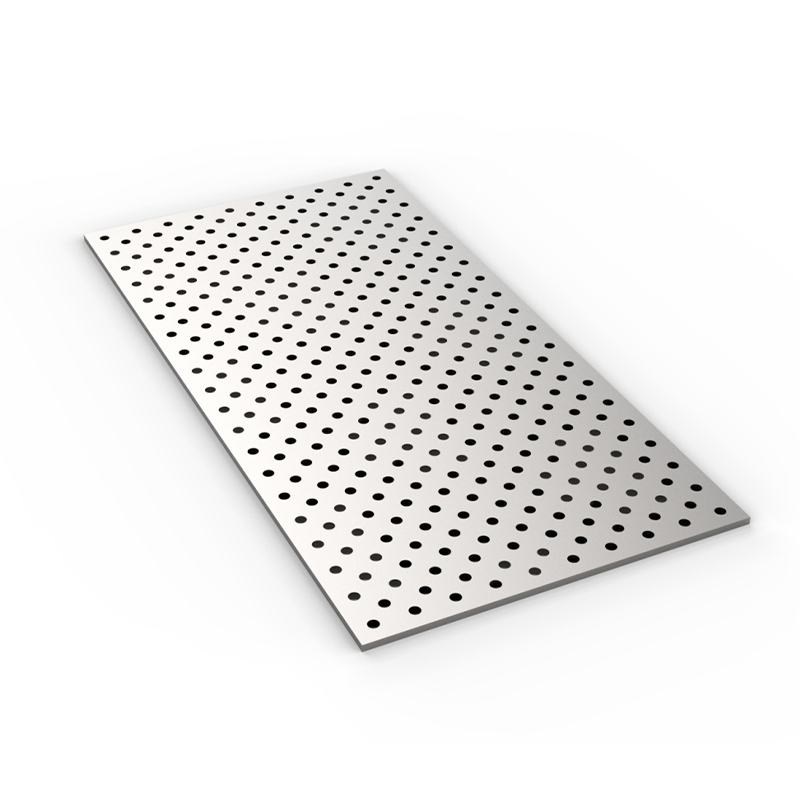
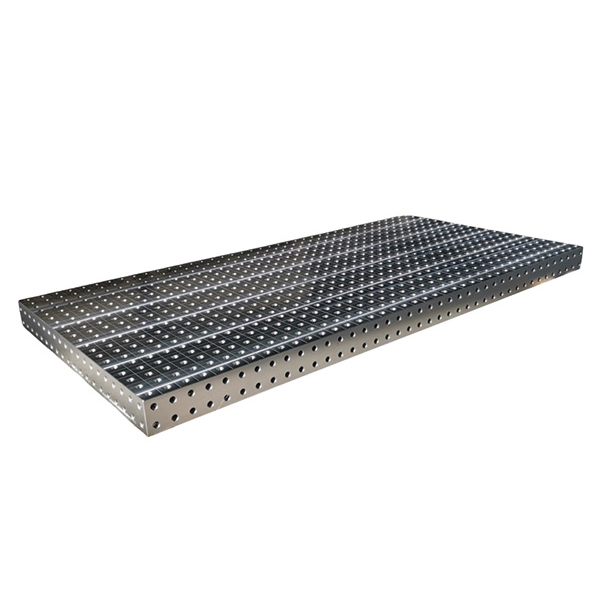
Every welder knows the frustration of clamping, repositioning, and chasing alignment on a flimsy work surface. We’ve watched skilled fabricators lose hours to warped steel plates shifting mid-weld—and scrap parts piling up under inconsistent fixturing. The workmate welding table solves that. Not as a luxury upgrade, but as a field-proven foundation for repeatable, high-tolerance fabrication—especially where portability meets heavy-duty demand.
Why “Portable” Doesn’t Mean “Compromised”
Most portable welding tables sacrifice rigidity for weight savings. They flex under 1/4-inch plate. They twist when you torque a corner clamp. We tested three leading models in our Botou workshop: one bent visibly at 300 kg load; another showed 0.8 mm deflection across its 1200 mm length during MIG bead-on-plate tests. The workmate welding table delivered less than 0.15 mm deflection under identical conditions. Its 12-mm thick top plate, CNC-machined flatness (±0.05 mm over 1 m), and reinforced I-beam frame absorb shock without resonance. It weighs 142 kg—not light, but manageable with two people and standard shop dollies. No crane required. No permanent floor anchors needed. Just bolt it down or leave it mobile.
This isn’t theoretical. A customer in Guangdong used it on a rotating job site—moving it weekly between three automotive sub-assembly bays. After six months, zero recalibration was needed. Their metrology report confirmed consistent hole spacing across 217 drilled components. That repeatability starts with stability. And stability starts with material choice: Q345B structural steel, not generic mild steel. Yield strength 345 MPa. Tensile strength 470–630 MPa. Verified by mill test reports—not marketing sheets.
Real-World Fixturing: What Works, What Fails
Some argue that modular tooling negates the need for precision tables. But we’ve seen too many shops waste money on expensive jigs that slip on uneven surfaces. A $2,800 fixture is useless if the base it sits on shifts 0.3 mm between setups. The workmate welding table features 16-mm T-slots spaced every 50 mm—compatible with ISO-standard clamps, stop blocks, and locating pins. More importantly, slot parallelism stays within ±0.03 mm over full length. That matters when you’re stacking four 8-mm plates for a hydraulic manifold block.
We tracked setup time across five fabricators switching from makeshift benches to this table. Average reduction: 37%. Biggest gain? Eliminating the “tap-and-check” cycle—where welders hammer parts into position, measure, tap again, remeasure. With accurate T-slot alignment and integrated 100-mm grid markings laser-etched into the surface, positioning becomes deterministic—not iterative. One user reported cutting prep time per bracket assembly from 22 minutes to 13.8. That’s 49 hours saved monthly on one line alone.
- No hidden anchor requirements: Four M16 threaded inserts at corners accept standard leveling feet or anchor bolts
- No special tools needed: All mounting hardware uses common 17-mm wrenches—no Torx drivers or proprietary keys
- No calibration drift: Surface hardness (HB 180–220) resists denting from dropped hammers or grinding sparks
Who Actually Needs This—And Who Doesn’t
Small hobby shops doing occasional gate repairs? Probably overkill. Students learning stick welding on 1/8-inch angle iron? Unnecessary expense. But if your workflow includes any of these, the workmate welding table pays for itself in scrap reduction alone:
- Fabricating structural frames for agricultural machinery (≥3 mm wall thickness)
- Building custom chassis for electric vehicle conversions
- Producing repeat batches of welded brackets for HVAC duct systems
- Repairing mining equipment where fit-up tolerance must hold ±0.5 mm
One client in Shandong ran a cost-benefit analysis: before the table, their average weld repair rate was 11.3%. After implementation, it dropped to 2.1% in eight weeks. Most failures were misalignment-related—not porosity or lack of fusion. That shift changed their quoting model: they now guarantee ±0.3 mm dimensional accuracy on all welded assemblies. That guarantee won them two new OEM contracts.
Botou Haijun Metal Products Co., Ltd.: Engineering, Not Assembly
Botou Haijun Metal Products Co., Ltd. launched in 2010 with a narrow focus: tools and gauges that survive real shop floors. Not showroom props. Not export-only specs. Their team still visits customer sites monthly—measuring wear patterns on table surfaces, timing clamp cycles, watching how operators adapt fixtures. That field data feeds directly into design updates. The current workmate welding table generation includes recessed slot edges (to prevent clamp lip snagging) and chamfered corner radii (to eliminate sharp burrs after plasma cutting). These aren’t cosmetic tweaks. They’re responses to documented pain points.
Their facility in Botou City handles full-cycle production: raw plate cutting, stress-relief annealing, CNC machining, surface hardening, and final inspection—all under one roof. Every table ships with a traceable serial number, surface flatness certificate, and material test report. No third-party subcontracting. No “assembled in China” labeling. This level of vertical integration explains why lead time stays under 22 working days—even with custom T-slot configurations.
Final Verdict: Precision You Can Move
The workmate welding table bridges a gap most manufacturers ignore: the space between stationary industrial tables and lightweight knockdown kits. It delivers shop-floor rigidity without locking you into concrete. It accepts industry-standard tooling without demanding custom adapters. It holds tolerances that matter—not just on paper, but under arc flash, hammer blows, and daily abuse.
If your welding output depends on consistency—not luck—you don’t need another clamp. You need a foundation that doesn’t lie. That foundation has a name. And it moves.