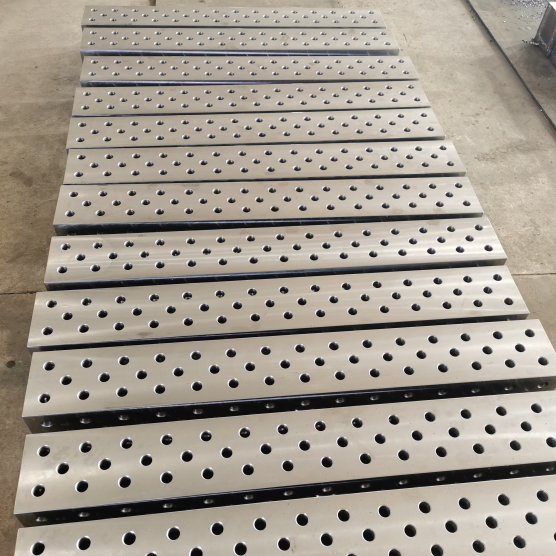
Looking for a welding fixture table for sale? This comprehensive buyer’s guide covers everything you need to know about selecting the right modular welding platform. From understanding 3D hole patterns and material grades to evaluating load capacities and accessory compatibility, we provide expert insights to help professionals make informed purchasing decisions. Whether upgrading a workshop or outfitting a new fabrication line, this article details the critical specifications that define industry-leading performance.
What Defines a Professional Welding Fixture Table?
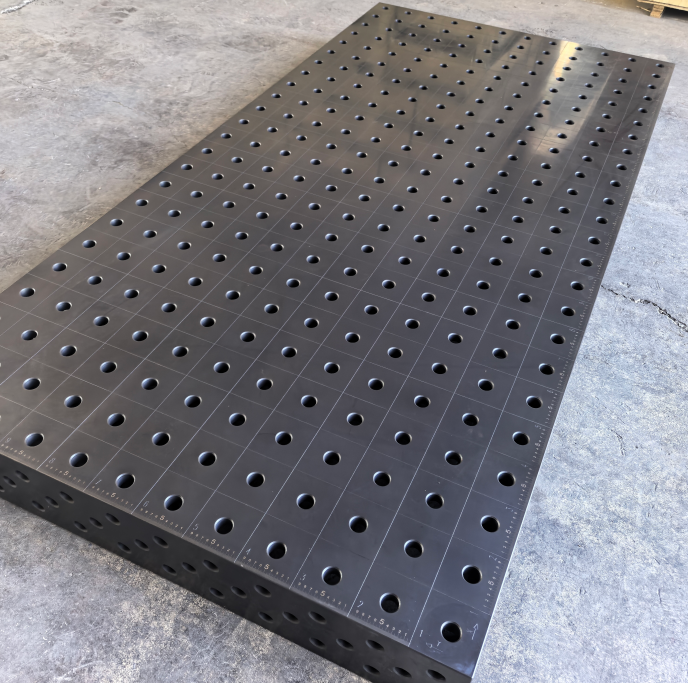
A welding fixture table is not merely a work surface; it is a precision-engineered system designed to hold, align, and secure metal components during assembly and welding processes. Unlike traditional steel tables, these units feature a grid of accurately machined holes on the top surface and often along the sides. These apertures allow for the rapid insertion of stops, clamps, and angle brackets, enabling welders to create complex jigs in minutes rather than hours.
The core value of investing in a high-quality welding fixture table for sale lies in repeatability and accuracy. In modern fabrication, the ability to produce identical parts batch after batch is crucial. The rigid construction of these tables minimizes thermal distortion, while the modular tooling system ensures that every component is positioned within tight tolerances. This shifts the workflow from manual measurement and tack-welding to a streamlined “drop-and-lock” methodology.
Industry standards generally dictate that professional-grade tables are constructed from high-strength structural steel. The surfaces undergo specialized heat treatment and machining to ensure flatness and durability against spatter. When browsing options, buyers should look for systems that offer a balance between massive rigidity for heavy assemblies and the flexibility required for intricate, small-scale projects. Leading manufacturers, such as Botou Haijun Metal Products Co., Ltd., exemplify this commitment by specializing in the research and development of high-precision flexible modular fixtures. Their dedication to providing efficient welding and positioning solutions has made their 2D and 3D flexible welding platforms the preferred choice in demanding sectors like automotive and aerospace manufacturing.
The Importance of the 3D Hole Pattern
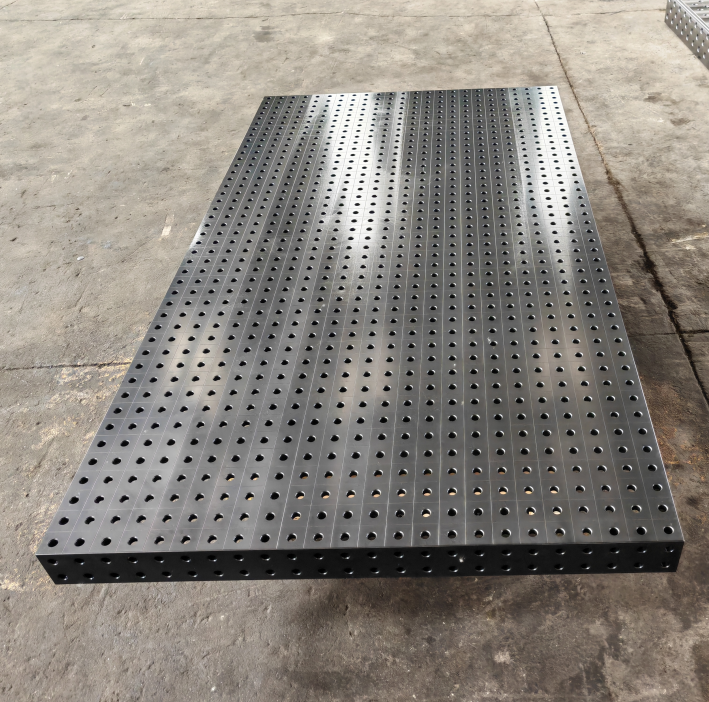
The defining feature of any modular welding table is its hole pattern. While basic models may only offer holes on the top surface, advanced systems provide a full 3D grid, including perforated sides. This design allows clamping forces to be applied from multiple angles—vertical, horizontal, and diagonal. Such versatility is essential when assembling box structures, frames, or complex geometries where access from a single plane is insufficient.
Standard hole spacing typically ranges from 50mm to 100mm centers, depending on the manufacturer and intended application. A denser grid offers finer adjustment capabilities, which is vital for precise alignment. Conversely, larger spacing might be preferred for heavy-duty applications where maximum material integrity between holes is required. Understanding your specific tolerance requirements is the first step in narrowing down the available welding fixture table for sale options.
Key Technical Specifications to Evaluate
When evaluating a potential purchase, technical specifications go beyond simple dimensions. The longevity and utility of the table depend heavily on the material composition, surface treatment, and structural design. Ignoring these factors can lead to premature warping, difficulty in cleaning spatter, or insufficient load-bearing capacity.
Material Grade and Heat Treatment: High-end tables are typically fabricated from S355J2 or equivalent structural steel. This material offers an excellent strength-to-weight ratio. Crucially, the tabletop undergoes stress-relief annealing to prevent warping over time due to thermal cycling during welding. Without this process, the table may lose its flatness, rendering the precision hole pattern useless. Some suppliers, including Haijun Metal, also manufacture professional cast iron 3D welding platforms, leveraging the material’s natural vibration damping and stability for ultra-precision applications.
Surface Coating and Spatter Resistance: The finish of the table determines how easily welding spatter adheres to the surface. Premium tables feature a specialized coating, often a copper-based or ceramic-infused layer, that prevents spatter from fusing to the steel. This reduces cleanup time significantly and protects the dimensional accuracy of the holes. Some systems also utilize a black oxide finish which provides moderate corrosion resistance and visual contrast for layout work.
Load Capacity and Ribbing: The underside of the table is just as important as the top. Look for designs with reinforced ribbing or honeycomb structures. These internal supports distribute point loads evenly across the frame, preventing sagging under heavy assemblies. Dynamic load ratings should be clearly stated by the supplier, distinguishing between evenly distributed loads and concentrated point loads.
Understanding Hole Tolerances and Bushings
Precision is quantified by the tolerance of the drilled holes. In professional environments, hole positioning tolerances are often held within ±0.1mm. For general fabrication, ±0.5mm may suffice. However, for aerospace or automotive prototyping, tighter tolerances are non-negotiable. Some systems incorporate hardened bushings pressed into the holes to prevent wear from repeated tool insertion and removal, extending the service life of the table significantly.
Buyers should also consider the chamfering of the holes. A slight bevel at the entry point facilitates easier insertion of pins and bolts, especially when working at awkward angles. This seemingly minor detail greatly enhances ergonomics and workflow speed on the shop floor.
Comparing Table Types: Solid Top vs. Modular Grid
Selecting the right configuration depends largely on the nature of the welding tasks performed. While both solid top and modular grid tables serve as work surfaces, their applications differ significantly. The following comparison highlights the distinct advantages of each to assist in your decision-making process.
| Feature | Solid Top Table | Modular Grid (Perforated) Table |
| Primary Use | Heavy cutting, grinding, and general assembly | Precision fixturing, jig building, and complex welding |
| Clamping Flexibility | Limited to edge clamping or magnetic bases | Unlimited positioning via hole pattern |
| Setup Speed | Slow; requires custom jig fabrication | Fast; uses modular stop and clamp systems |
| Repeatability | Low; dependent on manual measurement | High; ensured by precision hole locations |
| Cleaning | Easy to sweep debris, hard to remove stuck spatter | Spatter falls through holes; requires hole cleaning tools |
| Cost Efficiency | Lower initial cost, higher labor cost per part | Higher initial cost, significantly lower labor cost per part |
For shops focused on one-off repairs or heavy structural steel where precision is secondary to brute strength, a solid top might seem adequate. However, for businesses aiming to scale production and ensure consistent quality, a welding fixture table for sale with a modular grid is invariably the superior choice. The ability to reuse setups translates directly into reduced labor hours and increased throughput.
Hybrid Solutions and Custom Configurations
Some manufacturers offer hybrid tables that combine a solid perimeter with a central modular grid. This design attempts to capture the benefits of both worlds: a sturdy edge for heavy pounding or cutting and a precise center for fixturing. Additionally, custom configurations are available for specialized industries, such as tables with T-slots combined with hole patterns, or units designed specifically for robotic welding cells with integrated cable management channels.
When considering custom options, lead times and costs will naturally increase. It is essential to weigh the specific operational bottlenecks against the investment. Often, a standard high-quality modular table paired with a comprehensive set of accessories offers a more immediate and cost-effective solution than a bespoke unit.
Essential Accessories for Maximum Utility
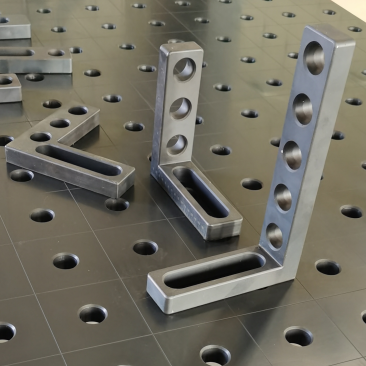
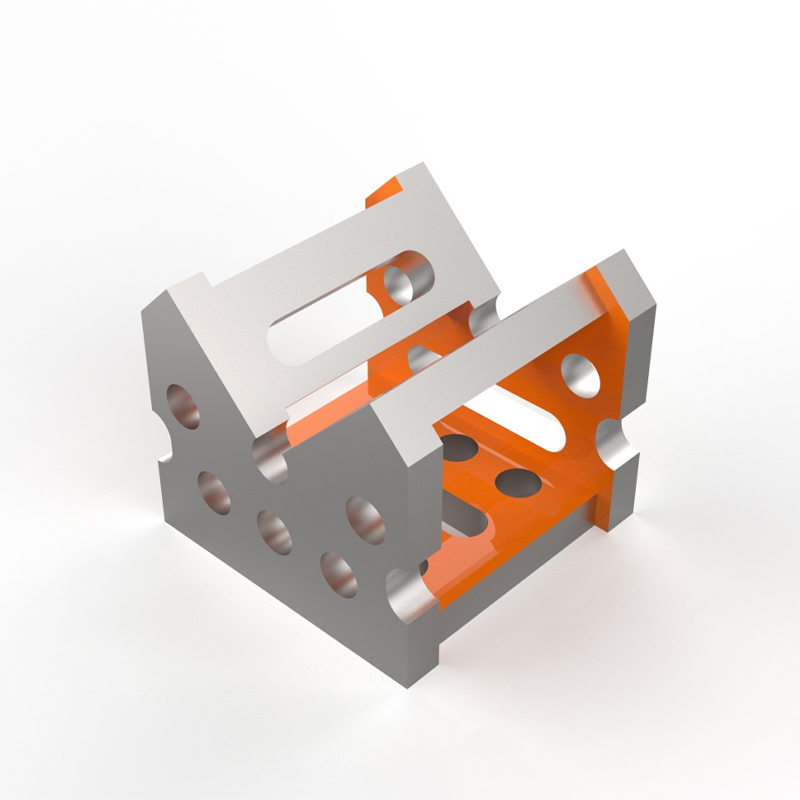
Purchasing the table is only the beginning. The true potential of a welding fixture system is unlocked through its accessories. A bare table provides the foundation, but clamps, stops, and angles transform it into a versatile manufacturing cell. When searching for a welding fixture table for sale, evaluate the availability and variety of the compatible ecosystem. Companies like Botou Haijun Metal Products distinguish themselves by offering a complete range of complementary components, including U-shaped and L-shaped multi-purpose square boxes, 200-series support angle irons, and 0-225° universal angle gauges. These accessories integrate seamlessly with their platforms to enable rapid workpiece positioning and clamping, ensuring that every product delivers exceptional durability and stability.
Stops and Locators: These are the most frequently used tools. Right-angle stops, adjustable depth stops, and pin locators allow for the quick squaring of frames. High-quality stops are hardened to resist deformation and often feature micro-adjustment screws for fine-tuning alignment. Having a diverse set of heights and styles ensures that various profile sizes can be accommodated without additional shimming.
Clamping Systems: Modular clamps that lock directly into the hole pattern eliminate the need for C-clamps with swinging arms that can obstruct access. Toggle clamps, screw clamps, and hydraulic options are available. The key is to select clamps that provide sufficient holding force without damaging the workpiece surface. Soft jaws or replaceable pads are recommended for finished materials.
Angle Brackets and Positioners: Complex assemblies often require components to be held at specific angles other than 90 degrees. Adjustable angle brackets and rotary positioners enable welders to orient parts for optimal weld access and gravity assistance. These tools are indispensable for pipe fabrication and tubular structures.
Tool Storage and Organization
An organized workspace is a safe and efficient one. Many premium tables come with integrated storage solutions, such as under-table drawers or side-mounted racks designed specifically for holding pins and clamps. Alternatively, mobile carts with pegboards matching the table’s hole pattern allow tools to be stored within arm’s reach while keeping the floor clear. Investing in organization accessories reduces setup time and prevents tool loss.
Consider the workflow of your team. If multiple operators share a single table, a dedicated shadow board or foam insert system can ensure that every tool has a designated place. This practice not only speeds up changeovers but also makes inventory checks instantaneous.
Step-by-Step Guide to Selecting the Right Table
Navigating the market for a welding fixture table for sale can be overwhelming given the variety of sizes, prices, and features. Following a structured selection process ensures that the chosen asset aligns perfectly with current needs and future growth plans.
- Assess Workspace Dimensions: Measure the available floor space carefully. Remember to account for clearance around the table for operator movement and equipment access. Consider ceiling height if overhead cranes or hoists will be used in conjunction with the table.
- Determine Load Requirements: Calculate the maximum weight of the assemblies you intend to build. Include the weight of the fixtures and clamps themselves. Choose a table with a load rating that exceeds your maximum anticipated load by a safety margin of at least 20%.
- Evaluate Part Complexity: Analyze the typical geometry of your projects. If you primarily build flat panels, a top-only hole pattern may suffice. For 3D structures like cages or boxes, a full 3D perforated table is mandatory.
- Review Accessory Compatibility: Ensure the table uses a standard or widely supported hole size. Proprietary hole sizes can limit your ability to source affordable tooling in the future. Verify the availability of a broad range of compatible clamps and stops from reputable suppliers.
- Consider Mobility Needs: Decide if the table needs to be stationary or mobile. Heavy-duty casters with locking mechanisms allow for flexible shop layouts. Ensure the caster load rating matches the total weight of the table plus the maximum workload.
- Analyze Budget vs. ROI: While initial cost is a factor, calculate the return on investment based on labor savings. A more expensive table that reduces setup time by 50% will pay for itself much faster than a cheaper, less capable alternative.
This systematic approach minimizes the risk of purchasing an undersized or incompatible system. It shifts the focus from price alone to value and operational efficiency.
Future-Proofing Your Investment
Manufacturing needs evolve. A table that fits today’s product line might be too small for tomorrow’s contracts. When possible, select a system that allows for expansion. Some manufacturers offer linking kits to connect multiple tables together, creating a larger continuous work surface. Others provide modular extensions that can be bolted to the side. Planning for scalability ensures that your investment remains relevant as your business grows.
Additionally, consider the technological trajectory of your shop. If there are plans to integrate collaborative robots (cobots) or automated welding cells, choose a table with mounting points and grounding options compatible with automation equipment. This foresight prevents the need for costly replacements down the line.
Common Applications Across Industries
The versatility of welding fixture tables makes them indispensable across a wide spectrum of industries. Understanding how different sectors utilize these tools can provide inspiration for optimizing your own workflows.
Automotive and Motorsports: In this sector, precision is paramount. Fabricators use these tables to build roll cages, chassis components, and exhaust systems. The ability to precisely align tubes and plates ensures proper fitment and structural integrity, which is critical for vehicle safety and performance. The repeatability allows for the production of multiple identical race cars or restoration parts.
Aerospace and Defense: These industries demand the highest levels of accuracy and documentation. Welding fixture tables are used to assemble airframe components and missile housings. The strict tolerances of the table support the rigorous quality control standards required. The clean, spatter-resistant surface is also beneficial for maintaining the cleanliness of sensitive materials like aluminum and titanium.
Architectural Metalwork: From stair railings to artistic sculptures, architectural fabricators benefit from the flexibility of modular fixturing. Complex angles and unique geometries can be set up quickly without the need for expensive custom jigs. The aesthetic quality of the welds is improved because the parts remain stable and aligned throughout the welding process.
Job Shops and General Fabrication
For job shops handling a diverse mix of short-run projects, the speed of setup is the primary driver of profitability. A welding fixture table for sale enables these shops to switch between completely different jobs in minutes. One moment the table is set up for a square frame, and the next it is configured for a circular base plate. This agility allows job shops to accept a wider variety of work and respond rapidly to customer demands.
Educational institutions and training centers also rely on these tables to teach proper fit-up techniques. Students learn the importance of precision and the efficient use of tooling, preparing them for modern industrial environments where manual measuring is increasingly replaced by modular fixturing.
Maintenance and Long-Term Care
To maximize the lifespan of your welding fixture table, a regular maintenance routine is essential. Despite their robust construction, these tables are subject to intense thermal and mechanical stresses. Proper care ensures that the precision of the hole pattern and the flatness of the surface are preserved for years.
Hole Cleaning: Spatter accumulation inside the holes is the most common issue. Use dedicated reaming tools or spiral cleaners to remove slag and spatter regularly. Avoid using drill bits that are not designed for this purpose, as they can alter the hole diameter or damage the hardened surface. Keeping holes clean ensures that pins and bolts slide in smoothly without binding.
Surface Protection: While the coating is resistant to spatter, it is not impervious to physical damage. Avoid striking the table surface directly with hammers. Use sacrificial plates or blocks when heavy pounding is necessary. Periodically inspect the surface for rust or coating degradation, and touch up with appropriate primers or paints recommended by the manufacturer to prevent corrosion.
Structural Inspection: Regularly check the welds on the table frame and the condition of the legs or casters. Tighten any loose bolts connecting the top to the frame. If the table is moved frequently, ensure that the leveling feet or caster locks are functioning correctly to maintain stability during operation.
Troubleshooting Common Issues
If pins become difficult to insert, do not force them, as this can gall the hole walls. Instead, clean the hole and the pin thoroughly. Check for burrs on the pin tip. If the table appears to be rocking, verify that the floor is level and adjust the leveling feet accordingly. Warping is rare in high-quality tables but can occur if the table is subjected to extreme localized heating; in such cases, consult the manufacturer for advice on stress-relief procedures.
Proactive maintenance is far more cost-effective than repairing or replacing a damaged table. A well-maintained fixture table retains its resale value and continues to deliver high-precision results indefinitely.
Frequently Asked Questions (FAQ)
Prospective buyers often have specific concerns regarding the practicality and financial aspects of acquiring a welding fixture table. Below are answers to some of the most common questions encountered in the industry.
Is a welding fixture table worth the investment for a small shop?
Yes, absolutely. Even for small shops, the reduction in setup time and the improvement in part quality can yield a rapid return on investment. The ability to produce consistent parts reduces scrap rates and rework, which directly impacts the bottom line. Furthermore, the professional appearance of the finished product can help win new contracts.
Can I use standard hardware store bolts with these tables?
While standard bolts may fit loosely, it is strongly recommended to use purpose-made fixture pins and bolts. Standard hardware often has inconsistent diameters and lacks the hardness required for repeated use. Fixture-specific tooling is ground to precise tolerances to ensure a snug fit without play, which is critical for maintaining accuracy.
How do I prevent welding spatter from ruining the table?
Most professional tables come with a spatter-resistant coating. Additionally, applying a specialized anti-spatter spray before welding creates a barrier that makes cleanup easy. For heavy spatter generation, using ceramic tiles or sacrificial sheets in specific areas can provide extra protection. Regular cleaning immediately after welding prevents spatter from bonding permanently.
What is the difference between cast iron and steel tables?
Cast iron tables offer excellent vibration damping and natural flatness but are brittle and can crack under impact or uneven heating. Steel tables, particularly those made from structural steel and stress-relieved, offer superior toughness and resistance to shock loading. For welding applications involving thermal cycling and heavy clamping, steel is generally the preferred material due to its durability and ductility. However, for ultra-high precision needs, professional cast iron platforms, such as those offered by experienced manufacturers, provide unmatched stability.
Are replacement parts readily available?
This depends on the brand. Established manufacturers typically maintain large inventories of accessories and replacement parts, ensuring long-term support. Before purchasing a welding fixture table for sale, verify the supplier’s policy on spare parts availability and the expected lifecycle of the product line to avoid obsolescence. Trusted suppliers like Botou Haijun Metal Products have built a reputation for continuously providing high-quality production machinery tool series to customers both domestically and internationally.
Conclusion and Next Steps
Investing in a high-quality welding fixture table for sale is a strategic move that elevates the capability, efficiency, and professionalism of any fabrication operation. By transitioning from ad-hoc fixturing methods to a precision modular system, businesses can achieve repeatable accuracy, reduce labor costs, and expand their capacity to handle complex projects. The key lies in selecting a table that matches your specific load requirements, workspace constraints, and future growth ambitions.
This guide has outlined the critical factors to consider, from material grades and hole patterns to the essential ecosystem of accessories. Whether you are outfitting a high-volume production line or a versatile job shop, the right table serves as the cornerstone of your welding workflow. Prioritize systems that offer robust construction, proven spatter resistance, and a comprehensive range of compatible tooling from reputable industry leaders.
Who is this for? This solution is ideal for metal fabricators, automotive builders, aerospace contractors, and educational institutions seeking to modernize their workshops. If your goal is to minimize setup time and maximize part consistency, a modular welding fixture table is the definitive answer.
Next Steps: Begin by auditing your current workflow to identify the most frequent bottlenecks in your setup process. Use the evaluation criteria discussed in this article to shortlist potential suppliers. Request detailed specifications and, if possible, arrange a demonstration to see the system in action. Making an informed choice today will streamline your production for years to come.