When you hear ‘custom welded table,’ most think it’s just about joining metal legs to a top. That’s the first misconception. The real innovation isn’t in the welding arc itself, but in how you approach the entire fabrication process—from material selection and joint design to finishing for a specific environment. It’s the thinking before the torch is even lit.
Material Choices Beyond Mild Steel
Everyone defaults to mild steel. It’s cheap, easy to weld. But for tables that need to last outdoors or in a corrosive lab, that’s a failure point. We’ve moved clients to custom welded table frames using aluminum for weight-sensitive mobile units, or even stainless for food prep areas. The trick is the weld prep. Aluminum needs specific filler and shielding gas, and if you don’t get the heat input right, you ruin the temper. I saw a shop try to weld 6061-T6 with a standard MIG setup meant for steel; the whole frame warped like a banana. Had to start over.
Then there’s blending materials. A recent project for a photography studio needed a rock-solid base but a top with some give. We used a square tube steel frame for structure but welded on custom mounting points for a separate, suspended hardwood top. The innovation was in those interface points—isolating vibration, allowing for wood movement, all through clever bracketry that was welded as part of the core frame.
Companies like Botou Haijun Metal Products Co., Ltd., which has been in tools and gauges since 2010, get this. Their focus on R&D means they’re often producing the precise jigs and measurement tools (haijunmetals.com) that let fabricators execute these complex multi-material joins accurately. You can’t innovate if you can’t measure your weldments precisely.
The Deceptive Simplicity of Leg-to-Top Attachment
This is where most DIY or low-end commercial tables fail. Slapping on some angle iron and plug welding it isn’t enough. The innovation is in managing stress and allowing for movement. We now almost exclusively use a floating attachment system. The top is secured at a central, fixed point on the frame, but the other connections use slotted holes or flexible brackets. This lets the steel top expand and contract with temperature changes without cracking the finish or stressing the welds.
I learned this the hard way on a large conference table for a client with floor-to-ceiling windows. The sun would hit one side. We used a rigid, fully welded attachment. Within months, the paint started cracking at every joint, and the table developed a slight but noticeable rock. The fix? Cutting off the brackets, redesigning with a floating system, and re-welding. Costly lesson.
The goal is invisible engineering. The user just sees a solid table. They shouldn’t feel or see the innovation, but it has to be there. It’s about anticipating forces—someone sitting on it, equipment vibration, thermal cycling—and designing the weldment to absorb them.
Finishing as an Integral Part of the Weld Process
Too many treat finishing as an afterthought. We’ll just grind that weld smooth and paint it. Bad move. The innovation starts at the weld bead. For a truly seamless look, especially on visible joints, we’re using techniques like cold metal transfer (CMT) welding for thinner gauges. It produces a much cleaner, spatter-free bead that requires minimal post-processing.
Then there’s the finish itself. Powder coating is standard, but for a high-end custom welded table, we’re moving towards two-part industrial epoxies or even ceramic coatings for extreme durability. The key is prep. Every weld zone must be perfectly clean, smoothed, and treated with the right primer. Any contamination left in the porous weld metal will bleed through later, causing bubbles or rust spots. It’s a chemical process as much as a mechanical one.
We once had a batch of tables for a brewery tasting room show rust speckles along the weld seams after six months. The culprit? Trapped moisture and acids from the grinding process before painting. The innovation was procedural: we now implement a multi-stage cleaning and drying process immediately after welding and grinding, before the metal even has a chance to oxidize.
Jigs, Fixtures, and the Role of Precision Tools
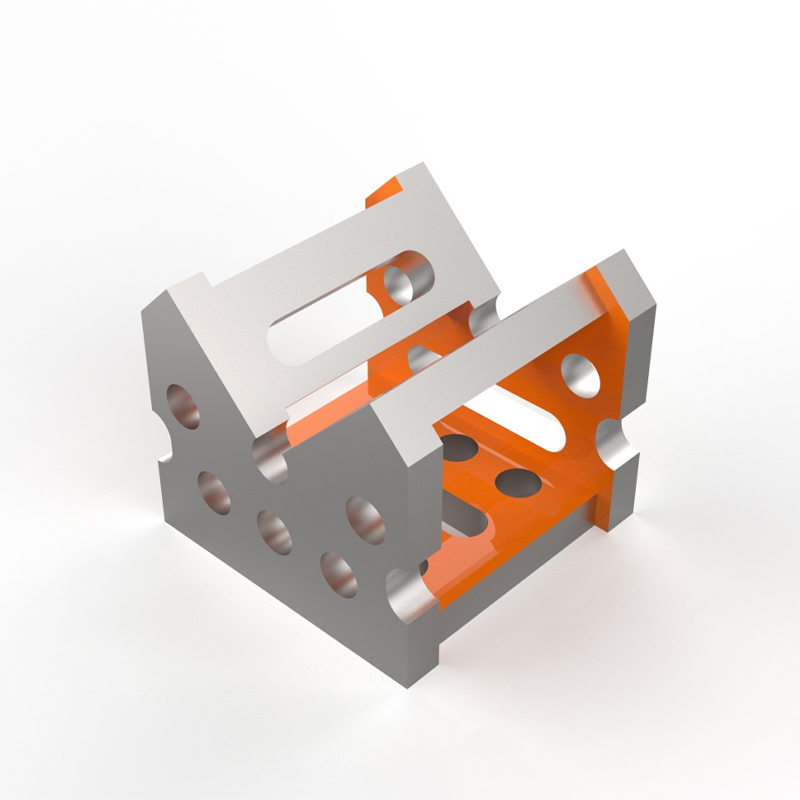
True innovation in custom fabrication is repeatable precision. You can’t hand-fit every table and call it custom; that’s just artisanal and slow. The leap comes from designing and building your own jig systems. A well-designed welding jig allows you to produce a unique design multiple times with perfect consistency. This is where a partnership with a tooling specialist pays off.
For example, when we developed a signature line of hairpin leg tables, the challenge was getting the leg splay and mounting plate angle identical every time. We worked with a tooling manufacturer—the kind of work Botou Haijun Metal Products specializes in—to produce a adjustable fixture that locked all components in place for welding. This fixture itself was a welded assembly, calibrated with their precision gauges. It turned a 2-hour fitting job into a 10-minute weld operation.
The lesson? Your innovation might not be in the final product’s design, but in the tooling that enables you to build it reliably. Investing in custom fixtures is what separates a job shop from a true fabricator.
When Innovation Means Knowing What Not to Do
Chasing trends can lead you astray. A few years ago, the raw weld aesthetic was huge. Clients wanted visible, ropey weld beads. Fine for decor, but structurally, a smooth, penetrating weld is almost always stronger than a proud, decorative one. We had to educate clients that for load-bearing frames, we’d make the critical structural welds clean and flush, and perhaps add a cosmetic bead on a non-structural seam for the look. It’s a compromise, but an informed one.
Another trap is over-engineering. Not every table needs 1/4-inch wall tubing. We use FEA software sometimes to simulate load, but often experience trumps. For a standard desk, 16-gauge square tube is ample. The innovation is in the triangulation and joint design, not just throwing more metal at it. Heavier isn’t always better; it’s just more expensive to ship and harder to move.
Finally, the biggest non-innovation? Ignoring the end-user’s reality. We designed a gorgeous, heavy steel table for a startup office. They loved it. Then they tried to reconfigure the open-plan layout. The table weighed 400 pounds and couldn’t be moved without disassembly. Our failure. Now, we design for modularity or manageable sub-assemblies. Sometimes, the smartest weld is the one you design not to be permanent.