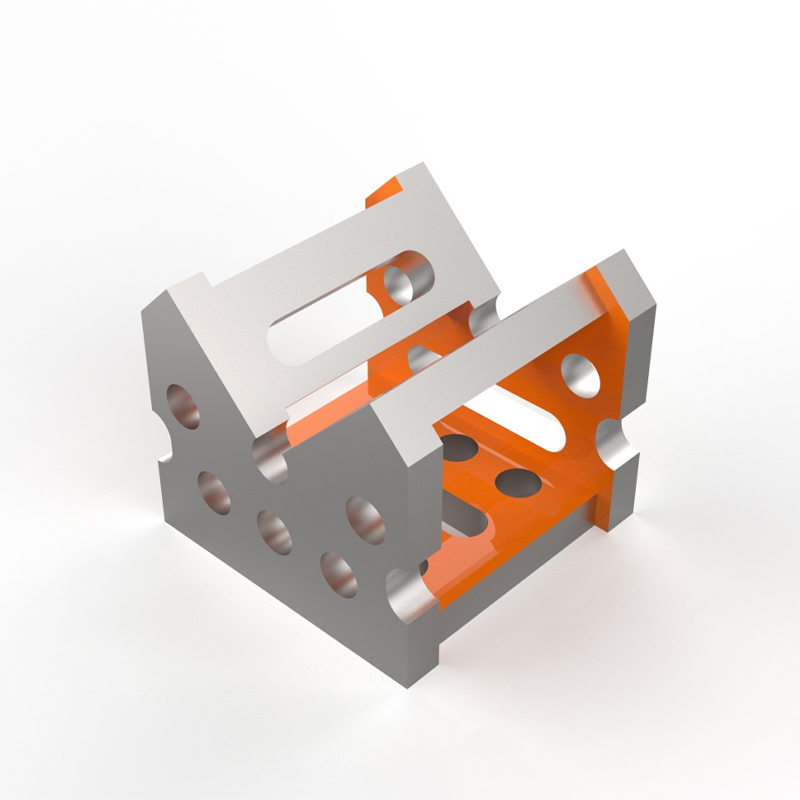
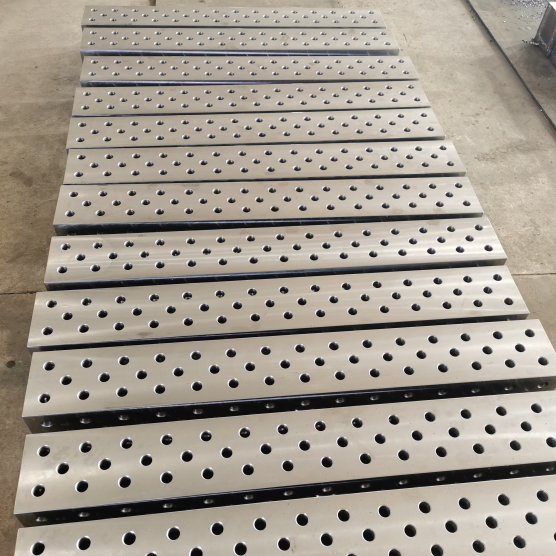
Looking for reliable fabrication equipment? The Ultimate Guide to Welding Tables: Buy Heavy Duty Cast Iron Fabrication Tables from China Manufacturers provides essential insights into sourcing premium welding surfaces directly from industrial hubs. This guide covers material benefits, manufacturing standards, and strategic sourcing tips to help professionals secure durable, precision-ground cast iron tables that enhance workflow efficiency and project accuracy without compromising on budget.
What Defines a Heavy Duty Cast Iron Welding Table?
A heavy duty cast iron welding table is more than just a work surface; it is a foundational tool for precision fabrication. Unlike standard steel tables, cast iron offers unique properties that make it indispensable for high-tolerance work. The primary distinction lies in the material’s inherent stability and ability to dampen vibrations.
Cast iron contains graphite flakes within its microstructure. These flakes act as natural shock absorbers, dissipating energy from grinding, hammering, or welding arcs. This vibration damping prevents distortion in delicate assemblies and ensures that measurements remain consistent throughout the fabrication process.
Furthermore, these tables are typically manufactured using gray cast iron grades known for excellent machinability and wear resistance. When sourced from reputable China manufacturers, these tables undergo rigorous heat treatment to relieve internal stresses, ensuring the surface remains flat over years of heavy use.
The “heavy duty” designation implies a substantial mass, often ranging from several hundred kilograms to multiple tons depending on dimensions. This mass provides thermal inertia, meaning the table absorbs heat from welding without warping rapidly, maintaining geometric integrity during complex joins.
Key Material Properties of Gray Cast Iron
Understanding the metallurgy behind these tables helps buyers appreciate their value. The industry prefers gray cast iron for fabrication tables due to specific physical characteristics:
- Dimensional Stability: Minimal expansion and contraction under temperature fluctuations compared to mild steel.
- Self-Lubricating Surface: The graphite content reduces friction, making it easier to slide heavy workpieces into position.
- Machinability: Allows for precise grinding to achieve surface flatness tolerances often within 0.1mm per meter.
- Wear Resistance: Withstands repeated impact from tools, clamps, and falling debris without denting easily.
When evaluating products from Chinese suppliers, verifying the specific grade of cast iron used is crucial. High-quality manufacturers will provide material certificates confirming the composition meets international standards for fabrication equipment.
Introduction to Modern Welding Fabrication Tables
In heavy-duty fabrication, the welding table is not merely a workbench—it is the foundation of geometric truth. Every angle, every fit-up, and every distortion-controlled weld traces back to one uncompromising parameter: flatness. A table that has bowed under thermal stress or worn unevenly under repeated fixturing will introduce minute errors that compound across assemblies. For critical structures—pressure vessels, heavy equipment frames, or seismic-resistant building joints—those errors mean rejected welds, rework, and compromised safety margins. That is why selecting the right platform is a strategic engineering decision.
Over two decades in this trade, I have tested steel plate tables, composite tops, and hardened tool-steel surfaces. Each has its niche. But for rigorous, day-in-day-out heavy-duty applications, no material matches gray cast iron. And that brings us to the core of this discussion: the technical advantages of cast iron welding tables.
When you source from a reputable cast iron welding table manufacturer, you gain three inherent physical properties that steel cannot replicate: vibration damping, wear resistance, and thermal stability.
Vibration Damping – During welding and grinding, high-frequency vibrations travel through the workpiece. On a steel table, those vibrations reflect and resonate, causing micro-movements that disturb precise fit-up and increase operator fatigue. Cast iron’s flake graphite microstructure internally converts vibrational energy into low-grade heat, effectively deadening oscillations within milliseconds. The result: smoother arc starts, more consistent bead profiles, and less distortion in thin-wall sections.
Wear Resistance – Heavy fabrication involves dragging fixtures, sliding heavy components, and repeated clamping in the same locations. A mild steel table develops burrs and grooves within months. Cast iron, however, contains hard iron carbide particles dispersed throughout a softer ferrite matrix. This combination provides a self-lubricating, abrasion-resistant surface that maintains original flatness even after years of service. Leading heavy duty welding table factory facilities use ASTM A48 Class 40B iron with controlled chill depth, ensuring the top surface resists peening and galling from failed tacks or dropped tools.
Thermal Stability – Perhaps the most overlooked advantage. Welding introduces localized heat inputs exceeding 1500°C. Steel tables expand aggressively, and because the heat is uneven, they warp permanently. Cast iron’s lower coefficient of thermal expansion (approximately 30% less than low-carbon steel) and its ability to conduct heat laterally away from the weld zone keep the tabletop stable. A properly stress-relieved cast iron table will remain flat within 0.5mm over a 2-meter span, even after thousands of arc hours. This makes it the best welding table for applications involving heavy gauge materials, preheat passes, or post-weld heat treatment.
Of course, not all cast iron tables are equal. A trusted heavy duty welding table factory will incorporate ribbed underside patterns to increase rigidity without adding mass, precision-ground top surfaces to a tolerance of ±0.1mm, and pre-drilled grid patterns compatible with standard tooling. Avoid import castings with unbroken chilled edges or improper annealing—they will crack under cyclic heating.
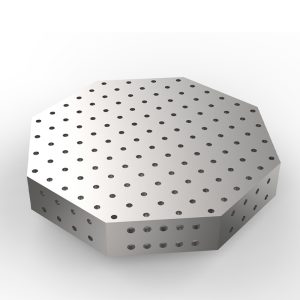
Why Source Fabrication Tables Directly from China Manufacturers?
China has evolved into a global powerhouse for heavy industrial manufacturing, particularly in the sector of welding and fabrication equipment. Sourcing heavy duty cast iron tables directly from Chinese factories offers distinct advantages regarding cost, customization, and production capacity.
Cost Efficiency is the most immediate benefit. By eliminating intermediaries and trading companies, buyers access factory-direct pricing. The mature supply chain in regions like Hebei and Shandong allows manufacturers to source raw iron and energy at competitive rates, passing savings to international clients.
Beyond price, manufacturing scalability is a key factor. Chinese foundries are equipped to handle large-volume orders and oversized castings that might be logistically challenging or prohibitively expensive in other regions. They possess the infrastructure to cast, machine, and ship massive tables efficiently.
Additionally, modern Chinese manufacturers have significantly upgraded their quality control protocols. Many facilities now operate with CNC machining centers capable of achieving micron-level precision on table surfaces. This technological leap ensures that “Made in China” is increasingly synonymous with high-performance industrial tools rather than just low-cost alternatives.
Navigating the Supply Chain Landscape
The landscape of welding table manufacturing in China is diverse. It ranges from small workshops to large-scale industrial complexes. For buyers seeking heavy duty cast iron solutions, focusing on established foundries with export experience is vital.
- Integrated Foundries: Facilities that handle melting, casting, aging, and machining under one roof ensure better quality consistency.
- Export Specialization: Manufacturers accustomed to overseas markets understand packaging requirements, shipping logistics, and international compliance standards.
- Customization Capabilities: Leading factories offer tailored solutions, such as specific hole patterns, T-slot configurations, or integrated fixture systems.
Engaging directly with these manufacturers allows for clearer communication regarding technical specifications. It enables buyers to request specific heat treatment processes or surface finishes that align with their unique operational needs.
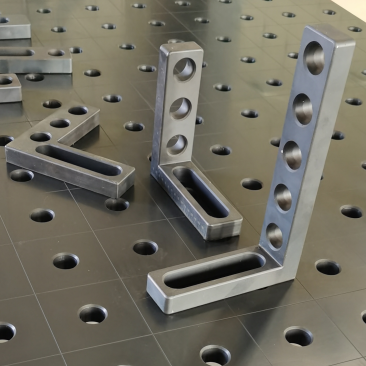
In this competitive landscape, Botou Haijun Metal Products Co., Ltd. stands out as a premier example of specialized expertise. Dedicated to the research, development, and production of high-precision flexible modular fixtures, Haijun Metal provides efficient welding and positioning solutions tailored for the modern manufacturing industry. Their core product line features advanced 2D and 3D flexible welding platforms, renowned for exceptional versatility and precision, making them the preferred jigging equipment in the machining, automotive, and aerospace sectors. Beyond the platforms themselves, Haijun Metal offers a comprehensive ecosystem of complementary components—including U-shaped and L-shaped multi-purpose square boxes, 200-series support angle irons, and 0-225° universal angle gauges—that integrate seamlessly to enable rapid workpiece positioning. With a strong commitment to durability, the company also manufactures professional cast iron 3D welding platforms and angle connection blocks, serving as a trusted supplier to customers both domestically and internationally.
Top 10 Features of the Best Welding Tables for Professional Fab Shops
In a professional fabrication shop, a welding table is not a passive surface—it is an active productivity tool. Over two decades of running heavy-duty fab lines, I have evaluated dozens of table designs. The difference between a table that accelerates workflow and one that creates bottlenecks comes down to specific, quantifiable features. Below are the ten non-negotiable attributes of the best welding table for professional use, with special emphasis on load capacity, hole pattern versatility, and accessory integration.
1. Minimum 5,000 lb Uniform Load Capacity
Heavy fabrication means heavy components. A professional table must support entire assemblies—think excavator boom sections, press frames, or industrial skids—without deflection. The best tables are rated for a minimum of 5,000 lbs uniformly distributed, with safety factors of 4:1. Beware of tables that flex under point loads at the center. A truly heavy duty welding table factory will publish deflection curves, not just single-number ratings.
2. Through-Hardened Top Surface (Not Just Case-Hardened)
Many tables boast “hardened surfaces” that are merely induction-case-hardened to 0.030″ depth. Once that thin layer wears through, the soft substrate deforms. The best tables feature through-hardened cast iron or quenched-and-tempered steel plates achieving 40–45 HRC uniformly from surface to core. This ensures grinding sparks, dropped tools, and sliding fixtures do not create localized divots.
3. Modular Hole Pattern – 16mm × 16mm or 28mm × 28mm Grid
The hole pattern defines your fixturing universe. Two standards dominate professional shops: the European 16mm diameter on 50mm centers, and the heavy-duty 28mm diameter on 100mm centers. Both offer 0.001″ positional accuracy between holes. A random or non-standard pattern renders most commercial clamps useless. The best welding table uses a precision-bored grid with chamfered edges to accept locating pins, stop blocks, and swing clamps without binding.
4. Full Surface Accessory Compatibility
A bare table is only half the tool. The best tables integrate seamlessly with a full ecosystem of accessories: magnetic squares, adjustable outrigger supports, coplanar riser blocks, and modular stops. Before purchasing, verify that your chosen cast iron welding table manufacturer offers at least 50 distinct accessories—including V-blocks for pipe work, angle brackets for gusset positioning, and sacrificial backup bars for plasma cutting.
5. Flatness Tolerance of 0.5mm per Meter or Better
This repeats from our earlier discussion but bears emphasizing. For professional work, flatness must be certified. A top-tier heavy duty welding table factory will grind the table surface after stress-relieving and provide an individual flatness report. Acceptable tolerance: 0.5mm over 1 meter, and no more than 1.5mm over 2 meters. Anything looser introduces cumulative error into multi-segment assemblies.
6. Through-Holes for Clamping from Below
Under-table access is a forgotten feature. The best tables include strategically placed through-holes or open channels enabling clamps to reach from underneath. This is critical when welding complex 3D assemblies—cages, platforms, or structural nodes—where top-side clamping interferes with torch access.
7. Integrated Lifting Points and Forklift Pockets
Professional shops reconfigure cells regularly. A 500‑800 lb table must be mobile without dismantling. Look for integrated lifting eyes at the four corners and full-width forklift pockets. Avoid tables that require slings wrapped around the top; that practice damages ground surfaces and creates safety hazards.
8. Removable or Replaceable Top Inserts
Even the best tables suffer accidental arc strikes, through-welds, or plasma spatter. A smart design features replaceable corner inserts or modular top sections. When one quadrant wears out, you replace only that insert—not the entire table. This feature alone can extend service life by a factor of five.
9. Workbench Height (34–36″) with Adjustable Leveling Feet
Standard work height is 34–36″ to the table surface, allowing comfortable welding from standing or seated positions. But floors are rarely flat. The best tables include six or more adjustable leveling feet (not just four corners) to eliminate rocking on uneven concrete. Each foot should allow ±0.5″ of height adjustment with locknuts to prevent vibration loosening.
10. Accessory Storage Rails or Panels
Clamping efficiency is destroyed when you walk across the shop for every stop block. The best tables integrate side rails, under-shelf storage, or magnetic tool bars specifically designed to hold clamps, squares, and welding consumables. This is not a luxury—it is a lean manufacturing necessity that reduces motion waste.
Professional Verdict:
A table missing any of these ten features might still serve a hobbyist. But for a professional fab shop where time is billed by the hour and rework is the enemy, these features are non-negotiable. Prioritize load capacity, a verifiable flatness standard, and deep accessory support. When evaluating a cast iron welding table manufacturer, ask for deflection data, hardness certification, and a full accessory catalog. That documentation separates engineered tools from fabricated steel boxes.
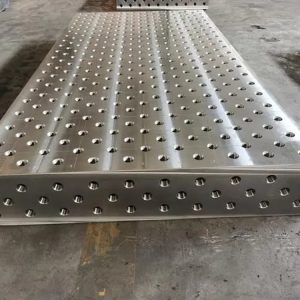
Technical Advantages of Cast Iron Over Steel Tables
While steel welding tables are common, heavy duty cast iron tables offer superior performance for precision fabrication. The choice between materials often dictates the quality of the final welded product. Here is a detailed comparison of why cast iron is preferred for high-end applications.
Comparative Analysis: Cast Iron vs. Mild Steel
The following table outlines the critical differences between cast iron and mild steel fabrication tables, highlighting why cast iron is the superior choice for precision work.
| Feature | Heavy Duty Cast Iron | Mild Steel (Standard) |
| Vibration Damping | Excellent (Graphite structure absorbs shock) | Poor (Transmits vibration, causing noise and potential distortion) |
| Thermal Stability | High (Resists warping under heat cycles) | Moderate (Prone to expansion and permanent deformation) |
| Surface Flatness | Superior (Maintains precision over time) | Variable (Can develop high spots or dips with heavy use) |
| Wear Resistance | High (Hard surface resists scratching and denting) | Moderate (Softer surface may gouge under impact) |
| Machinability | High (Easy to grind to precise tolerances) | Moderate (Can gum up cutting tools during finishing) |
| Lifespan | Decades (Often outlasts the facility itself) | Years (May require resurfacing or replacement sooner) |
This comparison clearly demonstrates that while steel tables serve general purposes, cast iron is the definitive material for tasks requiring repeatability and exactness. The investment in a cast iron table pays dividends through reduced rework and higher assembly quality.
Moreover, the non-sparking nature of certain cast iron alloys adds a layer of safety in environments where flammable gases might be present, although proper ventilation remains paramount in all welding scenarios.
Critical Features to Evaluate When Buying
Not all cast iron tables are created equal. When purchasing from China manufacturers, buyers must scrutinize specific features to ensure they receive a product that meets heavy duty standards. Overlooking these details can lead to receiving a sub-par product that fails to deliver the expected precision.
Surface Flatness and Precision Grinding
The most critical attribute of a welding table is its flatness. A table that is not flat will introduce errors into every project placed upon it. Reputable manufacturers utilize large-scale CNC gantry grinders to process the table surface after casting and stress-relieving.
Buyers should look for specified flatness tolerances. Industry leaders often guarantee flatness within 0.1mm to 0.3mm per square meter. Ask the manufacturer for inspection reports or third-party verification of surface geometry before shipment.
Additionally, the surface finish matters. A finely ground surface facilitates smoother movement of jigs and fixtures. Some tables come with a protective oil coating to prevent rust during transit, which should be easy to clean and replace with a suitable workshop protectant.
Hole Patterns and Fixturing Compatibility
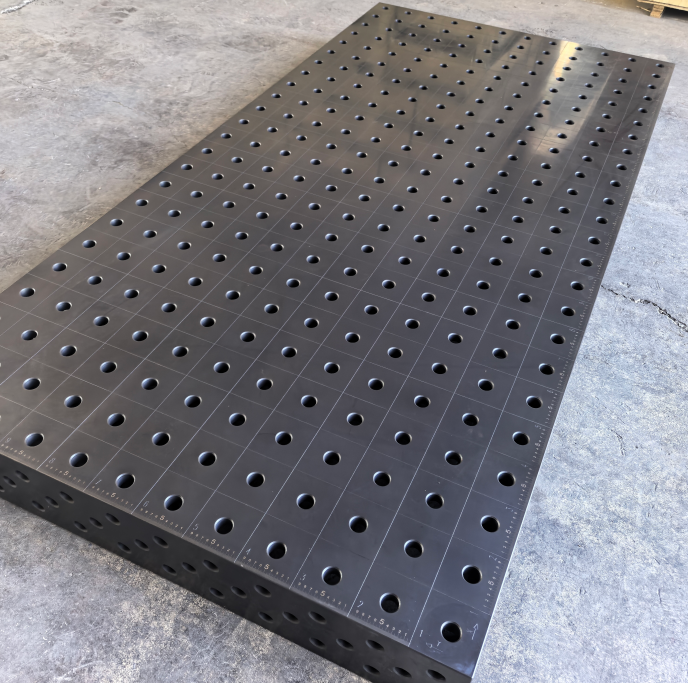
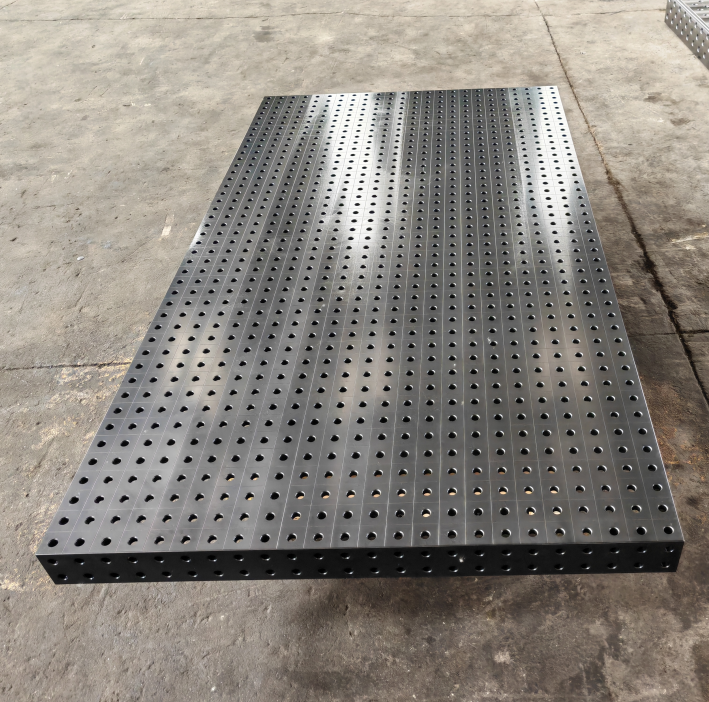
Modern fabrication relies heavily on modular fixturing. The arrangement of holes on the table surface determines its versatility. Common patterns include square grids or specialized slot configurations.
- Square Hole Grids: Typically 50mm x 50mm or 100mm x 100mm spacing, allowing for flexible clamp placement.
- T-Slots: Provide strong anchoring points for heavy-duty clamps and vises, ideal for large structural work.
- Threaded Inserts: Some tables come with pre-installed threaded holes for direct bolting of custom fixtures.
When ordering from China, specify the desired hole pattern clearly. Custom drilling is often available but may affect lead times. Ensure the hole edges are deburred and chamfered to prevent damage to clamping tools and to facilitate easy insertion.
Structural Integrity and Ribbing
A heavy duty table must support immense loads without sagging. The underside of the table should feature a robust ribbing structure. These ribs reinforce the tabletop, distributing weight evenly and preventing deflection.
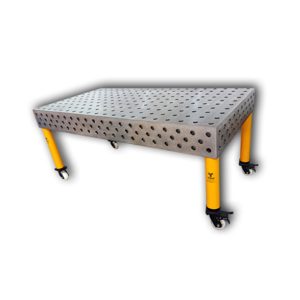
Inspect photos or CAD drawings of the underside provided by the manufacturer. Look for cross-ribbed designs rather than simple parallel supports. The legs and frame should be constructed from thick-walled steel tubing or solid cast iron columns, welded securely to the tabletop.
Adjustable leveling feet are another essential feature. They allow the table to be stabilized on uneven workshop floors, ensuring the precision surface remains perfectly horizontal regardless of the foundation conditions.
Step-by-Step Guide to Sourcing from China
Sourcing heavy industrial equipment internationally requires a structured approach to mitigate risks and ensure satisfaction. Following a systematic process helps buyers navigate language barriers, quality concerns, and logistical complexities effectively.
Procurement Process for Welding Tables
To successfully acquire a high-quality cast iron fabrication table, follow these operational steps:
- Step 1: Define Specifications: Clearly document your requirements, including dimensions, load capacity, hole pattern, flatness tolerance, and surface finish. Create a detailed technical drawing if possible.
- Step 2: Identify Verified Manufacturers: Search for suppliers with proven expertise in cast iron casting and machining. Look for business licenses, ISO certifications, and export history.
- Step 3: Request Detailed Quotations: Contact multiple manufacturers with your specifications. Ask for a breakdown of costs, including material grade, machining time, and packaging details.
- Step 4: Verify Quality Controls: Request photos of similar completed projects. Ask about their heat treatment process (stress relieving) and how they measure flatness. Consider hiring a third-party inspection agency.
- Step 5: Negotiate Terms and Logistics: Discuss Incoterms (e.g., FOB, CIF), payment methods, and lead times. Ensure the packaging plan includes moisture protection and reinforced crating for ocean freight.
- Step 6: Final Inspection and Shipment: Conduct a pre-shipment inspection to verify dimensions and surface quality. Once approved, arrange for shipping and track the cargo until delivery.
Adhering to this workflow minimizes the risk of misunderstandings and ensures that the final product aligns with your operational expectations. Communication clarity is paramount at every stage.
Common Applications for Heavy Duty Cast Iron Tables
The versatility of heavy duty cast iron welding tables makes them suitable for a wide array of industrial applications. Their stability and precision support various sectors, from automotive prototyping to large-scale structural steel fabrication.
Industrial Sectors Benefiting from Cast Iron Surfaces
Different industries leverage the unique properties of these tables to solve specific challenges. Understanding these applications helps buyers justify the investment based on their specific workflow needs.
- Precision Machinery Manufacturing: Used for assembling and welding components where micron-level accuracy is critical. The vibration damping ensures that sensitive parts are not damaged during the process.
- Automotive and Aerospace Prototyping: Ideal for building custom frames and fixtures. The ability to repeatedly clamp and unclamp tools without degrading the surface is vital for iterative design processes.
- Robotic Welding Cells: Serve as the base for robotic arms and positioners. The rigidity of cast iron prevents movement during high-speed automated welding, ensuring consistent weld paths.
- Education and Training Centers: Provide a durable platform for teaching welding techniques. Their longevity means they can withstand the rigorous use by students over many years.
- Artistic Metalwork: Support complex sculptures and architectural elements where irregular shapes need stable referencing points for assembly.
In each of these scenarios, the heavy duty cast iron fabrication table acts as the cornerstone of quality control. It transforms the welding process from a manual craft into a repeatable, engineered operation.
Quality Assurance and Inspection Standards
When importing from China, quality assurance is the buyer’s responsibility. Relying solely on the manufacturer’s word is risky. Implementing a robust inspection strategy ensures that the received tables meet the promised standards.
Key Inspection Points for Cast Iron Tables
Professional inspectors focus on several critical areas when evaluating welding tables before shipment. Buyers should be familiar with these checkpoints to communicate effectively with inspection agencies.
- Material Verification: Confirming the chemical composition of the cast iron through spectral analysis to ensure it matches the ordered grade.
- Dimensional Accuracy: Measuring length, width, height, and diagonal lengths to check for squareness and overall size conformity.
- Flatness Testing: Using precision levels, laser scanners, or granite straightedges to map the surface and verify flatness tolerances across the entire area.
- Visual Examination: Checking for surface defects such as sand holes, cracks, cold shuts, or excessive roughness that could interfere with fixturing.
- Coating and Packaging: Ensuring the anti-rust coating is applied evenly and that the wooden crate is sturdy enough to withstand ocean transport shocks.
Documenting these inspections with photos and reports provides leverage in case discrepancies arise. It also builds a record of quality for future orders with the same manufacturer.
Frequently Asked Questions (FAQ)
Addressing common queries helps clarify doubts potential buyers may have regarding the purchase and usage of heavy duty cast iron welding tables from China.
How long does it take to manufacture a custom cast iron table?
Lead times vary based on complexity and order volume. Generally, standard models may be ready in 4 to 6 weeks, while highly customized tables with specific hole patterns or extra-large dimensions can take 8 to 12 weeks. This includes time for casting, natural aging or heat treatment, machining, and final assembly.
What is the typical flatness tolerance achievable?
High-quality manufacturers in China can consistently achieve flatness tolerances of 0.1mm to 0.3mm per meter for precision-grade tables. For general heavy-duty applications, a tolerance of 0.5mm per meter is often acceptable. Always specify your required tolerance in the initial inquiry.
How are these tables packaged for international shipping?
To prevent damage and rust, tables are typically coated with a heavy-duty anti-corrosion oil. They are then wrapped in waterproof plastic and secured in fumigated wooden crates with steel strapping. Internal bracing is used to prevent movement within the crate during transit.
Can I get a sample or visit the factory?
Due to the size and weight of these tables, shipping samples is usually impractical. However, many manufacturers welcome factory visits for serious buyers. Alternatively, they can provide live video tours or detailed video inspections of the production line and finished goods.
What maintenance is required for cast iron tables?
Maintenance is minimal but essential. Regularly clean the surface to remove spatter and debris. Apply a thin layer of machine oil or a dedicated rust preventative when not in use for extended periods. Avoid dropping heavy objects directly onto the surface to maintain flatness.
Making the Right Choice for Your Workshop
Selecting the right welding table is a strategic decision that impacts productivity and product quality for years. Heavy duty cast iron fabrication tables represent a significant investment, but one that yields substantial returns through improved precision and durability.
By sourcing directly from China manufacturers like Botou Haijun Metal Products Co., Ltd., businesses can access world-class manufacturing capabilities at competitive prices. The key lies in thorough vetting, clear specification of requirements, and rigorous quality control measures.
Whether you are outfitting a new robotic cell, expanding a job shop, or upgrading an educational facility, the stability and reliability of cast iron are unmatched. Focus on suppliers who demonstrate transparency, technical expertise, and a commitment to international quality standards.
Next Steps: Begin by drafting your specific technical requirements and reaching out to verified manufacturers for detailed consultations. Request material certifications and discuss your quality assurance protocol early in the conversation to ensure a smooth procurement journey.
Investing in the right foundation for your welding operations sets the stage for excellence in fabrication. Choose wisely, prioritize quality, and leverage the global supply chain to equip your workshop with the best tools available.