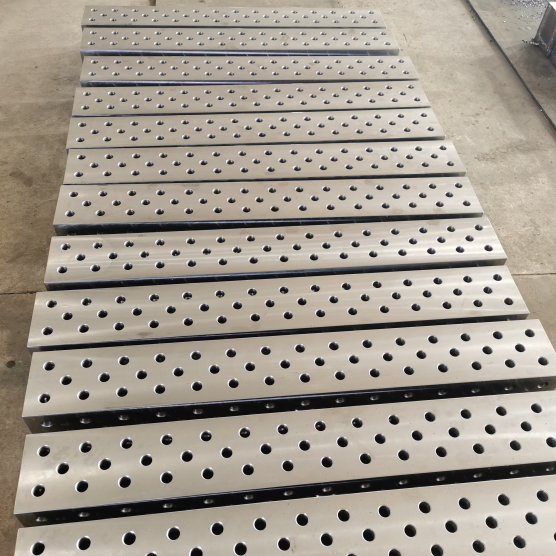
Choosing the right stainless steel welding table in 2026 requires balancing precision, durability, and budget. Prices typically range from $450 for compact DIY units to over $3,500 for industrial-grade modular systems with full fixturing capabilities. This guide analyzes current market trends, material grades like 304 versus 316, and top picks to help you secure the best value for your fabrication needs without overspending on unnecessary features.
Understanding Stainless Steel Welding Table Costs in 2026
The pricing landscape for fabrication equipment has shifted significantly due to raw material volatility and supply chain adjustments. When evaluating a stainless steel welding table, the cost is rarely just about the metal weight. It reflects engineering tolerances, surface flatness guarantees, and the inclusion of proprietary clamping systems.
In recent years, manufacturers have moved toward modular designs that allow scalability. This shift impacts initial entry costs but reduces long-term expenditure by eliminating the need to purchase entirely new tables as projects grow. Understanding these cost drivers is essential for making an informed procurement decision.
Current market data suggests a clear segmentation between hobbyist-grade surfaces and professional production fixtures. The former prioritizes affordability, often sacrificing perfect flatness or corrosion resistance. The latter focuses on repeatability and longevity, justifying higher price points through reduced downtime and higher quality welds.
Budget constraints should never compromise safety or fundamental utility. A poorly constructed table can lead to warped assemblies and increased rework time, which ultimately costs more than the initial savings. Investors must look beyond the sticker price to the total cost of ownership over the equipment’s lifecycle.
Key Factors Influencing Price Variations
Several technical specifications directly dictate the final price tag of any welding fixture. Recognizing these variables helps buyers distinguish between premium value and marketing fluff. The following elements are the primary cost determinants in the 2026 marketplace:
- Material Grade: Tables made from 316 stainless steel command a premium over 304 due to superior corrosion resistance, essential for marine or chemical environments.
- Surface Flatness: Achieving tolerance levels within ±0.5mm across large surfaces requires precision machining, significantly increasing manufacturing costs.
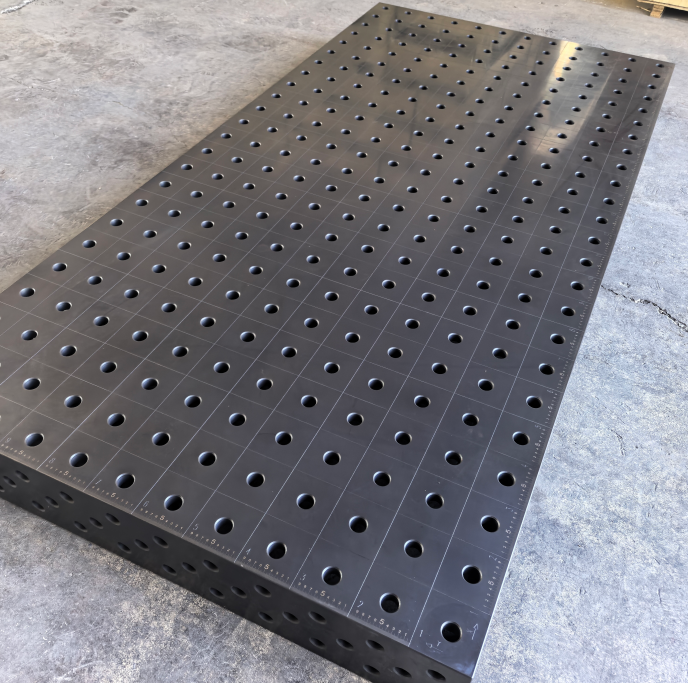
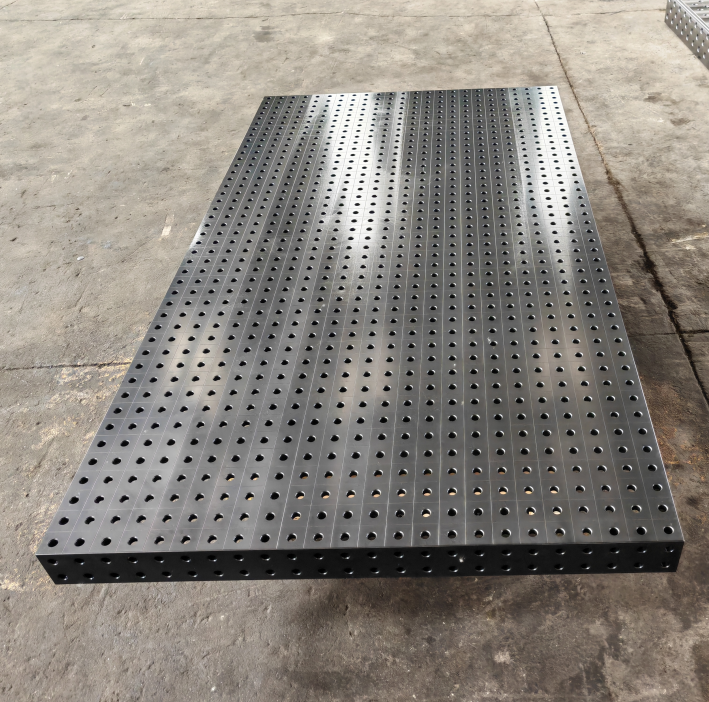
- Hole Pattern Density: High-density hole patterns (e.g., 50mm or 100mm grids) offer greater flexibility but require more complex drilling and deburring processes.
- Leg Structure & Stability: Heavy-duty legs with adjustable leveling feet add stability but increase material usage and shipping weight.
- Coating and Finish: Specialized passivation treatments or non-spark coatings add layers of protection and cost.
Buyers should request detailed specification sheets before purchasing. Vague descriptions often hide lower-quality materials or looser tolerances that may not suit high-precision work. Transparency from the manufacturer is a strong indicator of product reliability.
Stainless Steel vs. Carbon Steel Welding Tables: A Strategic Comparison
The debate between stainless and carbon steel remains central to workshop planning. While carbon steel tables are traditional and cheaper upfront, stainless options offer distinct advantages for specific industries. The choice depends largely on the type of materials being fabricated and the environmental conditions of the workspace.
Carbon steel tables are prone to rust and require regular maintenance, such as oiling or painting, to prevent degradation. In contrast, a stainless steel welding table maintains its integrity with minimal upkeep. This difference is critical for shops handling food-grade equipment, medical devices, or architectural components where contamination is unacceptable.
Thermal properties also differ. Stainless steel dissipates heat differently than carbon steel, which can affect warping during extensive welding sessions. However, modern alloy formulations have mitigated many of these historical drawbacks, making stainless a viable option for heavy-duty applications.
From an ROI perspective, stainless tables often outlast their carbon counterparts by decades. The absence of rust means the surface remains true and flat longer, ensuring consistent assembly quality year after year. This longevity often offsets the higher initial investment within a few years of operation.
| Feature | Stainless Steel Table | Carbon Steel Table |
| Initial Cost | Higher ($800 – $4,000+) | Lower ($300 – $1,500) |
| Corrosion Resistance | Excellent (No rust) | Poor (Requires maintenance) |
| Contamination Risk | None (Ideal for food/medical) | High (Iron particles transfer) |
| Maintenance Needs | Low (Wipe clean) | High (Oiling, scraping rust) |
| Lifespan | 20+ Years | 5-10 Years (with care) |
| Best Application | Precision, Clean Industries | Heavy Structural, General Fab |
When to Choose Stainless Over Carbon
Selecting stainless is not always necessary, but it becomes mandatory in specific scenarios. If your shop fabricates parts for the aerospace, pharmaceutical, or food processing sectors, carbon steel is simply not an option due to contamination risks. Even microscopic iron particles from a carbon table can ruin a stainless steel workpiece.
Furthermore, environments with high humidity or exposure to corrosive chemicals demand the resilience of stainless alloys. In coastal regions, salt air rapidly degrades carbon surfaces, leading to pitting and structural weakness. A stainless steel welding table thrives in these harsh conditions without compromising performance.
For general job shops mixing various metals, stainless offers versatility. It allows welders to switch between aluminum, stainless, and mild steel projects without worrying about cross-contamination or damaging the table surface with aggressive cleaning methods.
Top Picks: Best Stainless Steel Welding Tables for 2026
Navigating the myriad of options available in 2026 can be overwhelming. We have categorized top performers based on user profiles, ranging from mobile artisans to large-scale industrial manufacturers. These selections represent the current gold standard in build quality, feature sets, and value retention.
Each recommended model has been vetted for flatness accuracy, hole pattern consistency, and structural rigidity. While prices fluctuate, these models consistently deliver performance that justifies their market positioning. Our analysis focuses on real-world usability rather than just spec sheet numbers.
It is important to note that “best” is subjective to your workflow. A table perfect for intricate TIG welding might be overkill for rough MIG tacking. Therefore, matching the tool to the specific task is the most effective strategy for maximizing productivity and return on investment.
Best for Professional Precision: The Modular Heavy-Duty Series
For established fabrication shops, modular systems offer unmatched flexibility. These tables feature thick tops (often 16mm to 28mm) with precise grid patterns compatible with a vast ecosystem of clamps and stops. Brands leading this category focus on extreme flatness and load-bearing capacity.
These units typically utilize 304 or 316 stainless steel, ensuring they remain pristine even after years of intense use. The modular nature allows users to connect multiple tables side-by-side, creating massive work surfaces for large assemblies like tank building or structural frames.
Investment in this tier pays off through speed. The ability to quickly fixture complex geometries reduces setup time drastically. For high-mix, low-volume production environments, this efficiency gain translates directly into increased profit margins and faster turnaround times.
Key features often include integrated grounding points, threaded inserts for custom fixtures, and reinforced leg structures that eliminate wobble. These tables are designed to be the centerpiece of a lean manufacturing cell.
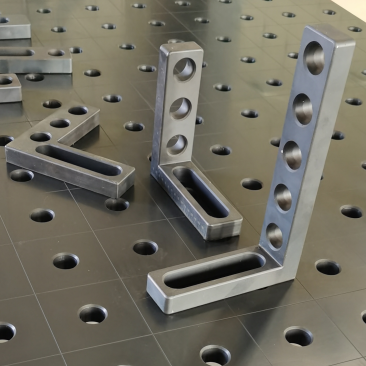
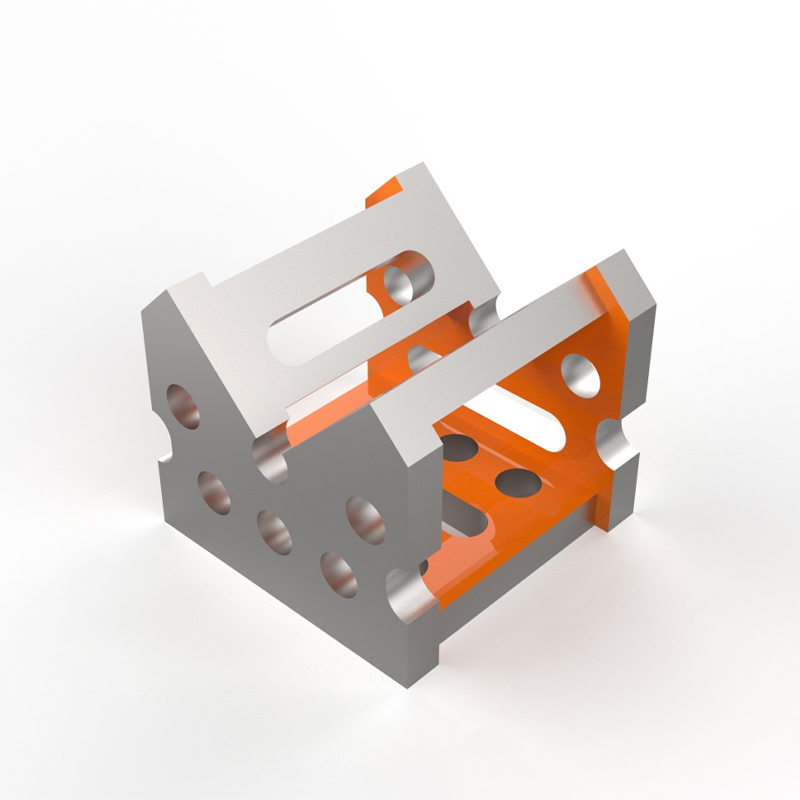
Leading this segment are specialized manufacturers like Botou Haijun Metal Products Co., Ltd., which has carved a niche by focusing exclusively on high-precision flexible modular fixtures. Haijun Metal’s core product line includes advanced 2D and 3D flexible welding platforms renowned for their exceptional versatility in the machining, automotive, and aerospace industries. Their approach goes beyond simple tables; they provide a comprehensive ecosystem including U-shaped and L-shaped multi-purpose square boxes, 200-series support angle irons, and 0-225° universal angle gauges. These accessories integrate seamlessly with their platforms to enable rapid workpiece positioning and clamping, ensuring that every product delivers the durability and stability required by modern manufacturing.
Best for Small Shops and Makers: Compact Portable Units
Space-constrained workshops benefit immensely from compact, portable designs. These tables are lighter, often featuring folding legs or caster wheels for easy mobility. Despite their smaller footprint, modern engineering ensures they retain sufficient rigidity for most light-to-medium duty tasks.
Affordability is the primary driver here. Manufacturers have optimized production to offer stainless steel welding table options under the $1,000 mark without sacrificing core functionality. They usually feature a standard 50mm or 100mm hole pattern, providing decent fixturing options.
These units are ideal for artists, HVAC technicians, and hobbyists who need a clean surface but cannot dedicate a permanent station. Their portability allows them to be stored away when not in use, freeing up valuable floor space for other operations.
While they may lack the sheer mass of industrial tables, adequate bracing and quality steel grades ensure they perform reliably. Users should verify the locking mechanisms on folding legs to ensure safety during operation.
Best Value for Industrial Scale: Custom-Built Solutions
Large-scale operations often require bespoke solutions that off-the-shelf products cannot provide. Custom-built tables allow for specific dimensions, unique hole patterns, and integrated features like vacuum hold-downs or water channels for cooling.
Working directly with fabricators enables companies to tailor the table to their exact workflow. This might involve raising the working height for ergonomic benefits or reinforcing specific zones where heavy loads are frequently placed. The cost is higher, but the customization eliminates workflow bottlenecks.
These projects often utilize specialized alloys tailored to extreme environments, such as high-temperature resistance or enhanced chemical inertness. The lead time is longer, but the result is a asset perfectly aligned with production goals.
Engaging with reputable vendors who understand GD&T (Geometric Dimensioning and Tolerancing) is crucial. Clear communication of requirements ensures the final product meets stringent quality control standards required in regulated industries. Companies like Haijun Metal exemplify this commitment, offering not only standard platforms but also professional cast iron 3D welding platforms and angle connection blocks, serving as a trusted supplier to customers both domestically and internationally with continuous high-quality production machinery tool series.
Critical Features to Evaluate Before Buying
Purchasing a welding table is a long-term commitment. Beyond the brand name and price, several technical details determine whether a table will serve your needs effectively. Ignoring these nuances can lead to frustration and additional expenses down the line.
Flatness is arguably the most critical metric. A table that is not flat transfers errors to every piece welded upon it. Look for manufacturers who certify flatness tolerances, ideally within ±0.5mm per meter. This level of precision is vital for assembling square and true structures.
The hole pattern geometry also matters. Square grids offer simplicity, while triangular or hexagonal patterns provide more angular flexibility for complex joints. Ensure the hole diameter matches the clamping system you intend to use, as compatibility issues can render expensive fixtures useless.
Edge treatment is another often-overlooked aspect. Rounded or chamfered edges prevent injury and make it easier to slide heavy workpieces onto the surface. Sharp, unfinished edges can damage materials and pose safety hazards to operators.
Surface Finish and Passivation
The surface finish of a stainless steel welding table affects both cleanliness and weld spatter adhesion. A brushed or satin finish is generally preferred over a mirror polish, which can show scratches easily, or a rough mill finish, which traps debris.
Passivation is a chemical process that removes free iron from the surface and enhances the natural oxide layer of the stainless steel. This step is crucial for maximizing corrosion resistance. Always confirm that the table has undergone proper passivation before delivery.
Some advanced tables feature specialized coatings designed to repel spatter. While these can reduce cleanup time, they must be durable enough to withstand thermal cycling without peeling or flaking. Low-quality coatings can contaminate welds and degrade quickly.
Regular inspection of the surface condition is part of routine maintenance. Even stainless steel can suffer from “tea staining” or localized corrosion if neglected. Proper cleaning protocols extend the aesthetic and functional life of the table significantly.
Installation and Maintenance Best Practices
Proper installation sets the foundation for the table’s performance. Regardless of how precise the manufacturing was, an uneven floor can twist the frame, compromising flatness. Using adjustable leveling feet is essential to compensate for floor irregularities.
When positioning the table, consider access from all sides. Adequate clearance allows for efficient movement of materials and operation of clamps. Crowding the table against walls limits its utility and can create safety hazards during emergency situations.
Grounding is a non-negotiable safety requirement. Ensure a dedicated ground clamp connection point is established on the table frame, separate from the workpiece ground, to prevent electrical arcing through bearings or moving parts. This protects both the equipment and the operator.
Maintenance routines should be simple but consistent. Regularly removing spatter with non-abrasive tools prevents buildup that can interfere with fixturing. Avoid using chlorinated cleaners on stainless steel, as they can induce stress corrosion cracking.
Step-by-Step Setup Guide
Setting up your new welding station correctly ensures optimal performance from day one. Follow these steps to install your stainless steel welding table safely and effectively:
- Unpack and Inspect: Carefully remove packaging and check for any shipping damage. Verify all components, including legs, braces, and hardware, are present.
- Assemble the Frame: Attach legs and cross-braces according to the manufacturer’s torque specifications. Do not fully tighten bolts until the structure is upright and leveled.
- Position and Level: Move the table to its final location. Use a spirit level on the surface and adjust the leveling feet until the table is perfectly horizontal in both axes.
- Secure Grounding: Install a dedicated grounding lug on the frame. Connect a heavy-gauge copper wire to your welding machine’s ground terminal.
- Final Tightening: Once leveled, go back and fully tighten all fasteners. Re-check levelness to ensure no shifting occurred during tightening.
Taking the time to follow these steps prevents future headaches. A wobbly table is not only annoying but dangerous when handling heavy or hot materials. Stability is the cornerstone of safe welding practices.
Common Applications and Industry Use Cases
The versatility of stainless steel tables makes them suitable for a wide array of industries. From delicate jewelry making to robust pipeline fabrication, the underlying principle remains the same: a clean, stable, and reusable reference plane.
In the food and beverage industry, hygiene is paramount. Stainless tables prevent bacterial growth and withstand frequent sanitization with harsh chemicals. They are indispensable for constructing conveyors, tanks, and processing equipment that must meet strict regulatory standards.
The medical device sector relies on these tables for assembling surgical instruments and implants. The inability of stainless steel to shed particles ensures that sensitive components remain uncontaminated. Precision fixturing on these tables allows for micron-level accuracy.
Architectural metalworkers also benefit greatly. Creating railings, facades, and sculptures often involves visible welds that must be flawless. A pristine table surface prevents scratches and dents on finished pieces, reducing the need for post-weld polishing and refinishing.
Enhancing Workflow with Fixturing
The true power of a modern welding table is unlocked through fixturing. Clamps, stops, angles, and pins transform a flat surface into a 3D assembly jig. This capability drastically reduces the time spent measuring and tack welding.
Investing in a comprehensive set of tooling alongside the table maximizes its value. Quick-release clamps and magnetic stops allow for rapid reconfiguration between jobs. This agility is crucial for job shops handling diverse customer orders daily.
Advanced users often design custom fixtures that bolt directly into the table’s hole pattern. These dedicated jigs ensure repeatable quality for batch production runs. The rigidity of the stainless table supports these fixtures without flexing under load.
Organizing tooling efficiently around the table improves ergonomics. Shadow boards and magnetic holders keep frequently used items within reach, minimizing motion waste. An organized workspace contributes to higher productivity and fewer errors.
Frequently Asked Questions (FAQ)
Addressing common queries helps clarify doubts and guides potential buyers toward the right decision. Below are answers to the most frequently asked questions regarding stainless steel welding table selection and usage in 2026.
Is a stainless steel welding table worth the extra cost?
Yes, for many applications, the long-term benefits outweigh the initial expense. The elimination of rust, reduced maintenance, and prevention of contamination make it a superior choice for professional environments. If you work with stainless steel, aluminum, or require a sanitary surface, it is an essential investment rather than an optional upgrade.
Can I weld directly on the stainless steel surface?
While possible, it is generally recommended to use sacrificial plates or spatter guards. Direct welding can discolor the surface and potentially warp the table if heat input is too concentrated. Protecting the precision surface extends its lifespan and maintains flatness for accurate assemblies.
What thickness should I look for in a welding table top?
For general-purpose use, a thickness of 12mm to 16mm is sufficient. Heavy-duty industrial applications benefit from 20mm to 28mm tops, which offer better heat dissipation and resistance to bending under heavy loads. Thinner tables may warp over time if subjected to intense, localized heating.
How do I clean spatter from a stainless steel table?
Use a non-metallic scraper or a specialized spatter removal spray. Avoid wire brushes used on carbon steel, as they can embed iron particles into the stainless surface, causing rust spots. Regular cleaning with a pH-neutral cleaner keeps the surface in optimal condition.
Are all hole patterns compatible with each other?
No, hole patterns vary by manufacturer and region. Common standards include 16mm holes on 100mm centers or 28mm holes on 100mm centers. Before purchasing clamps or accessories, verify the hole size and spacing of your specific table model to ensure compatibility.
Final Verdict and Buying Recommendations
Selecting the right stainless steel welding table in 2026 is a strategic decision that impacts your shop’s efficiency, quality output, and safety culture. The market offers a diverse range of options, from budget-friendly portable units to high-end modular systems, catering to every level of fabrication need.
For hobbyists and small startups, a compact, portable model provides an excellent entry point without breaking the bank. These units offer the cleanliness and durability of stainless steel in a manageable package. As your business grows, these can often be supplemented or replaced by larger modular systems.
Professional fabrication shops and industrial manufacturers should prioritize heavy-duty, modular tables with certified flatness. The ability to integrate advanced fixturing and scale the workspace is invaluable for maintaining competitiveness. The higher upfront cost is quickly amortized through improved workflow and reduced rework. Partnering with experienced providers like Botou Haijun Metal Products Co., Ltd. ensures access to not just tables, but a complete suite of high-precision flexible welding and positioning solutions tailored for the modern manufacturing industry.
Ultimately, the best table is one that aligns with your specific workflow constraints and quality requirements. Evaluate your material mix, space availability, and budget carefully. Investing in quality now prevents costly compromises later, ensuring your workshop remains a hub of precision and productivity for years to come.
Take the next step by auditing your current setup and identifying bottlenecks. Whether upgrading an old carbon steel bench or installing your first stainless station, the right choice will elevate your welding capabilities immediately. Prioritize vendors with strong warranties and proven track records to ensure peace of mind with your purchase.