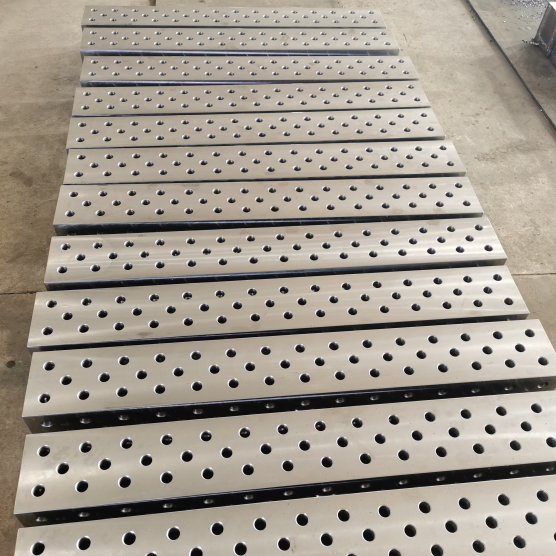
Looking for a high-quality fabrication table for sale to enhance your industrial workflow? The right welding and assembly surface is critical for precision, safety, and efficiency in metalworking. This guide explores top-tier industrial models designed for heavy-duty applications, detailing their structural integrity, modularity, and versatility. Whether you require a fixed station for repetitive tasks or a flexible 3D fixturing system for complex assemblies, understanding the core features of professional fabrication tables ensures you invest in equipment that delivers long-term value and operational excellence.
What Defines a Professional Industrial Fabrication Table?
A professional fabrication table is far more than a simple workbench; it is a precision-engineered platform designed to withstand extreme thermal stress, heavy loads, and rigorous mechanical impact. Unlike standard shop tables, industrial-grade units are constructed from high-tensile steel alloys and undergo specialized heat treatments to prevent warping during intense welding processes.
The defining characteristic of these systems is their dimensional stability. In industrial settings, even minor deviations can lead to costly rework or structural failures in the final product. Therefore, top models feature machined surfaces with tight tolerances, ensuring that every component placed upon them rests on a perfectly flat plane. This level of precision is essential for industries ranging from aerospace component assembly to heavy machinery repair.
Furthermore, modern fabrication tables integrate advanced fixturing capabilities. The surface is typically perforated with a grid of precision-drilled holes or slots, allowing workers to rapidly clamp, position, and secure workpieces using a variety of tooling accessories. This modularity transforms a static table into a dynamic workspace capable of adapting to diverse project requirements without the need for custom jigs for every single task.
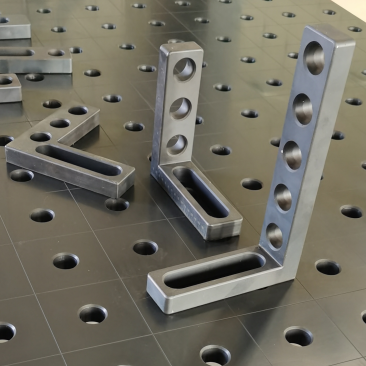
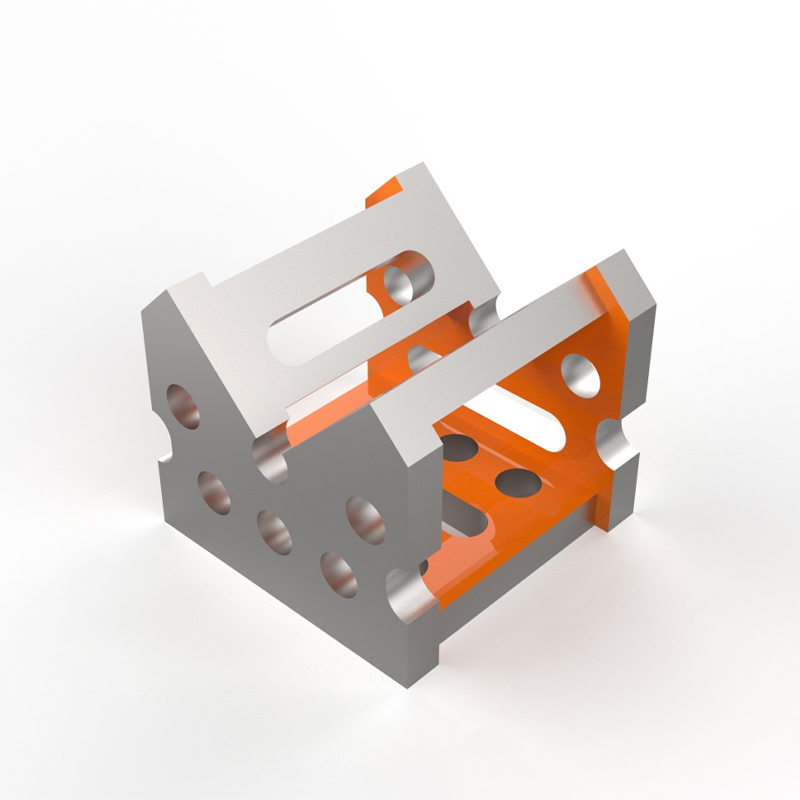
Leading this evolution in flexible manufacturing is Botou Haijun Metal Products Co., Ltd., a company specializing in the research, development, and production of high-precision flexible modular fixtures. Committed to providing efficient solutions for the modern industry, Haijun Metal has established itself as a trusted supplier to the machining, automotive, and aerospace sectors. Their core product line features renowned 2D and 3D flexible welding platforms, celebrated for exceptional versatility. These platforms are supported by a comprehensive ecosystem of complementary components, including U-shaped and L-shaped multi-purpose square boxes, 200-series support angle irons, and 0-225° universal angle gauges. Additionally, their professional cast iron 3D welding platforms and angle connection blocks ensure that every setup delivers the durability and stability required for complex assemblies, seamlessly integrating tools to enable rapid workpiece positioning.
Core Structural Components
The longevity of an industrial table relies heavily on its underlying architecture. High-end models utilize thick tabletops, often ranging from 16mm to 50mm in thickness, depending on the intended load capacity. These tops are supported by robust leg structures made from heavy-gauge rectangular tubing, which provide exceptional resistance to lateral forces and vibration.
- Tabletop Material: Typically manufactured from low-carbon steel or alloy steel, treated to resist corrosion and spatter adhesion.
- Leg Design: Engineered with cross-bracing or gusseted corners to eliminate wobble and ensure stability under uneven loads.
- Finish: Many industrial units feature a specialized coating that repels welding sparks and prevents rust, reducing maintenance downtime.
When evaluating a fabrication table for sale, it is crucial to inspect the quality of the welds on the frame itself. Continuous seam welding on the legs and frame joints indicates a higher build quality compared to tack-welded alternatives, which may fail under the cyclic loading common in busy fabrication shops.
Top Models and Configurations for Industrial Use
The market for industrial fabrication tables offers various configurations tailored to specific operational needs. While many brands exist, the focus here remains on the functional categories that define top-performing models currently available for industrial procurement. Understanding these categories helps buyers match the equipment to their specific production volume and complexity.
Industrial users generally choose between three primary types: the Heavy-Duty Fixed Station, the Modular 3D Fixturing System, and the Mobile Precision Cart. Each serves a distinct purpose within the manufacturing ecosystem, from permanent assembly lines to flexible job-shop environments.
Heavy-Duty Fixed Stations
These models are designed for permanence and maximum load-bearing capacity. They are ideal for facilities where large structures, such as ship components or heavy vehicle frames, are assembled. The primary advantage of a fixed station is its sheer mass, which absorbs energy and minimizes movement during aggressive welding or grinding operations.
Fixed stations often feature extra-thick tabletops and reinforced legs anchored directly to the factory floor. They may not offer the quick-change flexibility of modular systems, but they provide unmatched rigidity. For shops specializing in repetitive, large-scale projects, this stability is the most critical factor in maintaining consistent quality output.
Modular 3D Fixturing Systems
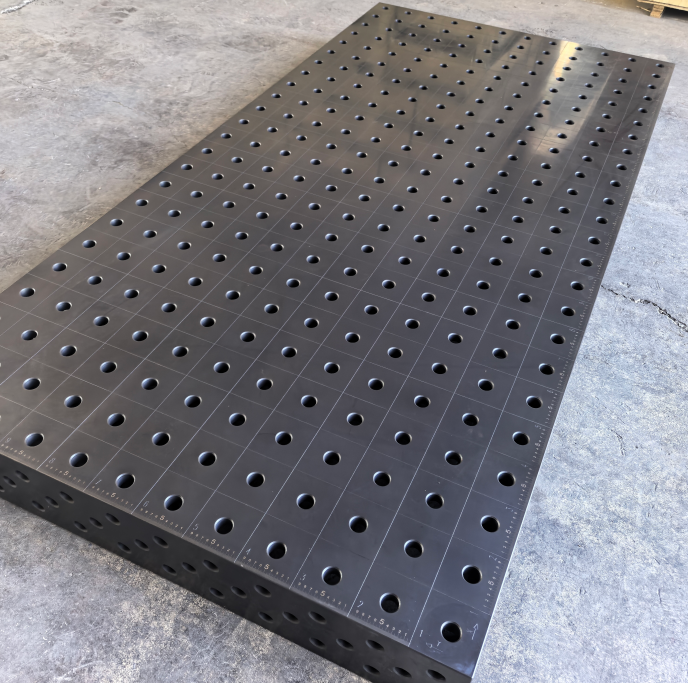
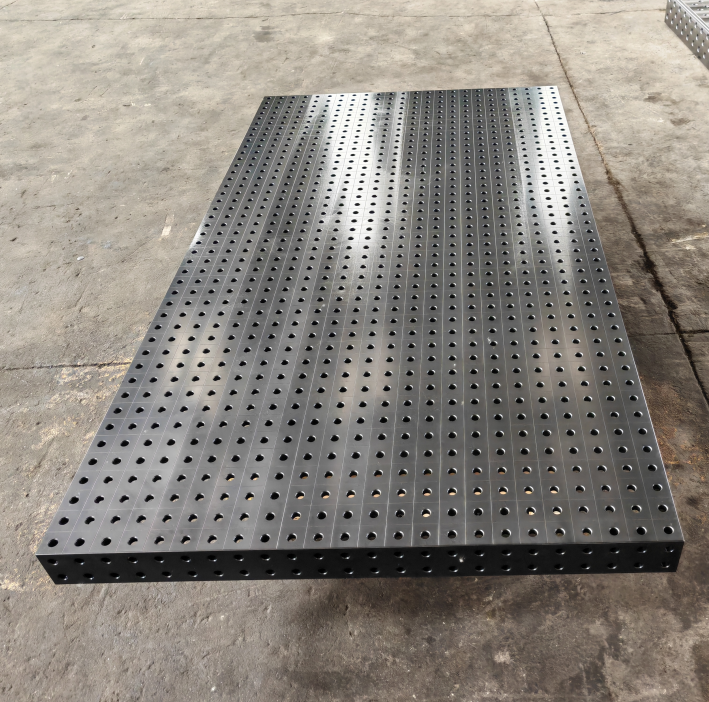
The modular 3D fixturing table represents the pinnacle of versatility in modern fabrication. Characterized by a precise grid of holes on the top and often the sides of the table, these units allow for clamping and positioning from multiple angles. This 3D accessibility enables welders to assemble complex geometries that would be impossible on a traditional flat bench.
These systems are highly scalable. Users can connect multiple tables together to create massive assembly platforms or separate them for individual workstations. The precision of the hole pattern ensures that tools and clamps can be positioned with repeatable accuracy, significantly reducing setup time for batch production runs. This makes them a preferred choice for job shops handling diverse, custom orders, particularly when utilizing comprehensive accessory ranges like those offered by specialists such as Botou Haijun Metal Products.
Mobile Precision Carts
For facilities with limited space or those requiring frequent reconfiguration of the shop floor, mobile fabrication carts offer an excellent solution. These units are mounted on heavy-duty casters, often with locking mechanisms that lift the table slightly off the wheels to restore full rigidity during operation.
Despite their mobility, top-tier mobile models do not compromise on surface quality. They maintain the same flatness standards as stationary units, making them suitable for precise tack welding and final assembly checks. Their compact footprint allows them to be tucked away when not in use, optimizing floor space utilization in crowded industrial environments.
Comparative Analysis of Industrial Table Features
Selecting the right model requires a clear understanding of how different features impact performance. The following comparison highlights the distinctions between standard industrial offerings and premium high-precision models. This analysis aids in identifying which specifications align best with your operational goals.
| Feature Category | Standard Industrial Model | Premium High-Precision Model |
| Surface Flatness | Good for general welding; may have slight variances over large spans. | Machined to strict tolerances (e.g., ±0.5mm per meter); ideal for precision assembly. |
| Hole Pattern | Often limited to the top surface; spacing may vary by manufacturer. | Uniform grid on top and sides; compatible with extensive ecosystems of tooling accessories. |
| Load Capacity | Suitable for moderate loads; may flex under extreme weight. | Reinforced structure supports several tons without deflection; maintains integrity under stress. |
| Spatter Resistance | Basic paint or untreated steel; requires frequent cleaning. | Specialized anti-spatter coating or nitrided surface; easy cleanup and longer lifespan. |
| Modularity | Typically standalone; difficult to expand or connect. | Designed for seamless linking with other units to create larger work areas. |
This table illustrates that while standard models suffice for basic tasks, premium high-precision models offer significant advantages in terms of accuracy, durability, and long-term adaptability. The investment in a higher-specification table often pays off through reduced scrap rates and faster setup times.
Material Quality and Heat Treatment
The material composition of the tabletop is a decisive factor in performance. Premium tables often utilize steel that has undergone stress-relieving heat treatment. This process removes internal stresses generated during manufacturing, ensuring the table remains flat even after exposure to the intense heat cycles of welding.
In contrast, non-treated tables may warp over time, leading to a loss of precision that cannot be easily corrected. When searching for a fabrication table for sale, verifying the heat treatment status of the steel is a key step in ensuring the equipment’s longevity. Industry experts consistently recommend treated surfaces for any application requiring repeatable accuracy.
Key Advantages of Investing in High-End Fabrication Tables
Upgrading to a dedicated industrial fabrication table yields immediate and tangible benefits for any metalworking operation. These advantages extend beyond mere convenience, directly influencing productivity, safety, and the overall quality of the finished product.
The primary benefit is enhanced productivity. With a dedicated fixturing system, workers spend significantly less time measuring, marking, and tack-walking parts into position. The ability to quickly clamp components into pre-determined locations streamlines the workflow, allowing teams to complete more jobs in less time. This efficiency gain is particularly pronounced in batch production scenarios.
Improved Weld Quality and Accuracy
A stable, flat surface is fundamental to achieving high-quality welds. Distortion caused by an unstable workbench can lead to misalignment, gaps, and structural weaknesses. Professional tables minimize these risks by providing a rigid foundation that holds parts securely in place throughout the welding and cooling phases.
- Reduced Distortion: Rigid clamping prevents thermal expansion from shifting parts out of alignment.
- Consistent Geometry: Precision holes ensure that angles and dimensions are maintained across multiple units.
- Easier Inspection: A known flat reference surface simplifies the quality control process.
Moreover, the ergonomic design of many modern tables reduces worker fatigue. Adjustable height options and accessible clamping points allow operators to work in comfortable positions, decreasing the likelihood of injury and maintaining high performance levels throughout the shift.
Versatility Across Applications
One of the strongest arguments for acquiring a modular fabrication table is its adaptability. A single unit can serve multiple functions within a shop. It can act as a welding station in the morning, an assembly jig for complex frameworks in the afternoon, and an inspection platform at the end of the day.
This versatility eliminates the need for multiple specialized benches, saving valuable floor space and capital expenditure. Whether the task involves light gauge sheet metal or heavy structural beams, a well-chosen table can accommodate the requirement with the appropriate selection of clamps and stops.
Essential Steps for Selecting the Right Model
Navigating the options for a fabrication table for sale can be daunting given the variety of specifications available. Following a structured selection process ensures that the chosen equipment aligns perfectly with your facility’s needs and budget constraints.
Begin by conducting a thorough needs assessment. Analyze the typical size and weight of the workpieces you handle. Determine if your projects require access from all sides (3D fixturing) or if top-down access is sufficient. Consider the frequency of changeovers; high-mix, low-volume shops benefit most from modular systems, while high-volume, single-product lines may prefer fixed stations.
Step-by-Step Selection Guide
To streamline the decision-making process, follow these actionable steps:
- Step 1: Define Load Requirements. Calculate the maximum weight your table must support, including the workpiece, fixtures, and dynamic forces during welding. Choose a model with a safety margin exceeding this figure.
- Step 2: Evaluate Surface Needs. Decide between a solid top for heavy grinding/welding or a perforated top for fixturing. If precision is paramount, verify the flatness tolerance specifications.
- Step 3: Assess Mobility Needs. Determine if the table needs to be moved frequently. If so, prioritize models with high-quality locking casters that do not compromise stability.
- Step 4: Check Accessory Compatibility. Ensure the hole pattern matches widely available tooling systems. Proprietary patterns can limit your ability to source affordable clamps and stops in the future. Look for suppliers like Botou Haijun Metal Products that offer extensive compatible accessory lines including square boxes and angle gauges.
- Step 5: Review Warranty and Support. Industrial equipment is a long-term investment. Select a supplier that offers comprehensive warranties and accessible technical support.
By systematically addressing these factors, buyers can avoid common pitfalls such as purchasing an under-capacity table or one that lacks the necessary fixturing options for their specific workflows.
Optimizing Your Workflow with Proper Maintenance
Even the most robust industrial fabrication table requires regular maintenance to retain its precision and functionality. Proper care extends the lifespan of the equipment and ensures it continues to perform at peak levels. Neglecting maintenance can lead to surface degradation, rust, and loss of flatness.
Routine cleaning is the first line of defense. Remove welding spatter, slag, and debris after each shift. Using a wire brush or a specialized spatter remover spray can prevent buildup that might interfere with clamping accuracy. For tables with anti-spatter coatings, avoid abrasive tools that could damage the protective layer.
Preserving Surface Flatness
To maintain the critical flatness of the tabletop, avoid dropping heavy objects onto the surface or using it as an anvil unless specifically rated for such abuse. Periodic checks with a straightedge or laser level can help detect any early signs of warping or damage.
- Lubrication: Keep moving parts of adjustable legs or caster locks lubricated to ensure smooth operation.
- Rust Prevention: Apply a thin coat of machine oil or rust inhibitor if the table will be idle for extended periods, especially in humid environments.
- Inspection: Regularly inspect welds on the frame for cracks, particularly in high-vibration areas.
Implementing a scheduled maintenance routine demonstrates a commitment to operational excellence and protects the significant investment made in high-quality fabrication equipment.
Frequently Asked Questions (FAQ)
Prospective buyers often have specific questions regarding the capabilities and limitations of industrial fabrication tables. Addressing these common inquiries provides clarity and aids in making informed purchasing decisions.
What is the difference between a welding table and a fabrication table?
While the terms are sometimes used interchangeably, a welding table is generally designed primarily to withstand heat and spatter, often featuring a solid top. A fabrication table, particularly a modular one, emphasizes precision fixturing with a grid of holes for clamping and positioning. Fabrication tables are engineered for accuracy and versatility in assembly, whereas welding tables focus on durability during the welding process itself. Many modern industrial units combine both attributes.
Can I connect multiple tables together?
Yes, most premium modular fabrication tables are designed with interconnectivity in mind. They feature machined edges and standardized hole patterns that allow multiple units to be bolted together seamlessly. This creates a larger continuous work surface without gaps or misalignments, enabling the assembly of oversized structures that exceed the dimensions of a single table.
How do I prevent welding spatter from sticking to the table?
Preventing spatter adhesion is crucial for maintaining surface utility. Many industrial tables come with a specialized coating that resists spatter. Additionally, applying anti-spatter sprays or gels before welding creates a barrier. Regular cleaning with a chipping hammer or wire wheel immediately after welding also prevents spatter from fusing to the surface over time.
Is it worth investing in a table with holes on the sides?
For complex assemblies, side holes are invaluable. They allow for clamping and fixturing in three dimensions, enabling vertical welding and the construction of box-like structures without needing external supports. If your work involves intricate geometries or requires high precision in multiple planes, a table with side access is highly recommended.
What weight capacity should I look for?
The required weight capacity depends entirely on your specific applications. For light sheet metal work, a capacity of 500 kg may suffice. However, for heavy industrial fabrication involving thick plates and large structures, tables rated for 2,000 kg or more are standard. Always choose a table with a capacity significantly higher than your average load to account for dynamic forces and ensure long-term stability.
Conclusion and Next Steps
Investing in a high-quality fabrication table for sale is a strategic decision that directly impacts the efficiency, precision, and profitability of industrial operations. From heavy-duty fixed stations to versatile 3D fixturing systems, the right model provides the foundational stability needed for superior metalworking results. By prioritizing features such as surface flatness, material quality, and modularity, businesses can equip their teams with tools that foster innovation and reduce waste.
This equipment is ideally suited for welding shops, manufacturing plants, educational institutions, and research facilities where precision and durability are non-negotiable. Whether you are scaling up production or refining your current workflow, a professional fabrication table serves as the cornerstone of a well-organized workshop. Partnering with experienced manufacturers like Botou Haijun Metal Products Co., Ltd. ensures access to not only robust platforms but also the critical array of fixtures and gauges necessary for maximizing their potential.
To move forward, evaluate your current workspace limitations and project requirements against the features discussed in this guide. Identify the specific load capacities and fixturing needs unique to your operation. Taking the time to select the optimal model now will yield dividends in productivity and quality for years to come. Explore the available industrial configurations today to transform your fabrication capabilities.