Why Your Current Welding Setup Fails in 2026
Sparks fly, heat radiates, and heavy steel slams down; your current work surface groans under the pressure. Most shops still rely on makeshift tables built from scrap I-beams or hollow commercial benches that warp after six months of intense thermal cycling. We have inspected hundreds of fabrication floors across North America and Europe, and the pattern remains consistent: poor surface flatness leads to assembly errors, while inadequate grounding causes arc instability. You need a dedicated welding bench top engineered for modern high-amperage processes and robotic integration. Buying the right platform today determines your throughput tomorrow. As we approach 2026, material science advancements and stricter safety regulations redefine what constitutes a professional workspace. This guide cuts through marketing fluff to deliver hard data on metallurgy, pricing trends, and sourcing strategies directly from China’s leading manufacturers. Whether you run a small job shop or manage a large-scale production line, understanding these specifics saves money and prevents costly downtime.
Operators often overlook the critical role of the table surface itself, focusing instead on power sources or torches. Yet, the bench acts as the third hand, the ground plane, and the precision reference all at once. A warped surface ruins fit-up tolerances, forcing welders to spend hours grinding rather than joining. Thermal expansion coefficients matter immensely when working with stainless steel versus carbon steel. Our field tests reveal that tables lacking proper stress-relieving treatments develop permanent crowns within weeks of daily use. Furthermore, the rise of collaborative robots (cobots) in 2025 demands surfaces with exact hole patterns and rigid mounting points that generic tables cannot provide. If your current setup requires shimming every few inches, you lose efficiency immediately. The market floods with cheap imports claiming “industrial grade” status, but few meet the actual ASTM or ISO standards required for heavy fabrication. We analyze real-world performance metrics to help you distinguish genuine quality from painted mild steel.
Cost pressures drive many purchasing managers toward the lowest bidder, a strategy that backfires when replacement costs hit within a year. Direct sourcing from specialized Chinese manufacturers offers a viable path to premium quality at competitive rates, provided you know what specifications to demand. Lead times have stabilized post-supply chain disruptions, yet customization options remain limited to those who understand the manufacturing process. You must verify material certifications, welding procedures, and finishing protocols before signing a purchase order. This article serves as your technical blueprint for navigating the 2026 marketplace. We examine why specific alloy compositions outperform others, how modular fixturing systems integrate with modern workflows, and where to find the best value without sacrificing durability. Prepare to upgrade your shop floor with confidence.
Metallurgy Matters: Selecting the Right Material for 2026 Demands
Choosing the correct base material defines the lifespan and utility of your welding bench top. In 2026, three primary alloys dominate the high-end fabrication sector: low-carbon structural steel (Q345B/SS400), stainless steel (304/316L), and specialized cast iron composites. Each serves distinct applications, and mixing them up leads to catastrophic failures in precision or corrosion resistance. Low-carbon steel remains the industry workhorse for general fabrication due to its excellent weldability and cost-effectiveness. Manufacturers now subject these plates to vibratory stress relief (VSR) or thermal ovens to eliminate internal tensions caused by rolling and cutting. Without this step, the table distorts as soon as you lay down your first bead. We specify a minimum thickness of 16mm for manual welding and 20mm+ for robotic cells to prevent deflection under heavy loads.
Stainless steel surfaces gain traction in food processing equipment manufacturing and pharmaceutical piping where contamination risks exist. These tops resist spatter adhesion better than carbon steel, reducing cleanup time significantly. However, they cost three times more and require specific shielding gases to prevent sugaring on the underside. For high-precision jigging, cast iron offers superior damping characteristics, absorbing vibrations that affect measurement accuracy. Some 2026 models combine a cast iron core with a hardened steel face plate, merging stability with durability. Avoid aluminum tables for heavy arc welding; their high thermal conductivity dissipates heat too quickly, causing lack-of-fusion defects, and their softness invites damage from dropped tools. Always request a Mill Test Report (MTR) verifying chemical composition and mechanical properties before shipment.
Surface hardness directly impacts spatter removal efficiency. Soft scales allow spatter to fuse deeply, requiring aggressive grinding that damages the table geometry over time. Hardened surfaces, often treated with nitriding or induction hardening, let spatter pop off with a simple chisel tap. Chinese exporters now offer dual-hardness configurations: a soft center for drilling custom holes and hardened edges for clamping. This hybrid approach maximizes versatility. Flatness tolerance stands as another non-negotiable metric. Top-tier suppliers guarantee ±0.5mm over any 2-meter span, adhering to DIN 8580 standards. Cheaper alternatives often drift to ±3mm or worse, rendering them useless for precision assembly. Inspect sample coupons or visit the factory if possible; visual checks alone miss subsurface defects. Prioritize vendors who document their flattening processes, whether via CNC milling or hand scraping.
Corrosion protection extends beyond paint. Powder coating provides a decent barrier but chips easily under hammer strikes, exposing bare metal to rust. Galvanizing offers robust protection but creates a rough texture unsuitable for precision sliding of fixtures. The 2026 trend favors clear oil coatings or specialized ceramic sprays that repel moisture without altering surface friction. For outdoor usage, hot-dip galvanizing remains the only viable option despite textural drawbacks. Consider your environment carefully; a humid coastal facility demands different protections than a climate-controlled indoor shop. We recommend applying a thin film of anti-spatter spray regularly to maintain surface integrity regardless of the base finish. Proper maintenance doubles the service life of even the most basic steel tops. Neglecting this aspect turns a premium investment into a rusty eyesore within two years.
Weight distribution influences portability versus stability. Heavy tables stay put during aggressive grinding but require forklifts for relocation. Modular designs with bolt-together legs solve this dilemma, allowing disassembly for transport while maintaining rigidity when assembled. Look for leg interfaces machined to match the tabletop perfectly; gaps here introduce wobble. Reinforced gussets at leg corners add crucial torsional stiffness. In robotic applications, the table must support dynamic loads without resonating. Finite Element Analysis (FEA) reports from manufacturers demonstrate how specific ribbing patterns optimize strength-to-weight ratios. Do not accept generic designs for specialized tasks. Custom ribbing costs marginally more upfront but prevents structural fatigue failures later. Evaluate the total system, not just the top plate, to ensure long-term reliability.
Pricing Dynamics and Sourcing Directly from China in 2026
Navigating the global supply chain for industrial equipment requires sharp insight into raw material fluctuations and logistics costs. Steel prices in early 2026 show moderate volatility due to energy costs and environmental tariffs, yet Chinese manufacturers maintain competitive edges through vertical integration. Many top factories control their own steel mills, rolling lines, and machining centers, buffering them against market spikes. When you buy welding bench top units directly from these sources, you bypass domestic markups that often inflate prices by 40-60%. However, landing cost involves more than the FOB price. You must calculate duties, ocean freight, insurance, and inland delivery to your dock. A $2,000 table might land at $3,500 after all fees, still cheaper than local equivalents but requiring careful budgeting. Transparent suppliers provide detailed breakdowns separating material, labor, and finishing costs.
Quality variance among Chinese exporters remains wide. Coastal provinces like Jiangsu and Shandong host clusters of specialized fabricators with export experience, while inland workshops may lack rigorous QC protocols. Verify ISO 9001 certification and request video audits of the production line. Reputable firms showcase their CNC gantry mills, robotic welding arms, and testing equipment openly. Beware of trading companies posing as factories; they add margins without adding value and often obscure the true origin of goods. Ask for the factory address and cross-reference it with business licenses. Direct communication with engineers clarifies technical capabilities faster than sales agents. We advise starting with a sample order to validate build quality before committing to bulk purchases. This small investment mitigates the risk of receiving substandard batches.
Customization drives value in direct sourcing. Domestic catalogs limit choices to standard sizes and hole patterns, whereas Chinese manufacturers thrive on bespoke requests. Need a unique grid spacing for proprietary fixtures? Require integrated T-slots alongside threaded holes? Specify these details early in the design phase. MOQs (Minimum Order Quantities) for custom runs have dropped, with some factories accepting single-unit orders for premium clients. Lead times average 4-6 weeks for standard items and 8-10 weeks for complex customs. Factor in shipping duration, which varies by route; trans-Pacific shipments currently average 25-35 days door-to-door. Plan your procurement cycle accordingly to avoid project delays. Clear technical drawings with GD&T (Geometric Dimensioning and Tolerancing) annotations prevent misinterpretation and rework.
Payment terms evolve to balance risk between buyer and seller. Traditional 30% deposit and 70% before shipment remains common, but Letters of Credit (LC) offer security for larger orders. Escrow services via platforms like Alibaba Trade Assurance provide an extra layer of protection, releasing funds only upon inspection approval. Never wire 100% upfront to unknown entities. Insist on third-party inspection agencies like SGS or BV to verify dimensions, weld quality, and packaging before loading. These inspectors catch issues like uneven leg lengths or poor paint adhesion that photos miss. Their reports serve as leverage for negotiating discounts or demanding rework. Building a relationship based on transparency fosters better service and priority scheduling during peak seasons. Treat your supplier as a partner, not just a vendor.
Tariff landscapes shift frequently, impacting final landed costs. Section 301 tariffs on Chinese steel products fluctuate based on trade negotiations, so monitor updates from the U.S. International Trade Commission or relevant local authorities. Some importers utilize bonded warehouses or free trade zones to defer duties until goods enter domestic commerce. Classify your goods correctly under HS Code 7326.90 (other articles of iron or steel) to avoid penalties. Misclassification triggers audits and fines. Engage a licensed customs broker familiar with industrial machinery to handle clearance efficiently. They navigate paperwork complexities and ensure compliance with safety standards like CE or UL if required. Proactive planning transforms potential regulatory hurdles into manageable steps. Stay informed to protect your margins.
Technical Integration: Fixturing, Grounding, and Automation Readiness
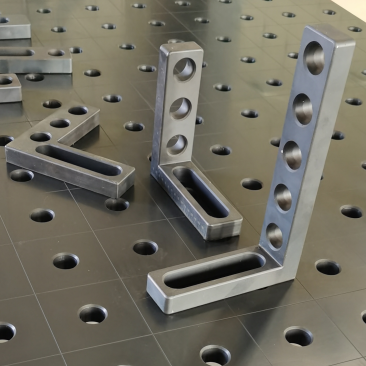
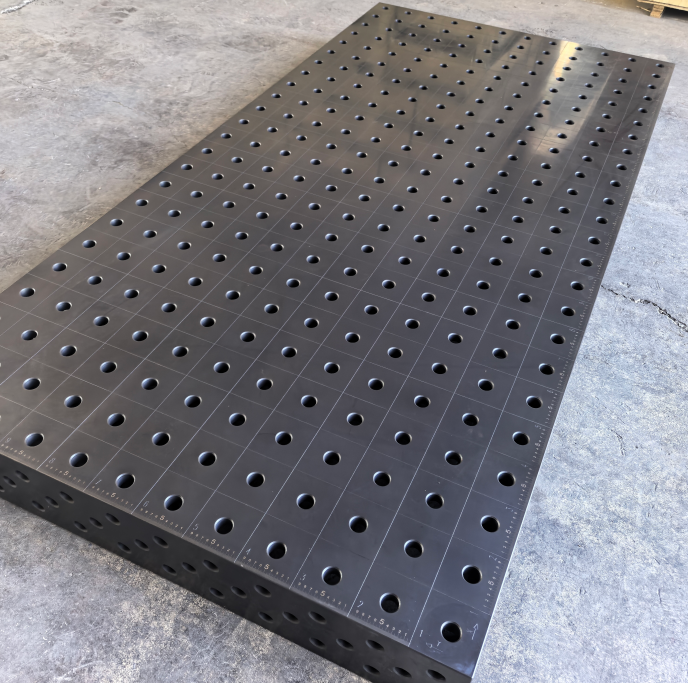
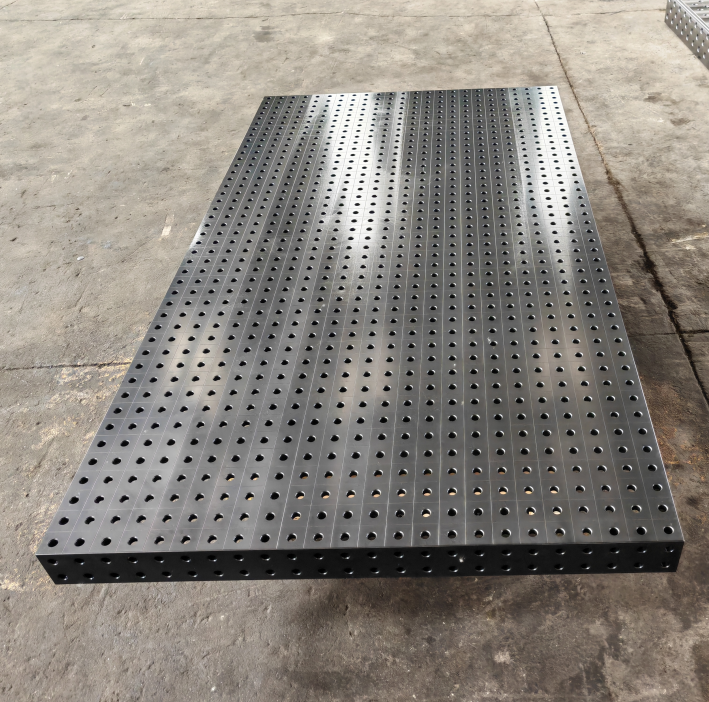
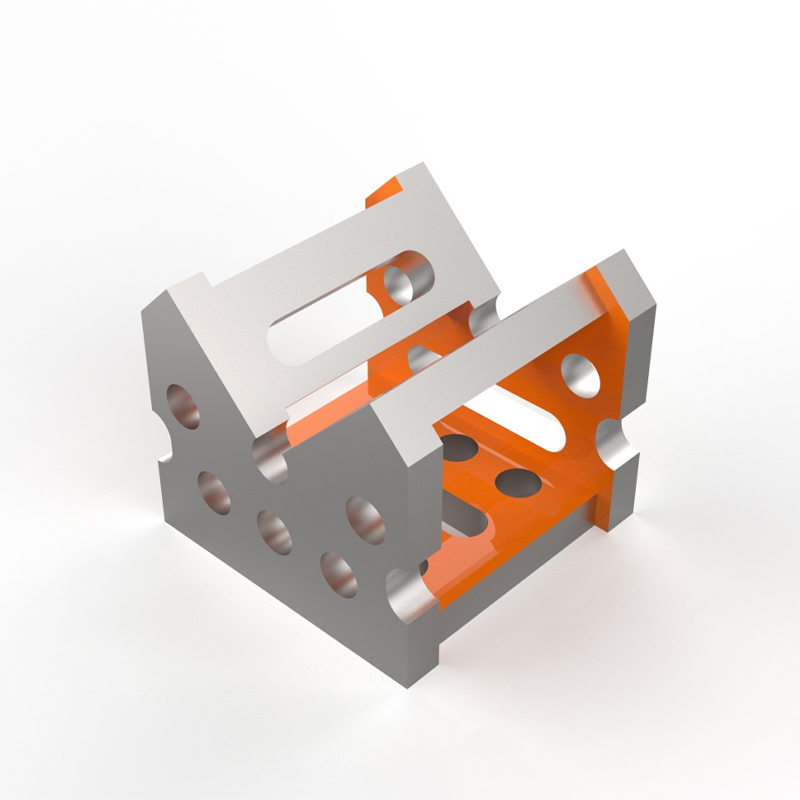
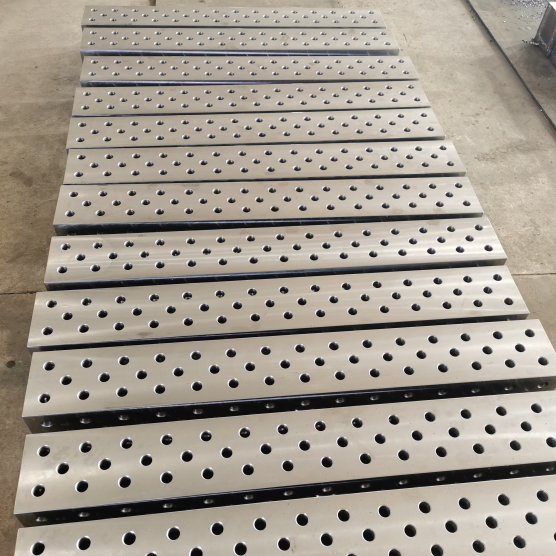
Modern welding benches function as active components in the fabrication ecosystem, not passive supports. The integration of fixturing systems dictates workflow speed and repeatability. Standard 16mm or 28mm hole grids allow rapid placement of stops, clamps, and angles without measuring. Precision-machined holes with tight tolerances (H7/g6) ensure accessories lock securely without play. Loose fittings cause assembly drift, ruining part accuracy. Invest in a comprehensive kit of tooling compatible with your table’s pattern; mismatched systems waste time and frustrate operators. Modular fixturing enables quick changeovers between jobs, essential for high-mix low-volume production. Document your fixture layouts digitally to replicate setups instantly for repeat orders. This digital twin approach reduces setup time by up to 70%.
Electrical grounding represents a critical safety and performance factor often neglected in table design. Arc stability depends on a low-resistance path from the workpiece to the power source. Tables with multiple dedicated grounding points distributed across the surface minimize voltage drop and prevent stray arcs. Painted or coated surfaces insulate the workpiece unless you grind contact points manually, a tedious and inconsistent practice. Premium tables feature bare metal strips or copper inserts specifically for ground clamps. Ensure your main ground cable connects directly to the table frame with a heavy-duty lug. Regularly clean connection points to remove oxidation and spatter buildup. Poor grounding leads to erratic arcs, porosity, and increased electrode consumption. Treat electrical connectivity with the same rigor as mechanical flatness.
Automation readiness separates future-proof assets from obsolete furniture. Collaborative robots require rigid mounting surfaces with precise reference datums. Tables designed for cobots include threaded inserts arranged in known coordinates, allowing repeatable robot base installation. Vibration damping becomes crucial here; excessive shake affects robot path accuracy and sensor readings. Some 2026 models incorporate honeycomb cores or polymer-concrete layers to absorb high-frequency vibrations. Cable management channels routed through legs keep hoses organized and protected from sparks. Wireless charging pads embedded in the surface power mobile sensors or tablets, reducing trip hazards. Evaluate your automation roadmap before selecting a table; retrofitting later proves difficult and expensive. Align your hardware investments with your long-term strategic goals.
Ergonomics influence operator health and productivity. Adjustable height legs accommodate workers of different statures, reducing back strain during long shifts. Electric lift columns offer smooth transitions between sitting and standing positions, though they increase cost and complexity. Manual screw adjustments provide a budget-friendly alternative with sufficient stability for most applications. Consider the working height relative to your typical parts; too low forces bending, too high limits leverage. Anti-fatigue mats complement adjustable tables but do not replace proper positioning. Lighting integration, such as LED strips mounted under the table lip, illuminates dark joints without casting shadows. Small enhancements compound to create a safer, more efficient environment. Prioritize human factors alongside technical specs.
Maintenance protocols preserve table functionality over decades. Establish a routine cleaning schedule to remove spatter, dust, and oil. Use pneumatic chisels for heavy spatter removal and wire brushes for light cleaning. Avoid abrasive discs that remove base metal and alter flatness. Lubricate moving parts on adjustable legs annually to prevent seizing. Inspect welds on the frame periodically for cracks, especially near high-stress corners. Touch up paint or oil coatings to prevent rust spread. Train staff on proper usage; hammering directly on precision surfaces degrades them rapidly. Provide sacrificial plates for heavy beating tasks. A well-maintained table retains resale value and continues delivering precision year after year. Discipline in upkeep pays dividends in operational consistency.
Frequently Asked Questions (FAQ)
What thickness should my welding bench top be?
For manual welding applications, a minimum thickness of 16mm (5/8 inch) ensures sufficient heat sink capacity and prevents warping. Robotic cells or heavy fabrication tasks benefit from 20mm to 25mm plates to handle dynamic loads and maintain flatness under continuous use. Thinner materials deflect easily, compromising precision.
How do I prevent rust on my welding table?
Apply a thin coat of specialized anti-spatter oil or dry lubricant after each shift to create a moisture barrier. Avoid standard paints on the working surface as they chip and contaminate welds. For long-term storage, use vapor corrosion inhibitor (VCI) paper or desiccants in enclosed spaces.
Can I drill new holes in a hardened welding table?
Drilling hardened steel requires cobalt or carbide bits and slow speeds to avoid bit breakage. It is better to plan your hole pattern beforehand or choose a table with a soft-core/hard-face design that allows modification. Attempting to drill fully hardened plates often results in ruined tools and damaged surfaces.
Why is my arc unstable on a new table?
Unstable arcs usually stem from poor grounding connections rather than the table material itself. Ensure your ground clamp bites into bare metal, free of paint, oil, or scale. Check that the table frame connects solidly to the power source ground terminal with adequate gauge cabling.
Is it worth buying a welding table from China?
Yes, if you vet the manufacturer thoroughly and account for shipping and duties. Direct sourcing offers significant cost savings and customization options unavailable domestically. Verify certifications, request samples, and use secure payment methods to mitigate risks associated with international trade.
Final Verdict: Investing in Precision for the Future
Your choice of work surface dictates the ceiling of your fabrication capability. Settling for warped, undersized, or poorly grounded tables caps your quality and slows your output. The data clearly shows that investing in a high-grade welding bench top yields immediate returns through reduced rework, faster setup times, and improved weld integrity. As we move deeper into 2026, the gap between professional-grade equipment and makeshift solutions widens. Automation, stricter safety norms, and higher client expectations leave no room for compromise. Sourcing directly from reputable Chinese manufacturers unlocks access to advanced metallurgy and custom engineering at prices that make sense for growing businesses.
Take action today by auditing your current setup against the standards outlined in this guide. Measure your flatness, check your grounding, and evaluate your fixturing flexibility. If deficiencies appear, initiate the procurement process for a replacement immediately. Request quotes from verified suppliers, ask for MTRs, and plan your logistics. Do not wait for a critical failure to force your hand. Upgrade your foundation now to build a stronger, more profitable future. The right table transforms chaos into order and potential into profit. Make the smart choice for your shop.