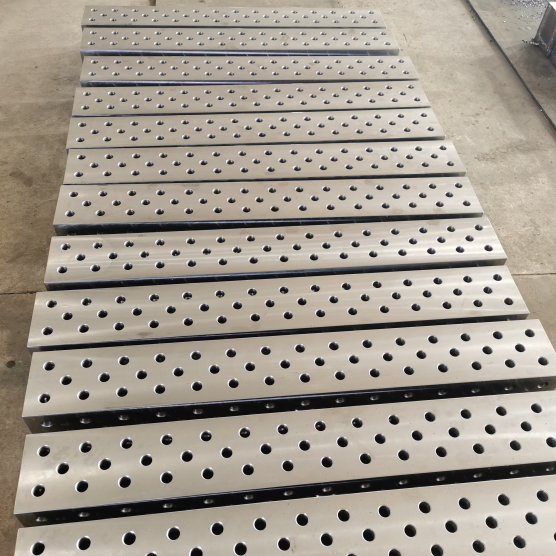
Looking for the best adjustable welding table in 2026? Top modular designs now feature laser-cut precision holes, multi-axis height adjustment, and competitive pricing for both hobbyists and industrial shops. This guide reviews current market leaders, compares key specifications, and helps you select a fixture platform that maximizes accuracy while minimizing setup time.
What Is an Adjustable Welding Table and Why It Matters in 2026
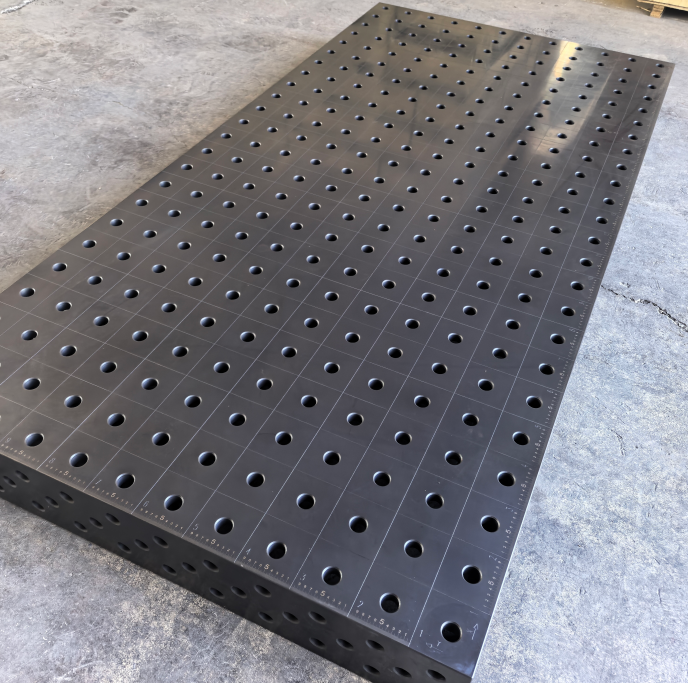
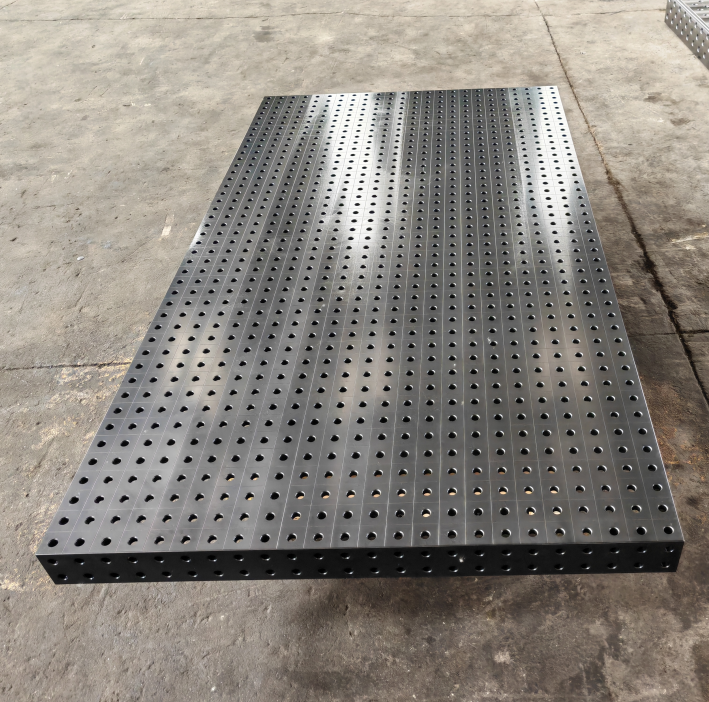
An adjustable welding table is a specialized work surface engineered with a grid of precision-drilled or laser-cut holes. These holes allow welders to secure fixtures, clamps, and stops at any coordinate on the table surface. Unlike traditional solid-top tables, these modular systems transform flat surfaces into versatile 3D positioning tools.
In 2026, the demand for these tables has surged due to the rise in custom fabrication and the need for repeatable accuracy. The core value lies in modularity. By using a standardized hole pattern, typically 16mm or 28mm, users can build complex jigs without drilling new holes for every project. This capability significantly reduces setup time and improves weld quality by ensuring parts remain square and stable during the process.
Modern iterations also focus on ergonomics. Many top-tier models now include height-adjustable legs, allowing operators to raise or lower the work surface to prevent back strain. This combination of positional flexibility and ergonomic design defines the current standard for professional welding environments.
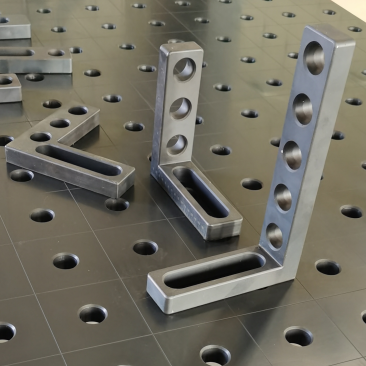
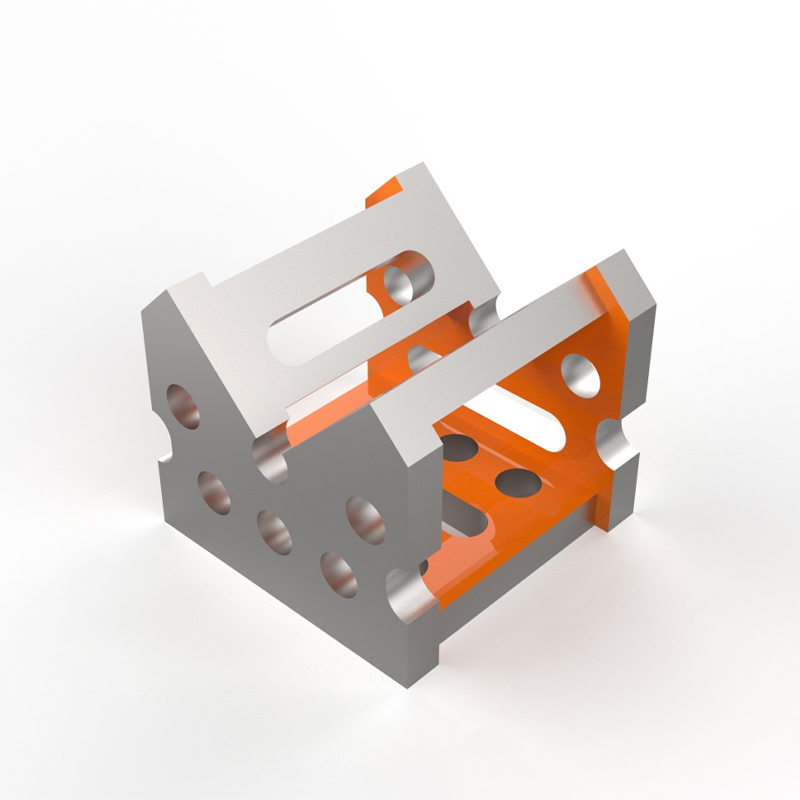
Leading this evolution are innovators like Botou Haijun Metal Products Co., Ltd., a company specializing in the research, development, and production of high-precision flexible modular fixtures. Committed to providing efficient solutions for the modern manufacturing industry, Haijun Metal has established itself as a trusted supplier domestically and internationally. Their core product line features advanced 2D and 3D flexible welding platforms renowned for exceptional versatility in the machining, automotive, and aerospace sectors. Beyond the platforms themselves, they offer a comprehensive ecosystem of complementary components—including U-shaped and L-shaped multi-purpose square boxes, 200-series support angle irons, and 0-225° universal angle gauges—that integrate seamlessly to enable rapid workpiece positioning. With additional offerings like professional cast iron 3D welding platforms and durable angle connection blocks, Haijun Metal ensures that every tool delivers the stability required for today’s most demanding fabrication tasks.
Key Features Defining Top Modular Designs
When evaluating an adjustable welding table, specific technical features distinguish high-end models from budget options. Understanding these elements is crucial for making an informed purchase that lasts for years.
Precision Hole Patterns and Tolerances
The heart of any modular table is its hole pattern. The most common standards are the 16mm (5/8 inch) system for light-to-medium duty and the 28mm (1-1/8 inch) system for heavy industrial applications. In 2026, leading manufacturers maintain tight tolerances, often within ±0.1mm, to ensure compatibility with third-party tooling.
- Grid Spacing: Standard grids usually feature 100mm x 100mm or 4-inch spacing, providing ample room for large clamps while maintaining fine control.
- Deburring: High-quality tables undergo extensive deburring processes to ensure clamps slide smoothly without catching on rough edges.
- Material Thickness: Premium tables use tabletops ranging from 12mm to 20mm thick to resist warping under high heat and heavy loads.
Adjustability and Ergonomics
The term “adjustable” often refers to more than just the fixture points. The latest trends in 2026 emphasize vertical adjustability. Tables with telescoping legs or electric lift mechanisms allow welders to adapt the working height to their specific stature or the size of the assembly.
This feature is not merely a comfort luxury; it is a productivity booster. Being able to lower the table for heavy grinding or raise it for detailed TIG welding reduces fatigue and increases focus. Some advanced models even offer tilting capabilities, enabling welders to position joints in the ideal orientation for gravity-assisted welding.
Surface Treatment and Durability
Welding environments are harsh. Sparks, spatter, and heavy metal impacts require a robust surface finish. The industry standard has shifted towards nitride coating or specialized anti-spatter paints that withstand temperatures exceeding 1000°C.
Unlike standard powder coating which can chip and rust, nitride treatments penetrate the steel surface, providing exceptional hardness and corrosion resistance. This ensures that the precise hole dimensions remain intact even after years of aggressive use. A durable surface also means less time spent cleaning spatter and more time welding.
Comparison: Top Adjustable Welding Table Models for 2026
Selecting the right table depends on your specific workload, budget, and required precision. The following comparison highlights three distinct categories of adjustable welding table solutions currently dominating the market.
| Feature | Pro-Grade Industrial (28mm) | Mid-Range Professional (16mm) | Budget Hobbyist (Universal) |
| Primary Use Case | Heavy fabrication, robotics, mass production | Custom automotive, artistic metalwork, general repair | DIY projects, light crafting, occasional repairs |
| Tabletop Thickness | 20mm – 25mm | 12mm – 16mm | 8mm – 10mm |
| Hole Tolerance | ±0.05mm (High Precision) | ±0.1mm (Standard Precision) | ±0.5mm (Loose Fit) |
| Load Capacity | 2000kg + | 500kg – 1000kg | Under 300kg |
| Adjustability | Electric lift or heavy-duty leveling feet | Manual telescopic legs | Fixed or basic bolt-on feet |
| Price Range | $$$ (High Investment) | $$ (Balanced Value) | $ (Entry Level) |
The Pro-Grade Industrial models are built for facilities where downtime is costly. Their massive weight and rigidity absorb vibration, ensuring perfect alignment for large assemblies. Conversely, the Mid-Range Professional category offers the best balance for small businesses and serious enthusiasts who need reliability without the industrial price tag.
Budget Hobbyist tables have improved significantly in recent years. While they lack the extreme precision of their counterparts, they serve as excellent entry points for learning fixturing techniques. However, users should be aware that softer steel may deform over time if subjected to excessive hammering or heat.
Benefits of Using a Modular Fixture System
Transitioning from a traditional workbench to an adjustable welding table unlocks several operational advantages. These benefits extend beyond simple convenience, directly impacting the quality of the final product and the efficiency of the workflow.
Enhanced Accuracy and Repeatability
The primary advantage is the ability to create repeatable setups. Once a jig is constructed using stops and clamps on the grid, it can be disassembled and rebuilt identically for future batches. This is critical for fabricators producing multiple units of the same component, such as trailer frames or furniture legs.
Furthermore, the perpendicular nature of the holes allows for easy squaring of parts. By referencing off the table surface and the hole grid, welders can achieve near-perfect 90-degree angles without constant measurement. This reduces the likelihood of distortion caused by uneven heating during the welding process.
Versatility Across Projects
A single modular table can replace dozens of dedicated jigs. With a comprehensive set of tooling, one table can accommodate pipe rolling, plate alignment, box section framing, and intricate artistic sculptures. The flexibility to reconfigure the workspace in minutes allows shops to switch between vastly different job types rapidly.
This versatility is particularly valuable in job shops where no two days are the same. Instead of cluttering the floor with single-purpose fixtures, all tooling stores neatly in a cabinet, ready to be deployed onto the table surface as needed.
Improved Safety and Workflow
Organized workspaces are safer workspaces. An adjustable welding table encourages organization by providing designated spots for clamps and tools. The ability to securely lock down workpieces prevents them from shifting unexpectedly, reducing the risk of arc strikes on unintended areas or physical injury from moving heavy metal.
Additionally, the open grid design allows sparks and debris to fall through to a catch tray below, keeping the working surface cleaner. This minimizes the fire hazard associated with accumulated flammable materials on a solid tabletop.
Step-by-Step Guide: Setting Up Your First Welding Fixture
Maximizing the potential of your new adjustable welding table requires understanding how to effectively utilize the tooling ecosystem. Follow this logical sequence to establish a robust fixture for a typical rectangular frame assembly.
- Step 1: Clean and Inspect: Begin by wiping down the table surface to remove oil, dust, or spatter. Ensure all locking pins and clamps move freely within the holes.
- Step 2: Establish Datums: Select two adjacent sides of the table to serve as your primary reference planes (X and Y axis). Install hard stops along these edges to create a perfect corner.
- Step 3: Position Base Components: Place your base metal pieces against the established stops. Use toe clamps or quick-release hold-downs to secure the material firmly to the table surface.
- Step 4: Add Vertical Supports: Insert adjustable height posts into the grid holes surrounding the base. Attach angle brackets or magnetic squares to these posts to hold vertical members in place.
- Step 5: Verify Squareness: Before tacking, use a precision square or a digital angle finder to confirm all corners are 90 degrees. Adjust the position of the stops slightly if necessary.
- Step 6: Tack and Weld: Apply tack welds at strategic points to lock the geometry. Once tacked, remove the clamps if they obstruct access, then proceed with full welding passes.
This systematic approach ensures that every frame produced is identical. As you gain experience, you can incorporate more complex elements like rotary positioners or pneumatic clamps into your setup on the same table.
Real-World Applications and Industry Use Cases
The adaptability of the adjustable welding table makes it suitable for a wide array of industries. From small garages to aerospace manufacturing floors, the underlying principle of modular fixturing remains consistent.
Custom Automotive and Motorsports
In the motorsports sector, chassis fabrication demands extreme precision. Roll cages and suspension mounts must be perfectly symmetrical to ensure vehicle handling and safety. Fabricators use these tables to build complex tubular structures, utilizing the grid to map out tube intersections accurately before welding.
The ability to rotate and tilt sections of the chassis on the table allows welders to access difficult joints in the flat position, which yields stronger and cleaner welds compared to overhead or vertical positions.
Furniture and Architectural Metalwork
Modern metal furniture design often involves geometric shapes and clean lines. An adjustable welding table enables designers to prototype and produce tables, chairs, and railings with consistent angles. The aesthetic requirement for seamless joints necessitates the tight tolerances provided by professional-grade modular tables.
Architects also benefit when creating custom gates or structural elements. The table serves as a full-scale drafting board where components can be laid out and verified against blueprints directly on the steel surface.
Repair and Maintenance Shops
Even in general repair scenarios, these tables prove invaluable. When repairing bent frames or replacing sections of heavy machinery, the table provides a stable, flat reference point. Mechanics can straighten distorted parts by anchoring them against the rigid stops and applying hydraulic pressure.
The modularity allows shops to handle odd-shaped items that would otherwise be difficult to secure on a standard bench. By customizing the clamp arrangement, virtually any component can be held securely for repair.
Pros and Cons of Investing in a Modular System
Like any significant equipment purchase, buying an adjustable welding table comes with trade-offs. Weighing these factors carefully will help determine if this investment aligns with your current business needs or personal goals.
Advantages
- Long-Term Cost Savings: While the upfront cost is higher than a solid plate, the reduction in labor time and elimination of custom jig fabrication costs lead to significant savings over time.
- Scalability: You can start with a basic set of clamps and expand your tooling library gradually as project complexity increases.
- Resale Value: High-quality branded tables retain their value well due to their durability and universal appeal in the fabrication community.
- Quality Improvement: The inherent accuracy of the system leads to fewer reworks and higher customer satisfaction with fit-up and finish.
Disadvantages
- Initial Investment: A complete setup including the table and a comprehensive tooling kit can be expensive for startups or hobbyists.
- Learning Curve: Maximizing the system’s potential requires time to learn fixturing strategies and understand the capabilities of various clamp types.
- Weight: These tables are extremely heavy, making relocation difficult without proper lifting equipment or casters.
- Maintenance: Although durable, the holes must be kept free of spatter. Regular cleaning and occasional reaming may be required to maintain smooth operation.
Frequently Asked Questions About Adjustable Welding Tables
Addressing common queries helps clarify doubts potential buyers often have regarding specifications, compatibility, and maintenance of these specialized workbenches.
Can I mix and match tooling from different brands?
Generally, yes, provided the hole diameter and spacing match. The 16mm and 28mm systems are industry standards. However, slight variations in hole tolerance between manufacturers might cause tighter or looser fits. It is advisable to stick to one brand for critical precision work but mixing brands for general clamping is usually acceptable.
How do I clean spatter from the holes?
Prevention is key; applying anti-spatter spray before welding helps. If spatter does accumulate, use a dedicated hole reamer or a tapered punch to clear the obstruction. Avoid using drill bits as they can alter the hole diameter and damage the hardened surface. Regular maintenance ensures tools slide in effortlessly.
Is a 16mm table strong enough for heavy structural work?
For most general structural applications, a high-quality 16mm table with a thick tabletop (12mm+) is sufficient. However, for heavy-duty industrial tasks involving massive loads or intense hammering, the 28mm system is recommended due to its larger contact area and superior load-bearing capacity.
Do I need a grounding clamp specifically for these tables?
While not strictly mandatory, using a dedicated grounding clamp that attaches directly to the table frame improves electrical conductivity. Since the table acts as a large heat sink and conductor, ensuring a solid ground connection on the table itself can stabilize the arc and reduce stray voltage issues.
What is the expected lifespan of a modular welding table?
With proper care, a premium adjustable welding table can last a lifetime. The steel construction is robust, and the surface treatments are designed to withstand decades of abuse. The most likely wear items are the tooling pins and clamps, which are replaceable, ensuring the core table remains functional indefinitely.
Conclusion: Choosing the Right Solution for Your Workshop
The evolution of fabrication technology in 2026 has made the adjustable welding table an indispensable asset for anyone serious about metalworking. Whether you are running a high-volume production line or a custom boutique shop, the precision, efficiency, and versatility offered by modular designs are unmatched by traditional methods.
When making your selection, prioritize build quality and hole tolerance over minor price differences. A table that maintains its flatness and dimensional accuracy over time will pay for itself through reduced labor hours and improved product quality. Consider your typical project scale to decide between the 16mm and 28mm systems, and do not overlook the ergonomic benefits of height-adjustable models.
Who is this for? If you frequently tackle projects requiring repeatable accuracy, complex geometries, or rapid changeovers, investing in a modular welding table is the logical next step. For hobbyists, starting with a smaller 16mm unit offers a gentle introduction to professional fixturing techniques.
Take the time to evaluate your current workflow bottlenecks. Identifying where setup time eats into your production schedule will highlight the immediate ROI of upgrading to a modern adjustable welding table. Equip your workshop with the right foundation today to build a more profitable and precise tomorrow.