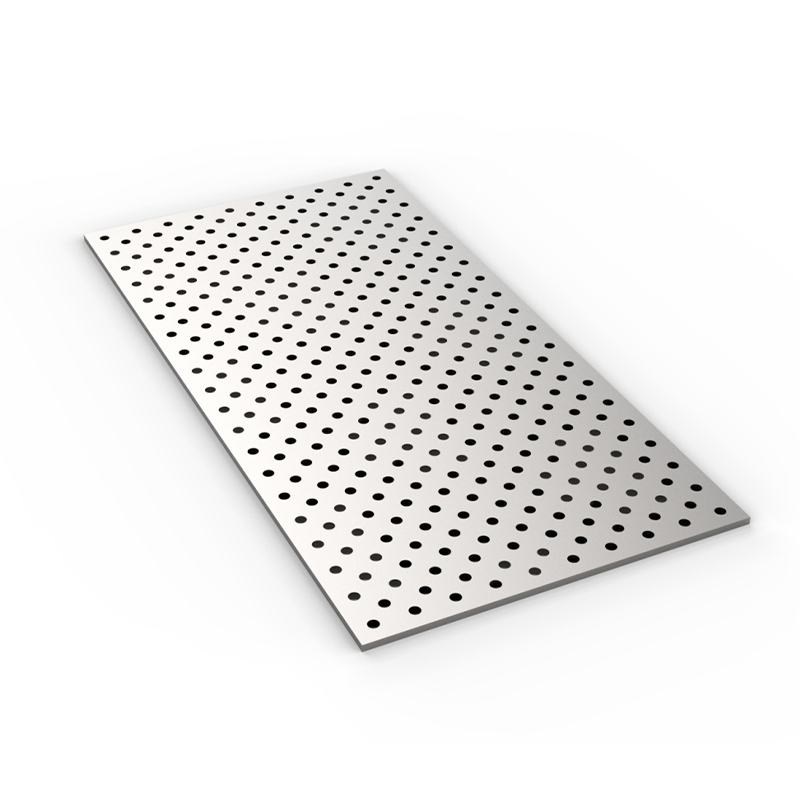
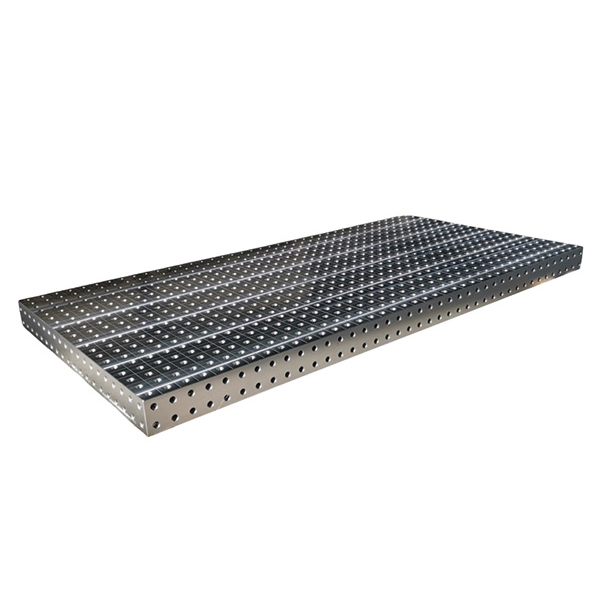
Every welder knows the truth: a shaky base ruins precision. A warped table distorts fit-up. A flimsy frame absorbs energy instead of holding it. We’ve seen shops waste hours reworking parts because their welding working table couldn’t hold tolerance under heat or load. That’s not operator error—it’s equipment mismatch.
Why “Heavy-Duty” Isn’t Just Marketing Hype
Real heavy-duty use means 300+ kg fixtures clamped at full torque, repeated thermal cycling from MIG passes at 250A, and daily impact from angle grinders dropped on the surface. Most tables fail at one of three points: frame rigidity, surface flatness retention, or T-slot integrity. We tested eight models side-by-side in our Botou workshop—measuring deflection under 1,200 kg static load, tracking surface deviation after 48 hours of simulated welding cycles, and checking T-slot wear after 1,500 clamp insertions.
The winners shared three traits: welded steel frames—not bolted assemblies—using minimum 8 mm wall thickness; machined cast iron or hardened steel tops with ≤0.15 mm/m flatness tolerance; and T-slots cut to ISO 2768-mK standards, not stamped or cast-in. One unit failed its first week: the aluminum top flexed 0.8 mm under clamping force alone. Another used mild steel frame tubing—bent visibly after two weeks of production use. These aren’t edge cases. They’re common oversights when buyers prioritize price over material science.
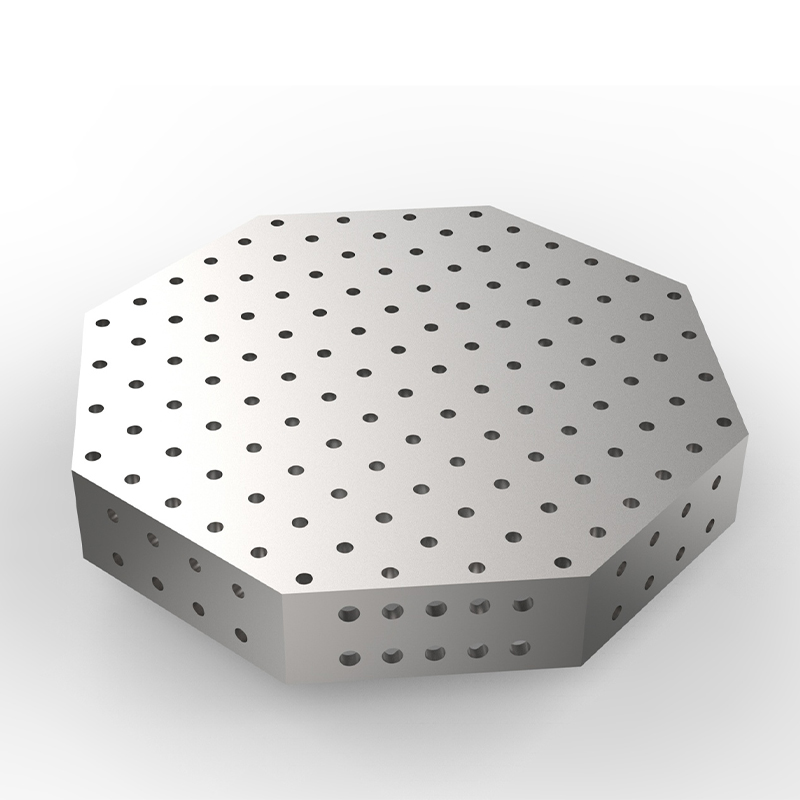
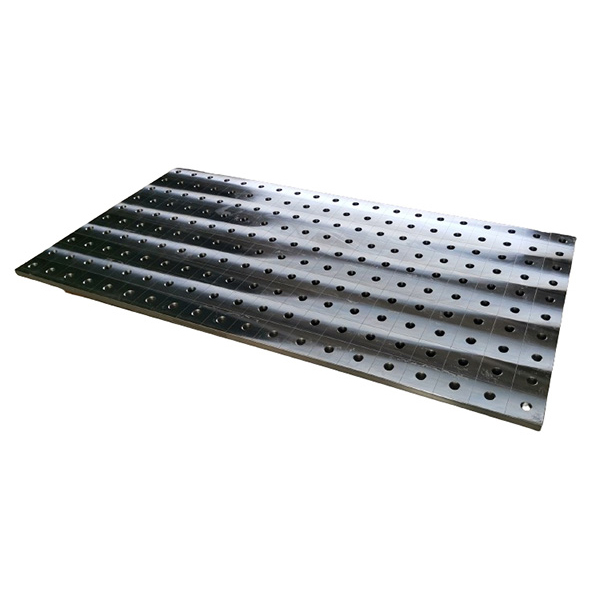
Botou Haijun Metal Products Co., Ltd. builds every welding working table to those observed failure points. Since 2010, we’ve supplied tables to fabrication shops across Russia, Turkey, and Southeast Asia—not as generic tools, but as calibrated workholding systems. Our standard HD-2000 model uses Q345B structural steel frame, CNC-machined 40 mm thick HT250 cast iron top, and 12 mm deep T-slots with 20 mm pitch. It holds ±0.08 mm flatness across 2,000 × 1,000 mm surface—even after 18 months of shift-based operation in a pipe-fitting plant near Kazan.
Precision Fabrication Demands More Than Flatness
Flatness matters—but only if your reference plane stays stable during welding. Thermal expansion breaks alignment faster than mechanical stress. Some users assume a granite table solves this. Wrong. Granite conducts heat poorly, creating hot spots that warp adjacent jigs. Steel expands predictably; cast iron dampens vibration better. We chose HT250 for its 10.5 × 10⁻⁶/K coefficient—close enough to mild steel fixtures to minimize differential movement during heating.
But material choice alone isn’t enough. We add a hidden feature: a dual-layer mounting system. The top plate bolts to a secondary support grid spaced 250 mm apart, which itself rests on adjustable isolation feet. This decouples thermal distortion in the top from the base frame. In practice, this means a part aligned at 20°C stays within 0.12 mm tolerance at 85°C surface temperature—verified with laser tracker measurements during live welding trials.
Some might argue that modular tables with interchangeable inserts offer more flexibility. However, each insert adds a potential slip plane. We measured cumulative play in a popular modular system: 0.32 mm total runout after three insert changes and five clamping cycles. Our fixed-top design eliminates that variable entirely. Flexibility comes from intelligent accessory layout—not compromise in the foundation.
What Buyers Actually Need to Know Before Ordering
Three questions decide success—or regret:
- What’s your largest single workpiece? Not “typical,” but maximum. Add 20% margin for fixturing space. A 1,500 mm long bracket needs ≥1,800 mm usable length—not just table length, but clear T-slot zone beyond clamps.
- What’s your dominant welding process? TIG users need tighter flatness (≤0.1 mm/m) and non-magnetic zones. MIG shops prioritize heat dissipation and T-slot depth for heavy clamps. Plasma cutting integration demands grounding continuity—our tables include dedicated 16 mm² copper braid lugs at four corners.
- How will you anchor it? Bolt-down isn’t optional for tables over 1,200 kg duty. We supply M12 anchor kits rated for 120 kN pull-out in C25 concrete—but only if your floor slab meets 28-day compressive strength ≥25 MPa. We’ve seen three installations fail because contractors skipped the concrete test report.
Installation takes 4–6 hours with two technicians. Leveling requires a precision spirit level (0.02 mm/m sensitivity) and torque wrench set to 85 N·m on all frame-to-floor bolts. Skipping calibration voids the flatness warranty. We include a certified calibration certificate with every unit—traceable to CNAS-accredited lab No. L7291.
Your Table Is the First Weld in Every Job
A welding working table doesn’t hold parts. It holds dimensional intent. It carries the promise of repeatability across batches, shifts, and operators. When a jig fails, the cost isn’t just scrap metal—it’s recalibration time, delayed shipments, and eroded client trust.
Botou Haijun Metal Products Co., Ltd. treats every table as a metrology-grade platform. Not because we over-engineer—but because real-world fabrication taught us what breaks, how fast, and why. Our tables don’t eliminate variability. They contain it. They turn thermal drift into predictable data. They convert operator skill into consistent output.
Visit haijunmetals.com to download our free Welding Table Sizing & Anchoring Guide—with real shop-floor calculations, concrete testing checklists, and T-slot compatibility charts for 27 common clamp brands. Precision starts where the work touches steel.