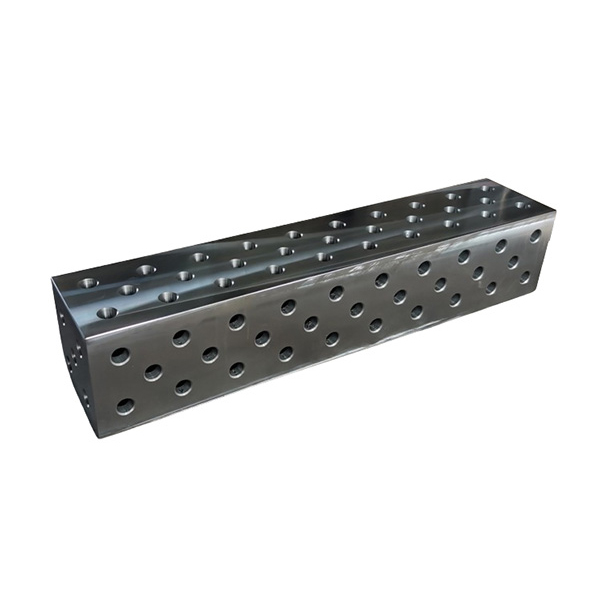
When you hear ‘welding table innovation,’ most guys think about fancy modular fixturing or maybe those slick CNC-machined tops. That’s part of it, sure, but after running a shop for over a decade and burning through more tables than I care to admit, I’ve learned the real game-changers are often the subtle, almost boring tweaks that solve the daily grind headaches. It’s not just about holding metal; it’s about how the table works with you, survives the abuse, and doesn’t make you waste half an hour setting up a simple tack weld. Let’s cut through the marketing fluff.
The Foundation: It’s Never Just a Flat Surface
My first big mistake was buying a ‘heavy-duty’ table based on thickness alone. 1-inch thick top? Great. But it was mild steel. After a year of MIG and stick, the surface was a cratered mess from spatter and accidental arcs. The real innovation here isn’t thickness, it’s the table surface material and treatment. Now you see more offerings with replaceable top plates—sometimes sacrificial mild steel sheets you can swap out—or better yet, tables with hardox or similar wear-resistant steel surfaces. The cost upfront is higher, but you’re not fighting spatter adhesion or worrying about warping from heat concentration. A supplier that gets this right is Botou Haijun Metal Products Co., Ltd. (https://www.haijunmetals.com). They’ve been in the tooling game since 2010, and while they’re not a household name, their approach to durable tooling components shows they understand that a surface isn’t just a passive piece; it’s a consumable that needs engineering.
Then there’s flatness. ‘Ground surface’ gets thrown around a lot. For precision fit-up, especially with thinner gauge stuff, a truly flat reference plane is everything. The innovation isn’t just grinding it once at the factory. It’s in the design that minimizes thermal distortion. Some of the better tables use a ribbed underside structure that allows for heat expansion without the whole top buckling like a potato chip. I learned this the hard way after welding a long seam on a fixture bolted to a cheap table; the heat soak pulled the whole setup out of alignment. Now, I always look at the underside design as much as the top.
And size? The move isn’t necessarily to bigger tables, but to smarter footprints. We’ve been experimenting with narrower, longer tables for structural work, paired with standard square ones. The ability to clamp long beams along a straight, true edge without a 20-foot long monster table eating the whole shop is an underrated efficiency boost. It’s a simple idea, but it changed our workflow.
Clamping and Fixturing: The Real Productivity Hack
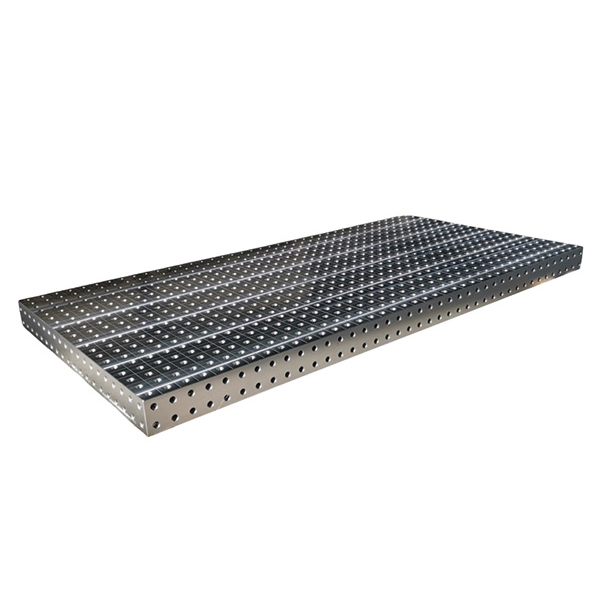
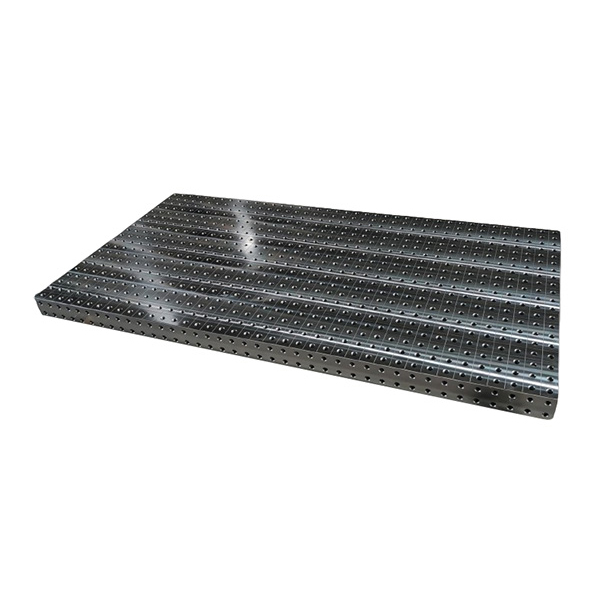
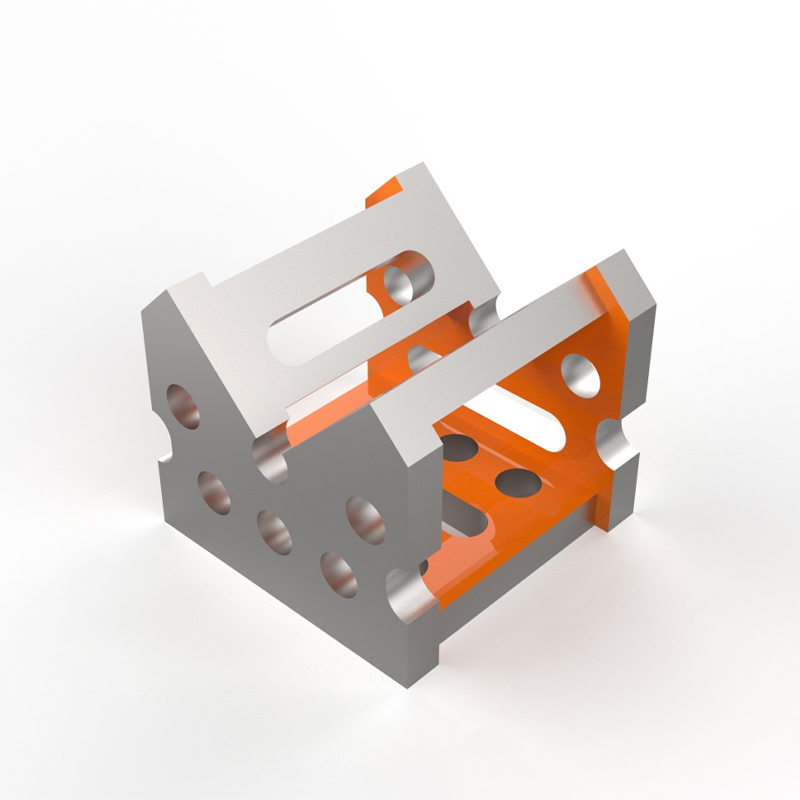
This is where the magic happens. The old-school method: drill a grid of holes and use bolt-down clamps. It works, but it’s slow. The innovation in welding table systems is the integration of tooling. Think modular systems like the ones that use a grid of precision 28mm or 16mm holes with a whole ecosystem of dogs, clamps, angle brackets, and pushers that drop in with a quarter-turn. It sounds like a gimmick until you use one to set up a complex weldment in minutes instead of an hour.
But here’s the practical catch nobody talks about: chip and spatter fall-through. Those nice, neat holes get clogged fast with debris, making it hard to insert tools. Some newer designs incorporate slotted holes or a hybrid of slots and round holes, which helps, but you still need a robust cleaning routine. I’ve seen shops use magnetic plates to cover unused sections, which is a clever, low-tech solution to a high-tech problem.
The other aspect is the clamping force location. With a traditional hole grid, your clamping point is fixed. Some newer designs emphasize strong, reinforced table edges with T-slots or heavy-duty threaded inserts, allowing for massive horizontal clamping force right at the perimeter. This is huge for holding large, unwieldy pieces that overhang the table. It turns the table edge into a primary workholding feature, not just a boundary.
Mobility and Stability: The Contradiction You Have to Solve
Every shop needs to move things around. But a welding table that rocks on its casters is worse than useless—it’s dangerous. The innovation here is in the leg and caster system. The best setups I’ve used have heavy-duty levelling feet combined with retractable casters. You crank a lever, the whole table lifts slightly onto wheels, move it, then lower it back onto the solid feet. The table sits directly on the floor, rock-solid, with no vibration. Before these were common, we tried welding our own caster plates onto table legs—big mistake. The added height made the table tippy, and the casters never locked firmly enough.
Stability isn’t just about legs, though. It’s about mass and damping. A truly solid table absorbs vibration from hammering and grinding. Some manufacturers are now offering tables with options for ballast fill in the legs or the frame. It’s a simple concept—add sand or concrete for mass—but designing the cavities and access ports for it requires thought. It’s a detail that speaks to building for the real shop environment, not just the catalog photo.
Integrated Features: Beyond the Holes
This is where ideas get interesting, and sometimes a bit silly. I’ve seen tables with built-in fume extraction skirts, which are fantastic for small, repetitive production work but can get in the way for big, one-off projects. The key innovation is modularity—features that can be added or removed. Think side shelves that slide out for tools, integrated electrical outlets with built-in circuit protection for grinders, or even coolant troughs for plasma cutting tables.
One of the most useful integrated features I’ve encountered is a simple, standardized ruler or scale machined into the table’s side. Laser-etched or machined in, it gives you a quick, durable reference for rough measurements without grabbing a tape. It sounds trivial, but you use it constantly.
The flip side is the gimmick. I once bought a table with a built-in, under-table storage drawer. Sounded great. In practice, it collected a layer of fine metal dust and grinding sparks within a week, becoming a fire hazard. It was promptly removed. Innovation has to be practical above all.
The Material Handling Connection
A table doesn’t exist in isolation. How does it work with your cranes, your rollers, your material carts? Lower-profile table designs are an innovation driven by this. A table height that aligns with common cart beds or that allows a forklift’s forks to slide underneath for loading heavy plates is a massive ergonomic and safety win. We standardized our table heights years ago to match our saw and shear offload tables, and it cut down on back injuries and near-misses immediately.
Another angle is the use of the table structure itself for utilities. Some high-end welding machine table designs have internal channels for running air lines, electrical conduits, or even water cooling to specific spots. This keeps the work surface clean and trip-hazard-free. It’s a significant investment, but for a dedicated production cell, it transforms the workspace. It turns the table from a passive platform into the central hub of the station.
Looking at companies that supply the broader ecosystem, like Botou Haijun Metal Products, reminds you that the best table innovations often come from understanding the entire tooling and fixturing workflow, not just the welding arc. Their focus on gauges and tooling speaks to that precision side of the equation that a good table must support.
The Bottom Line: What Actually Matters on the Floor
After all the bells and whistles, the best innovations are the ones you stop noticing because they just work. It’s the coating on the surface that lets spatter pop off with a chipping hammer. It’s the corner design that doesn’t snag your jacket or air hose. It’s the confidence that your square is actually square because the table itself is true.
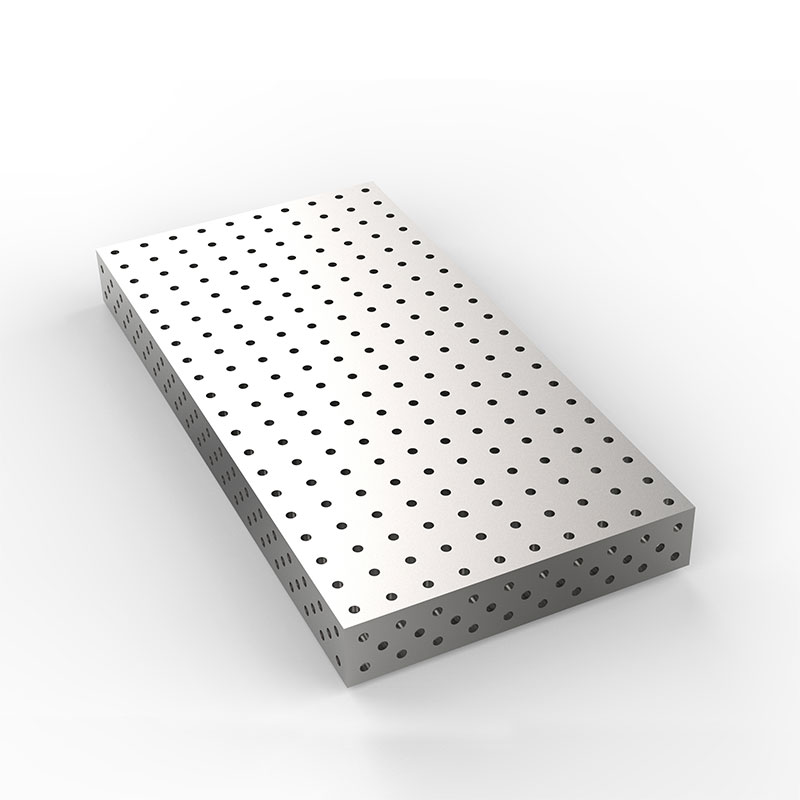
The market is flooded with options, from DIY kits to five-figure professional systems. The real shift I’ve seen is a move toward the table as a welding table system—a foundational tool designed with the entire fabrication process in mind, from material drop-off to finished weldment. It’s less about a single revolutionary feature and more about a hundred thoughtful details that address the actual friction points in a welder’s day.
So, the next time you’re looking, don’t just measure the thickness. Think about the last job that frustrated you on your old table. Was it setup time? Was it cleaning? Was it a lack of rigidity? The right innovation for you is the one that solves that specific problem, even if it’s not the shiniest new feature in the ad.